Blog16 min read
10 Days in Cuba: The Trip Is Sized by the Cash You Bring
A ten day Cuba plan built around one fact, no card issued anywhere in the world currently works on the island, so the cash you carry in is the whole budget.
By Dom

Most destinations let you under-plan the money question. Land short of cash, find an ATM, tap a card, move on. Cuba does not work that way, and as of this year it does not work that way for anyone, not only Americans. Since June 6, 2026, Visa and Mastercard cards issued anywhere in the world, not just by US banks, stopped processing on the island after the foreign bank that cleared those transactions for Cuba's state financial arm, Fincimex, cut ties under new US sanctions pressure, according to Cuba's central bank and wire reporting at the time. The only payment rails still working inside Cuba are cash, Cuba's own prepaid cards, and the Russian Mir and Chinese UnionPay networks, neither of which an ordinary US, Canadian, UK or EU traveler is likely to be carrying.
For US travelers this changes less than it sounds like, because US-issued cards never worked in Cuba in the first place, blocked by the decades-old embargo. What changes is that there is no longer a fallback plan of "bring a non-US card as backup." There is no backup. Whatever cash you carry in on day one, in practice mostly US dollars or euros, is the entire trip's spending money, and running short partway through does not have an easy fix: no card works, Western Union-style transfers into Cuba from the US are not a normal option under the embargo, and the nearest working ATM, even if you had a card that functioned, is its own separate problem in a country mid-fuel-crisis. This post treats that constraint as the spine of the itinerary, not a footnote, and builds the ten days, and the cash plan underneath them, around it.
Why no card works, in both directions
There are two separate reasons layered on top of each other, and it is worth untangling them because they affect planning differently.
US-issued cards have never worked in Cuba. This is the older, more familiar restriction: the US embargo bars American banks from clearing transactions with Cuban financial institutions, so Visa, Mastercard, and Amex cards issued by US banks have simply never functioned on the island, regardless of what changes elsewhere. If you are a US traveler, this part is not new and is not going away.
Since June 2026, non-US cards stopped working too. This is the new layer. President Trump's Executive Order 14404, signed May 1, 2026, widened secondary sanctions to foreign companies maintaining financial ties with GAESA, the Cuban military-run conglomerate that controls a large share of the island's economy, with an OFAC compliance deadline of June 5. The foreign bank that had been processing Visa and Mastercard transactions for Fincimex, GAESA's financial arm, ended that relationship rather than risk its own exposure, and Cuba's central bank confirmed the resulting suspension took effect June 6, 2026. That means a Canadian, British, German or Mexican card, any of which worked in Cuba for years, now does not either.
Practically, this means every traveler on this itinerary, not just Americans, is on a cash-only basis for the length of the trip, with the narrow exceptions of UnionPay and Mir cards that few Western travelers hold.
How much cash, and in which currency
Cuba's money situation runs on three tracks at once, which is confusing the first time and worth understanding before you land.
The Cuban peso (CUP) is the national currency, and it floats on two different rates. The Central Bank of Cuba's own official rate (what it calls its Segment III rate) sat around 707 CUP to the US dollar in mid-October 2026, while the informal street rate, tracked independently by the outlet El Toque and widely used by Cubans and travelers alike, ran noticeably higher and kept climbing through the month, from roughly 694 CUP per dollar at the start of October to around 793 by October 14, per reporting that cites El Toque's tracker. The gap between the two rates, and the rate's week-to-week movement, means any CUP figure in this post is a snapshot, not a number to lock in weeks ahead. Check a live tracker close to your travel dates.
US dollars and euros spend directly in much of the tourist economy. After a 2021 ban on dollar cash transactions, Cuba partially reversed course, and cash dollar and card acceptance has been expanding again in state-run "dollar stores" since early 2025, alongside the older MLC (freely convertible currency) prepaid-card system that most tourists cannot easily use anyway. In practice, casas particulares (private homestays), paladares (private restaurants), and most tour operators are happy to take USD or EUR cash directly at an informal but generally fair rate, which is simpler for a short trip than converting everything to CUP.
CADECA exchange houses handle the official conversion, if you do want CUP in hand for street food, local transport, or small purchases where cash dollars would be an obvious overpay. Expect a materially worse rate than the informal one, and expect queues.
A reasonable planning range, cross-checked against multiple budget breakdowns rather than any single source: a budget traveler staying in casas and eating at paladares can run $50 to $80 a day covering lodging, food, local transport and incidentals, while a more comfortable pace with better casas, a few paid tours and some buffer for transport delays lands closer to $90 to $130 a day. For ten days, that is roughly $500 to $1,300 depending on comfort level, in cash, before flights. Sources disagree by a wide margin on daily figures because Cuba's dual-rate, part-dollarized economy makes any single number soft; treat this as a range to plan around, not a quote to hold the trip to.
Getting in: the e-visa and the OFAC category, if you are American
Every visitor needs Cuba's tourist card, now issued as an e-visa through the government's own portal rather than the old paper card. It is commonly quoted at a baseline cost around $50 for US applicants (more if bought last-minute through an airline counter or a third-party reseller), with approval typically taking about 72 hours, and it covers a stay of up to 90 days. Apply through Cuba's official e-visa portal rather than a marked-up intermediary site.
US travelers face an additional, separate requirement that has nothing to do with Cuba's own paperwork: under the Cuban Assets Control Regulations, "ordinary tourism" is not a legal basis for a US person to spend money in Cuba. You must self-certify one of twelve authorized categories, among them family visits, journalistic activity, professional research and meetings, educational and religious activities, humanitarian projects, and the one most independent travelers use, Support for the Cuban People. That category requires a genuinely full-time schedule of activities that create meaningful interaction with Cubans, among them staying in casas particulares, eating at paladares, and supporting independently-run businesses, per the regulation's own text (31 CFR 515.574), and it is not satisfied by a trip that is mostly beach time with a casa booking as an afterthought. US travelers are required to keep records of their trip, receipts and a rough itinerary among them, for five years, in case of a compliance audit; nobody expects most travelers get audited, but the requirement is real and worth taking seriously rather than treating as a formality.
The US State Department currently rates Cuba at Level 2, Exercise Increased Caution, citing crime and the unreliable power supply rather than anything specific to tourist areas.
Getting around: the bus network has shrunk
Viazul, the state bus line most independent travelers have used for years to move between Havana, Viñales, Trinidad and Varadero, has pulled back service. Its Havana to Viñales route, along with stops in Pinar del Río province generally, was cancelled as of May 2025 for lack of working buses, and its Trinidad to Varadero service was cut to three days a week around the same time, according to traveler reports and regional forums tracking the cuts. Treat any older guide's Viazul timetable, including route lists that still show a direct Havana-Viñales bus, as out of date until you confirm current service directly before you travel; this post could not independently verify a single authoritative current timetable, since Viazul's own domain no longer resolves to the company's site at all.
The real workaround, and increasingly the default way most travelers move between these towns, is the colectivo: a shared private taxi, usually an older American or Russian sedan, that runs point to point once it has three or four paying passengers, arranged through your casa host, a local fixer, or in advance online. Reported per-person fares cluster in the $25 to $40 range for the longer hops (Havana-Viñales, Havana-Trinidad, Trinidad-Varadero), paid in cash, and a private car booked solely for your group costs more but removes the wait for other passengers to show up.
Renting a self-drive car is a real risk right now, not a convenience. Cuba's fuel crisis has pushed gasoline to roughly $1.30 a liter at the pump when it is available at all, capped at about 20 liters per fill, released only against appointments booked through a government rationing app that can run weeks or months behind, with black-market fuel reported as high as $6 a liter. Rental agencies have been known to hand over cars with less fuel than promised, and travelers who do rent have ended up stranded roadside unable to refill. Unless you have a specific reason to self-drive, arranging drivers through colectivos or your casa network removes this risk entirely.

The ten days
This routing starts and ends in Havana, with Viñales as a short loop west and Trinidad as the longer run east, structured so the longest colectivo legs happen once, not twice.
| Day | Base | Focus |
|---|---|---|
| 1 | Havana | Arrive, exchange some cash, settle into Habana Vieja |
| 2 | Havana | Habana Vieja plazas, Capitolio, the Malecón at sunset |
| 3 | Havana | Vedado and Miramar, a paladar dinner |
| 4 | Viñales | Colectivo west, tobacco country in the afternoon |
| 5 | Viñales | Valley hike or horseback tour, a cave |
| 6 | Trinidad | Long colectivo (via Cienfuegos is common), arrive evening |
| 7 | Trinidad | Plaza Mayor, the colonial core on foot |
| 8 | Trinidad | Playa Ancón for the day |
| 9 | Havana | Colectivo back, slow afternoon |
| 10 | Havana | Last market or gallery visit, depart |
Days 1-3, Havana. Spend the first day settling in and doing your initial cash exchange at a CADECA or your casa, rather than arriving with zero local currency and no plan. Habana Vieja's restored plazas, the Capitolio, and a sunset walk on the Malecón fill the next two days at an unhurried pace, with a paladar dinner as the kind of qualifying activity that supports the Support for the Cuban People category if you are American.
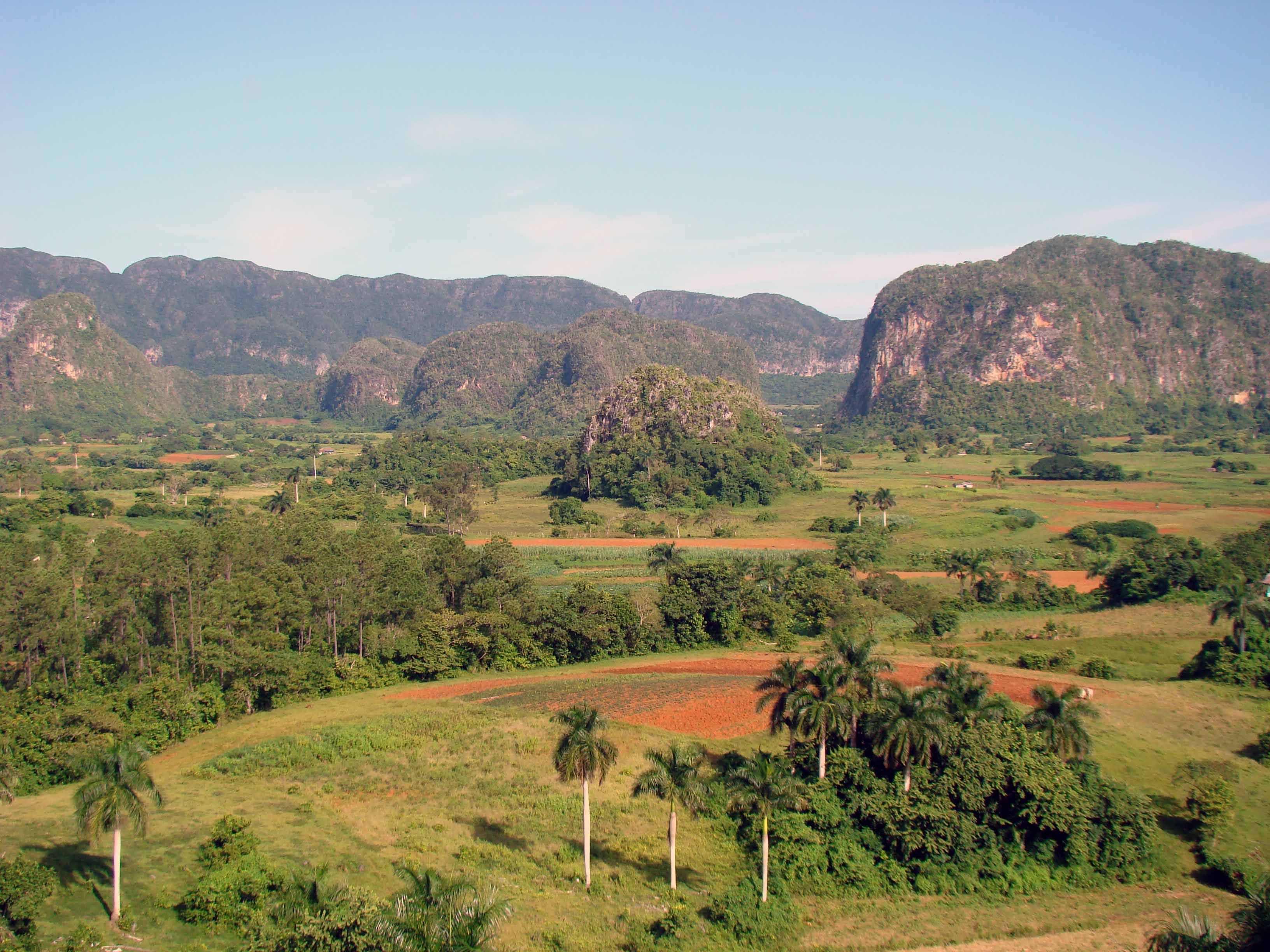
Days 4-5, Viñales. The valley's mogotes, limestone outcrops rising straight out of flat tobacco farmland, are the reason to make the trip west. Tobacco-farm and horseback tours are commonly sold in a mixed online-deposit, cash-on-the-day structure, often quoted around $25 to $30 per person for a half-day including a farm visit, though pricing varies a fair amount by operator and is worth confirming before you commit a day to it.
Days 6-8, Trinidad. The longest transit day of the trip. Trinidad's cobblestone core around Plaza Mayor is the best-preserved colonial town center on the island, walkable in a day, with Playa Ancón a short ride away for a beach day that does not require the Varadero resort strip. Routings via Cienfuegos are common on this leg; confirm with whoever arranges your colectivo which stops, if any, are included.
Days 9-10, back to Havana. Hold a buffer day here rather than scheduling flights tightly against the return colectivo. A multi-hour shared-taxi leg on a fuel-constrained island is not the place to assume everything runs on time.

Where this plan breaks
You run out of cash mid-trip. This is the failure mode the whole itinerary is built to avoid, and it is the one with no clean fix once you are a few days in. No card works as a backup, there is no quick wire transfer from a US bank account under the embargo, and even non-US travelers are now in the same position since the June 2026 card suspension. Overestimate the cash you bring, not underestimate it.
A nationwide blackout lands on a travel day. Cuba suffered repeated nationwide grid collapses through 2026, including a sixth islandwide failure by early August, with some areas receiving only a few hours of power a day even outside a full collapse, according to wire and regional reporting. Tourist hotels, particularly larger properties in Varadero and the resort cays, generally run on generators and keep functioning through these events, but a casa particular in a town center may not have the same backup, and a blackout hitting your colectivo's fuel stop or your casa host's ability to reach you is a real possibility, not a hypothetical.
The fuel crisis delays or reroutes your transport. A colectivo driver waiting weeks on a rationing-app fuel appointment is not a rare story this year. Build slack into transit days, particularly the Havana-Trinidad leg, and do not schedule an international flight on the same day as a long colectivo ride.
A hotel you booked gets consolidated or closed. Cuba's tourism ministry has moved to close and consolidate hotels, Varadero properties among them, during fuel-constrained stretches, relocating booked guests to other properties with little notice. This mostly affects resort-style hotel stays rather than casa particulares, but it is worth confirming your booking status close to arrival if you are not staying in a casa.
Viazul's schedule looks different from what an older guide describes. Routes have been cut since many popular guides were last updated, and the company's own web domain is not resolving to anything connected to the business as of this writing. Confirm current service through your casa network or a current travel forum rather than any specific published timetable, including this one.
Key Takeaways
| Point | Details |
|---|---|
| No card works, for anyone | US-issued cards never worked; since June 6, 2026, all foreign Visa and Mastercard cards stopped processing in Cuba too, after the bank clearing Fincimex's transactions cut ties under new sanctions |
| Cash is the entire budget | No ATM or card fallback exists; bring US dollars or euros in cash, with a buffer beyond your estimated spend |
| The peso runs on two rates | Roughly 707 CUP/USD official versus roughly 700-800 CUP/USD informal in mid-October 2026, and moving; check a live rate close to your dates |
| Americans need an OFAC category | "Ordinary tourism" is not legal grounds for a US person's Cuba spending; most independent travelers self-certify Support for the Cuban People, which requires a genuinely full schedule of qualifying activities |
| Everyone needs the e-visa | Apply through Cuba's official e-visa portal, commonly around $50 for US applicants, about 72 hours to process |
| Viazul service has shrunk | The Havana-Viñales route was cut in 2025 and Trinidad-Varadero reduced to three days a week; confirm current service rather than trusting an older guide |
| Self-drive rental is a real risk | Fuel rationing, appointment backlogs and black-market pricing have left tourists stranded roadside; colectivo shared taxis are the lower-risk default |
| A ten-day cash budget runs roughly $500-$1,300 | Wide range reflecting casa-and-paladar budget travel versus a more comfortable pace with paid tours, all cash |
How Planytera handles a trip like this
Planytera is an AI trip planner built by a solo developer, available on iOS, Android and the web. You describe the trip and it builds a day-by-day itinerary, ready in moments. A country where the transport network itself is shrinking and the money question has no safety net is exactly the kind of trip where getting the order and pacing of days right matters more than the list of places.
Building slack into transit days. A plan that treats the Havana-Trinidad colectivo leg as a fixed, on-time transfer is a plan that breaks the first time a fuel appointment runs long. Structuring the days around it rather than against it is the difference between a missed flight and a buffer day well spent.
Re-pacing when a day gets disrupted. If a blackout or a transport delay eats a planned day in Viñales or Trinidad, shifting the days around it and letting the rest of the trip resync beats manually rebuilding the itinerary from scratch.
Shared plans for a trip with real logistics to agree on. Deciding how to split a group colectivo fare, or which category of activity satisfies an OFAC requirement for everyone traveling together, is easier worked out on a shared, read-only itinerary than in a group chat the morning of. Split costs tracks who owes who without the app touching anyone's money.
It does not book flights, e-visas, colectivos or casas, and it does not track exchange rates. Those stay entirely yours to arrange, and on this trip, arranging them with a cash buffer matters more than almost anywhere else on this list.
Frequently asked questions
Can Americans legally travel to Cuba in 2026?
Yes, under specific conditions. US law requires self-certifying one of twelve authorized OFAC travel categories, since general tourism is not a legal basis for spending money in Cuba. Most independent travelers use Support for the Cuban People, which requires a genuinely full schedule of activities such as staying in private casas particulares and eating at privately-run paladares, not a trip that is mostly beach time with a casa booking as an afterthought. Keep records of your trip for five years in case of a compliance review.
Do any cards work in Cuba at all right now?
For most Western travelers, no. US-issued cards have never worked under the embargo, and since June 6, 2026, Visa and Mastercard cards issued anywhere else in the world stopped processing in Cuba too, after the foreign bank clearing those transactions for Cuba's state financial arm ended the relationship under new US sanctions pressure. The only cards that still work belong to the Russian Mir and Chinese UnionPay networks, which few US, Canadian, UK or EU travelers carry.
How much cash should I bring for ten days?
Budget ranges vary widely because Cuba's economy runs on multiple exchange rates at once, but a reasonable planning range is roughly $50 to $80 a day for a casa-and-paladar budget trip and $90 to $130 a day for a more comfortable pace with paid tours, all in cash. For ten days that is roughly $500 to $1,300 before flights. Bring more than your estimate, since there is no way to get more once you are on the ground.
Is it true Cuba's power grid keeps failing?
Yes. Cuba experienced repeated nationwide blackouts through 2026, including a sixth full grid collapse by early August, and even outside a full collapse many areas receive only a few hours of electricity a day. Larger hotels, especially in Varadero and the resort cays, generally run on generators and stay functional through these events; smaller casas particulares may not have the same backup.
Can I still take the Viazul bus between cities?
Not on every route an older guide might list. Viazul cut its Havana-Viñales service in 2025 and reduced Trinidad-Varadero to three days a week around the same time, and its own web domain is not resolving to the company as of this writing. Shared colectivo taxis, arranged through a casa host or booked in advance, have become the standard workaround for most intercity travel.
Should I rent a car and self-drive?
Think carefully before you do. Cuba's fuel crisis has pushed gas stations onto an appointment-based rationing system with waits running weeks to months, a 20-liter cap per fill when fuel is available, and black-market prices several times the pump rate. Tourists who self-drive have ended up stranded roadside with an empty tank and no way to refill on schedule. Colectivo shared taxis or a hired driver remove that risk.
Useful sources and further reading
- Cuba suspends Visa and Mastercard transactions, Central Bank of Cuba statement via Reuters-sourced wire reporting
- Visa and Mastercard services suspended across the world in Cuba, Daily Hive
- 31 CFR 515.574, Support for the Cuban People general license, Cornell Legal Information Institute
- OFAC Cuba Sanctions Program overview, US Department of the Treasury
- US dollar hits 400+ Cuban pesos and keeps climbing, El Toque informal rate reporting
- Cuba's sixth nationwide grid collapse of 2026, Local 10 / AP wire
- Grid failure plunges Cuba into nationwide blackout, Al Jazeera
- Cuban drivers face monthslong wait for gasoline, WLRN/NPR
- Cuba's gas crisis strands tourists too, Havana Times
- Cuba expands USD stores while wages stay in pesos, Havana Times / El Toque
Recommended
More from the Planytera blog.