Blog16 min read
10 Days in Costa Rica: The 40km Gap That Eats a Day
A ten day Arenal, Monteverde and Manuel Antonio plan built around the one stretch of road that makes Costa Rica's map lie about how many regions actually fit.
By Dom
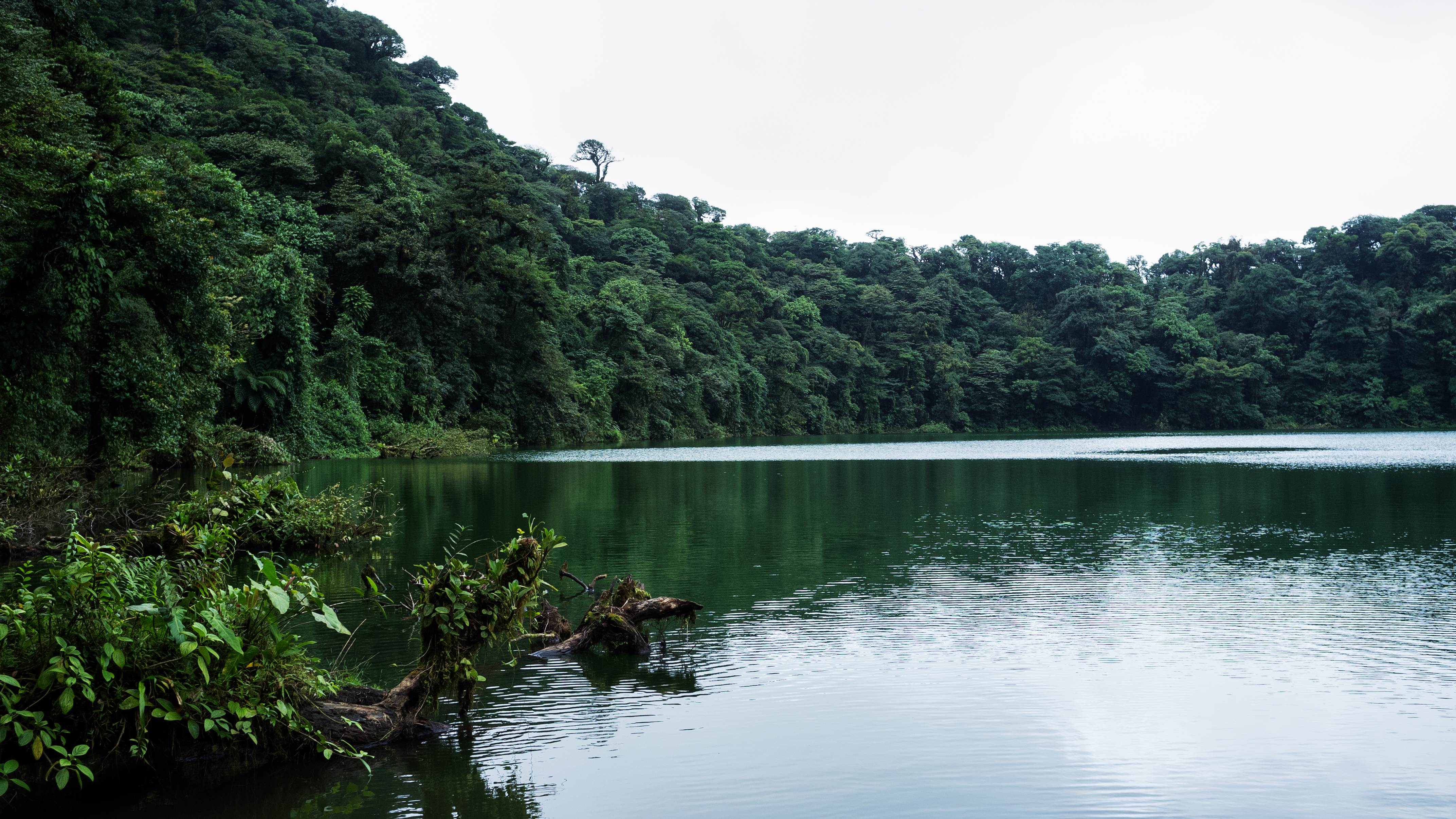

Look at Arenal and Monteverde on a map and they sit close enough to touch, two green blobs on either side of the same lake. Book a rental car on the strength of that map and you can lose the better part of a travel day finding out why nobody drives straight between them.
There is no direct paved road. For most of the last decade the only ways across were a long loop around Lake Arenal through the town of Tilarán, on a mix of paved and pressed-gravel surface, or a rough 4x4 track through the Río Chiquito valley that crossed an open riverbed and was only passable in the December to April dry season. A new bridge over the Caño Negro river opened in April 2026 and cut the direct route to under two hours, according to reporting from the Tico Times, but it runs through the same rural mountain corridor that has always made this stretch slower than its straight-line distance suggests, and it has no long track record yet. Whichever way you cross, this is the fact a ten day Costa Rica itinerary has to be built around, not discovered on day four.
This plan runs Arenal to Monteverde to the central Pacific coast at Manuel Antonio, using the operators' and government agencies' own published numbers, and flagging the places sources disagree rather than picking one and hoping.
The gap the map hides
Arenal and Monteverde look like neighbors because the straight-line distance between them is short. Guides differ sharply on exactly how short, some citing roughly 13 to 15 miles between the towns themselves and others measuring around 73 miles between the wider Arenal and Monteverde areas; that gap in the reported figures is itself a sign of how little a straight line tells you here. What the map does not show is Lake Arenal and the mountain range behind it, both sitting directly between the two.
Until 2026, the two practical options were a paved loop around the lake through Tilarán, roughly 115 km on Routes 142, 145 and 606, mixing paved and pressed-gravel surface and taking 3 to 3.5 hours (a 4x4 is not required but is recommended, especially in the rainy season), or a Jeep-boat-Jeep transfer: about 1.5 hours by van to the lake, a 40 minute boat crossing, then 25 more minutes by van into La Fortuna, roughly 3.5 hours door to door with no driving required.
A shorter, rougher option existed the whole time along the lake's inner shore, through Río Chiquito, crossing the Caño Negro riverbed. Multiple guides describe it as unpaved, 4x4-only, and passable only in the dry season, since the crossing becomes unsafe once the rains raise the water level. It saved perhaps 30 minutes over the paved loop, at real risk of getting stuck partway across a river with no signal.
A new bridge changes the arithmetic, cautiously
In April 2026, a 112 metre bridge opened over the Caño Negro river, according to the Tico Times, converting that old dry-season 4x4 shortcut into a year-round route numbered 936, running through Santa Elena, Río Chiquito, Caño Negro and El Castillo. The same reporting puts the new travel time at about 1 hour 50 minutes between La Fortuna and Monteverde, against roughly 3.5 hours on the old loop around Tilarán, and gives the route's length as around 95 km, shorter than the old loop's 115 km as well as faster.
That is a genuine improvement, and worth planning around if it holds. It is also new enough that caution is warranted. The Tico Times' own coverage describes the corridor as "a mountain and rural road rather than a highway" and recommends daylight driving and checking conditions before setting out, and a separate travel guide describes the drive as needing SUV or 4x4 clearance rather than a sedan. A comprehensive road-conditions guide updated as recently as early September 2026 does not mention Route 936 at all, a sign that even specialist trackers of Costa Rican roads have not yet folded it into their standard list. A single blog account also claims the approach road suffered storm damage and a closure in mid-2026, a claim this piece could not confirm against any official or news source, so treat it as unverified rather than either true or false.
The practical read: budget the old Tilarán loop's 3 to 3.5 hours as the number that will not surprise you, check current road status for Route 936 the week you travel, and treat any time under two hours as a bonus rather than the plan.

Arenal: what is actually worth booking
Arenal Volcano National Park itself is refreshingly low-friction to visit. It is run by SINAC, Costa Rica's national park authority, open daily from 8 AM to 4 PM, and multiple current guides put the foreign adult admission at $15 plus tax and $5 plus tax for children under 12, paid by card at the entrance with no advance reservation required. Trails run through old lava fields from the volcano's active decades and forest at its base, with the cone visible on a clear day and often shrouded the rest of the time.
La Fortuna Waterfall, a short drive from town, runs on a separate fee and schedule: open daily, commonly listed as 7 AM to 5 PM with last entry around 4 PM. Current sources disagree on the exact adult fee, ranging from $18 to $20, with $9 cited for children. The nonprofit ADIFORT runs the site and channels proceeds into local conservation, per its own materials. Reaching the pool at the bottom means over 500 steps down, and the same number back up.
Hot springs are the other Arenal staple, and the one place here with no single fee to cite: pricing runs from free river soaking spots to resort day passes well over $100, a budget decision rather than a fact to verify.
Monteverde just changed how it sells tickets
If you last visited Monteverde Cloud Forest Biological Reserve years ago, or read a guide written before late 2025, the ticketing system you remember no longer exists. Multiple current sources describe a change that took effect around December 2025: the reserve retired its all-access day pass, priced at $26 for foreign adults, and replaced it with separate tickets for each of several trail circuits, priced at $29 per adult and $16 per child aged 6 to 11, with each circuit ticket valid for a specific time slot capped at a stated number of visitors per slot. Hours run 7:30 AM to 4 PM, with the last circuit slot starting mid-afternoon.
The consequence for a ten day plan is simple: seeing more than one circuit now costs more than the old blanket ticket did, and the trip has to decide in advance which circuit is worth the time rather than wandering the whole reserve on one pass. Reserve tickets online for your specific date and circuit rather than assuming a walk-up day pass still exists.
The road on to the Pacific: Manuel Antonio's own quirks
The road south from Monteverde to Manuel Antonio, near Quepos, runs roughly 190 to 195 km and takes about 3.5 to 4 hours by car, according to route-planning sources, adding a second long travel day to a plan that already spent one getting into Monteverde.
Manuel Antonio National Park has its own booking system, separate from Arenal's walk-up model. It closes every Tuesday, confirmed by two independent visitor guides, and runs Wednesday through Monday from around 7 AM; sources differ on whether it closes at 3 PM or 4 PM, so check on arrival rather than planning a tight exit. Admission is commonly listed at $18.08 for adults and $5.65 for children aged 2 to 12, free under 2, reflecting a stated $16 and $5 base plus Costa Rica's value-added tax. The park caps daily visitors at roughly 2,500 through timed entry sold only through SINAC's own online portal, not at the gate, so arriving without a reservation risks not getting in at all on a popular day.

Entry requirements, briefly
Costa Rica's official tourism site lists several visa-waiver tiers by nationality, one allowing "up to 180 calendar days, non-extendable" and others capped at 30 days, so the length of stay an immigration officer grants depends on which tier your passport falls into rather than a single blanket rule; confirm your country's tier before booking a return flight timed to the edge of any allowance. Every visitor needs a passport valid for the length of the stay, proof of onward or return travel, and evidence of at least $100 per month of the visit, per the same official page. No vaccination is required for travelers arriving directly from the United States or Canada.
The ten days
This plan runs the classic triangle, Arenal, Monteverde, Pacific coast, and gives both the connector routes above a full day rather than folding them into an already-booked activity day.
| Night | Base | What shapes the day |
|---|---|---|
| 1 | La Fortuna | Arrive San José, transfer in (about 3 hours by road) |
| 2 | La Fortuna | Arenal Volcano National Park |
| 3 | La Fortuna | La Fortuna Waterfall, hot springs |
| 4 | Monteverde | The Arenal-Monteverde crossing, a full travel day |
| 5 | Monteverde | Cloud Forest Reserve, one booked circuit |
| 6 | Manuel Antonio | The long drive south, another full travel day |
| 7 | Manuel Antonio | Manuel Antonio National Park (reserved in advance) |
| 8 | Manuel Antonio | Beach day, or a boat trip out of Quepos |
| 9 | Manuel Antonio | Buffer day, or the drive back toward San José begins here |
| 10 | San José | Return transfer, departure |
Days 1 to 3, La Fortuna. Arrival day absorbs the transfer from Juan Santamaría International Airport, commonly cited at around 3 hours by road. Day 2 is the volcano park itself, no reservation needed. Day 3 splits between the waterfall in the morning, when the steps are less crowded, and hot springs in the afternoon.
Day 4, the crossing. Whichever route you take, book no activities on this day. If Route 936 is confirmed open and dry, it can be done by early afternoon; on the Tilarán loop or the Jeep-boat-Jeep transfer, budget the whole day and treat arrival by dinner as a win.
Day 5, Monteverde. One reserved circuit ticket, not a wander through the whole reserve. A second circuit or a night walk is an option if the day allows it, at its own separate price.
Day 6, south to the coast. Another full travel day on better roads but a longer distance, roughly 190 to 195 km. Breaking the drive at Jacó is a reasonable way to split it if the whole run feels long.
Days 7 to 9, Manuel Antonio. Day 7 is the park itself, reserved online before you fly. Days 8 and 9 are flexible: beach time, a boat trip out of Quepos, or, if logistics require it, day 9 becomes an early start back toward San José instead of a rest day.
Day 10, departure. San José's airport sits roughly 3 to 3.5 hours from Manuel Antonio by road, so build the same buffer into a same-day flight that the rest of this route would suggest.
What actually needs booking ahead
Short list, and each item has its own deadline. Manuel Antonio National Park, days or weeks ahead through SINAC's own portal, since there is no gate sale and the daily cap of roughly 2,500 visitors is real. Monteverde Cloud Forest Reserve, for your specific date and circuit, since the December 2025 switch to timed per-circuit tickets removed the old unlimited day pass as a fallback. Your Arenal-Monteverde crossing, in the sense of deciding the route and, if driving, confirming current conditions on Route 936 rather than trusting a map that treats it as settled.
Everything else, Arenal Volcano National Park, La Fortuna Waterfall, hot springs, needs no advance booking under current rules, though hotel beds in all three towns fill up in the December to April dry season, the same window that also makes the old Río Chiquito shortcut passable.
Key Takeaways
| Point | Details |
|---|---|
| There is no direct paved road between Arenal and Monteverde | The classic route runs the Tilarán loop, roughly 115 km on paved and pressed-gravel roads, 3 to 3.5 hours. |
| A new bridge cut the direct route to under two hours in April 2026 | The Tico Times reports Route 936 via a new Caño Negro bridge runs about 95 km in roughly 1 hour 50 minutes, though the corridor is still new and under-tracked. |
| A rough shortcut existed the whole time, and GPS apps still suggest it | The old Río Chiquito route needs a 4x4, crosses a riverbed, and is only reliably passable December through April; multiple guides warn navigation apps route travelers onto it without explaining the risk. |
| Arenal Volcano National Park needs no reservation | $15 plus tax for foreign adults, $5 plus tax for children under 12, 8 AM to 4 PM, card payment at the gate. |
| Monteverde retired its day pass in December 2025 | Circuit tickets now run $29 per adult and $16 per child, timed and capacity-limited, replacing a $26 all-access pass. |
| Manuel Antonio closes every Tuesday and sells no gate tickets | Roughly $18.08 adult, $5.65 child, capped near 2,500 visitors a day, booked only through SINAC's online portal. |
| Visa-free stay length depends on your passport, not a single rule | Costa Rica's official tourism page lists tiers up to 180 days for some nationalities and 30 days for others. |
| Monteverde to Manuel Antonio is its own full travel day | Roughly 190 to 195 km, 3.5 to 4 hours, on top of the Arenal-Monteverde crossing already spent earlier in the week. |
Where this plan breaks
Trusting the map's straight-line distance between Arenal and Monteverde. This is the single most common way a Costa Rica itinerary runs short on time. A plan built assuming an hour or two between the two, because that is what the distance on a map implies, loses most of a day it never budgeted, either to the old 3.5 hour loop or to an unverified new route.
Treating Route 936 as settled fact. The bridge opened in April 2026 and the time savings the Tico Times reports are real, but a comprehensive road-conditions guide updated in early September 2026 still does not list the route, and one blog's claim of a mid-2026 closure could not be confirmed either way. A tight day-4 schedule staked on the faster route, unchecked, risks the old 3.5-hour reality showing up uninvited.
Assuming Manuel Antonio works like Arenal. Arenal's gate sells tickets on arrival. Manuel Antonio does not, and a plan that reaches Quepos without a reservation already made can simply be turned away once the roughly 2,500 daily slots are gone.
Booking Monteverde as if the old day pass still existed. Guides and tour operators written before December 2025 describe unlimited trail access on one ticket. That product no longer exists; a circuit ticket books one route, at one time, and a second circuit costs a second fee.
Two long travel days with the coast still ahead. Day 4 crosses to Monteverde and day 6 continues to the coast, with only day 5 as a rest between them. A tighter version of this trip that compresses those removes the only slack in the week for a delayed crossing or simple fatigue.
How Planytera handles a trip like this
Planytera is an AI trip planner built by a solo developer, available on iOS, Android and the web. You describe the trip and it produces a day-by-day itinerary, ready in moments. On a route where the map understates how long one crossing actually takes, three things matter more than the sightseeing list.
Pacing around a real travel day, not a rough guess. A crossing that can run anywhere from under two hours to three and a half, depending on which route holds up, should shape the day around it rather than get squeezed between two activities. Planning day 4 as a travel day on purpose, with nothing else booked against it, absorbs the range instead of fighting it.
Re-pacing without rebuilding the week. If the crossing runs long, or a Manuel Antonio reservation only comes through for a different day, adjusting the days around that shift and letting the rest of the week resync beats redoing the itinerary from day one.
Saved trips and shared plans. A three-stop loop like this one often involves someone else booking a leg, a rental car, a park reservation. A shared, read-only plan link keeps everyone looking at the same itinerary as it adjusts.
Frequently asked questions
Is there really no direct road between Arenal and Monteverde?
There was no paved direct road for most of the last decade. The choice was a paved loop around Lake Arenal via Tilarán, roughly 115 km and 3 to 3.5 hours, a Jeep-boat-Jeep transfer across the lake itself in about the same total time, or a rough 4x4-only shortcut through Río Chiquito passable only in the dry season. A new bridge opened in April 2026 that turned that shortcut into a year-round route, cutting the trip to roughly 1 hour 50 minutes according to the Tico Times, though the route is new enough that some current guides have not yet updated to include it.
Should I drive the new Route 936 shortcut or take the Tilarán loop?
If your travel dates are outside the wet season and you have confirmed current road status, Route 936 is reportedly faster and shorter. If you cannot confirm its condition that week, or you are driving a standard rental rather than an SUV or 4x4, the Tilarán loop is the more established option, even though it takes longer. Budget the longer time regardless, and treat a faster crossing as a bonus.
Does Manuel Antonio National Park sell tickets at the gate?
No. Entry is sold only through SINAC's own online booking system, in advance, with a daily cap reported at roughly 2,500 visitors. Arriving without a reservation risks not getting in at all on a busy day, unlike Arenal Volcano National Park nearby, which does sell at the gate.
What day is Manuel Antonio National Park closed?
Tuesday, confirmed by multiple current visitor guides. It otherwise runs Wednesday through Monday, opening around 7 AM, though sources differ on whether it closes at 3 PM or 4 PM, so check the posted time for your visit date.
Has the Monteverde Cloud Forest Reserve ticket system changed recently?
Yes. Around December 2025, the reserve replaced its all-access day pass, previously $26 for foreign adults, with separate timed tickets for each trail circuit, priced at roughly $29 per adult and $16 per child, each valid for one circuit and one time slot with a capped headcount. A second circuit requires a second ticket.
How long can US, Canadian or European visitors stay in Costa Rica without a visa?
It depends on nationality. Costa Rica's official tourism site lists one visa-waiver tier allowing up to 180 calendar days, non-extendable, and other tiers capped at 30 days. Every visitor needs a passport valid for the stay, proof of onward or return travel, and evidence of at least $100 per month of the visit. Confirm which tier applies to your passport before booking a flight timed close to any limit.
Useful sources and further reading
- SINAC: national park system, the government agency operating Costa Rica's national parks, including Arenal Volcano and Manuel Antonio.
- The Tico Times: Costa Rica's new Caño Negro bridge cuts travel time to Monteverde, for the April 2026 bridge opening, Route 936, and the reported 1 hour 50 minute travel time.
- Manuel Antonio Park Online Services: frequently asked questions, for official hours, closed day and entrance fees.
- Earth Trekkers: Manuel Antonio National Park guide, cross-checking the closed day, fees and the roughly 2,500 daily visitor cap.
- Two Weeks in Costa Rica: the Monteverde Cloud Forest Reserve, for the December 2025 ticketing change, per-circuit pricing and hours.
- Two Weeks in Costa Rica: driving to Monteverde and road conditions of specific routes, for the Tilarán loop's distance and time, and the GPS-shortcut warning.
- My Tan Feet: Monteverde road conditions, for the Río Chiquito shortcut's seasonal 4x4-only status.
- Costa Rica Travel Blog: driving to Monteverde, for the 115 km, 3 to 3.5 hour figure on the paved and pressed-gravel loop.
- Visit Costa Rica: entry requirements, the official tourism board page on visa-waiver tiers, passport, funds and onward-travel rules.
Recommended
More from the Planytera blog.