Blog15 min read
7 Days in Switzerland: Book the Seat, Not Just the Pass
A seven day Zermatt to St Moritz plan built around the Glacier Express and Bernina Express, whose seats the Swiss Travel Pass does not actually cover.
By Dom
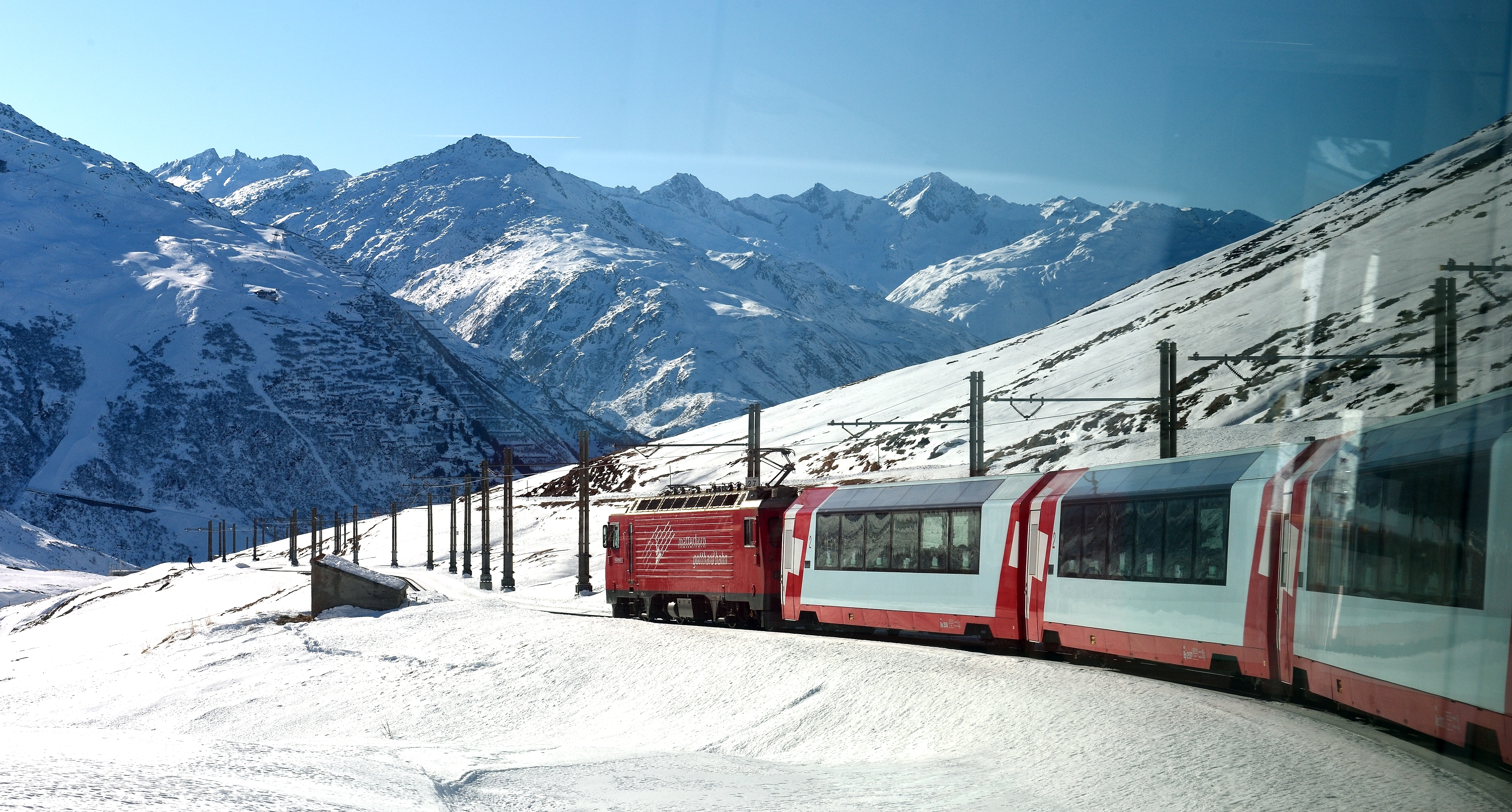

The Swiss Travel Pass advertises itself as one ticket for the whole country: trains, buses, boats, city transit, hundreds of museums. For most of a week in Switzerland that is exactly true. It is not true on the two trains most visitors actually build the trip around.
The Glacier Express, Zermatt to St Moritz, and the Bernina Express, Chur to Tirano, both require a seat reservation bought separately from the pass, for every passenger, with no exceptions below the age of six. Glacier Express confirms this on its own booking page: "a seat reservation is obligatory for all passengers and costs an additional charge," on top of whatever ticket or pass you are travelling on. Rhaetian Railway's FAQ says the same for the Bernina Express: "seat reservations on board the Bernina Express and Glacier Express must be purchased in addition to the ticket."
The reservation itself is not expensive. The timing is the problem. Glacier Express opens its 1st and 2nd class reservations exactly 93 days before the date of travel, and reports from travellers booking a July or August date describe the desirable seats gone within hours of that window opening, as tour operators holding block allocations release or confirm them the same morning. A pass bought in April for a trip in July does not fix this. A reservation made in April, the day the 93-day window opens for a July date, does.
This is a seven day plan built around that constraint: Zermatt to St Moritz to Lugano, with the two reserved trains as the spine and the rest of the week filling in around them, using the operators' own published numbers and flagging the places two sources disagree.
Two different products wearing the same pass
The Swiss Travel Pass, priced for 2026 at CHF 254 for 3 consecutive days in 2nd class up to CHF 499 for 15 days, or CHF 405 to CHF 787 in 1st class, per the official Swiss Travel System price list, covers unlimited travel on SBB trains, PostBuses, lake boats and city transit in more than 90 towns, free entry to over 500 museums, and discounts of roughly 25 to 50% on many mountain railways. On a normal InterCity train, an SBB regional service, or a lake boat on Lake Lucerne, that is the whole story: board with the pass, no reservation, no extra fee.
The Glacier Express and Bernina Express are not normal trains. They are timetabled scenic services with assigned, numbered seats in dedicated panoramic cars, and RhB and MGB (the two railways that jointly run the Glacier Express) sell the seat itself as a separate product from the journey. The pass pays for the ride. The reservation pays for the seat. Skip the reservation and, at least on the Glacier Express, you cannot board the train at all in the class you hold a ticket for.
The Glacier Express: what the seat costs, and when it goes
Glacier Express's own price page states the reservation fee plainly: CHF 54 per seat in 1st or 2nd class, or CHF 540 per seat in Excellence Class, the same figure regardless of season or distance travelled. Children under 6 travelling on a lap in 1st or 2nd class are the only passengers exempt.
The booking window is fixed and short. Per the Glacier Express FAQ, "bookings for 1st and 2nd class are available 93 days before the date of travel," while Excellence Class can be reserved across the entire timetable period with no 93-day restriction. Ninety-three days before a mid-July travel date lands in mid-April, and that is the morning to be at a keyboard, not a rough guide for "sometime in spring." Travellers who have tried this in past summers report the standard classes thinning out within the first day the window is open, and 1st class in particular has been reported gone by the following morning in peak weeks, largely to tour operators who hold block allocations and confirm or release them the moment the window opens.
If the 93-day window has already passed by the time you are reading this for your travel date, two fallbacks exist rather than none. Group allocations that go unclaimed are released to individual travellers 27 days before departure, and reservations that were made and later cancelled reappear in the system, so a second check closer to the date is worth doing even after a first attempt came up empty.
The ride itself is long. Glacier Express's own FAQ puts the full Zermatt to St Moritz run at "around 8 hours," while an independent rail-timetable reference gives just over 7.5 hours for the roughly 290 km route. Either figure means committing the better part of a day to one train, crossing the Oberalp Pass along the way, the highest point on the route.

The Bernina Express: cheaper seat, murkier deadline
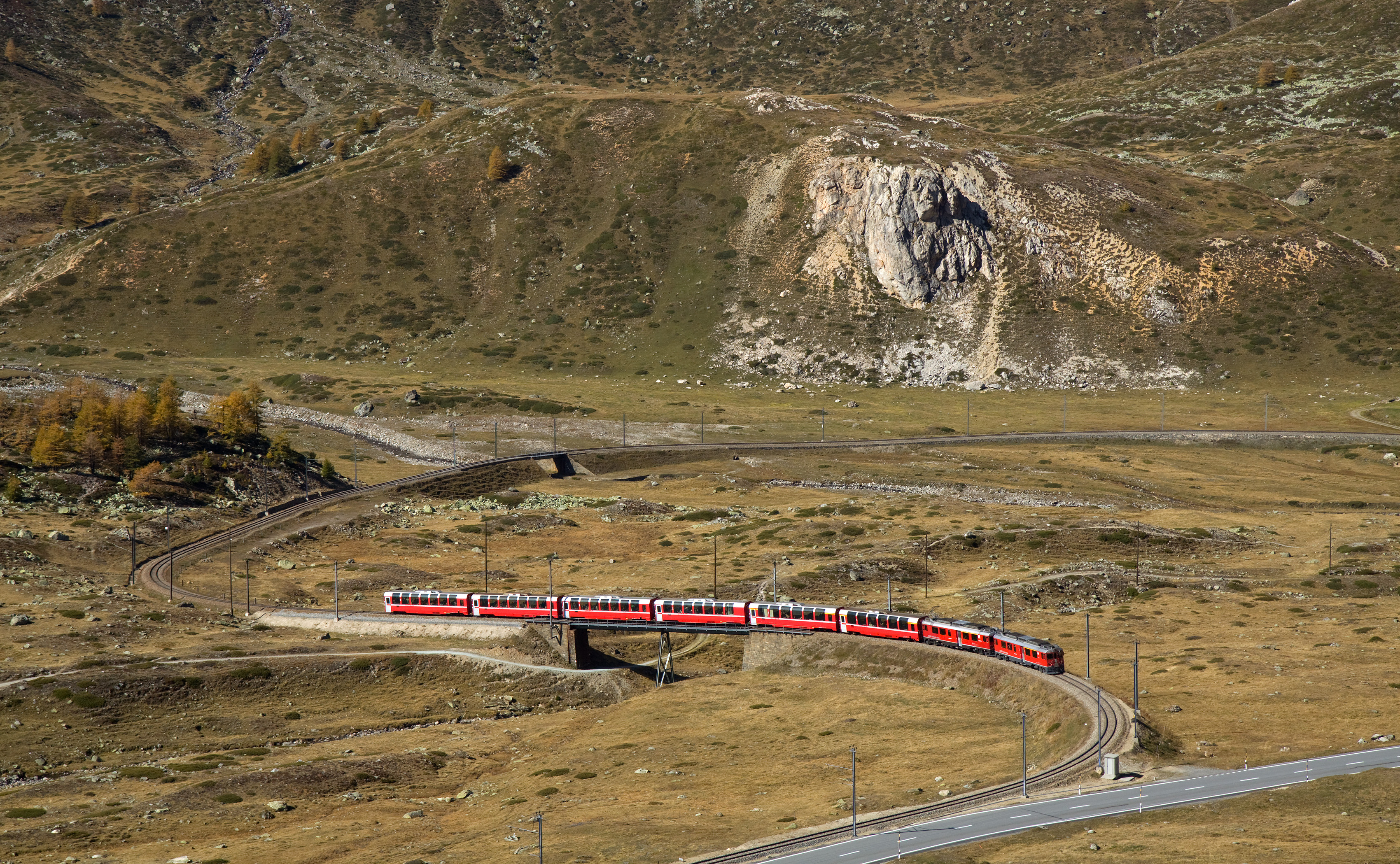
The Bernina Express reservation is smaller money. Independent rail-guide sources, cross-checked against a general search of current listings, converge on CHF 32 in low season and CHF 36 in high season (roughly 2 May to 25 October 2026) for the panoramic car, for the Chur to Tirano run or the shorter St Moritz to Tirano segment alike. A handful of other current listings instead give CHF 40 to 44 for the full Chur to Tirano route, distinct from a lower fee on the St Moritz to Tirano leg. The two pictures do not fully agree, so treat CHF 32 to 44 as the real range and check the fare shown at the point of booking on RhB's own shop rather than any figure printed here.
The booking window is where the real disagreement sits, and it is worth naming rather than smoothing over. Rhaetian Railway's own FAQ says reservations open with the entire upcoming timetable period, activated in the online shop "between mid and late October" each year and running through to the timetable's end the following December, which in practice means a summer date can be booked many months out, as soon as that year's timetable goes live. Separately, RhB's service page for phone and counter bookings states reservations can be made "at the earliest three months before the date of travel." A third account, from an independent rail-timetable source, describes online booking opening roughly six months ahead of summer travel, sometimes more, sometimes less. All three can be technically true for different booking channels at once. The one thing all three agree on: book earlier rather than closer to the date, and check the online shop the moment your dates are fixed rather than assuming a three-month rule of thumb covers every channel.
The route itself is shorter and, unusually, does not need a rack-and-pinion cog system despite being the highest point on it: Chur to Tirano takes about 4 hours over 144 km, crossing the Bernina Pass at Ospizio Bernina, 2,253 metres above sea level, on what several sources describe as the highest adhesion railway crossing in Europe. The Albula and Bernina lines together have carried UNESCO World Heritage status since July 2008, one of the reasons the route draws the crowds that make its seats worth reserving at all.
Seven days, Zermatt to Lugano
This plan runs the trip as a line rather than a loop: fly into Zurich or Geneva, end in Lugano or Milan, and skip the day a return to the starting city would cost. Both reserved trains sit early enough in the week that a missed or delayed reservation still leaves room to adjust the rest of the plan.
| Night | Base | What shapes the day |
|---|---|---|
| 1 | Zurich or Lucerne | Arrival, no reservation needed |
| 2 | Zermatt | Train in via Täsch, Matterhorn views, no cars |
| 3 | Zermatt | Glacier Express day, arrive St Moritz by evening |
| 4 | St Moritz | Engadin lakes, the town itself |
| 5 | St Moritz | Bernina Express day, arrive Tirano then on to Lugano |
| 6 | Lugano | Lake Lugano, day trip into Ticino |
| 7 | Lugano or Milan | Onward travel |
Days 1, Zurich or Lucerne. Arrival day, no train reservation to think about. Lucerne is the gentler first stop if jet lag is a factor: a compact old town, the lake, and an easy rail connection on to Zermatt the next morning.
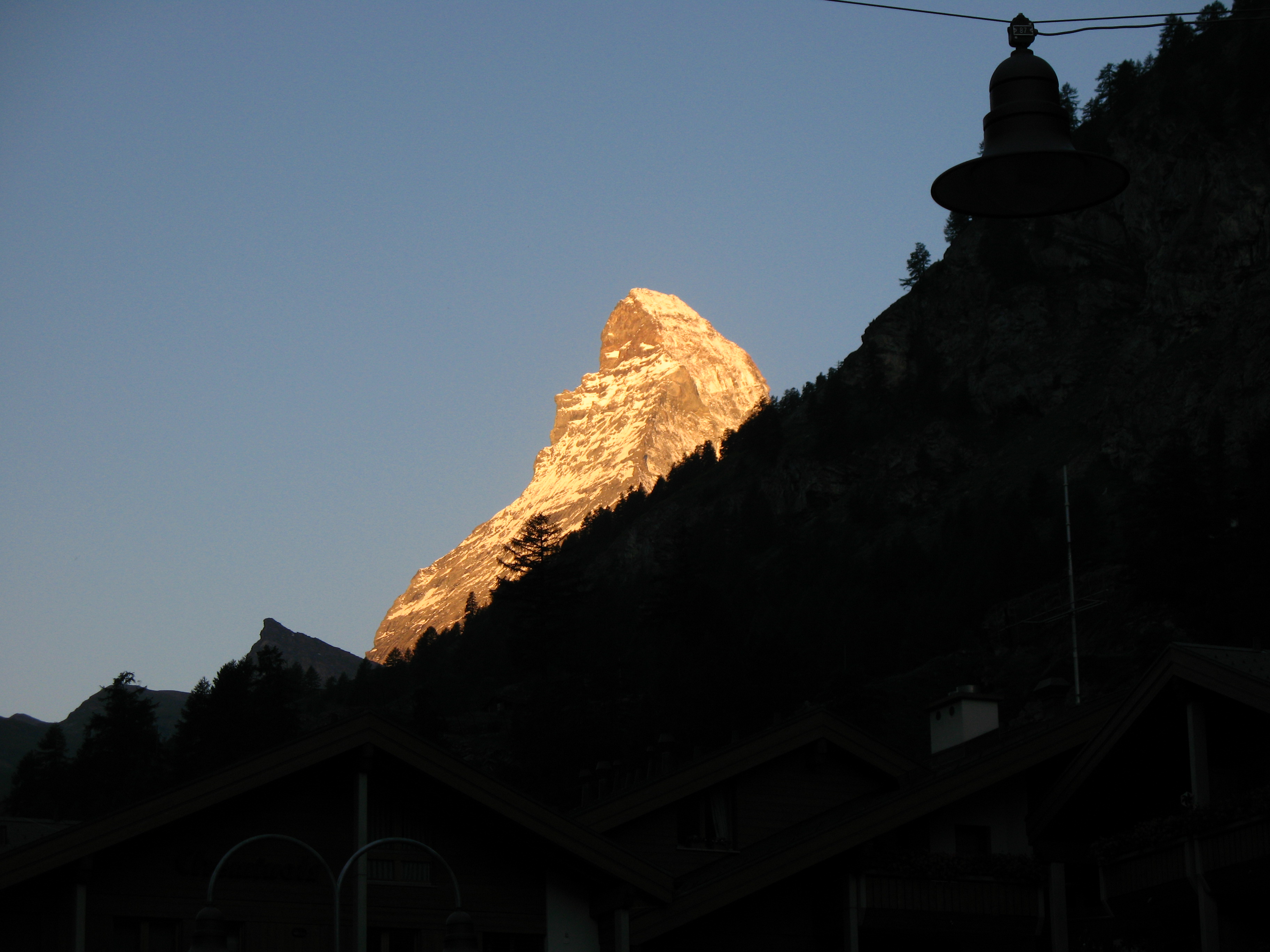
Day 2, into Zermatt. Zermatt has been car-free for decades. Drivers park at the Matterhorn Terminal in Täsch, a 2,100-space covered garage with EV charging, and finish the last stretch by shuttle train, a journey the terminal's own operator lists at 12 minutes, running every 20 minutes from roughly 06:00 to 22:00 and hourly through the night on weekends. Arriving by direct train from Visp or Brig needs no such transfer at all. Either way, the payoff is a village with unbroken Matterhorn views and no traffic.

Day 3, the Glacier Express. The full run to St Moritz takes most of a day, around 7.5 to 8 hours depending on the source, crossing the Oberalp Pass and the Rhine gorge en route. Bring the reservation confirmation and boarding pass together; the panoramic car has an assigned seat number, not a general admission.
Day 4, St Moritz. A rest day from train travel by design, since the two long reserved rides sit either side of it. St Moritz itself, the Engadin lakes, and the town's funicular and lake paths fill a slower day well.
Day 5, the Bernina Express. About 4 hours down to Tirano, over the Bernina Pass and past the UNESCO-listed Brusio spiral viaduct, then a connecting bus or train on into Lugano for the night. This is the shorter of the two reserved rides, and also the one with the murkier booking window described above, so it should be the first reservation locked once dates are set, not the second.
Day 6, Lugano and Ticino. A change of climate as much as scenery: Lugano sits at lake level in Italian-speaking Switzerland, warmer and slower-paced than the Engadin above it. A day with no reservation to manage, after two that were built entirely around one.
Day 7, onward. Lugano to Milan is a short, frequent, unreserved train connection for a European flight home, or a flight out of Zurich if the loop is closed by rail instead.
What actually needs booking ahead, and what does not
Short list, and it is almost entirely the two scenic trains. The Glacier Express reservation, the moment the 93-day window opens for your date, since standard-class seats have been reported thinning fast in peak summer weeks. The Bernina Express reservation, as early as the online shop allows for your date, given the disagreement above about exactly when that is. Hotel beds in Zermatt and St Moritz during July and August, both being small mountain resorts with a resort's worth of demand and a village's worth of rooms.
Everything else, including every other SBB train, PostBus and lake boat on this route, needs no reservation at all under the Swiss Travel Pass. That is the pass working exactly as advertised. It is also, unhelpfully, the reason the two trains where it does not work like that catch people out.
Key Takeaways
| Point | Details |
|---|---|
| The pass covers the ride, not the seat | Both Glacier Express and Bernina Express require a paid reservation on top of any ticket or pass, confirmed on each operator's own site. |
| Glacier Express reservations open exactly 93 days ahead | 1st and 2nd class only; Excellence Class can be booked across the whole timetable period. |
| The Glacier Express reservation costs CHF 54, or CHF 540 for Excellence | Flat fee, per the operator's own 2026 price page, regardless of distance or season. |
| Summer seats go fast | Travellers booking July and August dates have reported standard-class seats largely gone within the first day the 93-day window opens. |
| A missed window still has two fallbacks | Unclaimed group allocations release 27 days out; cancellations reappear closer to travel. |
| Bernina Express reservations run CHF 32 to 44 | Sources disagree on the exact figure and on whether it varies by route segment; confirm the fare shown at booking. |
| Bernina's booking window is genuinely unclear | RhB's own pages describe both a whole-timetable-period opening in October and a three-month rule for phone bookings. Book as soon as either channel allows. |
| The Swiss Travel Pass 2026 runs CHF 254 to CHF 787 | 3 to 15 consecutive days, 2nd or 1st class, per the official price list, and covers unlimited SBB trains, PostBuses, lake boats and 500-plus museums. |
Where this plan breaks
A reservation missed at the 93-day mark is not always recoverable. The fallbacks exist, released group seats at 27 days and cancellations closer in, but neither is guaranteed, and neither is a plan for a fixed departure date. If the 93-day window has passed for a summer trip and no fallback seat appears, the honest options are a different departure day, a different class, or skipping the reserved car and taking the equivalent regional connection instead, which exists on most of this route without the panoramic car or the reservation.
The Bernina Express's unclear booking window cuts both ways. If RhB's whole-timetable-period opening is the operative one, booking too late in that long window still risks losing the best times of day even though seats broadly exist longer than the Glacier Express's hard 93-day cutoff. Do not read "book any time before three months out" as safe; check the shop for your specific date as soon as it is fixed.
Two long reserved train days back to back with no slack between them is fragile. This plan puts a rest day at St Moritz between the two, on purpose. A tighter version that runs the Glacier Express and Bernina Express on consecutive days removes the only buffer in the week for a delayed connection, a missed Täsch shuttle, or simple fatigue.
Peak summer crowds arrive on both operators' timetables, not by surprise. Ospizio Bernina and the Oberalp Pass are name-brand alpine crossings, and July and August bring the crowds their price and difficulty of booking would predict. A shoulder-season trip in late May or September avoids the worst of the reservation scramble, at the cost of shorter daylight and cooler high passes.
Every figure in this piece has a publish date attached to it. Reservation fees, pass prices and booking windows are all subject to the annual Swiss timetable change each December. A trip planned more than a year out should re-check every number here against the operators' current pages rather than trusting a snapshot from September 2026.
How Planytera handles a trip like this
Planytera is an AI trip planner built by a solo developer, available on iOS, Android and the web. You describe the trip and it produces a day-by-day itinerary, ready in moments. On a route built around two trains with hard external deadlines, three things matter more than the sightseeing list.
Pacing around a fixed date, not a rough season. A reservation window that opens on one specific calendar day, 93 days before travel, is the kind of hard constraint that should decide the shape of the week before anything else gets booked. Setting the plan once around that date, with the days before and after built to absorb a delay rather than compound one, beats discovering the conflict after the fact.
Re-pacing without rebuilding. If a reservation only comes through for a different day than planned, or a Täsch shuttle or connecting train runs late, adjusting the days around it and letting the rest of the week resync is the difference between a plan that survives contact with a real timetable and one that has to be redone from day one.
Offline access on the train. Long alpine stretches on both the Glacier Express and Bernina Express routes lose signal in tunnels and remote valleys. Saved trips keep the full itinerary, maps and notes available with no connection, which matters most exactly when you are eight hours into the Glacier Express with no way to look anything up.
Frequently asked questions
Does the Swiss Travel Pass cover the Glacier Express and Bernina Express?
It covers the journey, not the seat. Both operators confirm that a seat reservation is compulsory for every passenger on both trains, purchased separately from any ticket or pass, with no exception below age six. Glacier Express's own booking page describes the reservation as "obligatory for all passengers and costs an additional charge," and RhB's FAQ states the same for both trains it names.
How much does the Glacier Express seat reservation cost?
CHF 54 per seat in 1st or 2nd class, or CHF 540 per seat in Excellence Class, a flat fee regardless of season or how much of the route you travel, per the operator's own 2026 price page.
When can I book a Glacier Express seat for a summer trip?
Exactly 93 days before your travel date for 1st and 2nd class, per the Glacier Express FAQ. Excellence Class can be reserved across the whole timetable period without that restriction. For a mid-July departure, that means the booking window opens in mid-April, and travellers booking peak summer dates have reported standard-class seats thinning within the first day it opens.
How much does the Bernina Express seat reservation cost?
Current listings disagree: most independent rail guides converge on CHF 32 in low season and CHF 36 in high season (roughly 2 May to 25 October 2026) for the panoramic car, while some others cite CHF 40 to 44 for the full Chur to Tirano route specifically. Confirm the figure shown at the point of booking on RhB's own shop rather than relying on any single published number.
How far ahead can I book Bernina Express seats?
This is genuinely unsettled across RhB's own materials. One official page describes reservations opening with the entire upcoming timetable period, activated in the online shop between mid and late October each year. A separate RhB service page quotes "at the earliest three months before the date of travel" for phone and counter bookings. Book as soon as your dates are fixed and check the shop directly rather than relying on either figure alone.
Is seven days enough for Zermatt, St Moritz and Lugano?
It is enough for this specific line, with one full rest day between the two long reserved trains. It is not enough to also add Lucerne, Interlaken or Geneva as more than a single arrival-day stop. Each of those is a further base with its own transfers, and the two scenic trains already claim two full days of the seven on their own.
Useful sources and further reading
- Glacier Express: prices and seat reservations, the operator's own reservation fees for 1st, 2nd and Excellence Class.
- Glacier Express FAQ, for the 93-day booking window, journey duration and pass-plus-reservation rule.
- RhB: seat reservations on the Bernina Line, for the phone and counter booking channel and its three-month guidance.
- RhB FAQ, for the whole-timetable-period booking window and the confirmation that Swiss Travel Pass holders still need a separate reservation.
- RhB: Bernina Express, for the Chur to Tirano journey time and the UNESCO World Heritage status of the Albula and Bernina lines.
- Seat61: Bernina Express, independent rail-timetable reference, for the CHF 32/36 seasonal reservation fee and route distance.
- Seat61: Glacier Express, for the 93-day window and route length cross-check.
- Swiss Travel System: official prices, for the 2026 Swiss Travel Pass consecutive-day prices in 1st and 2nd class.
- Matterhorn Gotthard Bahn: Matterhorn Terminal Täsch parking, for the Täsch to Zermatt shuttle frequency and journey time.
- SBB: punctuality, for the official three-minute definition of an on-time train.
Recommended
More from the Planytera blog.