Blog15 min read
7 Day Iceland Ring Road Itinerary: What It Really Takes
A seven day Ring Road plan with real driving times, the two things Icelandic car insurance never covers, and what the 2026 road tax changed.
By Dom
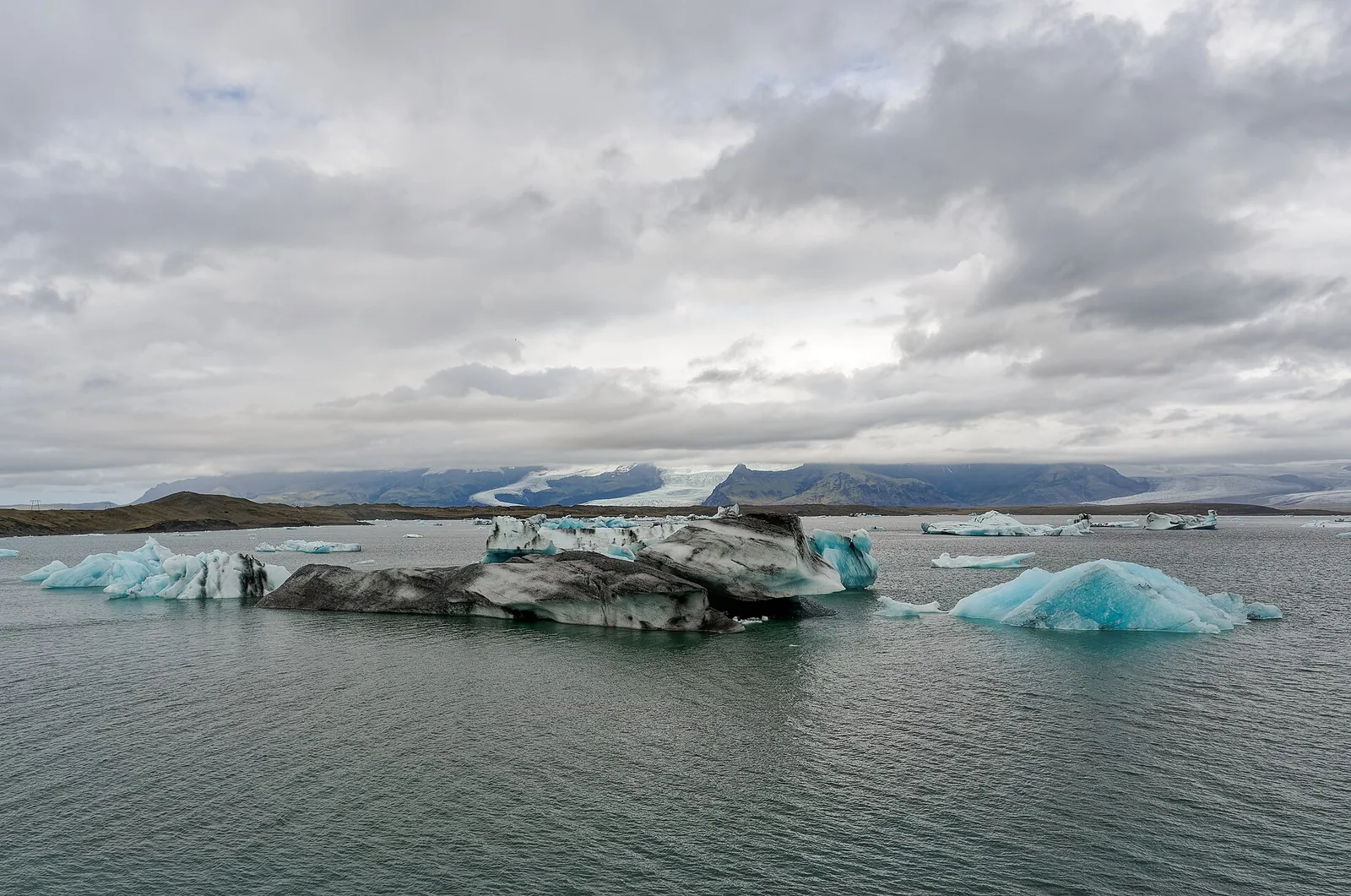

Seven days is the bare minimum for Iceland's Ring Road, and most plans for it are written as though it were comfortable. It is not. Route 1 runs roughly 1,320 km around the island, takes about 16 hours to drive without stopping, and a seven day loop means several days with three to six hours behind the wheel before you have looked at anything.
That is worth knowing up front, because the alternative plan, the south coast and back, is genuinely better for a lot of people and almost nobody suggests it.
What follows is the full loop done honestly, plus the two insurance exclusions that turn a good trip into an expensive one, and a tax change from January 2026 that most guides have not caught up with.
The car, and the two things insurance will never cover
Start with the good news, because it contradicts most of what is written about Iceland.
You do not need a 4x4 for the Ring Road. Route 1 has been fully paved since 2019, when the last gravel stretch in Berufjörður in the east was sealed. In summer a standard two wheel drive car will do the entire loop. Renting a 4x4 for a July or August Ring Road trip is money spent on reassurance rather than capability. Winter is a different question.
The catch is what a 2WD car cannot legally do, and where your coverage quietly stops.
F-roads are the mountain roads, and they are not for your rental. The F prefix marks Iceland's unpaved highland routes, minimally maintained, frequently including rivers with no bridge. Essentially every Icelandic rental contract prohibits 2WD vehicles on them and voids your insurance if you go anyway. They are seasonal too, generally closed from mid-September until June or July, with the exact opening dates set route by route each year by the road authority rather than on a fixed calendar.
No insurance covers river crossings. None of them. SafeTravel, the official safety service run by Iceland's volunteer search and rescue association, states it plainly: no insurance covers any damage to a vehicle while crossing a river. Not the standard collision waiver, not the premium tier, not the add-on with the reassuring name. If you drive into water and the engine drowns, that is your bill.
Wind will take your car door off, and that is your bill too. Iceland's gusts routinely catch an opened door and fold it back against the hinges. Nearly every rental policy treats this as negligence rather than an insurable event, and repairs commonly run 122,000 to 365,000 ISK. Hold the door with both hands, park facing into the wind, and get out on the sheltered side.
The two add-ons that are worth buying are Gravel Protection, which covers chips and cracks from stones thrown up by other cars, and Sand and Ash Protection, which covers wind-driven grit stripping the paint. That second one matters specifically on the exposed south coast near Vík. Neither is included in a standard waiver, and they are usually sold separately.
What changed on 1 January 2026
This is the part most Ring Road guides have not updated.
Iceland replaced most of its fuel-based road taxes with a distance-based road usage charge, the kílómetragjald. It applies to every vehicle regardless of what it burns, including petrol, diesel, hybrid and electric rental cars. For passenger cars and jeeps up to 3.5 tonnes the rate is 6.95 ISK per kilometre.
For a full Ring Road loop of about 1,320 km, plus the detours and doubling back that any real trip involves, budget on the order of 10,000 to 12,000 ISK in road tax alone. Rental companies are inside the same system and some add an administrative fee on top, so read what your contract says about it rather than assuming it is bundled.
The tradeoff is that fuel duty came down at the same time. Pump prices fell by roughly 90 to 95 ISK per litre in January 2026, and mid-2026 trackers put petrol somewhere around 210 to 222 ISK per litre. Net, driving costs about what it used to. It is just itemised differently, and the second line is the one that surprises people at drop-off.
One practical note on fuel: rural stations are unattended and pump-only. A chip card usually wants a four digit PIN. Contactless increasingly works, but bring a physical PIN-enabled card rather than relying on a phone wallet alone.
The route, and whether seven days is enough
Go south coast first. Operators and independent trip reports converge on this for a seven day loop, and the reasoning is sound: it front-loads the most photographed and most crowded stops while you are still fresh, and it leaves the quieter east and north for the middle of the week when you have found your rhythm.
Ignore the clockwise and anticlockwise labels. Travel writing uses them inconsistently enough that they cause more confusion than they resolve. South coast first means Reykjavík, then Vík, then east, then north, then back down the west side.
The natural overnight stops, in order:
| Night | Base | Roughly |
|---|---|---|
| 1 | Reykjavík or nearby | arrival day |
| 2 | Vík area | 180 to 190 km from Reykjavík, more with the Golden Circle |
| 3 | Höfn | the glacier lagoon day |
| 4 | Egilsstaðir | the long eastern fjords drive |
| 5 | Mývatn | geothermal country |
| 6 | Akureyri | Iceland's second city |
| 7 | Borgarnes or Reykjavík | the run back down the west |
The honest verdict on seven days: it completes the loop, and it does so with very little slack. There is no room for a long hike, a weather day, or an afternoon doing nothing. If any of those matter to you, either take nine or ten days, or do the south coast to Jökulsárlón and back and see half the island properly.
Snæfellsnes can be added to a seven day trip, because it works as a single focused day from Reykjavík at roughly two and a half to three hours each way. The Westfjords cannot. They need three days minimum on their own, and five to seven to do properly.
The seven days
Day 1: Land, and do not drive far
Most flights land at Keflavík. The Blue Lagoon is 23 km away, about a twenty to thirty minute drive, which is exactly why so many people go straight there before even reaching Reykjavík. It works, provided you booked it, and you have to have booked it.
Otherwise get to Reykjavík, sleep, and start properly tomorrow. Arriving and immediately driving four hours is how the week goes wrong on day one.
Day 2: Golden Circle and the south coast to Vík
The Golden Circle's three stops, Þingvellir, Geysir and Gullfoss, are all free to enter and need no reservation if you are driving yourself. Þingvellir charges for parking: 1,000 ISK for a car up to five seats, and one payment covers all the car parks in the park for the day.
Then east along Route 1. Seljalandsfoss is the waterfall you can walk behind, which is worth it and will get you wet. Skógafoss is twenty minutes further and has a staircase up the side. Sleep near Vík.
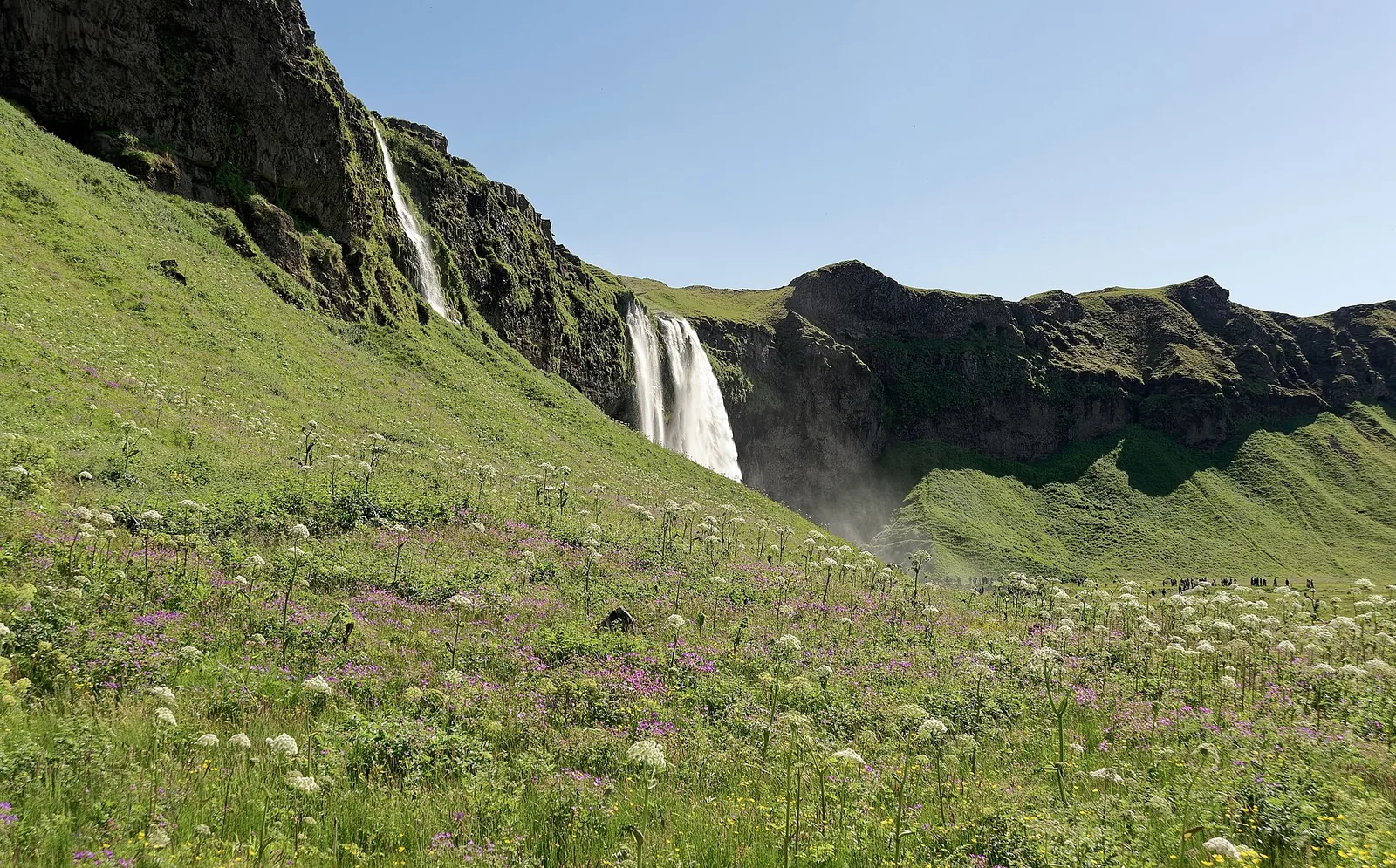

Day 3: Reynisfjara, then the glacier lagoon
Reynisfjara, the black sand beach with the basalt columns, gets its own section below because it has killed people and the guidance matters.
Then the long run east to Jökulsárlón, where icebergs calve off Breiðamerkurjökull and drift toward the sea. Across the road is Diamond Beach, where the ice that made it out gets pushed back onto black sand. It is the single most photographed spot in Iceland and it earns it. Sleep at Höfn.
Day 4: The eastern fjords
The least visited stretch of Route 1 and the one people remember. The road threads fjord after fjord with reindeer on the slopes and almost no traffic. Distances here vary a lot depending on the exact routing, and this is the day where an unhurried lunch stop costs you an arrival in the dark. Sleep at Egilsstaðir.
Day 5: Dettifoss and Mývatn
Dettifoss is the most powerful waterfall in Europe by volume and it looks it. Then Mývatn, a lake in an active geothermal field: bubbling mud at Námaskarð, the pseudo-craters at Skútustaðir, and the Mývatn Nature Baths, which are the north's answer to the Blue Lagoon and much quieter.
Day 6: Goðafoss and Akureyri
Goðafoss sits directly on Route 1 and takes twenty minutes. Akureyri is the north's capital, has actual restaurants, and is the departure point for whale watching if you skipped Húsavík.
Day 7: The long drive back
The west side of the loop is the plainest scenery of the week and the longest single drive. Break it at Borgarnes. If you have an evening flight rather than a morning one, this is the day Snæfellsnes can be bolted on, at the cost of any margin you had left.
Reynisfjara deserves its own warning
Sneaker waves at Reynisfjara arrive with, in SafeTravel's own words, zero warning, surging far higher up the beach than the waves before them, in conditions that look calm. People have died here. In August 2025 a nine year old girl was swept out of the Hálsanefshellir sea cave while visiting with her family.
Iceland runs a colour-coded alert system on the beach:
| Alert | What it means |
|---|---|
| Yellow | Stay alert and cautious |
| Orange | Stay at least 25 metres back from the sea |
| Red | Beach closed, viewing only from the designated viewpoint |
After the 2025 death the authorities lowered the threshold for triggering a red closure so it activates more readily. The rules that matter are simple: never turn your back on the sea, stay well back even when it looks flat, keep children within arm's reach, and watch for falling rock near the basalt columns.

What to book before you fly
Most of Iceland needs no reservation. These are the exceptions.
Blue Lagoon sells timed entry only and walk-ins are rarely accepted, so booking is effectively mandatory. Adult packages start from about 11,990 ISK for Comfort, 14,990 for Premium and 18,490 for Signature, with dynamic pricing that climbs on busy dates. In July and August popular slots go three to six weeks ahead. One caveat worth carrying: the Reykjanes eruption series that began in December 2023 has closed the lagoon repeatedly, most recently around the July to August 2025 eruption. It reopens each time, but check its status close to your date rather than assuming.
Sky Lagoon, on the edge of Reykjavík, is the easier alternative. Saman from about 13,990 ISK, Sér from 16,990. Summer sunset slots fill first.
Ice caves and glacier walks are guided only. Walking on glacier ice unguided is how people fall into crevasses. Natural blue ice caves form seasonally and are generally a November to March proposition. The exception is the Katla ice cave near Vík, which stays accessible year round because a layer of volcanic ash insulates it, and which runs roughly 22,900 to 41,500 ISK depending on operator and inclusions. Straightforward glacier walks on Sólheimajökull start from around US$138.
Whale watching runs from Húsavík in the north and Reykjavík in the south. Gentle Giants from Húsavík is 12,490 ISK for an adult, seasonal from April to November. Elding from Reykjavík is 14,500 ISK and runs year round. Peak season departures go one to two weeks ahead.
Silfra, the fissure between the tectonic plates at Þingvellir, is snorkel-by-guided-tour only for the general public. DIVE.IS starts from about 19,990 ISK if you drive yourself to the site. Certified divers can dive it independently, but only with a park permit, a drysuit certification, a buddy, and an 18 metre depth limit.
What a week actually costs
Iceland's reputation is accurate. This is not a country where careful research finds you a cheap version.
| What | Realistic cost |
|---|---|
| Casual restaurant main | 3,000 to 4,500 ISK |
| Lunch special, roughly 11:30 to 14:00 | 2,000 to 3,500 ISK |
| Draft beer, 500ml | 1,200 to 1,800 ISK |
| Coffee at a café | 600 to 900 ISK |
| Petrol | around 210 to 222 ISK per litre |
| Road usage tax | 6.95 ISK per km |
| Lodging tax | 800 ISK per night, 400 at campsites |
The single biggest lever is eating lunch rather than dinner. The same kitchens run midday specials well below their evening prices. The second is self-catering from Bónus, the cheapest national chain, or Krónan, which costs a little more and stocks a much better fresh and vegan range.
Two things that are genuinely free: the tap water is untreated glacial and spring water and among the best in the world, so buying bottled is pure waste. And tipping is not expected anywhere, because staff are paid properly. If service was excellent, ten percent is generous rather than standard.
Two things that catch people out: alcohol above 2.25 percent is sold only through Vínbúðin, the state monopoly, which has about fifty stores and limited hours, so a Sunday evening bottle of wine may simply not be available. And the hot tap water is geothermal, so it smells of sulphur. That is the water supply working correctly, not the plumbing failing.
Key Takeaways
| Point | Details |
|---|---|
| Seven days is the minimum, not the comfortable option | The loop is about 1,320 km and 16 hours of pure driving. Expect several three to six hour days with no slack for weather. |
| You do not need a 4x4 in summer | Route 1 has been fully paved since 2019. A 2WD car does the whole loop. |
| No insurance covers river crossings | Stated plainly by SafeTravel. It applies to every coverage tier, including the premium ones. |
| Wind door damage is on you | Treated as negligence by nearly every policy. Repairs run 122,000 to 365,000 ISK. |
| The road tax is new | Since 1 January 2026, 6.95 ISK per kilometre on all vehicles including rentals. Fuel duty fell to compensate. |
| Reynisfjara has a colour-coded alert system | Orange means stay 25 metres back. Red means the beach is closed. People have died here. |
| Book four things | Blue Lagoon, Sky Lagoon, any glacier or ice cave tour, and whale watching. Everything else can be decided that morning. |
| Eat lunch, not dinner | The same restaurants run midday specials well below evening prices. |
Where this plan breaks
It assumes the weather cooperates, and Icelandic weather does not negotiate. Sun, rain, wind and mountain snow inside one day is normal in August. A seven day loop has no spare day, so a bad-weather day does not get rescheduled, it gets deleted.
Day 4 is longer than it looks on a map. The eastern fjords add distance that a straight-line estimate misses entirely, and it is the day most likely to end with an arrival after dark and a closed kitchen.
The daylight is shrinking faster than people expect. On 1 August you get roughly 17 to 18 hours. By 31 August you are down to about 14 hours 38 minutes. A plan built on early August light does not work at the end of the month.
It is not the midnight sun trip people imagine. Reykjavík sits at about 64.1°N, south of the Arctic Circle, so the sun does set. Only Grímsey island gets true midnight sun, and the effect has largely tapered off by early August anyway. You get long bright evenings, which is lovely, and not the same thing.
Two drivers change this trip more than any other decision. Seven days of three to six hour drives on one licence is genuinely tiring. If there are two of you who can drive, add the second to the rental.
How Planytera handles a trip like this
Planytera is an AI trip planner built by a solo developer, available on iOS, Android and the web. You describe the trip and it produces a day-by-day itinerary, ready in moments. For a Ring Road week, three things matter more than usual.
Offline access. Mobile coverage on the eastern fjords and around the highland edges is patchy, and a plan you cannot open is not a plan. Saved trips keep the full itinerary, maps and notes available with no signal.
Re-pacing without rebuilding. Iceland is the trip where weather forces changes. Swap a stop, re-pace a day that turned out too long, and the rest of the week stays in sync rather than needing to be redone from the start.
Per-person cost estimates. In a country this expensive, seeing what a plan costs per person before you commit to it is worth more than it is in most places, particularly when a group is splitting a rental car and fuel. Split costs then tracks who owes who without anyone keeping a spreadsheet, and without moving anyone's money.
Frequently asked questions
Do I need a 4x4 for the Ring Road?
Not in summer. Route 1 has been fully paved since 2019 and a standard 2WD car will complete the entire loop. A 4x4 is only genuinely required for F-roads, the unpaved highland routes, which your rental contract almost certainly forbids a 2WD car from using anyway. Winter is a different question, where a 4x4 with winter tyres is sensible.
Is seven days enough for the Ring Road?
It is the bare minimum. You will complete the loop, with several days of three to six hours driving and almost no slack for weather, hikes or rest. If you want a comfortable trip, take nine or ten days, or drive the south coast to the glacier lagoon and back instead and see half the island properly.
What does Icelandic car insurance not cover?
Two exclusions catch people out. No policy at any tier covers damage from crossing a river, which Iceland's official safety service states plainly. And wind damage to an opened car door is treated as negligence rather than an insurable event by nearly every rental company, with repairs commonly running 122,000 to 365,000 ISK.
How much does it cost to drive around Iceland in 2026?
Two separate line items now. Petrol runs roughly 210 to 222 ISK per litre, and since 1 January 2026 there is also a distance-based road usage tax of 6.95 ISK per kilometre that applies to rental cars. Fuel duty was cut when the road tax launched, so the total is broadly similar to before, but the second charge appears separately and surprises people.
Is Reynisfjara safe to visit?
It is open and it is visited by thousands of people daily, but it has a genuine hazard that has killed visitors. Sneaker waves arrive without warning in apparently calm conditions. Check the colour-coded alert before you walk down, stay at least 25 metres back on orange, never turn your back on the water, and keep children close.
Can I see the midnight sun in August?
Not really. Reykjavík is at about 64.1°N, south of the Arctic Circle, so the sun sets even at midsummer, and the bright-night effect has largely faded by early August. Only Grímsey island sees true midnight sun. What you do get in early August is 17 to 18 hours of daylight, dropping to about 14 and a half by the end of the month.
Useful sources and further reading
- SafeTravel, run by Iceland's search and rescue association, for hazard alerts and trip registration.
- Umferdin, the national road authority's live road conditions and closures. The old road.is address redirects here.
- Icelandic Transport Authority driving guide for speed limits and road rules.
- Kílómetragjald, the government page for the distance-based road tax introduced in 2026.
- Blue Lagoon and Sky Lagoon official booking.
- Þingvellir National Park for parking fees and Silfra permits.
- Icelandic Met Office for weather and volcanic activity.
Recommended
More from the Planytera blog.