Blog21 min read
5 Day Tokyo Itinerary: A First-Timer's Day-by-Day Plan
A five day Tokyo itinerary built around what sells out, what to book first, and how to group the city so you are not crossing it twice.
By Dom

Most five day Tokyo plans fail for the same two reasons. They treat the city as a single destination rather than a dozen loosely connected ones, so you spend a third of the trip on trains. And they leave ticketing until arrival, by which point the handful of things genuinely worth planning around are gone.
This plan is built the other way round. It starts with what sells out, groups each day into one part of the city, and leaves the evenings loose, because evenings are when Tokyo is best and when a rigid schedule hurts most.
Book these four things before anything else
Tokyo is unusually forgiving for a city of its size. You can turn up without a plan and eat extremely well. But four things run on advance ticketing, and each one has caught out enough visitors that they are worth handling before you touch a hotel search.
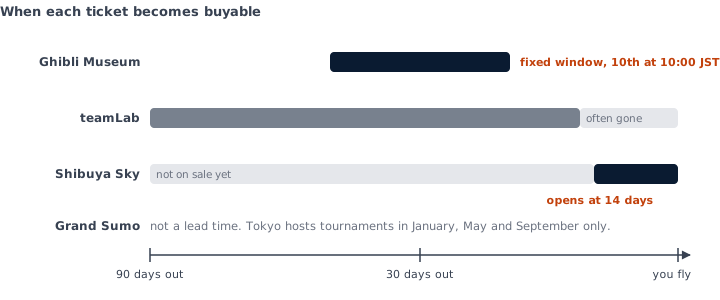
The Ghibli Museum in Mitaka is the hardest ticket in the city and the one people discover too late. Admission is by advance reservation only. Nothing is sold at the door, and no amount of turning up early changes that. Tickets go on sale at 10:00 Japan time on the 10th of each month, for visits during the following month. If you want to go in October, you are buying on 10 September. Miss the window and your only option is the next month.
Shibuya Sky sells its good slots first. The rooftop deck above Shibuya Scramble Square opens booking roughly two weeks ahead, at midnight Japan time. Online tickets run about ¥2,700 for an adult before 3pm and about ¥3,400 from 3pm onwards, which is a few hundred yen cheaper than buying at the counter. The sunset slots are the ones worth having and they go weeks in advance. Same-day tickets exist and frequently sell out.
Both teamLab venues are online only. teamLab Borderless moved to Azabudai Hills in February 2024, so any guide still sending you to Odaiba is out of date. Adult admission floats roughly between ¥3,600 and ¥5,600 depending on the date, which catches people who budgeted from an old blog post. teamLab Planets in Toyosu is a separate venue with a separate ticket, and its run has been extended more than once, currently reported to continue to the end of 2027. Do not assume you can walk up to either.
Sumo only happens when it happens. Grand Sumo tournaments run on a fixed calendar and Tokyo hosts three of the six each year, in January, May and September. If your dates fall inside one, buy early. If they do not, no amount of searching will produce a tournament, and the stable morning-practice visits sold by tour operators are a different and much quieter experience.
Getting in from the airport, and the card you need on day one
Which airport you land at changes your first afternoon more than most people expect. Haneda sits inside the city. Narita is roughly 60 kilometres east of it.
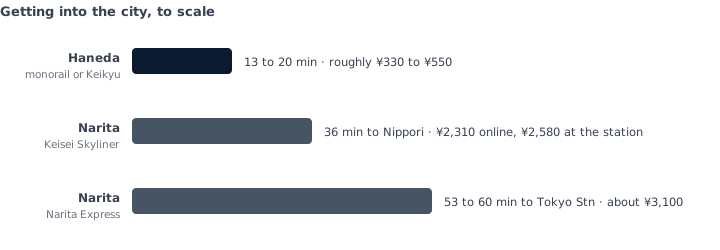
From Haneda, both the Tokyo Monorail and the Keikyu line reach central Tokyo in about 13 to 20 minutes, and the fare is small either way, somewhere in the region of ¥330 to ¥550 depending on which station you are heading for. There is no meaningful decision to make here. Take whichever platform is closer to your terminal exit.
From Narita, there are two reasonable trains and one bad habit. The Keisei Skyliner reaches Nippori in 36 minutes and Ueno in 41, at ¥2,580 bought at the station or ¥2,310 booked online in advance. The JR Narita Express runs to Tokyo Station in roughly 53 to 60 minutes at somewhere around ¥3,100, and is the better choice if your hotel is on the Tokyo Station side. The bad habit is defaulting to a taxi, which on that route is a genuinely expensive mistake.
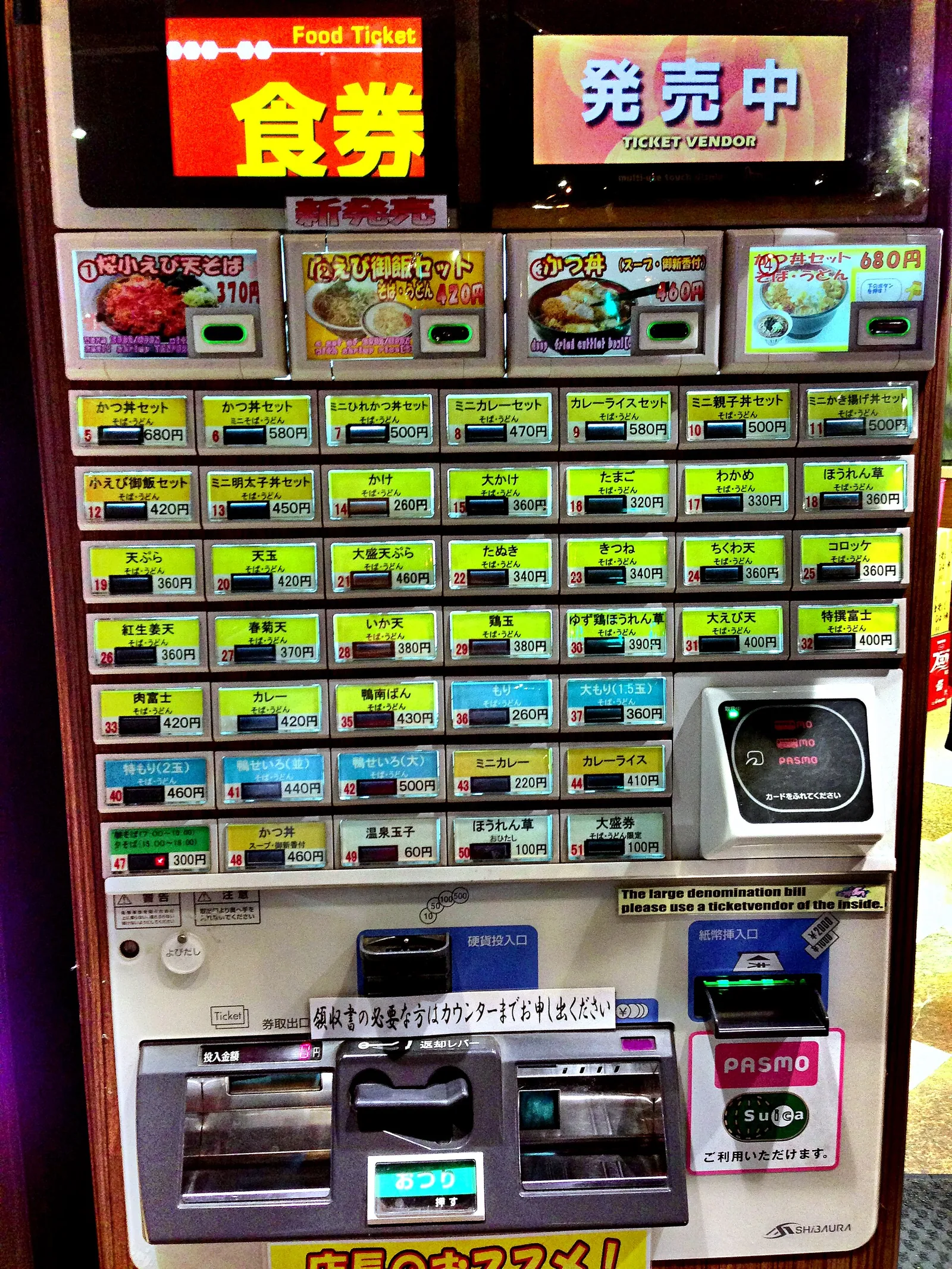
Then get an IC card, and get it at the airport rather than later. Suica and PASMO are prepaid transit cards that also work in convenience stores, vending machines and many restaurants. After the chip shortage that suspended sales of unpersonalised cards, physical Suica and PASMO returned in March 2025 and supply through 2026 has been steady at the major hubs. Welcome Suica, the tourist version, is sold at JR East Travel Service Centers and dedicated machines at both airports.
One detail that trips up Android users. iPhone has supported Japan's FeliCa standard for years, so you can add Suica straight to Apple Wallet and top it up with a foreign credit card. Most Android handsets sold outside Japan and a few Asian markets cannot do this, because the hardware lacks FeliCa. If you are on an Android phone bought in North America or Europe, plan on a physical card.
Skip the nationwide Japan Rail Pass for a Tokyo-only trip. A seven day ordinary pass costs ¥50,000, going up to ¥53,000 on 1 October 2026, and it is priced around long-distance shinkansen travel. It does not cover the Tokyo Metro, the Toei subway or any of the private lines, which between them are most of what you will actually ride.
The one pass worth a moment's thought is the Tokyo Subway Ticket, sold to foreign passport holders at the airports and major stations, covering all thirteen Metro and Toei lines. The 24 hour version runs around ¥1,000. Since a central subway ride costs roughly ¥180 to ¥240, it breaks even at about five rides in a single day. On the itinerary below, only the first and last days come close to that. Most people are better off paying as they go.
Where to stay, and why it decides the trip
Tokyo has no single centre, so "central" is close to meaningless as a filter. What matters is how many train lines your nearest station carries, because that determines whether every day starts with a transfer.
| Area | Best for | The tradeoff |
|---|---|---|
| Shinjuku | Transport above all else. Enormous line coverage, direct routes almost everywhere, strong late-night food. | The station is genuinely disorienting and you will get lost inside it more than once. |
| Shibuya | Nightlife, shopping, and being in the part of the city most visitors picture. | Crowded at all hours, and prices reflect the postcode. |
| Tokyo Station / Marunouchi | Shinkansen access and calm, well-run hotels. | Corporate and quiet after dark. Dinner means going elsewhere. |
| Ueno | Value, museums on the doorstep, direct Skyliner arrival from Narita. | Less polished. Fewer late options than the west side. |
| Asakusa | Atmosphere and older streets, generally the cheapest of the five. | Sits on the eastern edge, so most days start with a longer ride. |
For a first five day trip, Shinjuku or Shibuya will cost you more and save you time every single day. Ueno is the value pick and a defensible one. Asakusa is lovely and slightly out of the way, which matters more on a short trip than a long one.
The five day itinerary
Each day stays inside one part of the city. That single rule does more for a Tokyo trip than any list of attractions, because the alternative is three unplanned transfers a day and a week that feels like commuting.
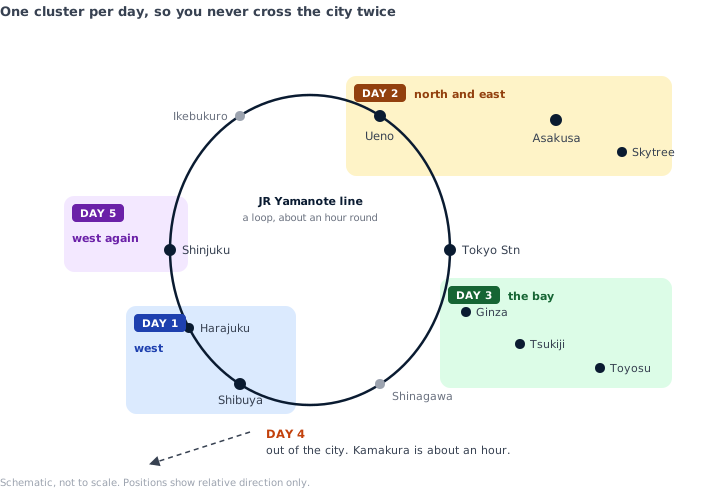
Day 1: The west side, ending above Shibuya
Morning. Start at Meiji Jingu, and start early. The shrine sits inside 70 hectares of forest planted a century ago, and before about 9am you get the gravel approach close to empty. It is a ten minute walk from Harajuku Station.
Late morning. Walk out the southern exit into Harajuku. Takeshita Street is a narrow, loud, teenage retail corridor that most adults enjoy for about fifteen minutes, which is the correct amount of time. Then cross to Omotesando, a wide tree-lined avenue of flagship architecture that feels like a different city entirely. The contrast between those two streets, four minutes apart, explains Tokyo better than any museum.
Afternoon. Work down through Cat Street to Shibuya. Eat lunch somewhere on the way rather than in Shibuya proper, where the queues are worst between noon and 2pm.
Evening. Your pre-booked Shibuya Sky slot. Aim for roughly 40 minutes before sunset so you get the city in daylight, the sunset, and the lit skyline in one visit. Then go down and cross the Scramble at street level, which is the version that actually feels like something.
Day 2: The old east side, from Senso-ji to Ueno
Early morning. Senso-ji in Asakusa before 8am. The temple grounds are open and effectively empty, the Nakamise shopping street shutters are still down, and the difference between 7:30am and 11am here is the difference between a temple and a queue.
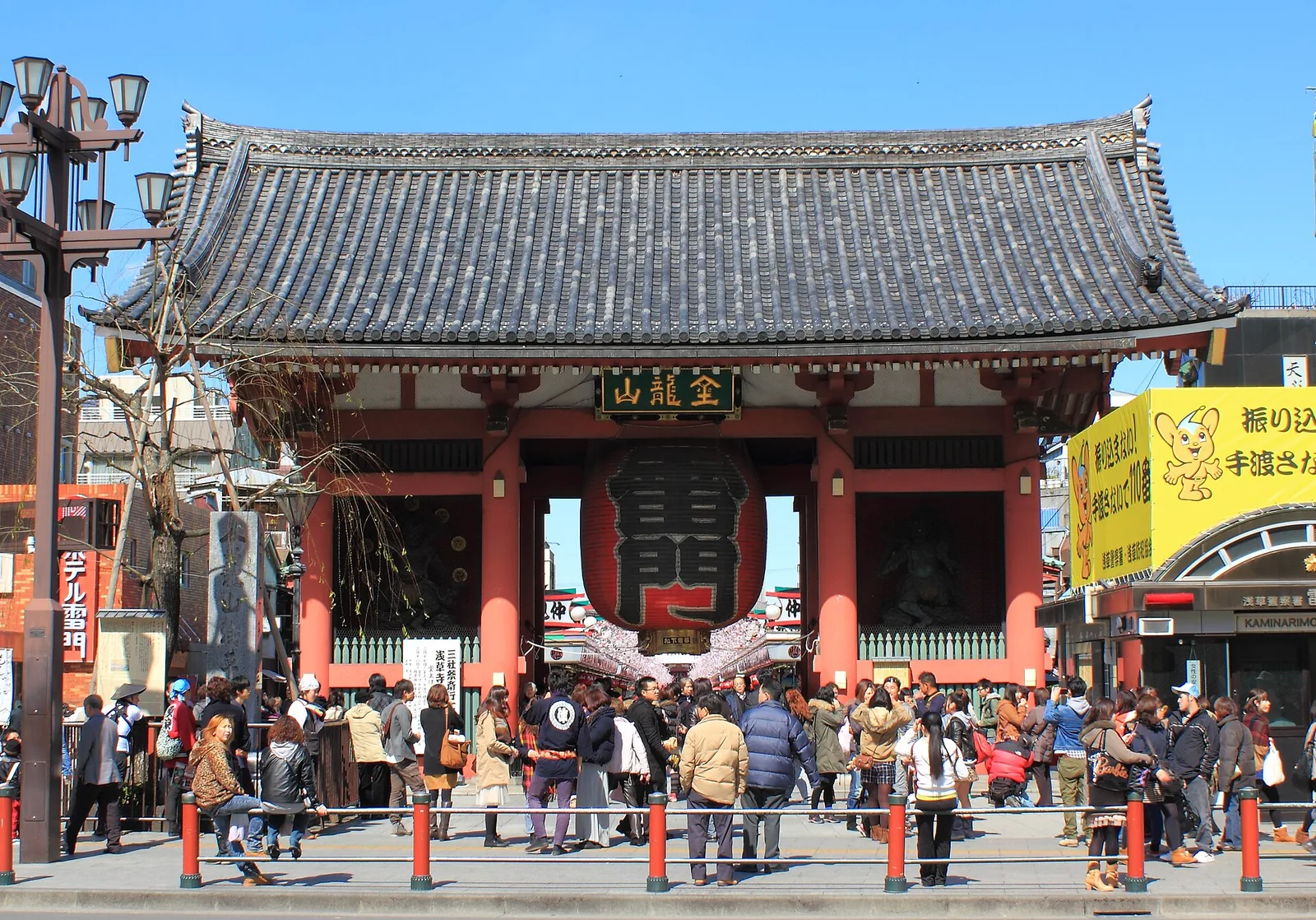

Mid-morning. Nakamise opens and the street fills up. Walk it once, buy something warm, then head towards the Sumida river. Tokyo Skytree is twenty minutes on foot across the bridge. Whether you go up is a real question: it is taller than Shibuya Sky and further from anything, and if you have already booked Shibuya Sky you can comfortably skip it.
Afternoon. Ueno Park. The Tokyo National Museum holds the largest collection of Japanese art anywhere and deserves two hours minimum. If museums are not your thing, Ameyoko market runs under the train tracks nearby and is one of the last genuinely chaotic shopping streets in central Tokyo.
Evening. Stay east and eat around Ueno or Asakusa, where dinner costs noticeably less than it does in Shibuya.
Day 3: The bay, from a fish market to a light installation
Early morning. Tsukiji outer market. The point of confusion here is worth clearing up: the wholesale auction moved to Toyosu in 2018, but the outer market, the part visitors actually want, stayed at Tsukiji and is still trading. It is a dense grid of stalls selling tamagoyaki, grilled scallops, knives and dried fish. Go hungry and go before 9am.
Late morning. Walk fifteen minutes to Hama-rikyu Gardens, a former shogunal duck-hunting ground now enclosed by the Shiodome towers. There is a teahouse on an island in the tidal pond. It is the best hour of quiet on this entire itinerary.
Afternoon. Ginza, which is either an hour or a whole afternoon depending on your relationship with department stores. The basement food halls, the depachika, are worth going into even if you buy nothing.
Evening. Your pre-booked teamLab slot. Planets in Toyosu keeps you on this side of the bay and involves walking barefoot through shallow water, so wear something you can roll up. Borderless at Azabudai Hills is the larger and more disorienting of the two, and sits west, closer to Roppongi.
Day 4: One day out of the city
Five days is exactly enough to spend one of them elsewhere, and the change of scale is worth more than a fifth Tokyo neighbourhood.
| Destination | Rough travel time each way | Verdict |
|---|---|---|
| Kamakura | About an hour from central Tokyo | The best fit for a five day trip. Coastal, walkable, a giant bronze Buddha and a dozen temples in a valley. Short enough that a slow start does not ruin it. |
| Nikko | About two hours by limited express from Asakusa, plus a bus or a twenty minute walk at the far end | Spectacular shrine complex in cedar forest and mountains. A genuinely full day. Only worth it if you leave early. |
| Hakone | About 80 minutes by Romancecar from Shinjuku | Hot springs, a lake and, on a clear day, Mount Fuji. The loop is a sequence of small transfers, charming when it works and tiring when you already are. The Hakone Freepass, ¥7,100 for two days, covers the whole circuit and is one of the few tourist passes that reliably pays for itself. |
| Kawaguchiko | Two hours or more, traffic dependent | The Fuji photograph you have seen. Also the highest chance of arriving to find the mountain completely hidden by cloud. Treat it as a gamble. |
If you want one recommendation: Kamakura. It is the shortest ride, it does not require an early alarm to work, and it gives you coastline, which Tokyo does not.
Day 5: Shinjuku, and whatever you have been putting off
Morning. Shinjuku Gyoen. Once an imperial garden, now 58 hectares of landscaped park split into Japanese, English and French sections, with an entry fee that keeps it calmer than the free parks.
Afternoon. The Tokyo Metropolitan Government Building has two observation decks at 202 metres and they are free. The view is not as good as Shibuya Sky, but it costs nothing and it is the correct answer for anyone who thought Shibuya Sky was overpriced. Alternatively, spend the afternoon on whatever your group has been quietly wanting: Akihabara for electronics and anime, Nakameguro for the canal and small shops, Shimokitazawa for secondhand clothing and record stores.
Evening. Omoide Yokocho and Golden Gai, two clusters of tiny bars and grill counters near Shinjuku Station that survived the city's redevelopment. Many Golden Gai bars seat six people and charge a cover. Some welcome visitors warmly and some do not, and reading the door notice matters. Omoide Yokocho is easier for a first visit.
Eating in Tokyo when someone in your group can't eat everything
Tokyo is one of the best eating cities on earth and one of the harder ones to navigate with a restriction. The difficulty is not unwillingness. It is that the assumptions are different.
Vegetarian and vegan. The trap is dashi, the stock underlying an enormous amount of Japanese cooking, which is usually made with katsuobushi, dried skipjack tuna. Miso soup, most noodle broths, many simmered vegetable dishes and a lot of nominally plant-based food contain it. Shojin ryori, the Buddhist temple cuisine tradition, is genuinely vegan and worth seeking out. Tokyo also has a real vegan restaurant scene now, concentrated around Shibuya, Harajuku and Asakusa.
Gluten. Standard Japanese soy sauce contains wheat. So does most ponzu, most teriyaki, a lot of dashi blends and the majority of ramen and udon. Soba is buckwheat by name but is very often cut with wheat flour. Even ni-hachi soba, the well-regarded style, is twenty percent wheat by definition, and cheaper soba contains more. Ask, and assume nothing from the menu description alone.
.jpg)
Halal and kosher. Halal-certified restaurants exist in Tokyo and cluster near the larger mosques, but they are not evenly distributed and you should plan around them rather than hope. Kosher options are considerably thinner.
Severe allergies. Japan's mandatory allergen labelling applies to prepackaged food, not to restaurant dishes, so a menu carries no legal obligation to disclose anything. Carry a written card in Japanese that states the allergen precisely. Staff take these seriously. A verbal request in English across a language gap is where the failures happen.
Small things that change a Tokyo day
A handful of local conventions have more effect on how a day feels than any attraction on the list above.
Send your luggage ahead instead of dragging it. Takkyubin, the door-to-door courier service, will move a suitcase between hotels or out to the airport, usually arriving the next day. Almost every hotel front desk will arrange it and the forms are bilingual. Tokyo stations are enormous and the lift is rarely where you need it, so the day you change hotels is the day this pays for itself. Pack an overnight bag, because your case will not arrive the same afternoon. Sending a bag to the airport rather than to another hotel needs more notice, usually two days before your flight, so raise it at the front desk early rather than the night before.
Coin lockers are everywhere and they fill up. Every major station has banks of them, most now operated by IC card rather than coins, in three or four sizes. On weekends at Tokyo, Shinjuku and Shibuya the large ones are gone by mid-morning. If you are travelling on your arrival or departure day with a case, find a locker first and plan second.
There are almost no public bins. This surprises people more than anything else on this list, given how clean the city is. Bins were stripped out of stations and streets after the 1995 sarin attack on the subway and were never fully reinstated. The convention now is that you carry your rubbish until you find a convenience store or a station platform bin. Carry a small plastic bag. Eating while walking is also mildly frowned upon, which is related.
Sort out data before you land. An eSIM is the least effort for most modern phones and can be activated before you leave home. A pocket wifi rental is better value for a group sharing one connection, but it is another device to charge and another thing to return. Free station and convenience store wifi exists and is inconsistent enough that you should not build a plan on it.
Tattoos still close some doors. Many onsen, public baths, gyms and pools refuse entry to visible tattoos, a rule tied historically to organised crime rather than to tourists. Attitudes have loosened and some places now allow cover patches for small designs, but the policy is set venue by venue. If a hot spring is part of your day trip, check that specific venue's rule in advance rather than finding out at the counter.
Stand on the left of the escalator. Tokyo stands left and walks right. Osaka does the opposite. It is a small thing that marks you out immediately, and in Shinjuku at rush hour it genuinely matters.
What five days in Tokyo actually costs
Tokyo has a reputation for expense that has not been accurate for a while. The yen has been weak against most major currencies for several years, and the everyday cost of eating here is lower than in London, New York or Sydney. Accommodation is where the money goes.
| Line item | Per person, five days | Notes |
|---|---|---|
| Local transport | ¥4,000 to ¥6,000 | Pay as you go on an IC card. Individual rides are mostly ¥180 to ¥320. |
| Airport transfer, return | ¥700 to ¥6,200 | The wide range is entirely Haneda versus Narita. |
| Ticketed attractions | ¥8,000 to ¥14,000 | Assumes Shibuya Sky, one teamLab venue and one museum. |
| Food | ¥15,000 to ¥40,000 | Lunch sets run ¥900 to ¥1,500. The top of this range assumes several considered dinners. |
| Day trip | ¥2,000 to ¥6,000 | Kamakura at the low end, Hakone or Kawaguchiko at the high end. |
One change worth knowing if you are shopping. From 1 November 2026, Japan's tax-free shopping system changes. Instead of the consumption tax being removed at the register, you pay the full price including tax and claim the refund at the airport when you leave. The old rules about sealed packaging, the ¥500,000 daily limit and the split between consumables and general goods are being scrapped. Purchases must leave Japan within 90 days for the refund to stand. If your trip starts after that date, budget for paying the tax up front and getting it back later.
Key Takeaways
| Point | Details |
|---|---|
| Book four things, ignore the rest | Ghibli Museum, Shibuya Sky, teamLab and sumo if your dates align. Everything else in Tokyo can be decided the morning of. |
| Ghibli sets your calendar | Tickets release at 10:00 JST on the 10th for the following month, and there are no door sales. It is the only fixed window, so build around it. |
| One district per day | The single highest-value rule. Crossing the city twice in a day costs roughly an hour and most of your energy. |
| Skip the Japan Rail Pass | It does not cover the Tokyo Metro and is priced for shinkansen travel. An IC card charged as you go is cheaper for a Tokyo-only trip. |
| Android users need a physical card | Mobile Suica needs FeliCa hardware, which most non-Japanese Android phones lack. iPhone handles it in Apple Wallet. |
| Dashi and soy sauce are the dietary traps | Fish stock hides in vegetarian dishes and wheat hides in soy sauce. Neither is obvious from a menu. |
| Tax-free changes on 1 November 2026 | Refunds move to the airport on departure. You pay the 10% up front from that date. |
| Spend one day outside Tokyo | Kamakura is about an hour away and gives you coastline and temples without an early start. |
Where this itinerary tends to break
Any plan this specific is making assumptions, and it is more useful to name them than to pretend they hold.
It assumes you are not jet lagged, and you will be. Most long-haul arrivals into Tokyo land in the afternoon, and a 7:30am start at Senso-ji on your second morning is optimistic. If you are coming from North America or Europe, treat day one as half a day and push everything back.
It underestimates August. Tokyo in high summer is hot and humid in a way that changes what a walking day means, and typhoon season overlaps. An itinerary that reads as comfortable in October is punishing in mid-August. The fix is not fewer stops, it is more indoor time between them, and a genuine break in the middle of the afternoon.
Day 4 is the one people quietly drop. By the fourth morning, a plan that involves a train out of the city competes with the pull of doing nothing much. That is often the right call, and the day trip is deliberately placed here so that dropping it costs you the least.
Group size breaks it fastest. Four people can absorb a change of plan. Six cannot, and a group of six will spend twenty minutes on every decision this itinerary assumes takes two. If you are travelling in a larger group, cut one stop from each day before you start.
It cannot know what you will love. Some people will spend three hours in the Tokyo National Museum and resent the schedule. Others will walk through it in forty minutes. The plan is a starting shape, not a promise, and the useful skill on day two is deleting things without guilt.
How Planytera handles a trip like this
Planytera is an AI trip planner built by a solo developer, available on iOS, Android and the web. You describe the trip you want and it produces a day-by-day itinerary, ready in moments. For a trip shaped like the one above, four things it does are directly relevant.
Dietary constraints go in once, not per restaurant. Set vegan, gluten-free, kosher, halal or a specific allergy at the trip level and the itinerary is built around it. Given how thoroughly dashi and wheat-based soy sauce are embedded in Japanese cooking, this is the section of a Tokyo trip that most rewards being handled up front.
Offline access matters more in Tokyo than most cities. Save a trip and the full itinerary, maps and notes stay available without a signal, which covers the underground stretches where a plan you can't open is a plan you don't have.
The plan is meant to be changed. Swap a venue you don't like, re-pace a day that is too full, and the rest of the trip stays in sync. That is the exact operation the fifth point above describes, and it is the difference between a plan and a list.
Group trips settle up without anyone keeping a spreadsheet. Share a read-only link or invite people to vote on activities, and use split costs to track who owes who. It tallies the maths and never touches anyone's money, and there are no cards to link.
It also checks visa and e-visa requirements once you set your passport, which is worth having in place before Japan's JESTA authorisation arrives later this decade.
Frequently asked questions
Is five days enough for Tokyo?
Five days covers the major districts at a sane pace with a day left over to leave the city. It is not enough to see Tokyo comprehensively, and no number of days is. Treat it as one good pass at four or five neighbourhoods rather than an attempt at the whole thing.
Do I need a Japan Rail Pass for a Tokyo-only trip?
No. The nationwide pass is priced around long-distance shinkansen travel and does not cover the Tokyo Metro, which is the network you will spend most of your time on. Pay as you go with an IC card.
Do I need a visa to visit Japan?
Passport holders from more than 70 countries, including the United States, Canada, the United Kingdom, Australia and most of the EU, can enter visa-free for short stays. Japan has passed legislation for an electronic travel authorisation called JESTA, but it is not in force and is planned for the 2028 fiscal year, so it does not affect trips taken now. Check your own passport against the Ministry of Foreign Affairs list rather than relying on a blog, including this one.
How far ahead do Tokyo attraction tickets sell out?
It depends on the venue, and getting this wrong is the most common planning mistake visitors make. Ghibli Museum tickets release at 10:00 JST on the 10th of the month for the following month and are the hardest to get. Shibuya Sky opens about two weeks ahead and its sunset slots go quickly. Both teamLab venues are online-only with no door sales.
Can I use a credit card everywhere in Tokyo?
Mostly, but not everywhere. Chains, department stores, hotels and most restaurants take cards. Small ramen counters, older izakaya, shrine offices, some market stalls and a number of ticket machines are still cash. Carry some yen and keep your IC card topped up.
Is Tokyo manageable for someone with limited mobility?
Better than most cities this size, with a real caveat. Tokyo Metro has completed at least one step-free route from street level to platform at every one of its stations, and staff will bring a portable ramp to bridge the platform gap on request. The catch sits in the phrase "at least one": it often means exactly one lift, sometimes at the far end of a long platform and feeding a single exit that is not the one you want. Transfers inside the largest interchanges cover real distance. Check step-free routing for the specific stations on your plan rather than trusting the network average.
Useful sources and further reading
- Ghibli Museum, Mitaka: official ticketing, the only authoritative source on the monthly release window.
- Keisei Electric Railway: Skyliner fares from Narita.
- JR East: Narita Express timetables and fares.
- teamLab Borderless, Azabudai Hills and teamLab Planets, Toyosu, official ticket pages.
- GO TOKYO: Shibuya Sky, the Tokyo Metropolitan Government's own tourism guide.
- Japan Ministry of Foreign Affairs: visa exemptions by nationality.
- Visit Japan Web, for immigration and customs QR codes before arrival.
- National Tax Agency, on the consumption tax refund rules changing in November 2026.
- Japan Meteorological Agency, for typhoon tracking during summer travel.
Recommended
More from the Planytera blog.