Blog15 min read
2 Week Interrail Itinerary: Flexible Pass, Fixed Seats
A two week Madrid to Rome plan on an Interrail Global Pass, priced with the compulsory French, Spanish and Italian seat reservations the pass leaves out.
By Dom
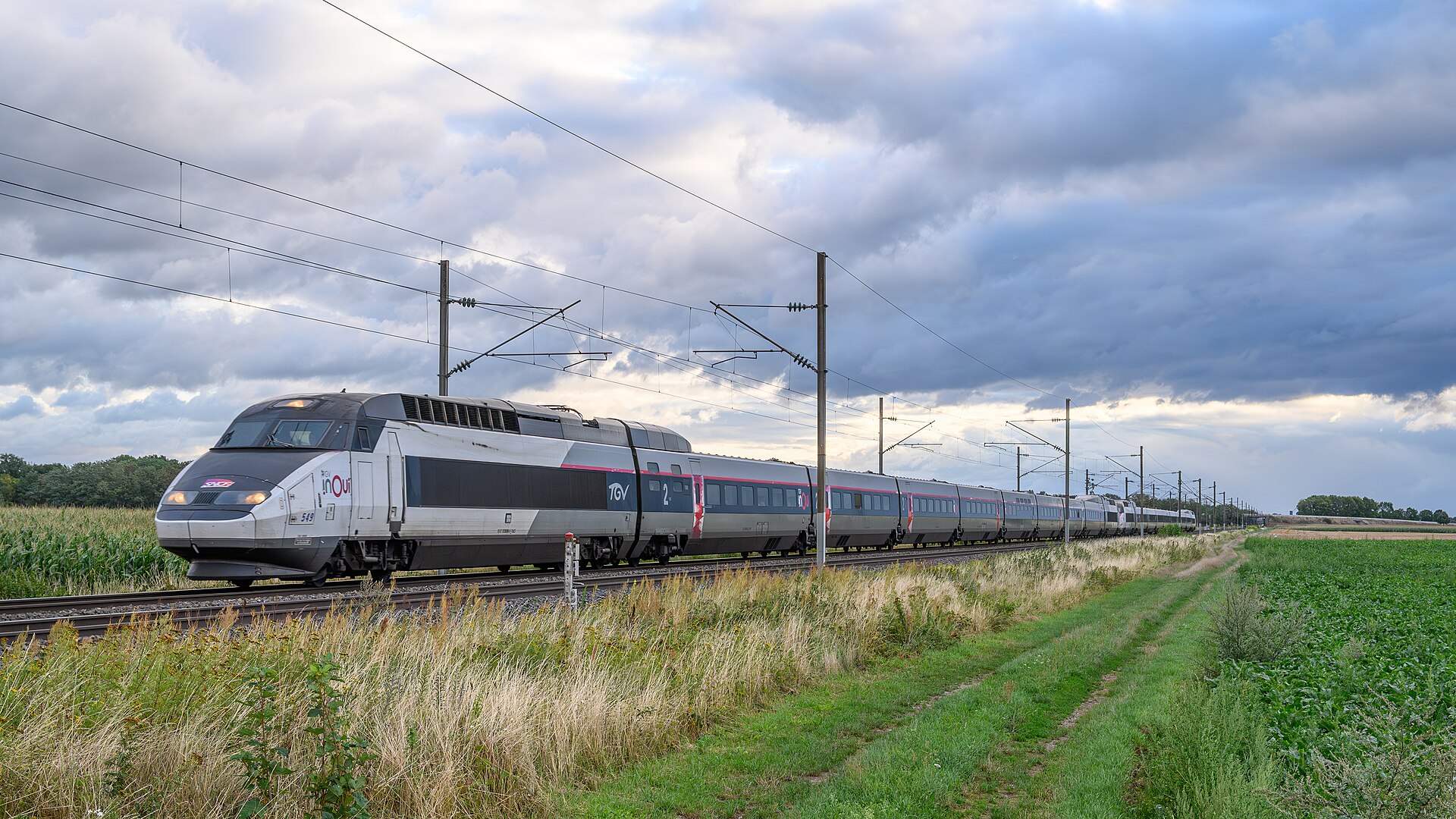

The Interrail pitch is freedom: one pass, hop on any train, change your mind in a hostel kitchen at midnight and be in a different country by lunch. On the slow trains of Europe that is roughly true. On the trains a two week, three country trip actually depends on, it is not.
Interrail's own Global Pass page says it plainly: "Most high-speed and night trains require a reservation at an additional cost." The operators sell that reservation separately from the pass, the pass does not include it, and on the French, Spanish and Italian high speed trains it is compulsory. No reservation, no seat, and no boarding.
So the pass is flexible and the seats are not. This post is a fourteen day route through Madrid, Barcelona, Paris, Milan, Florence and Rome, priced with the reservations included, and honest about which of the "they sell out" warnings hold up and which are folklore. Several do not hold up as neatly as the forums suggest. Where sources disagree, the post says so and gives the range.
What the pass actually costs, and what it leaves out
The Interrail Global Pass comes in two forms: a flexi pass, which gives you a set number of travel days inside a longer window, and a continuous pass. For a route like this one, the flexi version is the natural fit, because most of the fourteen days are spent standing in a city rather than sitting on a train.
Seat61's 2026 price table lists adult 2nd class flexi prices (ages 28 to 59) and, in its youth column, the under 28 prices:
| Pass | Adult | Youth (under 28) |
|---|---|---|
| 4 days in 1 month | €283 | €212 |
| 5 days in 1 month | €318 | €239 |
| 7 days in 1 month | €381 | €286 |
| 10 days in 2 months | €447 | €335 |
| 15 days in 2 months | €553 | €415 |
Treat these as list prices and check the Interrail shop for your date, since sales change them. Passes can be bought up to 11 months ahead.
A flexi travel day runs midnight to midnight. If you board an overnight train before midnight and do not change trains after midnight, it uses only the departure day. This route has no night trains, so each long hop costs one day and nothing else.
The reservation is a second, separate bill. Seat61 puts the rule bluntly: "Passholders must pay to make a reservation for every inter-city journey" in France, Italy and Spain, and suggests reckoning on €10 or more for each ride. Interrail's own fee tables give the specifics below, with their standing caveat that the figures are "indicative only and are subject to change."
The reservation bill, country by country
| Train | Reservation | Fee for pass holders (per person, per train) |
|---|---|---|
| Spain: AVE, 2nd class Elige | Compulsory | €10 |
| Spain: AVE, 1st class Elige Confort | Compulsory | €13 |
| Spain: Avant | Compulsory | €4 |
| Spain: Alvia, 2nd class | Compulsory | €6.50 |
| France: TGV inOui, domestic | Compulsory | €10 to €20 |
| France: Paris to Barcelona TGV | Compulsory | €35 (Seat61 lists €34) |
| France: Paris to Milan or Turin TGV | Compulsory | €31 in 2nd class |
| Italy: Frecciarossa, domestic | Compulsory | €13 |
| Italy: Frecciargento | Compulsory | €13 |
| Germany: ICE (for comparison) | Optional | €5.50 |
| Switzerland: IC (for comparison) | Optional | €4.40 |
The comparison rows are the point. In Germany, Austria and Switzerland a reservation on the fast trains is optional, so the pass behaves the way the marketing says it does. In France, Spain and Italy the same pass needs a paid seat on every high speed ride.
Interrail also adds a €2 booking fee per passenger per train when you book international trains through its own reservation system, per its international fee page. Booking through the operator or an agent can price differently, so compare before paying.
Which trains the pass does not cover at all
A reservation is only useful on a train the pass is valid on, and three of the most popular budget options are not:
- Italo, Italy's private high speed operator, is not covered, per Seat61. Boarding an Italo with only a pass means buying a full fare. Both Italo and Trenitalia serve the Milan, Florence and Rome corridor, so check the operator name when you book, not just the departure time.
- Ouigo and Avlo in Spain are not covered, per Seat61.
- Ouigo in France is where the sources split. Seat61's reservations guide lists a pass fee for Ouigo (€10 until a quota runs out, then €20 on high speed trains), and Interrail's own France page says reservations are required on Ouigo trains, while other guides say passes do not work on it. The sources do not agree, so plan around inOui and treat Ouigo as unverified until the booking screen shows your pass.
Do the seats really sell out? What the sources say
The angle of this post comes from a common warning: pass holders get a thin slice of each train, and it vanishes days ahead. The accurate version is more specific, and it differs by country.
France: the price steps up before the seats run out. Seat61 reports a limited number of €10 pass holder places on each TGV. When those sell out, the fee rises to €20 until the train is full. The same guide also says pass holders "can always get seats" on French domestic TGVs unless the train is physically full. Those two statements fit together: the quota is on the cheap fee, not on the seat. So on a domestic TGV, leaving booking late costs you up to €10 more per ride, and the real risk only arrives on a train that is full for everyone.
Eurostar: this is where the quota is real. For Eurostar, Seat61 says pass holder places are "limited by quota which can sell out even if the train isn't full, so book ahead." This route does not use Eurostar, but if you add London or Brussels to the start or end, this is the leg to lock first.
Spain: no published quota, and the evidence is anecdotal. Interrail's AVE page does not mention a limited number of pass holder seats. It says "we recommend you make your reservations as far in advance as possible." Seat61, writing about Renfe's own Spain Pass rather than Interrail, cites one report of pass reservations being unavailable while normal tickets still sold, and says that suggests a quota but cannot prove it. Seat61 also notes that Spanish trains often leave full. Treat Spain as "probably fine on a Tuesday, risky on a Friday evening or a holiday weekend."
Italy: compulsory, with no published pass quota. Interrail's Italy page says reservations are required on Frecciarossa and Frecciargento and gives no limit on pass holder seats. Seat61 describes the Italian reservation as one you need "for each high-speed or Intercity train you take in Italy."
Where this leaves the angle: the claim that the reservation is compulsory is confirmed by the operators and Interrail. The claim that the seats sell out days ahead is confirmed for Eurostar, partly confirmed for France as a price step, and not confirmed for Spain or Italy. A shorter version that is accurate beats a dramatic version that is not.
The 14 day route
Five long train days, one per hop, all inside a single 5 days in 1 month pass. That is the whole reason this route works on a flexi pass: nine of the fourteen days involve no pass travel day at all, because they are spent in a city on foot, on metro tickets or on regional trains.
| Night | Base | The day |
|---|---|---|
| 1 to 3 | Madrid | Arrive by air, three days in the city |
| 4 to 6 | Barcelona | AVE from Madrid (travel day 1) |
| 7 to 9 | Paris | Direct TGV from Barcelona (travel day 2) |
| 10 | Milan | Paris to Milan (travel day 3) |
| 11 to 12 | Florence | Milan to Florence (travel day 4) |
| 13 to 14 | Rome | Florence to Rome (travel day 5), fly home |
Madrid, nights 1 to 3. Nothing to reserve until you leave. The first reservation to make is the AVE to Barcelona, and Interrail's AVE page says reservations can be made on the day of travel or up to 3 months ahead at a local ticket desk. Online availability and booking windows are not formally published by Interrail for pass holders, so check as soon as you buy the pass.
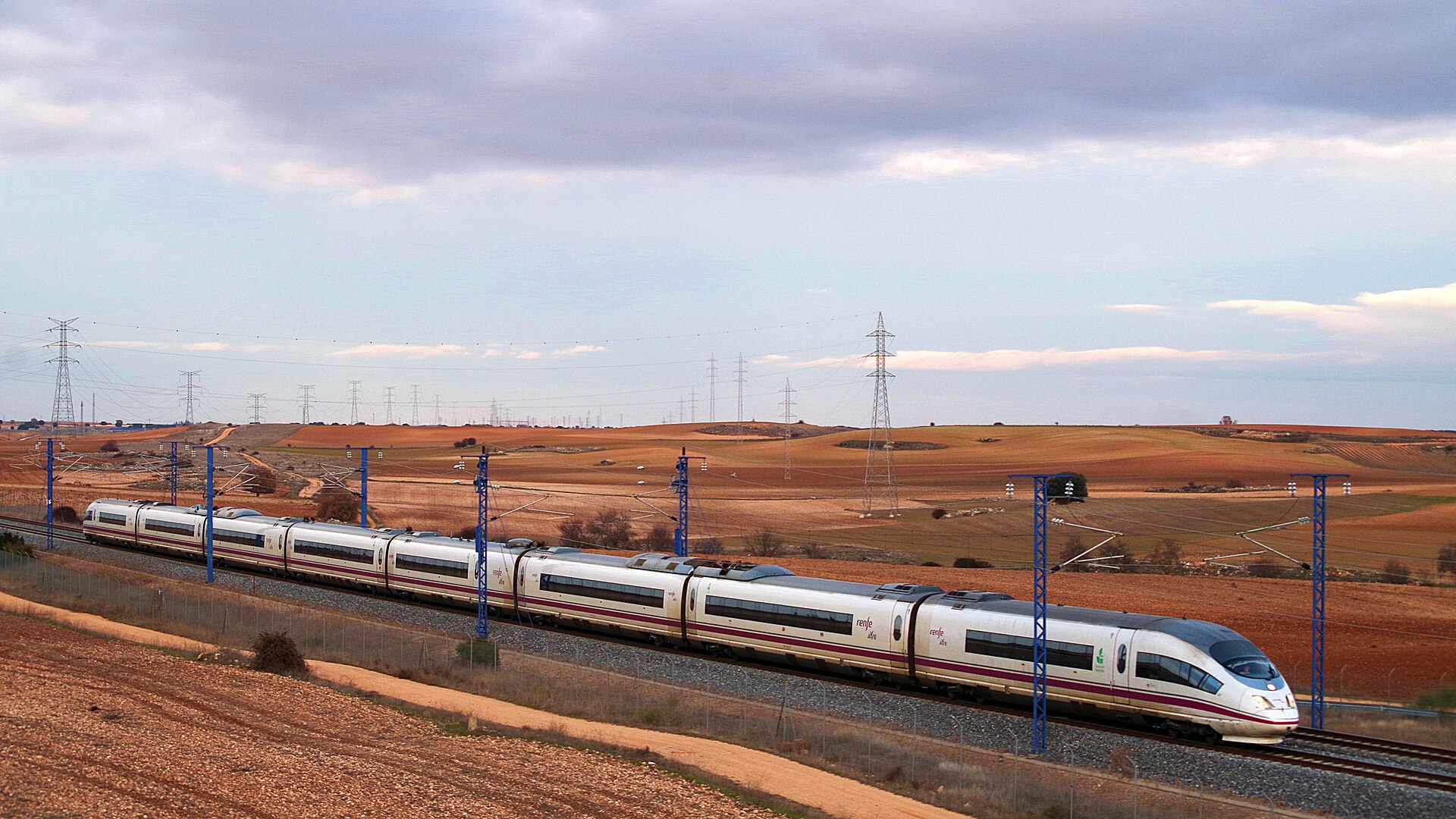

Madrid to Barcelona, travel day 1. About 2 hours 30 on the AVE, per Seat61. This is the cheapest and easiest hop on the route: a €10 reservation in 2nd class, €13 in 1st class. Interrail's AVE page also describes a pre-reservation option: you receive a code and must collect and pay for the reservation at a Spanish station ticket office within 72 hours, and a pre-reservation can only be booked up to 24 hours before departure. It holds a seat; it is not the reservation itself. Do not leave the station queue to the last day.
Barcelona, nights 4 to 6. Three nights here, with the second day free of trains.
Barcelona to Paris, travel day 2. The longest and most expensive single reservation on the route. Seat61 reports two direct TGVs each day in each direction, and a TGV Duplex journey of about 6 hours 50. Interrail's international fee page lists the pass holder reservation at €35 in either class; Seat61 lists €34, so call it €34 to €35. With only two direct trains a day, missing the morning departure leaves one other, so this is the hop to reserve first once the pass dates are fixed.
Paris, nights 7 to 9. Three days in Paris, none on a train that needs a pass day. For a deeper Paris plan, see our 4 day Paris itinerary.
Paris to Milan, travel day 3. This is the hop with a real choice, and the choice moves the bill by €18 or more. Interrail's fee page lists two options: a TGV at €31 in 2nd class (€45 in 1st), and Trenitalia's Frecciarossa via Lyon and Turin at €13 in both classes. Seat61 describes both as roughly 6.5 to 7 hours end to end, with one report of the Frecciarossa about 30 minutes quicker than the TGV; timings differ by source, so check your date. Pass access to the Frecciarossa on this route is recent, and Seat61 describes it as newly covered in 2026, so confirm your specific service shows a pass fare before you plan around the cheaper reservation.
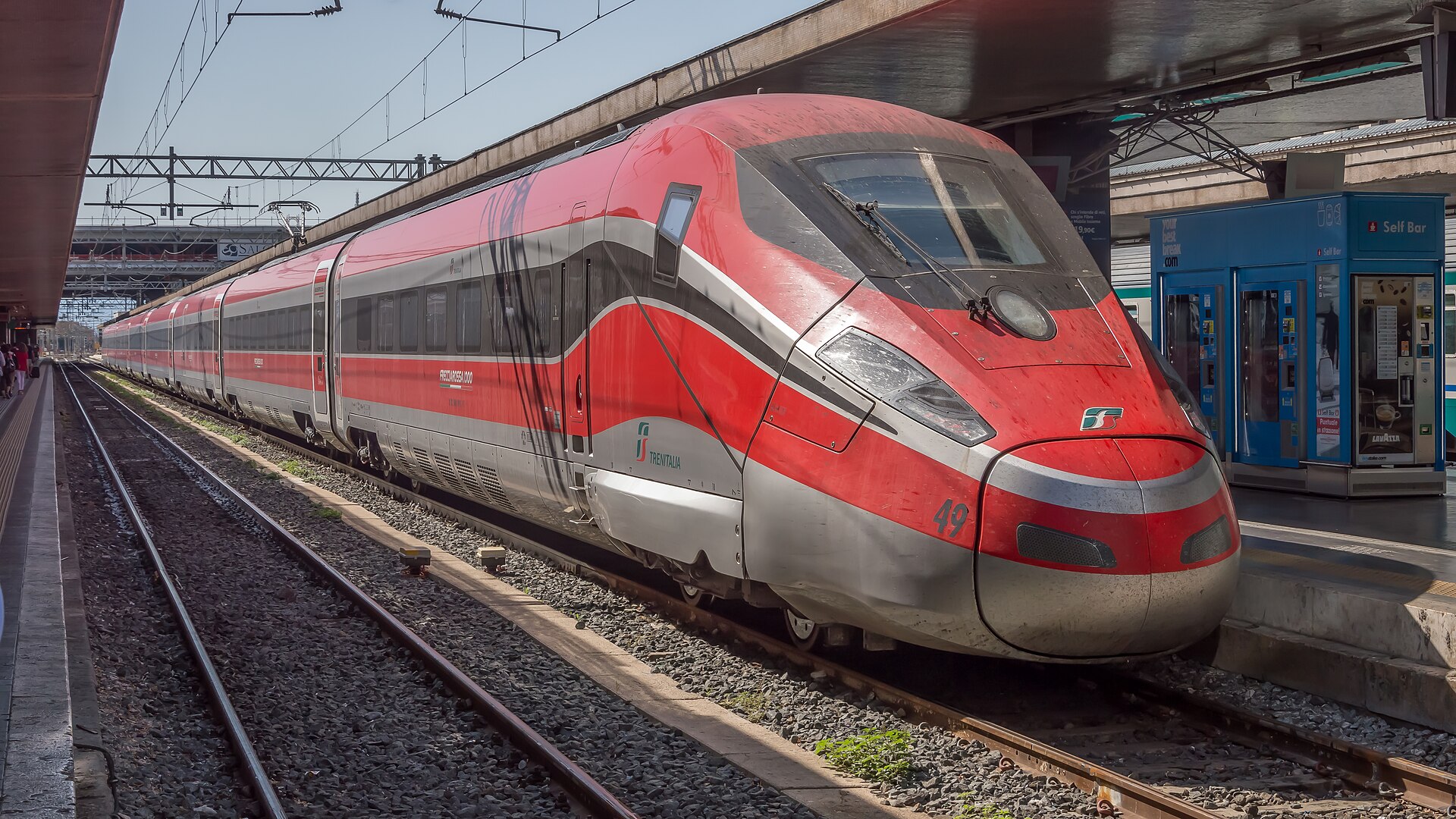

Milan, night 10. One night. After a day of travel, the point of Milan here is the connection south.
Milan to Florence, travel day 4. Roughly 1 hour 40 on the fastest Frecciarossa, per Rail Europe and Trainline, which agree to within a minute. Reservation €13.
Florence, nights 11 and 12. Two nights, with the full day between arrival and departure free of trains.
Florence to Rome, travel day 5. Sources split on the time, from 1 hour 36 (Planetware) to 1 hour 52 (Trainline for the fastest Roma Termini service), probably reflecting which service and station they measured. Reservation €13. Make this one early, since the final hop is the one with a flight attached.
Rome, nights 13 and 14. The reservation bill is done. For a deeper Rome plan, see our 4 day Rome itinerary.
The total, with the reservations in
Add the five long hops, using Interrail's own fee tables for 2nd class:
| Hop | Reservation |
|---|---|
| Madrid to Barcelona (AVE) | €10 |
| Barcelona to Paris (TGV) | €35 |
| Paris to Milan (Frecciarossa or TGV) | €13 or €31 |
| Milan to Florence (Frecciarossa) | €13 |
| Florence to Rome (Frecciarossa) | €13 |
| Total | €84 to €102 |
Add the Interrail €2 booking fee per passenger per international train if you book through its system, and the total moves up slightly. Next to a 5 day Global Pass at €318 for an adult (€239 youth), the reservations add roughly a quarter to a third to the cost of the pass: about €402 to €420 for an adult, all-in.
What this post cannot tell you is whether that beats five separate point to point tickets. Those prices move by date and by how far ahead you buy, and no source with a fixed figure was available for these legs. Price the five hops on the operators' own sites for your actual dates before you buy the pass. If the sum of the tickets comes in near the all-in pass cost, the pass is only buying you flexibility, and as the quota facts above show, the flexibility is partial.
Where this plan breaks
The Barcelona to Paris leg has two trains a day. Missing the morning departure, or a cancellation, leaves one other direct service per Seat61. Everything after it, including the Paris to Milan reservation, depends on that day holding.
Paris to Milan is the longest day on the route and crosses the Alps. A delay here has nowhere to go. Do not stack a flight, a pre-paid Milan hotel with no cancellation, or a timed museum entry on arrival day.
Booking late can mean paying double on French TGVs. The €10 quota fee jumps to €20 once it sells out. The sums are small, but they land on the one hop you cannot swap.
Spain's reservation booking can be awkward. Seat61 reports that some Spanish trains can only be booked at a station, and that summer queues at Madrid or Barcelona ticket offices can take up to two hours. A pre-reservation is a seat hold with a 72 hour collection deadline, so it can lapse if you forget it.
The pass days are a trap if you misjudge them. This route fits five days in a month, but add a London or Lyon detour or a night train and you start spending days faster than the plan assumes.
Every number here has a date on it. Interrail says its fees are indicative and subject to change. Check each figure against the operator at the time you book.
Key Takeaways
| Point | Details |
|---|---|
| The pass does not include seat reservations | Interrail states that most high-speed and night trains require a reservation at an additional cost. |
| They are compulsory in France, Spain and Italy | AVE, TGV inOui, Frecciarossa and Frecciargento all require one. Germany, Austria and Switzerland mostly do not. |
| The route costs five reservations | €84 to €102 in 2nd class using Interrail's own fee tables. |
| 5 day pass: €318 adult, €239 youth | Seat61 2026 list prices for 5 days in 1 month. Check the Interrail shop for sales. |
| Italo, Avlo and Spain's Ouigo are not covered | Check the operator on the booking screen; Italy's Italo shares the Milan, Florence and Rome corridor. |
| French TGV fee steps from €10 to €20 | The cheap pass holder quota sells out first. Domestic seats remain unless the train is full. |
| Eurostar quotas are real | Seat61: pass places can sell out even if the train is not full. |
| Spain and Italy quotas are not confirmed | No published limit; reports are anecdotal. Book early anyway. |
How Planytera handles a trip like this
Planytera is an AI trip planner built by a solo developer, available on iOS, Android and the web. You describe the trip and it produces a day-by-day itinerary, ready in moments. A rail route with fixed hops and reservations to chase leans on a few things in particular.
Pacing around the long travel days. A route with five transfer days, two of them over six hours, is really five arrival days. Planytera plans the pace around them, so the evening after the Paris to Milan ride is light rather than a full sightseeing slot. Planytera does not book trains or sell reservations; you still buy those from the operators.
Re-pacing when a train moves. If a reservation lands on a different day than you planned, or a line is disrupted, you can adjust the days around it and let the rest of the trip resync, rather than rebuilding the whole itinerary.
Offline access on the train. Recently opened trips keep the itinerary and notes available with no connection on the iOS and Android apps, which helps in tunnels, mountain sections and on platforms with poor signal.
Frequently asked questions
Does the Interrail pass cover seat reservations?
No. Interrail's Global Pass page says most high-speed and night trains require a reservation at an additional cost. Reservations are compulsory on French TGV inOui, Spanish AVE, and Italian Frecciarossa and Frecciargento, per Interrail's fee tables.
How much do reservations cost on this route?
Using Interrail's tables for 2nd class: €10 for the Madrid to Barcelona AVE, €35 for the Barcelona to Paris TGV (Seat61 lists €34), €13 or €31 for Paris to Milan depending on whether you take the Frecciarossa or the TGV, and €13 each for Milan to Florence and Florence to Rome. That totals €84 to €102. Interrail says fees are indicative and subject to change.
Do reservations for pass holders sell out?
It depends on the country. For French TGVs, Seat61 reports a limited quota of €10 pass holder places, then €20 until the train is full. For Eurostar it reports a quota that can sell out before the train does. For Spain and Italy no published quota was found. Booking early is the safe default either way.
Can I use Italo on an Interrail pass?
No. Seat61 says Italo is not covered by Interrail. On the Milan, Florence and Rome corridor, check that your train is a Trenitalia Frecciarossa or Frecciargento before you book.
Which pass should I buy for two weeks?
For this route, 5 days in 1 month is enough, at €318 for adults and €239 for under 28s per Seat61's 2026 table. Each hop on the route uses one day. If you add a sixth or seventh hop, the 7 day pass at €381 (€286 youth) is the next step. Compare the sum of point to point tickets for your dates before you decide the pass is worth it.
Is a rail pass cheaper than buying tickets?
Not necessarily. Seat61 says that for a London to France round trip a pass usually costs more than advance purchase tickets bought a few months ahead. For this route the answer depends on the five ticket prices on your dates, which this post could not verify. Check them first.
Useful sources and further reading
- Interrail: domestic train reservation fees, for AVE, TGV inOui, Frecciarossa, Avant and Alvia fees and compulsory status.
- Interrail: international train reservation fees, for Paris to Barcelona, Paris to Milan and the €2 booking fee.
- Interrail: AVE high-speed train, for the Spanish reservation rules and the 72 hour pre-reservation.
- Interrail: trains in France, for reservations being required on TGV inOui and Ouigo.
- Interrail: trains in Italy, for Frecciarossa and Frecciargento reservations.
- Interrail: Global Pass, for the statement that most high-speed and night trains need a paid reservation.
- Seat61: how to use an Interrail pass, for the 2026 price table, the travel day rule and the French and Italian fee notes.
- Seat61: Interrail and Eurail reservations, for the TGV €10 quota and the Eurostar quota.
- Seat61: Spain by train, for Spanish pass holder fees and the possible-quota caveat.
- Seat61: Spain, for Madrid to Barcelona and Paris to Barcelona journey times.
- Seat61: Italy, for the Italian pass holder reservation rule.
Recommended
More from the Planytera blog.