Blog18 min read
10 Days in Spain: The Alhambra Slot Decides Everything Else
A ten day Spain plan built around the Alhambra's timed Nasrid Palaces slot and the afternoon closures that decide what else is open, with 2026 prices and hours.
By Dom
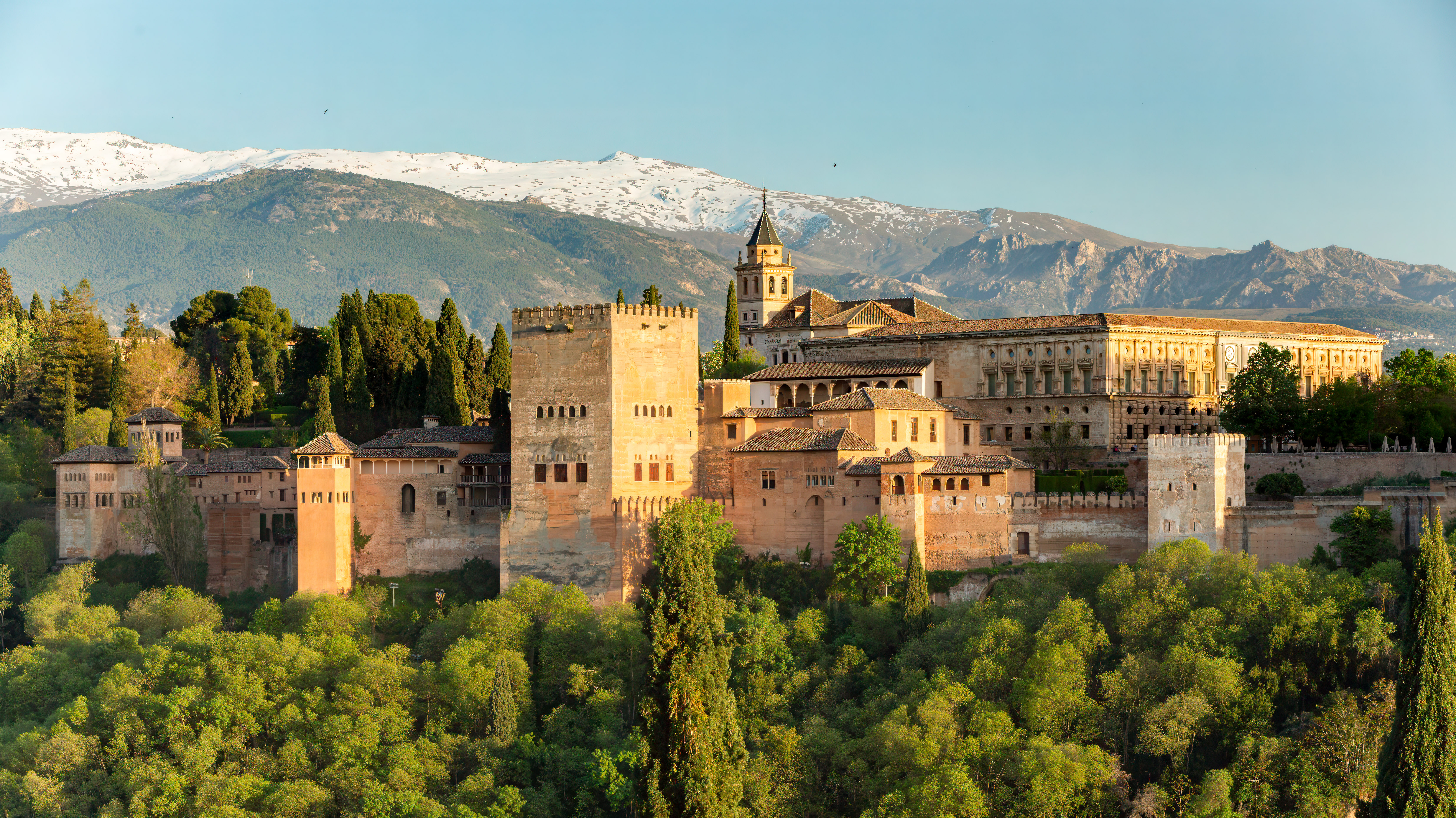

Most Spain itineraries get built around cities and trains, and then the Alhambra breaks the plan anyway. The Nasrid Palaces, the part of the Alhambra that is the actual reason to go, are entered in a fixed half-hour window printed on your ticket. Miss it and you do not get a second chance that day. Tickets for a given date go on sale 90 days ahead on the official site, and the early morning slots in particular are gone well before you land in Granada if you have not already booked one.
That single booking constraint is worth building the whole trip around, because it forces the one decision most ten day Spain plans dodge: fix your Granada dates first, book the Alhambra, then route everything else around it. This itinerary does that, and it also deals with the second thing that quietly wrecks the middle of the day in Andalusia: a real number of sights close, or shrink to a fraction of their hours, somewhere between 14:00 and 17:00. Not all of them. Knowing which ones is most of the trip planning.
The shape of the trip
| Segment | Days | Notes |
|---|---|---|
| Madrid | 3 | Including a day trip to Toledo |
| Seville | 2 | Base city for the south |
| Córdoba | 1 | Travel day between Seville and Granada |
| Granada | 2 | The Alhambra, booked first |
| Barcelona | 2 | Flown or trained in from the south |
This is the classic loop: Madrid as the political and gallery capital, then south into Andalusia for the Moorish sites, then Barcelona as a distinct, separate country's worth of city on the way out. It works because every leg between these five bases is a same-day train or a short flight. It does not include the Basque Country, Valencia or the Balearics, all of which are real ten day trips of their own and none of which fit here without cutting something above.
Booking the Alhambra before you book anything else
The Patronato de la Alhambra y Generalife, the public body that runs the site, sells tickets through its own portal at tickets.alhambra-patronato.es, and only there or through its authorised network of ATMs and phone lines; there is no ticket counter at the gate. Tickets for a given date are released 90 days ahead, at midnight Granada time, and stay on sale until 23:59 the night before your visit, if any are left. In summer and around Easter, they are not left.
The ticket you want is the General visit, which covers the Nasrid Palaces, the Alcazaba and the Generalife gardens. It is priced by an official order that took effect on 1 August 2025 and holds through 2026: €21.00 at the ticket office, €22.27 bought online once the booking fee is added. A Generalife and Alcazaba ticket without the Nasrid Palaces is roughly half that, and it is the wrong ticket if the Nasrid Palaces are the reason you came, which for most people they are.
The Nasrid Palaces access is the part that is timed: entry in a specific half-hour window, with roughly 300 people admitted per slot, and the gate does not hold latecomers. Arrive with about twenty minutes to spare. Once inside, there is no time limit on how long you stay, and the rest of the complex, the Alcazaba fortress and the Generalife gardens, is not time-slotted at all.
The site is open 08:30 to 20:00 from 1 April to 14 October, and 08:30 to 18:00 the rest of the year, with no midday closure and no separate morning and afternoon shift. That is a genuine change from how the Alhambra used to run, so anything you read describing a split-shift system is out of date.

What actually closes between 2 and 5, and what does not
This is the part guides skim past, and it changes what a day in each city can actually hold.
Madrid's big museums do not close for the afternoon. The Prado runs 10:00 to 20:00 Monday to Saturday and 10:00 to 19:00 on Sundays, and only shuts three days a year: 1 January, 1 May and 25 December. The Reina Sofía is open through the afternoon too, 10:00 to 21:00 most days, though it closes all day Tuesday, which is the one date worth checking before you fix a Madrid itinerary.
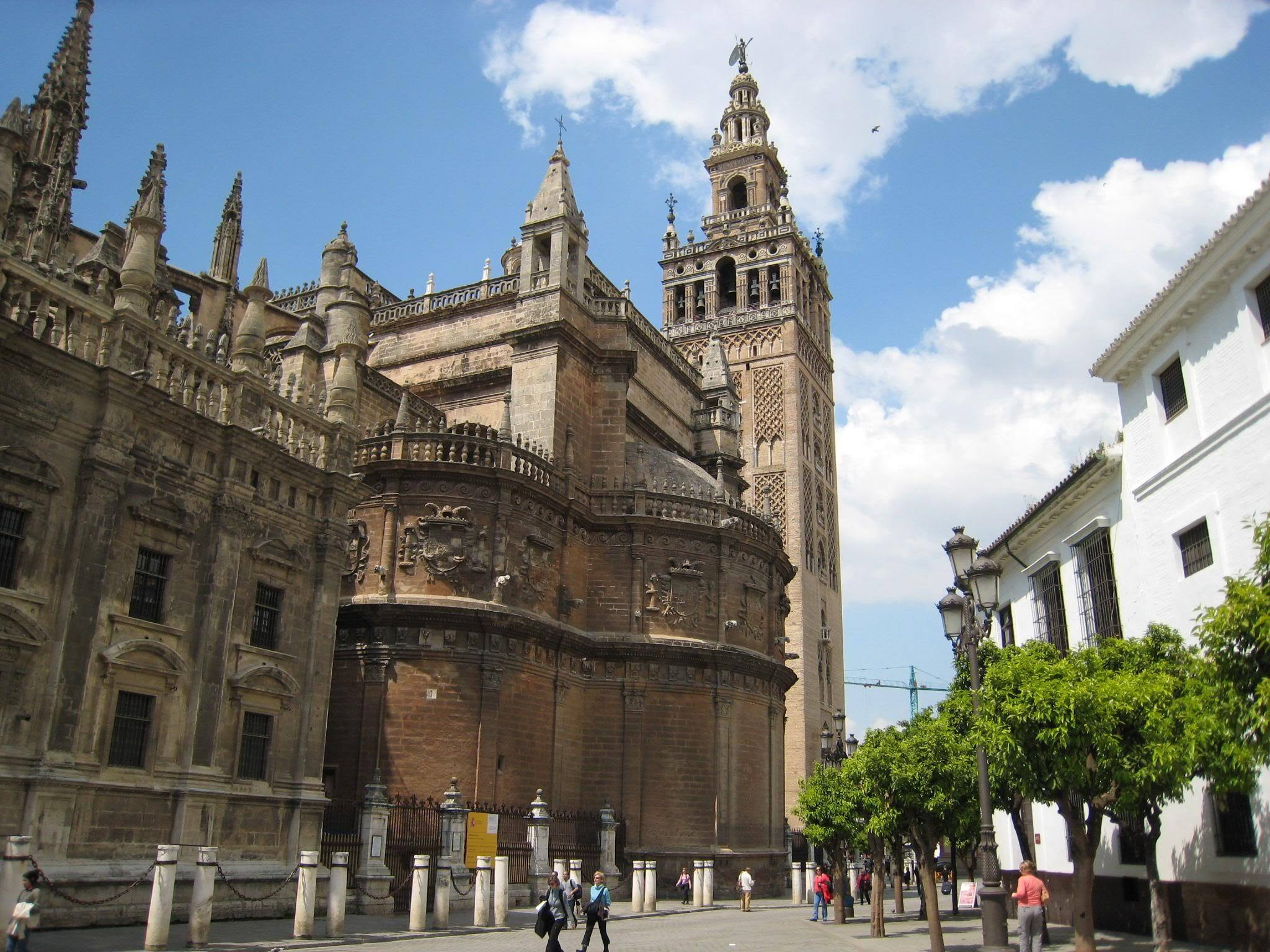
Seville Cathedral runs continuously as well. Monday to Saturday 11:00 to 19:00, Sundays 14:30 to 19:00. The Giralda tower climb is included in the same ticket, priced at €12 for a general adult admission.
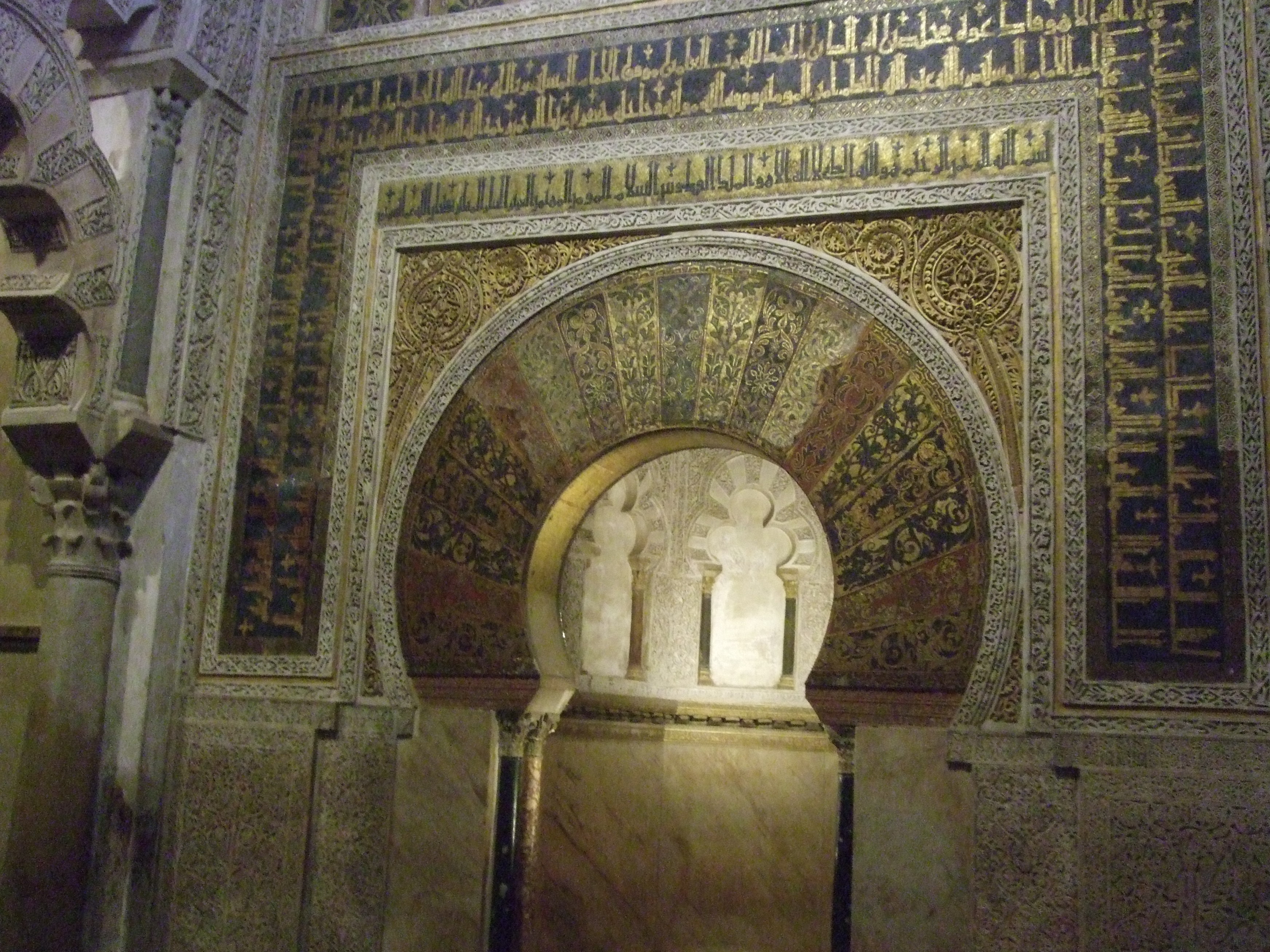
Córdoba is where the afternoon genuinely bites, and it splits by site. The Mezquita-Catedral, the mosque-cathedral that is the reason most people go to Córdoba at all, does not close midday; standard admission is €13, and Monday to Saturday there is a free entry window from 08:30 to 09:20, doors shutting to new arrivals at 09:20, before the paid hours start. The Alcázar de los Reyes Cristianos, a separate site and a separate ticket, is a different story: it has been closed for restoration through 2026, with the roof of the Mosaic Hall found to be in worse condition than expected and the reopening pushed back repeatedly. Sources disagree on whether it has a firm reopening date; treat it as closed and check the official Ayuntamiento de Córdoba site close to your travel dates rather than planning around it.
Toledo is the clearest case of the actual siesta pattern. Several of its smaller monuments, including the Mezquita del Cristo de la Luz, close for a midday break, commonly somewhere in the 14:00 to 16:00 window, and reopen for the rest of the afternoon. This is not consistent enough across sites to give one blanket hour, and it is exactly why Toledo as a single fast-moving day trip needs slack built in rather than a tight back-to-back schedule.
The pattern, once you see it: state-run major monuments and museums with year-round staffing (the Prado, the Reina Sofía, Seville Cathedral, the Mezquita) tend to run continuous hours. Smaller sites, and anything currently mid-renovation, are the ones that either close for a chunk of the afternoon or are not open at all. Check the specific site, not the city.
Getting between cities
Madrid to Seville runs on Renfe's AVE high-speed line, the fastest services covering the 471 km in about two hours thirty minutes, with roughly 15 to 20 departures a day. Advance fares start from around €14 to €25 depending on how far ahead you book; Renfe's booking window opens 60 days before departure, and prices climb as the date approaches, so book once your dates are fixed rather than waiting.
Seville to Córdoba is a short AVE hop, around 40 to 45 minutes, with fares from roughly €7 to €10 booked ahead on the fastest services.
Córdoba to Granada takes about one hour twenty minutes on the fastest AVE service, with slower Avant and Alvia trains on the same route running closer to one hour forty-five. Either way it is a same-day connection, not a travel day.
Granada to Barcelona has no proper high-speed link, which is the one leg where flying is clearly the better call. There is a single direct high-speed train a day, taking around six and a half hours; every other train option connects through Madrid, Córdoba or Antequera and runs seven to nine hours. Flying covers it in about one hour thirty minutes, with three or four direct Vueling and Iberia flights daily. Unless a full day on a train genuinely appeals to you, fly this one.
Madrid to Toledo is a 33 minute Avant service from Madrid-Puerta de Atocha, with one-way fares from around €14 to €18. It runs often enough, and is short enough, that Toledo works well as a single day trip rather than an overnight.
Getting around each city
Madrid uses the Tarjeta Multi transit card, which costs €2.50 and is reusable. Loaded with pay-as-you-go metro fares, a single journey is €1.50 for up to five stops, rising in steps to a maximum of €2.00 for ten stops or more. As of 1 January 2026, the Community of Madrid is continuing the extraordinary fare discounts it introduced in mid-2025, so current prices are lower than the pre-2025 baseline; worth checking the CRTM site for whether that holds by the time you travel, since it has already been extended once.
Seville and Córdoba are compact enough to walk for most of a stay; both historic centres are largely pedestrianised or close to it, and neither has a transit pass worth the overhead for a two or three day visit.
Barcelona runs on the T-Casual, a 10-journey card priced at €13.00 for the single central zone, which covers the metro, buses and trams within the city. It does not cover the airport connection, which is priced separately.

The ten days
Days 1 to 3: Madrid, with Toledo as a day trip
Madrid does not need a car and rewards walking between the Palacio Real, the Retiro and the Golden Triangle of the Prado, Reina Sofía and Thyssen-Bornemisza museums. Give the Prado a real half day; at €15 general admission and open every day but three a year, there is no rush to cram it into a single morning. The Reina Sofía, home to Picasso's Guernica, is €12 and closed all day Tuesday, so build your three Madrid days around that closure rather than discovering it on arrival.
Put one of the three Madrid days toward Toledo. The train is 33 minutes each way, which leaves most of a day inside the walls. Pace it loosely: several of the smaller monuments here close for a stretch in the early-to-mid afternoon, and a schedule built assuming everything is open from open to close will run into a locked door somewhere around 14:00.
Days 4 and 5: Seville
The AVE from Madrid takes about two and a half hours and drops you in the centre of Seville, not an outlying station. Seville Cathedral and the Giralda are the anchor for one of the two days, running continuous hours with no midday gap, and the Real Alcázar, Seville's own royal palace complex, is the other: open 09:30 to 19:00 from April through September and 09:30 to 17:00 the rest of the year, general admission €15.50.
Barrio Santa Cruz, the old Jewish quarter, is the wandering-without-a-plan part of a Seville visit, and it is genuinely better done in the evening once the day's heat has broken, which in Andalusia in summer is most of the point of building slack into the afternoon rather than fighting through it.
Day 6: Córdoba
A single day, travelling in from Seville and on to Granada the same evening. The AVE from Seville is under 45 minutes, so this is not a rushed connection. Spend the day at the Mezquita-Catedral, using either the paid hours or, if your train timing allows an early arrival, the free 08:30 to 09:20 window Monday through Saturday, which grants the same interior access as a paid ticket: the forest of horseshoe arches, the mihrab, and the 16th century cathedral nave built into the centre of the mosque.
Do not build the day around the Alcázar de los Reyes Cristianos. It has been shut for restoration through 2026 with a repeatedly delayed reopening, and whether it is open by the time you travel is genuinely unclear from official sources at the time of writing. Check the Ayuntamiento de Córdoba's own site close to your dates; do not plan a slot around it on the strength of anything published months ahead.
Continue to Granada by early evening train, roughly 80 to 105 minutes depending on the service.
Days 7 and 8: Granada
This is the day your Alhambra ticket was booked around, so the two days here should be built loosely enough to absorb it landing anywhere in the site's 08:30 to 20:00 (summer) or 08:30 to 18:00 (winter) hours. Arrive with about 20 minutes before your Nasrid Palaces slot; once you are through that gate, there is no clock on how long you stay in the palaces, the Alcazaba fortress, or the Generalife gardens.
Give the second day to the Albaicín, the old Moorish quarter across the valley, and the Mirador de San Nicolás, the viewpoint that gives you the Alhambra whole against the Sierra Nevada rather than in the close-up pieces you see from inside it.
Days 9 and 10: Barcelona
Fly from Granada; at roughly 90 minutes in the air against six and a half hours or more on the ground, this is not a close call. Barcelona is a different country's worth of a city after five days of Andalusia and Castile, and two days is enough for the essentials rather than the whole list: the Sagrada Família and a walk through the Gothic Quarter or along Passeig de Gràcia for the Modernista buildings.
The Sagrada Família sells only timed, pre-booked entry; there is no walk-up ticket at any price. General adult admission starts at €26, rising toward €46 for the ticket that includes tower access. In ordinary season, booking a couple of weeks ahead is generally enough; 2026 is Gaudí's centenary year, and June in particular is expected to be tighter, so book earlier than you otherwise would if your trip lands in early summer.
What ten days actually costs
| What | Realistic cost |
|---|---|
| Café con leche, standing at the bar | €1.50 to €2.50 |
| Menú del día at an ordinary restaurant | €12 to €18 |
| Madrid to Seville, AVE booked ahead | from about €14 |
| Alhambra General ticket (Nasrid Palaces, Alcazaba, Generalife) | €21 at the ticket office, €22.27 online |
| Sagrada Família general admission | from €26 |
| Barcelona municipal tourist tax | €5 per person, per night, on top of the regional Catalonia rate |
| Madrid Tarjeta Multi card | €2.50, reusable |
| Barcelona T-Casual, 10 journeys | €13.00, one zone |
Barcelona's accommodation tax is worth planning for specifically, because it changed shape in 2026. Since 1 April 2026, Barcelona's own municipal surcharge is €5 per person per night regardless of hotel category, added on top of a Catalonia-wide regional rate that varies by accommodation type; a five-star hotel stay works out to roughly €12 per person per night combined, a four-star closer to €8.40, and a short-term rental around €9.50. It applies for the first seven nights of a continuous stay and stops after that. Madrid, by contrast, has no general overnight tourist tax at all, so the two halves of this trip are priced differently on that one line.
Key Takeaways
| Point | Details |
|---|---|
| Book the Alhambra first, then route the rest of the trip around it | Tickets go on sale 90 days ahead and the Nasrid Palaces slot is a fixed half hour with no late entry. |
| The Alhambra General ticket is €21 to €22.27 | €21.00 at the ticket office, €22.27 online with the booking fee, under an order effective since 1 August 2025 and holding through 2026. |
| Madrid's major museums do not close for the afternoon | The Prado runs to 20:00 most days and shuts only three days a year. The Reina Sofía is closed all day Tuesday instead. |
| Córdoba's Alcázar is closed, not just quiet in the afternoon | Under restoration through 2026 with a repeatedly delayed reopening. The Mezquita next door is unaffected and has a free 08:30 to 09:20 entry window. |
| Granada to Barcelona has no real high-speed rail link | One direct train a day at about six and a half hours, versus a roughly 90 minute flight. Fly this leg. |
| Toledo's smaller sights are the real siesta closures | Several close for a stretch in the early-to-mid afternoon. Build slack into a Toledo day rather than a tight schedule. |
| Barcelona's tourist tax changed on 1 April 2026 | A €5 per person per night municipal charge stacks on the Catalonia regional rate. Madrid has no equivalent tax. |
Where this plan breaks
Booking the Alhambra late is the single most common way this trip falls apart. If you are inside the 90 day window and the dates you want are gone, you have three honest options: shift your Granada days to whatever slot is still available, accept a Generalife-and-Alcazaba-only ticket and skip the palaces, or book a guided tour that carries its own allocation. All three are real choices. Pretending the ticket will turn up if you check back tomorrow usually is not.
Treating Córdoba as a full day trips over the Alcázar closure. If you plan a day there assuming both major sites are open and the Alcázar turns out still to be shut, the Mezquita alone is a half day, not a full one. Either extend the Córdoba stop or shift the freed time to Seville or Granada.
Summer heat changes what the middle of the day is for. Andalusia in July and August routinely gets uncomfortably hot by early afternoon, and outdoor walking, the Alhambra's Generalife gardens included, is a morning or evening activity in that stretch. A plan that has you doing an uncovered outdoor circuit at 14:00 in August has not accounted for the season.
The Granada to Barcelona leg eats a whole day if you take the train by mistake. Booking a train ticket without checking that it is the one direct service, rather than one of the connections through Madrid, turns a travel day into most of two.
How Planytera handles a trip like this
Planytera is an AI trip planner built by a solo developer, available on iOS, Android and the web. You describe the trip you want and it builds a day-by-day itinerary, ready in moments. A few things it does map directly onto the problems above.
Anchoring the plan around one fixed booking. The Alhambra slot is the one piece of this trip that cannot move once it is booked. Building the days around a date that is already fixed, rather than a flexible starting point, is a different planning problem than most itineraries, and the plan can be built or adjusted around that anchor rather than you working backward by hand.
Pacing as a setting. Andalusia in summer and Andalusia in spring are different trips, mostly in how much outdoor walking sits in the early afternoon. Asking for a slower pace re-spaces the days around it instead of just deleting stops.
Offline access for the connections. Five bases and four intercity legs means several days where you are on a train or in an airport with patchy signal. A saved trip keeps the itinerary and notes available without a connection.
Group trips settle up without a spreadsheet. Splitting a Spain trip commonly means one person books the Alhambra tickets, another the AVE fares, a third the Barcelona hotel. Share a read-only link, or invite people to vote on which sites make the cut, and use split costs to track who owes who. It does the arithmetic and never touches anyone's money, and there are no cards to link.
It also checks visa and e-visa requirements once you set your passport.
Frequently asked questions
How far ahead do I need to book Alhambra tickets?
As soon as your Granada dates are fixed. The Patronato de la Alhambra releases tickets for a given date 90 days ahead, at midnight Granada time, on its own site, tickets.alhambra-patronato.es. In summer and around Easter Week, popular dates and the early morning Nasrid Palaces slots sell out well inside that window, sometimes within days of release.
What happens if I miss my Nasrid Palaces time slot?
You are not admitted late. The Nasrid Palaces are entered in the specific half-hour window printed on your ticket, with roughly 300 visitors let in per slot, and the gate does not hold spaces for latecomers. Arrive with about 20 minutes to spare. The rest of the complex, the Alcazaba and the Generalife gardens, has no such restriction, and once inside the palaces there is no limit on how long you can stay.
Is the Alcázar de los Reyes Cristianos in Córdoba open?
At the time of writing, no. It has been closed for restoration through 2026, with work delayed after the roof of the Mosaic Hall turned out to be in worse condition than expected. Sources disagree on whether a firm reopening date has been set, so check the Ayuntamiento de Córdoba's own site close to your travel dates rather than planning a Córdoba day around it. This does not affect the Mezquita-Catedral next door, which is a separate site under separate management.
Should I take the train or fly from Granada to Barcelona?
Fly, in almost every case. There is only one direct high-speed train a day, and it takes about six and a half hours; every other train option connects through Madrid, Córdoba or Antequera and runs seven to nine hours. Vueling and Iberia both fly the route directly several times a day in around 90 minutes.
Do Spanish museums and monuments really close for siesta?
Some do, most don't, and it depends on the type of site rather than the city. Large state-run institutions with year-round staffing, the Prado, the Reina Sofía, Seville Cathedral and the Mezquita in Córdoba among them, run continuous daily hours. Smaller monuments, particularly in Toledo, and anything currently under renovation, like Córdoba's Alcázar, are the ones that either close for a stretch in the afternoon or are not open at all. Check the specific site rather than assuming a citywide pattern.
Is ten days enough to see Madrid, Andalusia and Barcelona?
It is enough to see the anchor sights of each without feeling rushed, provided you don't add a sixth base. This itinerary allots three days to Madrid including Toledo, three across Seville and Córdoba, two to Granada, and two to Barcelona. Adding the Basque Country, Valencia or the Balearics on top of this route, rather than in place of one leg of it, is the most common way a ten day plan turns into an exhausting one.
Useful sources and further reading
- Patronato de la Alhambra y Generalife, hours and rates, official site, ticket prices, opening hours and Nasrid Palaces timed-entry rules.
- Alhambra ticket sales information, booking process and timed-slot entry rules.
- BOJA order of 17 July 2025, the official public-price order setting Alhambra admission for 2026.
- Museo del Prado, opening hours, official hours, free-entry windows and the three annual closure dates.
- Museo Reina Sofía, visitor information, hours, Tuesday closure and free-entry windows.
- Catedral de Sevilla, hours and rates, official site, opening hours and admission price.
- Real Alcázar de Sevilla, visitor information, official site, seasonal hours and ticket prices.
- Mezquita-Catedral de Córdoba, tickets and hours, official site, admission price and the free morning entry window.
- El Debate, Alcázar de Córdoba restoration delay, March 2026 report on the roof condition and delayed reopening.
- Renfe, Madrid to Seville AVE, official operator site for high-speed fares and the 60 day booking window.
- Consorcio Regional de Transportes de Madrid, Tarjeta Multi, official fare and card information.
- T-mobilitat, T-Casual fares, official Barcelona transit fare page.
- Sagrada Família, official tickets, timed-entry booking, prices and centenary-year guidance.
- Idealista, Catalonia tourist tax rates 2026, the 1 April 2026 rate change and Barcelona's municipal surcharge.
Recommended
More from the Planytera blog.