Blog18 min read
10 Days Island Hopping in Greece: The Ferries Decide
A ten day Greek islands plan built from the ferry timetable, with real crossing times, the three Athens ports, and why three islands is the honest number.
By Dom
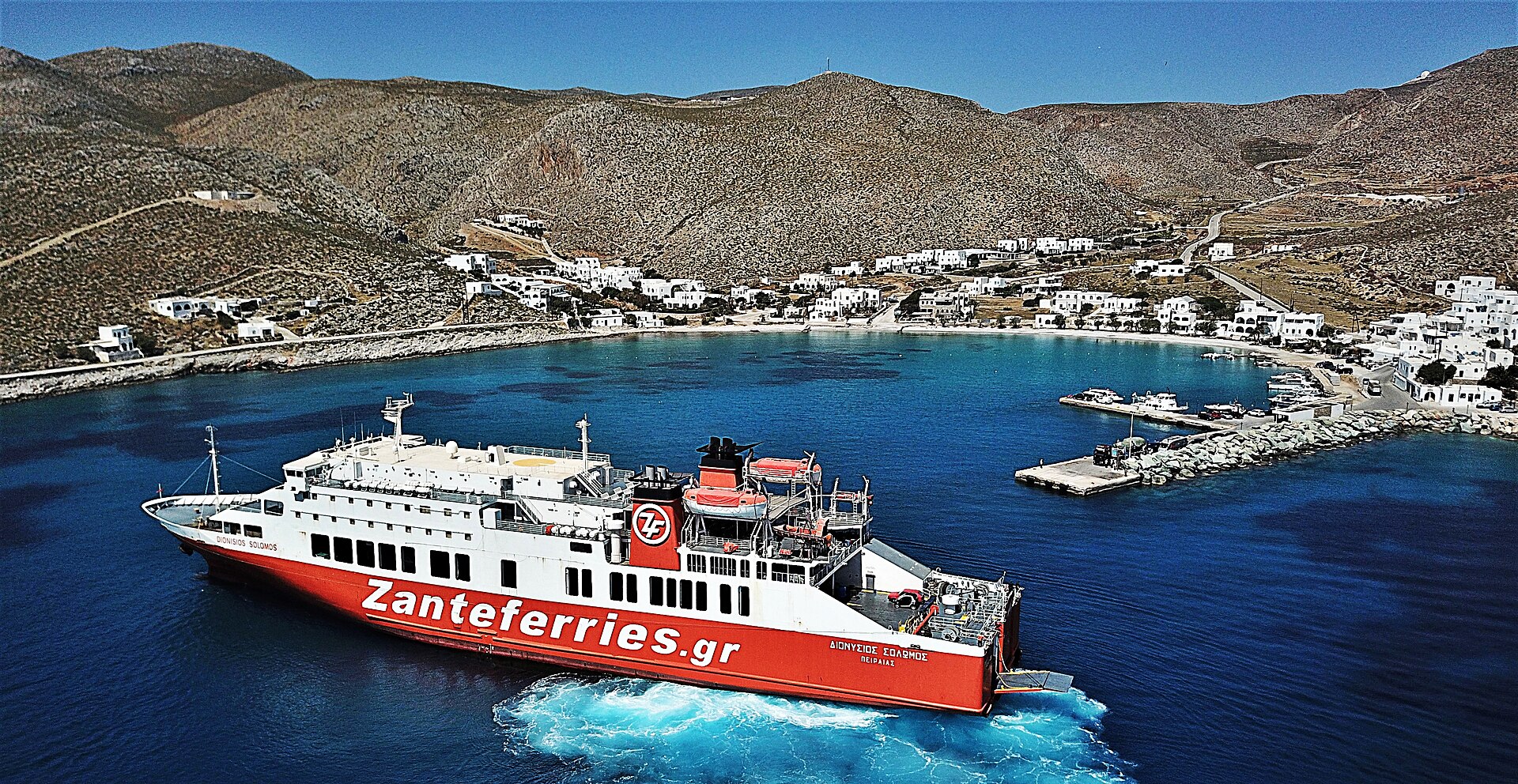

Ten days in the Greek islands sounds like five islands. It is three, and on a bad week it is two.
That is not pessimism, it is subtraction. A crossing between two Cyclades islands takes most of a morning once you add the hour the operators want you at the quay, the transfer to the port, and the fact that you cannot check in at the other end until the afternoon. Do that four times and four of your ten days are gone.
The second problem is worse, because it is invisible until you try to book. The Cyclades are not one network. They are several separate lines radiating out of Athens, and the sideways connections between them are thin, seasonal, and in some months genuinely once a week. The island you want to add is often not one ferry away. It is one ferry back to Piraeus and another ferry out.
So this itinerary is built the other way round. Start from the timetable, work out what is reachable, then decide what the days look like.
Athens has three ferry ports, and the wrong one costs you a morning
Everyone knows Piraeus. Fewer people know their island sails from somewhere else. According to This is Athens, the city's official visitor service:
- Piraeus is the main one, reachable by Metro line 1 and by bus from the centre. Most islands, most of the time.
- Rafina sits on the east coast and serves Andros, Tinos, Mykonos, Paros, Naxos, Amorgos, Ios, Syros, Sikinos, Folegandros, Koufonissia and Crete. From the city centre it is Metro line 3 to Doukissis Plakentias then bus 314, or a KTEL bus from Pedion Areos as often as every fifteen minutes between 05:45 and 22:30. A taxi is 50 to 60 minutes.
- Lavrio is further down the same coast and serves Kythnos, Kea, Kimolos, Limnos, Milos, Paros, Naxos, Tinos, Syros, Sikinos and Folegandros. A taxi runs about €45 and averages around 75 minutes.
Note the overlaps. Paros, Naxos, Syros, Tinos, Sikinos and Folegandros appear on more than one list, which means the port belongs to the sailing you booked, not to the island. Booking a 07:30 departure and reading the port name on the morning of travel is how people miss boats in Greece. Rafina is the better choice for Mykonos and Tinos if you are flying in, since it is far closer to the airport, and the worse choice if you are staying in central Athens.
What the crossings actually take
Durations vary by vessel: conventional ships are slower, cheaper and far steadier, and high-speed craft are the opposite on all three counts.
| Crossing | Typical | Fastest advertised | Summer frequency |
|---|---|---|---|
| Piraeus to Mykonos | about 3h 49m | 2h 40m | about 26 weekly |
| Piraeus to Paros | from about 2h 40m | daily | |
| Piraeus to Naxos | from about 3h 15m | daily | |
| Piraeus to Milos | from about 2h 30m | daily | |
| Piraeus to Santorini | about 6h 40m | 5h | several daily |
| Paros to Naxos | about 49m | 45m | about 19 weekly |
| Naxos to Santorini | about 2h 12m | 1h 20m | about 13 weekly in summer, about 1 weekly October to May |
| Mykonos to Santorini | about 2h 44m | about 5 weekly, June to September | |
| Milos to Santorini | from about 1h 50m | 1 to 7 days per week depending on month | |
| Santorini to Piraeus | about 7h 4m | 5h 35m | Blue Star 7, SeaJets 7, Fast Ferries 6 weekly |
Two of these do the most damage to a naive itinerary.
Naxos to Santorini drops to roughly one crossing a week outside summer. In July it is a routine hop. In April or October it can be the reason a whole leg of your plan does not exist. The same shape applies across the Cyclades: the sideways connections are built for the summer tourist flow, not for the islanders, so they thin out first.
Mykonos to Santorini is less frequent than its fame suggests. Ferryscanner counts about five direct crossings a week in high summer on a route much of the internet treats as a daily bus. If your plan has you on Mykonos on a Tuesday and Santorini on a Wednesday, check a Wednesday sailing exists before booking either hotel.
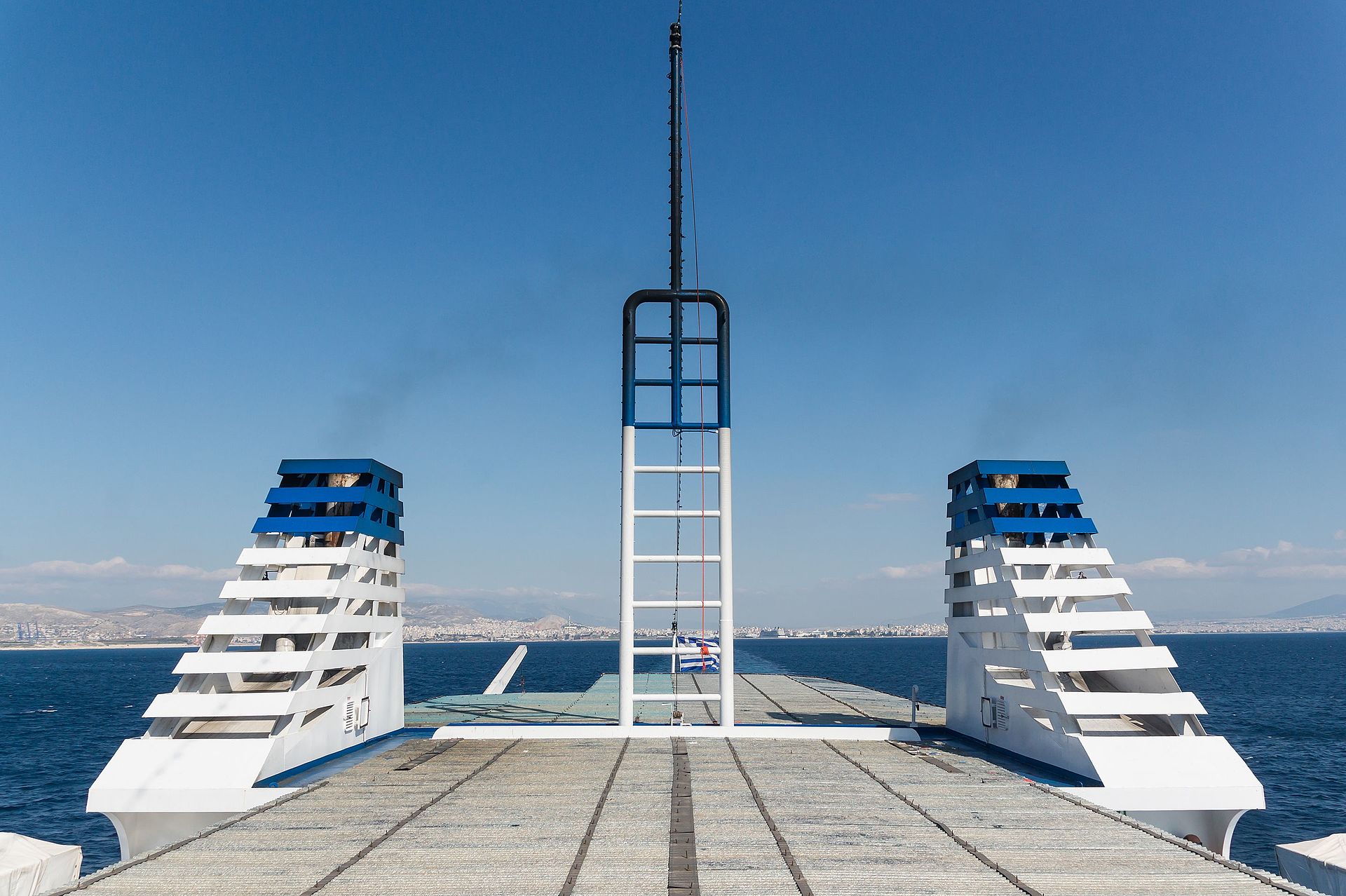

Treat any single published time with suspicion. The big ferry search sites list helicopter operators alongside ships: Hoper, an Athens company flying scheduled Robinson R44 and R66 helicopters carrying three or four passengers, appears on the same route pages as Blue Star and SeaJets, which is why you will see a "fastest crossing" of 35 or 45 minutes on a route no boat has done in under two hours. If a figure looks impossible for a ship, it probably is a helicopter. Sources disagree on the plain ferry times too: Ferryhopper describes Piraeus to Santorini as five hours to over eleven, and elsewhere on the same site gives a shortest trip of 4h 45m, while Ferryscanner puts the typical crossing at 6h 40m and the fastest at 5h. Build the day around the sailing you hold a ticket for.
The wind is a scheduling constraint, not a weather detail
The meltemi is a strong dry northerly across the Aegean, and it peaks in the same July and August window when most people take this trip. When it gets up, the local port authority issues what Greeks call the apagorevtiko, a sailing ban, following a severe weather bulletin from the national meteorological service. It is an administrative decision about a port, not about your operator, and no expensive ticket routes around it.
This is not rare. On Friday 14 August 2026, with winds reported at 9 Beaufort and gusts over 100 km/h, a general sailing ban was imposed at Rafina and Lavrio. Piraeus stayed open but lost sailings anyway: Blue Star Paros to Syros, Tinos and Mykonos was cancelled, along with Superspeed 4 to Paros, Naxos and Koufonisia and a Champion Jet run to Kythnos, Sifnos, Serifos, Kimolos and Milos. The ban held until early Saturday afternoon, then lifted, with operators adding extra services to clear the backlog into the Assumption holiday weekend, one of the busiest travel weekends of the Greek year. That happened this month.
The hierarchy is worth knowing. Greece's port regulations allow passenger ships to sail in fairly heavy weather, and the large conventional ferries are the last to stop. The high-speed catamarans and hydrofoils are the first, because they are lighter and the ride becomes unacceptable long before it becomes unsafe. At the top of the scale nothing moves. If one leg of your trip cannot slip, put it on a conventional ship even though it is slower, and put it early in the day.
What you are actually owed when a sailing is cancelled
Ferry travel inside the EU is covered by passenger rights rules, and they are less generous than most travellers assume in exactly the case that matters here.
If your sailing is cancelled, or departure is delayed by more than 90 minutes, the carrier must offer a choice: reimbursement within seven days, or re-routing on the earliest available service at no extra cost. You are also entitled to refreshments in proportion to the wait, and to accommodation up to €80 a night for up to three nights if an overnight stay becomes necessary. Delayed arrival carries compensation from 25% of the fare up to 50%, depending on the length of the crossing and the delay.
Here is the part that decides your trip: none of the compensation applies, and the accommodation obligation does not apply, when the cause is severe weather. The carrier is exempt where a cancellation results from weather endangering safe operation. So on the day the meltemi shuts the port, you get your fare back or a seat on the next boat, and the room you now need in Naxos is your own problem, at August rates, at four hours' notice. That asymmetry is the strongest argument here for fewer islands and more slack.
Ten days, arranged around the boats
One line, three bases, and a night in Athens at each end that exists to absorb failure.
| Night | Base | The crossing that shapes the day |
|---|---|---|
| 1 | Athens | none, arrival day |
| 2 | Athens | none |
| 3 | Naxos | Piraeus to Naxos, morning sailing |
| 4 | Naxos | none, or the short hop to Paros and back |
| 5 | Naxos | none |
| 6 | Santorini | Naxos to Santorini, the leg with real timetable risk |
| 7 | Santorini | none |
| 8 | Santorini | none |
| 9 | Athens | Santorini to Piraeus, or the flight |
| 10 | Athens | departure |
Days 1 and 2, Athens. Two nights gives you one proper day. The thing to sort in advance is the Acropolis, on mandatory timed entry with a daily cap of 20,000 visitors across one-hour slots, made permanent from 1 April 2024. Book at hhticket.gr, which opens 60 days ahead. Adult admission is €30 in the April to October season.
Getting around is cheap: Athens transport authority OASA prices a 90-minute ticket at €1.20 and the airport at €9.00 single or €16.00 return on the Metro, or €5.50 on the express bus. Metro line 3 now runs from the airport through to Piraeus without a change.
Day 3, out to Naxos. Take a morning sailing. This is the most useful discipline of the trip: a cancelled morning boat still leaves you an afternoon boat, while a cancelled afternoon boat costs the night. Naxos rather than Mykonos as the first base is deliberate. It is the largest of the Cyclades, with beaches, mountain villages and a working interior rather than a single strip, it costs meaningfully less, and it is one of the four hub islands, which means more onward options when something goes wrong.
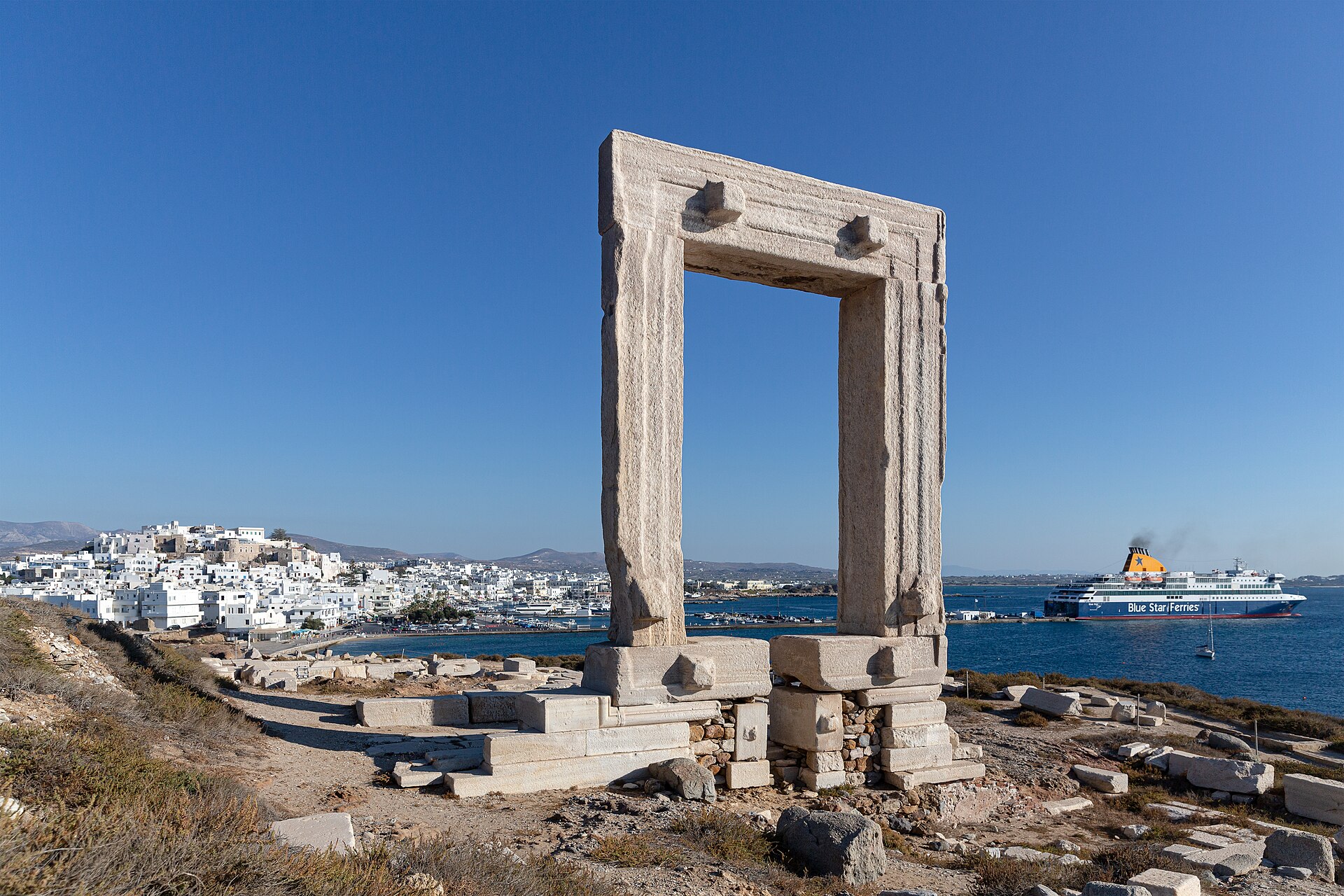

Days 4 and 5, Naxos, with Paros optional. At about 49 minutes and roughly 19 crossings a week in summer, Paros is the only connection here short and frequent enough for a day trip without rearranging anything. Go in the morning, come back in the evening, and treat it as an outing rather than a fourth island. The rest belongs to Naxos itself: the Portara at the harbour mouth, the villages of the Tragaea, and beaches on the west coast that run for kilometres.
Day 6, Naxos to Santorini. The leg with the most timetable risk on the trip. Around 13 crossings a week in summer sounds comfortable and is, until you notice that outside summer it falls to about one. Book this one as soon as your dates are firm, and take a morning departure again.
Days 7 and 8, Santorini. Ferries arrive at Athinios, below the cliff on the west coast, which is not where the cable car is. The cable car runs between the Old Port and Fira for cruise passengers arriving by tender, at €10 one way for an adult on the operator's own list. Off a ferry you want the bus or a transfer up the switchbacks, around twenty minutes to Fira. The island has been pushing back on crowds with a daily cruise passenger cap of 8,000, tightened for 2026 so a ship's full berth capacity counts against it rather than an assumed occupancy. That is aimed at cruise arrivals, not at you.
Day 9, back to Athens. The last Santorini to Piraeus departure of the day is mid-afternoon, and the crossing is about 7 hours typically. Flying is faster and often worth it. Either way, sleep in Athens: putting an international flight on the same day as the final ferry gives the trip a single point of failure at the end, on the leg most exposed to weather.
What to book, and when
Book the ferries as soon as they exist, which is later than you expect. Greek summer schedules are loaded gradually. Some major routes appear late in the preceding year, and the full spring and summer picture fills in between January and spring, with Cyclades summer schedules typically published around February and March. Operators run early-booking discounts in that window. So if you are planning in November for the following August, the sailings you need may not be on sale yet, and their absence is not evidence they will not run. Once one appears for a July or August date, book it: cabins and vehicle spaces go first.
Ferry tickets are personal. They are issued in the named passenger's name and are not transferable, because EU rules require the operator to hold a passenger list. Names get checked at boarding. Most Greek operators accept an e-ticket on a phone, but not all do, and the standard advice is to be at the embarkation area an hour before departure.
Almost nothing else needs booking. Island buses, most tavernas and most of what you will actually do are fine on the day. Greece does not punish spontaneity, except at the quay.
Budget for the fee that is not the fare. Greece charges a climate crisis resilience fee on accommodation, per room and per night, under Law 5073/2023. From April to October it runs €2 for one and two star hotels, €5 for three star, €10 for four star and €15 for five star, with short-term rentals at €8 rising to €15 for detached houses over 80 square metres. November to March drops to €0.50, €1.50, €3 and €4. The separate €20 per person levy you will read about at Santorini and Mykonos is a cruise passenger fee charged on cruise arrivals, not what you pay stepping off a Blue Star ferry.
Fares are moderate: Piraeus to Santorini from about €46.50 to €117.70 depending on vessel and class, Naxos to Santorini about €31.50 to €68.70, Paros to Naxos in single figures.
Key Takeaways
| Point | Details |
|---|---|
| Three islands is the honest number for ten days | Each hop costs the better part of a day once the boarding hour, the transfers and the afternoon check-in are counted. |
| Athens has three ferry ports | Piraeus, Rafina and Lavrio. Several islands are served from more than one, so the port is a property of your sailing, not of the island. |
| The sideways connections are the fragile ones | Naxos to Santorini runs about 13 times a week in summer and about once a week from October to May. |
| Mykonos to Santorini is thinner than its reputation | About five direct crossings a week in high summer, on a route many itineraries assume is daily. |
| High-speed craft cancel first | The large conventional ferries are the last to stop sailing. Put any leg that cannot slip on a conventional ship, in the morning. |
| Sailing bans are a normal August event | A general ban shut Rafina and Lavrio on 14 August 2026 in 9 Beaufort winds, with named Piraeus sailings cancelled too. |
| Weather cancellations void the good part of your passenger rights | You still get a refund or re-routing, but the compensation and the hotel obligation do not apply when severe weather is the cause. |
| Book the ferries when they go on sale, not before | Cyclades summer schedules are typically published around February and March, and their absence in November proves nothing. |
| Take a morning sailing every time | A cancelled morning boat leaves an afternoon boat. A cancelled afternoon boat costs a night, and the last Santorini to Piraeus departure is mid-afternoon. |
Where this plan breaks
It has one weather day, and it is disguised as the Athens buffer night. If the meltemi takes a day out of the middle of the week, the buffer at the end absorbs it, and you arrive home having lost the last Santorini day rather than the flight. That works exactly once. A week with two sailing bans in it breaks this itinerary, and no version of a ten day plan with three islands survives two.
The shoulder season is not the same trip. Naxos to Santorini can be a once-weekly service in April or October. The plan is still doable out of season, but it has to be rebuilt around what runs, not shrunk from the summer version.
Adding Mykonos costs more than it looks. Either a fourth base, which costs a travel day you do not have, or swapping out Naxos, which puts you on the sparser Mykonos to Santorini connection. If Mykonos matters more than the arithmetic, use Rafina and make it your only island besides Santorini.
Western Cyclades and central Cyclades are two different holidays. Milos, Sifnos, Serifos and Kimolos sit on a different axis out of Athens. Milos to Santorini is listed as running anywhere from one to seven days a week depending on the month, and Milos to Mykonos is seasonal, roughly March to November. Combining a western island with Santorini in the same ten days works in July and is a real risk either side of it.
It assumes a foot passenger. Bring a car and every fare rises, and vehicle space is the first thing to sell out. Hire locally for the days you need it.
The Acropolis slot is a fixed point in a plan otherwise built on slack. Bought 60 days out for a specific hour, it does not move when the trip does. That is the argument for putting Athens at the start, where nothing upstream can shift it.
How Planytera handles a trip like this
Planytera is an AI trip planner built by a solo developer, available on iOS, Android and the web. You describe the trip and it produces a day-by-day itinerary, ready in moments. On a trip whose real structure is a timetable, three things carry more weight than the sightseeing list.
Re-pacing without rebuilding. One cancelled sailing moves everything after it. Losing a Naxos to Santorini crossing does not just delete a boat, it shortens Santorini, shifts the return leg and threatens the buffer night. Re-pacing a day or swapping a stop keeps the rest in sync, rather than sending you back to a blank page in a hotel lobby with poor signal.
Offline access. Signal on an Aegean crossing is intermittent, and the moment you most need your own plan is standing at Athinios working out what changed. Saved trips keep the itinerary, maps and notes available with no connection.
Per-person costs, shared. A Greek islands week hides its cost in a dozen places: fares that swing by a factor of three depending on vessel, the nightly resilience fee, transfers up a cliff. Split costs tracks who owes who without moving anyone's money, and a read-only link means everyone knows which boat and which port.
Frequently asked questions
How many Greek islands can you visit in 10 days?
Three, comfortably, with a short day trip to a fourth if the crossing is under an hour. Each island change costs most of a day once you count the boarding hour, transfers at both ends and an afternoon check-in. The Cyclades also do not connect sideways as well as a map suggests: many inter-island routes are seasonal and some run only a few times a week, so the fifth island often needs a return to Piraeus in between.
Which Athens port do Greek island ferries leave from?
Three of them, depending on the sailing. Piraeus is the main port and covers most destinations. Rafina, on the east coast and much closer to the airport, serves Andros, Tinos, Mykonos, Paros, Naxos, Amorgos, Ios, Syros, Sikinos, Folegandros, Koufonissia and Crete. Lavrio serves Kythnos, Kea, Kimolos, Limnos, Milos, Paros, Naxos, Tinos, Syros, Sikinos and Folegandros. Several islands appear on more than one list, so the port belongs to your ticket rather than to the island. Confirm it when you book, not on the morning.
How far in advance should I book Greek ferries?
As soon as the sailing appears for sale, which is later than people expect. Operators load schedules gradually: some major routes appear in the final months of the preceding year, and the full summer picture fills in between January and spring, with Cyclades timetables typically published around February and March. A route not being listed in November tells you nothing about whether it will run in August. Once it lists, book, because cabins and vehicle spaces go first.
What happens if my Greek ferry is cancelled because of wind?
You can choose between a refund within seven days and re-routing on the earliest available service, and the same applies if departure is delayed by more than 90 minutes. What you do not get, when severe weather is the cause, is the delay compensation or the carrier-funded hotel: weather that endangers safe operation exempts the carrier from both. In practice a sailing ban leaves you paying for a room at short notice in high season, which is the strongest reason to build slack into the plan.
Should I take the fast ferry or the conventional one?
It depends what the leg is carrying. The high-speed catamarans and hydrofoils roughly halve the crossing time and cost more, but they are the first cancelled when the meltemi gets up, because the ride degrades long before the weather becomes genuinely dangerous. The large conventional ferries are slower, cheaper and steadier, and keep sailing in conditions that ground the fast craft. If a leg cannot slip without wrecking the week, put it on a conventional ship and take a morning departure.
Is Mykonos or Naxos the better base for island hopping?
Naxos, for most people building a ten day trip. It is one of the four Cyclades hub islands along with Paros, Syros and Mykonos, so it has more onward options when something is cancelled, and it costs considerably less. It also sits a 49 minute hop from Paros with around 19 crossings a week in summer, which gives you a real day trip. Mykonos is the better base only if Mykonos itself is the point, in which case sail from Rafina and accept that the direct Mykonos to Santorini connection runs about five times a week in high summer rather than daily.
Useful sources and further reading
- This is Athens: onward journeys in Greece, the official Athens visitor service, for which islands sail from Piraeus, Rafina and Lavrio and how to reach each port.
- OASA fares, the Athens transport authority, for the 90-minute, 24-hour and airport ticket prices.
- Your Europe: ship and ferry passenger rights, the official EU guidance on cancellations, the 90-minute threshold, compensation bands and the severe weather exemption.
- ProtoThema: sailing ban from Rafina and Lavrio, 14 August 2026, for the named cancelled sailings.
- Keep Talking Greece: sailing ban and ferry modifications, 14 August 2026, for the wind strength and the duration of the ban.
- Blue Star Ferries, for schedules and adverse weather notices.
- Ferryscanner route pages, for typical and fastest crossing times, weekly frequencies and fares.
- Ferryhopper: Cyclades ferries, for hub islands and the seasonal availability of individual routes.
- Santorini Cable Car, the operator's own price list.
- GTP: climate resilience fee rates, for the full per-night table by accommodation category and season.
- hoper, the scheduled helicopter operator whose flights appear alongside ferries on booking sites.
Recommended
More from the Planytera blog.