Blog17 min read
7 Day Hokkaido Winter Itinerary
A seven day Sapporo-based Hokkaido winter plan built on trains, with the January 2026 snow chaos, the Geneva-only driving permit rule and two spare days.
By Dom
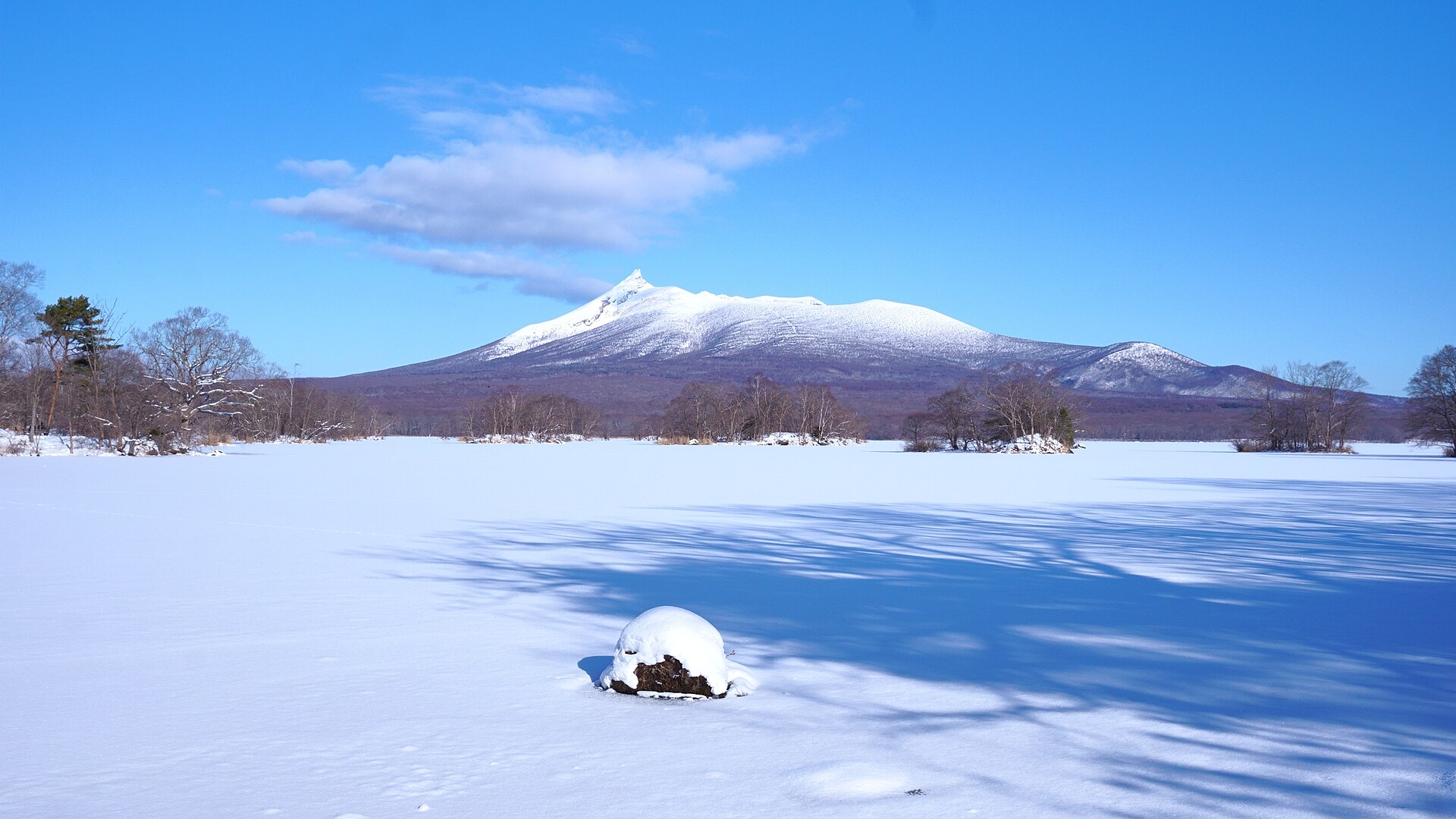

Most Hokkaido winter itineraries are lists of things to see: the Sapporo Snow Festival, the Otaru canal, a hot spring, some powder. The list is the easy part. The hard part is that Hokkaido in winter is a place where the transport can stop, all at once, for a day or more, and a plan with no slack in it turns that into a ruined trip.
That is not hypothetical. In late January 2026 a heavy snowfall shut down large parts of the rail and air network around Sapporo. Kyodo News, as reported by Anadolu, said JR Hokkaido cancelled more than 500 train services on Sunday 25 January, affecting nearly 130,000 people. Hokkaido Airports, per the same report, said nearly 7,000 people were stranded overnight at New Chitose Airport. This is the trip that angle is built around: seven days, trains by default, and two days left deliberately empty.
There is a second decision to make before you fly, and it is narrower than people expect. If you want to rent a car in Japan, the rule is not "bring an international licence". It is one specific paper permit, and a lot of travelers hold the wrong one. We cover that below, and it is the reason this plan is a rail plan.
What happened in January 2026, and what the sources disagree on
Reporting on the storm is messier than the headlines suggest. Here is what the coverage says, by source:
- Anadolu, citing Kyodo News and Hokkaido Airports (26 January 2026): over 500 JR Hokkaido train services cancelled on Sunday, affecting nearly 130,000 people; nearly 7,000 people stranded overnight at New Chitose Airport on Sunday; 56 flights cancelled; Sapporo-area trains resumed on Monday afternoon after tracks were cleared.
- FNN, citing NHK and local media (26 January): 140 Rapid Airport trains stopped on the previous day alone, and about 7,000 passengers reportedly spent the night at the airport. JR Hokkaido said it would be difficult to resume services even by 1 p.m. on Monday.
- CGTN, citing Xinhua (28 January): more than 90 flights cancelled at the airport on Monday, more than 170 train services suspended on Tuesday, and over 2,000 people forced to stay at the airport from Monday night into Tuesday.
Those numbers describe different days and different scopes: 500 services across the network on one day, 140 on the airport line alone, 170 on a later day. Do not add them up or quote one as "the" figure. They agree on the shape: hundreds of train services in a day, thousands of people sleeping in a terminal, and a recovery that took more than a day.
One traveler's first-hand account, published on photoguide.jp, describes boarding an airport train at New Chitose at about 11:10 a.m. on the Sunday and reaching Sapporo Station at 3:45 a.m. the next morning, more than 16 hours later, with JR's estimates for resuming slipping through the afternoon and evening. It is one person's account, not an official record, but it matches the pattern in the news reports. On the worst day, the 33 minute airport ride that JR Hokkaido advertises is not a number you can plan on.
Trains or a rental car: decide before you fly
Both options look fine on a map. In winter they fail differently.
The driving permit rule
The Japan Automobile Federation (JAF) states it plainly: holders of an International Driving Permit issued abroad under the 19 September 1949 Geneva Convention on Road Traffic can drive in Japan. IDPs issued under other treaties, such as the 1968 Vienna Convention, are not valid in Japan. That is the entire rule, and it catches people out because an IDP issued under the wrong convention looks like the right document.
A few more points from JAF's English pages:
- A separate route for six licence issuers. Holders of licences from Switzerland, Germany, France, Belgium, Monaco or Taiwan do not use an IDP. They may drive in Japan by carrying a Japanese translation of the licence together with the original. JAF does not translate IDPs.
- That translation has to be applied for from inside Japan. JAF's FAQ says applications are only accepted from within Japan. JAF's pages do not say whether short-stay visitors are excluded, and a secondary site claimed that tourists no longer qualify as of October 2025. We could not confirm that against JAF itself, so treat it as unresolved. If your licence is from one of the six, contact JAF or your rental company before you book, not at the counter.
The part that should drive your planning: a Geneva-format IDP is generally something you obtain at home, in advance, from your own country's issuing body, in paper form. We did not verify, country by country, which issuers produce the 1949 format, so check that on the permit itself or with the body that issues it. A traveler who arrives in Sapporo with the wrong permit has a rental reservation they cannot use, and in winter, on the one day the trains are not running, that is a bad time to find out.
We could not read the large rental chains' English pages, so confirm with the company that you also carry your home licence and passport.
What JAF and Hokkaido say about winter driving
Neither source is a Hokkaido-specific driving manual, but both are direct:
- Visit Hokkaido, the regional tourism site, says winter driving "carries many risks, such as frozen road surfaces and snowy roads, so avoid doing so if you are not accustomed to it."
- JAF says it is extremely dangerous to drive on snowy roads with regular tires, and that most rental cars are fitted with studless tires in winter, but you should check when you reserve. It also says to carry chains and a jack even with studless tires.
- Black ice is most dangerous on bridges, overpasses with good airflow, and near tunnel entrances and exits, and in the hours when daytime snow melts or temperatures drop after rain.
- In a whiteout, JAF says to turn on your hazard lamps and stop in a safe place.
- For road conditions, JAF points to JARTIC, the Japan Road Traffic Information Center.
Our opinion: if you have never driven on packed snow and ice, a first Hokkaido trip is not the place to learn, which is why the plan below uses no car. An experienced winter driver can still use it, and should rent only for the days needed.
What the train costs
JR Hokkaido sells a Hokkaido Rail Pass as 5, 7 or 10 consecutive days. On the operator's page, adult prices are ¥22,000 for 5 days, ¥28,000 for 7 days and ¥37,000 for 10 days when bought in advance (through major travel agents outside Japan or JR-EAST Train Reservation), and ¥1,000 more at a designated JR Hokkaido station. We could not find an independent second source that lists those prices, so confirm them on JR Hokkaido's site before you buy, because passes get repriced.
There are also 4-day area passes: the Sapporo-Noboribetsu Area Pass at ¥10,000 in advance or ¥11,000 at a station, and the Sapporo-Furano Area Pass at ¥11,000 or ¥12,000.
Two details that matter for this plan:
- Limited express trains are all reserved seats. JR Hokkaido says there are no non-reserved seats on its limited express trains, and that pass holders must get a reserved seat ticket before boarding. On some trains, if the quota for pass holders is full, you may not get a seat even if one is empty.
- No refund or extension for delays. After the start date, the pass is not extended or refunded "for any reasons including the cancellation and delay of trains," per JR Hokkaido. That is relevant to a winter trip, and it is a good reason not to buy a longer pass than your trip needs.
We did not find published fares for the Rapid Airport, Otaru or Noboribetsu legs, so we cannot say whether a pass beats point-to-point tickets here. Price the legs on JR Hokkaido's timetable search and compare. For a plan with one base and two day trips, the area pass or single tickets may be cheaper than a 5-day pass.
The plan: one base, two day trips, two empty days
The structure is a single base in Sapporo for six nights, with two day trips on rail lines that run out and back, and two days with nothing booked. One base means a cancelled train never strands your bags in a town you cannot leave, and a missed day trip does not mean rebooking a hotel.
| Day | Plan | Why it sits here |
|---|---|---|
| 1 | Arrive New Chitose, train to Sapporo, easy evening | Arrival day. Nothing you cannot lose. |
| 2 | Sapporo on foot: Odori Park, markets, food | A city day that works in any weather. |
| 3 | Day trip to Otaru by JR | First day trip, early in the week. |
| 4 | Day trip to Noboribetsu by limited express | Second day trip, reserved seats, check status first. |
| 5 | Spare day | Absorbs a cancelled day trip or a storm. |
| 6 | Spare day, or a second city day | Absorbs the week's second disruption, or becomes a bonus. |
| 7 | Fly out | Leave the morning free of anything else. |

Day 1: Arrive and do not try to do anything
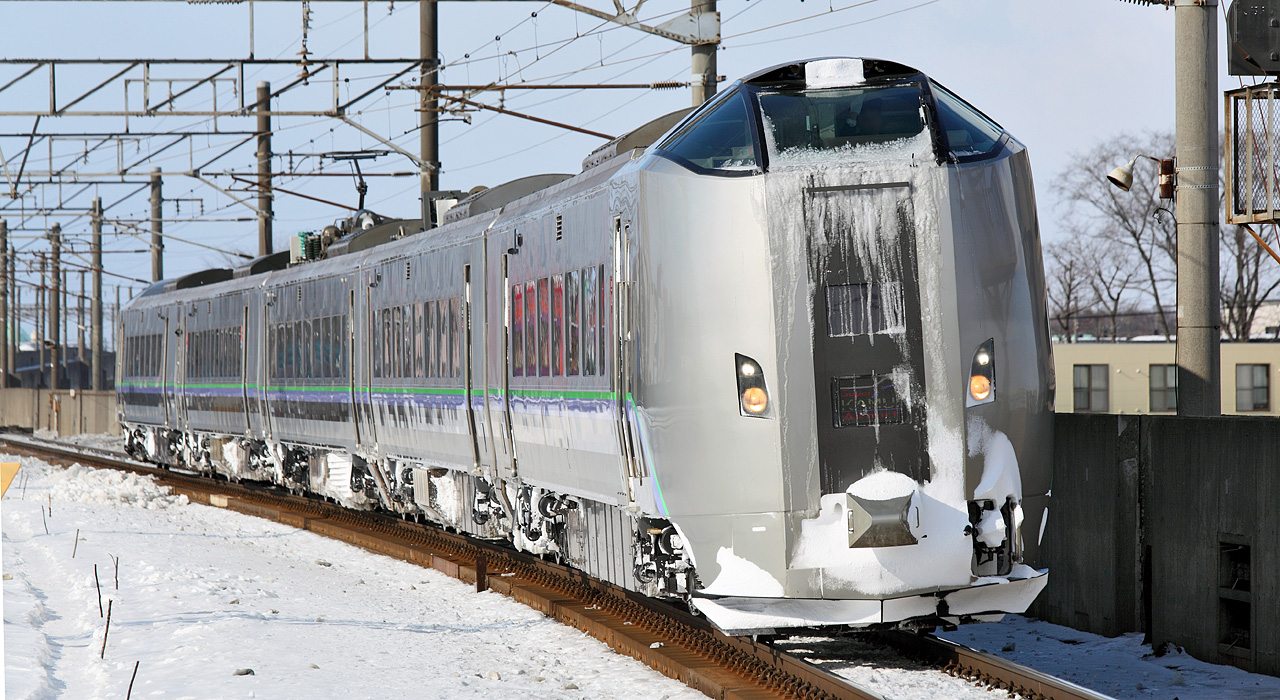
JR Hokkaido's airport page says there are six Airport Trains an hour between 9:00 and 16:00: one Special Rapid taking 33 minutes at its fastest, three Rapids at 37 minutes and two Semi-Rapids at 43. It gives no frequency for the rest of the day, so if your flight lands in the evening, check the timetable rather than assuming the same pattern. Most seats are unreserved, with car 4 reserved-seat only.
The Special Rapid number is the best case, and the January account is about exactly this leg. If your arrival day has heavy snow in the forecast, book the first night as flexible if you can and check JR Hokkaido's live operation information before you leave the gate. Otherwise: check in, eat, sleep. Day 1 is the cheapest day to lose.
Day 2: Sapporo on foot
Spend the day inside the city. Odori Park, the central strip of green that runs through downtown, is the spine of it. This is the day that functions in every kind of weather, and it is the day you swap with a day trip if the forecast turns.
If your dates fall in early February, the Sapporo Snow Festival is the reason to be here. The Hokkaido Tourism Organization lists the 2027 festival as 4 to 11 February, open every day, with venues at Odori Park, Susukino and Tsudome. We could not load the festival's own site to confirm, so check snowfes.com before you commit to dates. If you are going for the festival, the plan changes: Day 2 becomes festival day, and the rest stays as is.
Day 3: Otaru
Otaru is the standard winter day trip from Sapporo, and the JR Hokkaido airport page confirms it is on the same rail line as the airport: its fastest airport train reaches Otaru in 73 minutes. We did not find a published Sapporo to Otaru time or fare, so look both up on JR's timetable search.
It sits on day 3 on purpose: it is close, on a main line, and if it is cancelled you still have days 5 and 6. The canal and old warehouses are an afternoon walk, so Otaru is the easiest thing in the plan to drop or move.
One transfer fact from JR Hokkaido that matters if you extend the trip: anyone heading to Yoichi, Kutchan or Niseko by rail must change at Otaru, IC cards such as Suica do not work beyond Otaru, and you should buy a ticket at your departure station in advance. We did not verify journey times beyond Otaru, so we do not build a ski-resort leg into a seven day plan. If skiing is the point of your trip, this is a different itinerary.
Day 4: Noboribetsu
Noboribetsu is the hot spring town on the Sapporo-Noboribetsu area pass, and the day trip is by limited express. That means a reserved seat on a train where, per JR Hokkaido, there are no unreserved seats. We did not find a published Hokuto journey time, so we do not state one: look it up, and make sure the return is not the last train of the evening.
The rule for this day is simple. Check JR Hokkaido's live status the evening before and again in the morning. If the line is disrupted, do not go: you have a spare day for this. A day trip that strands you in a small town overnight with no booked room is the single worst version of a winter disruption.
Days 5 and 6: Spare, and meant to stay that way
The January coverage describes a recovery that took more than a day: trains resuming Monday afternoon in one report, services toward Hakodate and Asahikawa described by CGTN as unlikely to return to normal in the near term on the Tuesday. One storm can cost you a day of travel and a day of catching up. Two spare days is what makes the plan survive one storm without losing anything you wanted to do.
If the weather holds, use day 5 for whichever day trip you skipped and day 6 for a second look at Sapporo or a long meal. A bonus day in a good city beats a missed flight.
Day 7: Fly out
Your flight home is the one thing in this plan you cannot move, so stack nothing on top of it. JR Hokkaido's disruption page lists the fallbacks if the airport train is cancelled: a bus at roughly 70 to 90 minutes and about ¥1,500, or a taxi at about 60 minutes from about ¥17,000 per vehicle. It warns buses may become extremely crowded and that weather can lengthen journeys or suspend services.
If your flight leaves in the morning, consider sleeping near the airport the night before. That is our advice, not an official recommendation, and it costs a hotel night. The January coverage is the argument for it: the day the train stopped, people who were already at the airport had a very different day from people trying to reach it.

What to check when snow hits
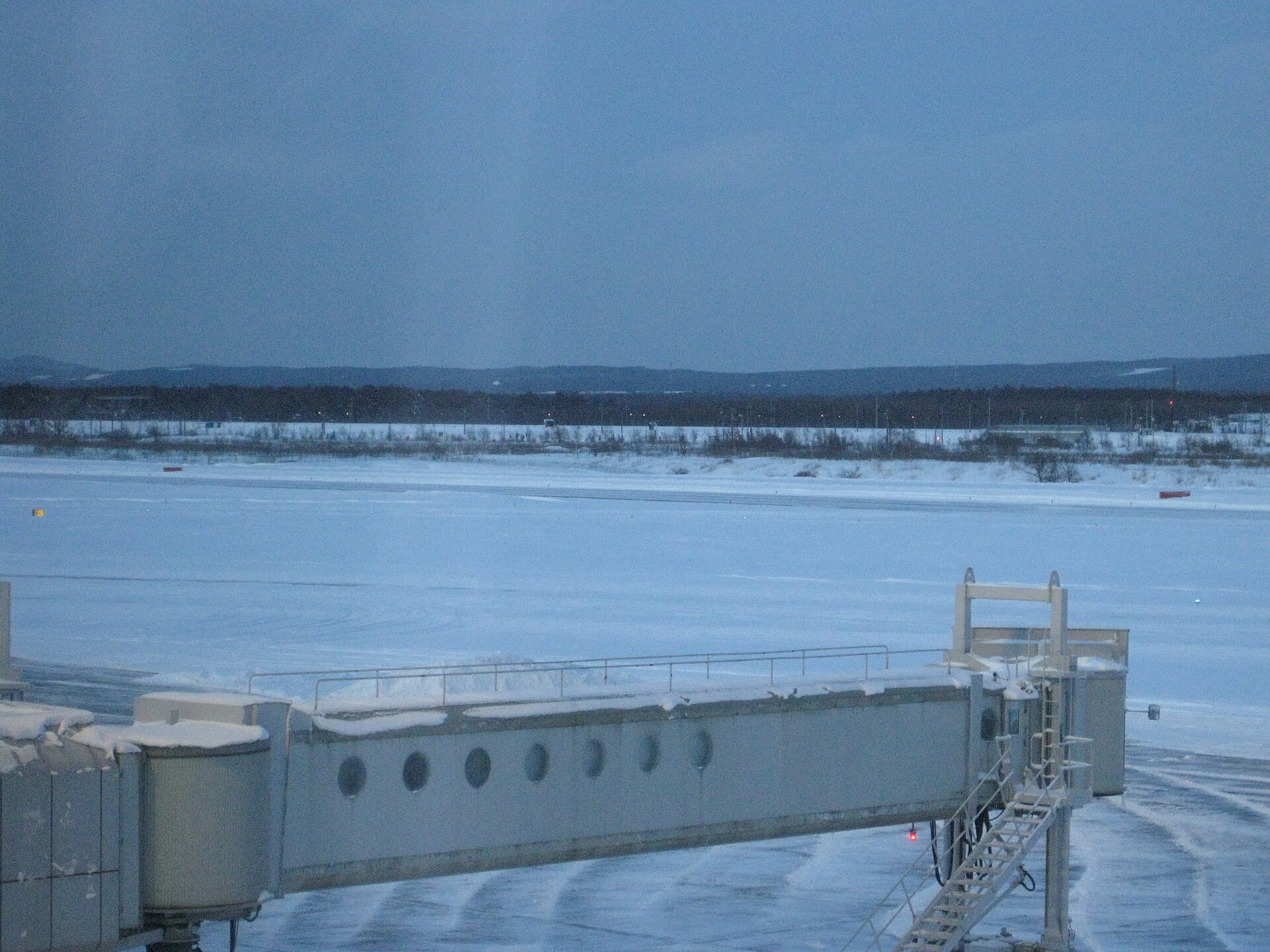
Keep these open on your phone, because the first sign of a disruption is usually on an operator's page, not in a headline:
- JR Hokkaido live operation information. The operator's disruption page links timetable and status pages for Sapporo and Otaru stations, and says to check the information boards in the station. A delay certificate can be requested at the station.
- The MLIT Hokkaido travel safety site. The Hokkaido District Transport Bureau, part of Japan's transport ministry, runs a site with an operating status panel that links live pages for JR Hokkaido, New Chitose Airport departures, ferries, expressway buses, roads and weather. Its pages are largely in Japanese with machine translation.
- Your airline, since the airline is the party that rebooks you.
The rule: if heavy snow is forecast for a travel day, move the travel a day earlier or later while you still have a choice.
Key Takeaways
| Point | Details |
|---|---|
| Snow can stop the network | In late January 2026, Kyodo (via Anadolu) reported over 500 JR Hokkaido services cancelled in one day. Other reports give different counts for different days and scopes. |
| The airport is the choke point | Nearly 7,000 people were reported stranded overnight at New Chitose on the Sunday, per Hokkaido Airports via Anadolu. |
| Driving needs a Geneva permit | JAF accepts IDPs issued under the 1949 Geneva Convention only. Vienna Convention permits are not valid. |
| Rail pass has no delay refund | JR Hokkaido does not extend or refund a pass for cancelled or delayed trains once it has started. |
| Limited expresses are all reserved | Get a seat ticket before boarding. Pass quotas can run out on some trains. |
| Snow Festival 2027 | 4 to 11 February per the Hokkaido Tourism Organization. Verify on the festival's own site. |
| Plan two spare days | Day 5 and day 6 are empty on purpose. They are what lets the trip survive one storm. |
| Fallback to the airport | Bus roughly 70 to 90 minutes and about ¥1,500, taxi about 60 minutes from about ¥17,000, both subject to weather and crowding (JR Hokkaido). |
Where this plan breaks
It breaks if the storm hits twice. Two spare days survive one disruption. They do not survive a second, or one that closes the airport on departure day. There is no itinerary that protects you from that. A flexible flight and travel insurance that covers weather are the only real hedges, and policy terms vary, so read yours.
It breaks on arrival and departure days. The fragile airport trains sit on the two days you cannot move. Sleeping near the airport the night before departure reduces the risk and costs a hotel night.
It breaks if you hold the wrong permit. If you were planning on a rental car and your IDP is the Vienna format, there is no workaround at the counter. Fix this weeks before you fly, and if you cannot, switch to the train plan above, which is why that plan exists.
It breaks if a day trip has no return. If the Noboribetsu return cancels, you need a bed in a small town. Skip it on a bad forecast day.
Some numbers here are unverified by us. We did not find published fares for the Rapid Airport, Otaru or Noboribetsu legs, journey times for Otaru and Noboribetsu from Sapporo, or the rental companies' own requirements. They are left out on purpose, and you need to look them up.
How Planytera handles a trip like this
Planytera is an AI trip planner built by a solo developer, available on iOS, Android and the web. You describe the trip and it produces a day-by-day itinerary, ready in moments. A trip where the weather decides which days work leans on a few things in particular.
Re-pacing when a day is lost. This is the plan that changes at 6 a.m. when a train is cancelled. You can swap a day, move the day trip onto a spare day, or lighten the next morning, and the rest of the itinerary stays in sync instead of needing to be rebuilt from the top.
Offline access. On a stalled train or in an airport terminal with a crowded network, a plan you cannot open is not much of one. Recently opened trips keep the itinerary and notes available with no connection on the iOS and Android apps.
To be plain about the limits: Planytera does not book trains, flights or rental cars, does not sell tickets, and does not track live prices or live train status. It does not know about cancellations or snow forecasts. You have to check JR Hokkaido, the airport and your airline for that. Use the itinerary to decide where the days fall once you know.
Frequently asked questions
Can I rent a car in Hokkaido with any international driving permit?
No. JAF says only an IDP issued under the 1949 Geneva Convention on Road Traffic is valid for driving in Japan. Permits issued under other treaties, such as the 1968 Vienna Convention, are not valid. Licences from Switzerland, Germany, France, Belgium, Monaco and Taiwan use an official Japanese translation from JAF instead, applied for from inside Japan.
Is it better to use trains or a rental car in a Hokkaido winter?
For most visitors, trains. Visit Hokkaido advises against winter driving if you are not accustomed to it, and JAF describes black ice on bridges and near tunnels and the danger of regular tires on snow. Trains are not immune: the January 2026 snowfall cancelled hundreds of JR Hokkaido services in a day. But a rail plan with spare days fails gently, and a car plan on a blizzard day can fail dangerously.
Is the Hokkaido Rail Pass worth it?
We cannot say from the sources we could read. JR Hokkaido lists adult prices of ¥22,000 for 5 days, ¥28,000 for 7 days and ¥37,000 for 10 days when bought in advance, but we did not find published fares for the legs in this plan. Add up the individual fares on JR Hokkaido's timetable search and compare. Remember that the pass is not refunded or extended for delays, and that every limited express needs a reserved seat.
What do I do if my train to the airport is cancelled?
JR Hokkaido tells you to check the station information boards and its operation information, then consider other transport. It lists an airport bus at roughly 70 to 90 minutes and about ¥1,500, and a taxi at about 60 minutes from about ¥17,000 per vehicle. It warns buses may become extremely crowded and that weather can lengthen journeys or suspend services. A delay certificate can be requested at the station. Contact your airline early as well.
When is the Sapporo Snow Festival in 2027?
The Hokkaido Tourism Organization lists 4 to 11 February 2027, open every day, at Odori Park, Susukino and Tsudome. We could not load the festival's own site, so confirm there before booking anything non-refundable.
Useful sources and further reading
- Japan Automobile Federation: driving in Japan, for the 1949 Geneva rule, the Vienna exclusion, the one year limit and the six translation countries.
- Japan Automobile Federation: snow-covered and icy roads, for tires, chains, black ice and whiteout guidance.
- Visit Hokkaido: useful information for your trip, for the advice to avoid winter driving if you are not accustomed to it.
- JR Hokkaido: airport trains, for the 33 minute Special Rapid, the hourly frequency and the Otaru transfer for Niseko.
- JR Hokkaido: if your train is delayed or cancelled, for the bus and taxi fallbacks and the delay certificate.
- JR Hokkaido: rail passes, for pass prices, reserved seat rules and the no refund policy.
- Anadolu Agency: heavy snow derails normal life in northern Japan, for the 500 services and 7,000 stranded figures.
- FNN: Hokkaido snow coverage, for the 140 Rapid Airport trains figure.
- CGTN: over 2,000 stranded at Hokkaido airport, for the later-day figures.
- photoguide.jp: Hokkaido winter travel tips, a first-hand account of the January airport train delay.
- Hokkaido Tourism Organization: Sapporo Snow Festival, for the 2027 dates.
- MLIT Hokkaido travel safety information, for the live transport status panel.
Recommended
More from the Planytera blog.