Blog17 min read
7 Day Bhutan Itinerary: Days Against Budget
A seven day Bhutan plan built on the US$100 nightly Sustainable Development Fee, and on the guide rule that sources still disagree about.
By Dom
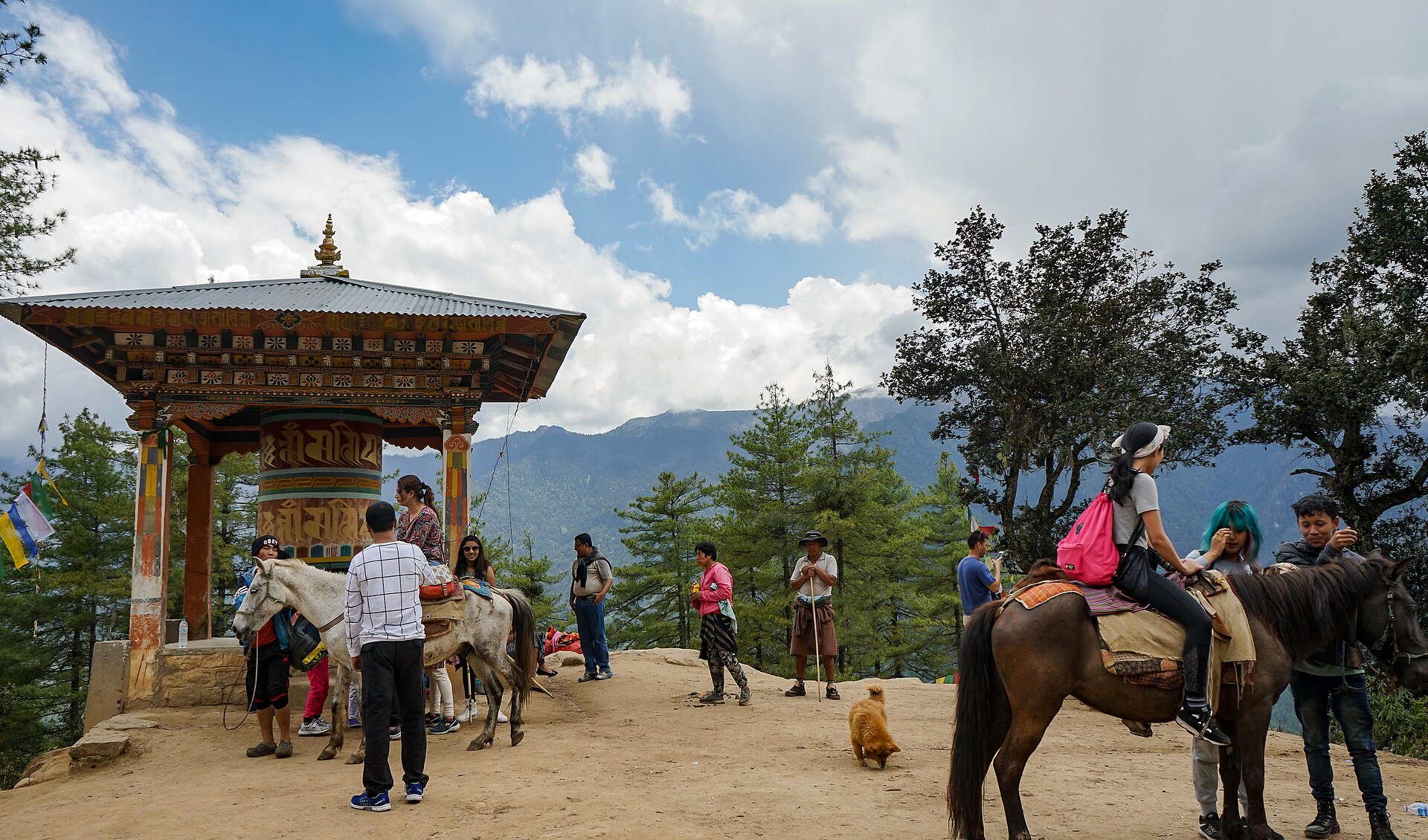

Most countries charge you for what you do. Bhutan charges you for how long you stay. The Sustainable Development Fee is a daily levy paid to the Royal Government of Bhutan, it does not cover food, accommodation or transport, and it is the first line of every honest budget for the country.
That changes what "7 days" means. In most places a seventh day is a seventh day of sightseeing. In Bhutan it is a seventh instalment of a fixed fee, before you have eaten, slept or moved a metre. So the real planning question is not which monasteries to see. It is how many nights the trip is worth, and what each additional night has to deliver to justify a charge that arrives before anything else does.
This post builds a seven day, six night route that makes that trade deliberately, and it is upfront about the places where the sources disagree. One of them is the guide rule, and the honest answer is that the sources I could reach do not agree on it.
Sourcing note: the Tourism Council of Bhutan's own site refused connections when I tried it for this post, so the fee, visa and guide figures below come from the UK Foreign Office, the government-cited pages summarised on Wikipedia, and several tour operators, not from the Bhutanese tourism authority directly. Where that matters, I say so.
The fee that sets the price
Here is what the sources agree on.
The Sustainable Development Fee, usually shortened to SDF, is US$100 per person per night for most international adult visitors. The UK Foreign Office says so on its Bhutan entry requirements page: all adult visitors must pay a daily fee of US$100 per night. Wikipedia's visa policy page, which cites the Department of Immigration FAQ, says the rate runs "from 1 September 2023 till 31 August 2027". Operators describe it as half of the standard US$200 rate, a discount that has been extended to a fixed end date.
The fee has an end date, and nobody has said what comes after. One operator guide says plainly that what happens after 31 August 2027 has not been announced. If your trip falls close to that boundary, the rate you will pay is a question to put to whoever sells you the trip, in writing.
It is charged per night, not per day. A trip described as seven days with six nights in the country carries six nights of SDF. Arrive on Monday, leave the following Sunday, and you have paid for six. The sources use "day" and "night" loosely, so confirm with your operator exactly how your arrival and departure dates are counted.
On top of the SDF, most visitors pay a one-off visa application fee of US$40. The Foreign Office and Wikipedia both give that figure, and both describe it as non-refundable. The visa is applied for in advance, and the Foreign Office notes that you can arrange it through a Bhutanese tour operator, through a hotel, or via the Department of Immigration's website. Your passport must have an expiry date at least six months after the date you plan to leave Bhutan.
Children are where the sources start to drift. Most put children under 6 at no charge and children aged 6 to 11 at half, so US$50 a night. Others say 6 to 12 for the half rate. Wikipedia says tourists over the age of 5 pay. If you are travelling with a child close to any of those thresholds, check their age against the rule your operator is applying, not the one in a blog. Indian nationals pay a separate rate, reported as Nu. 1,200 per person per night, and that rate sits outside this post.
The fee, as arithmetic
The SDF is the only part of the cost that is the same for every traveller. So do that arithmetic first.
| Nights in Bhutan | SDF per adult | Plus visa fee | Fixed total per adult |
|---|---|---|---|
| 4 | US$400 | US$40 | US$440 |
| 5 | US$500 | US$40 | US$540 |
| 6 | US$600 | US$40 | US$640 |
| 7 | US$700 | US$40 | US$740 |
Those are my multiplication of the published rate, not figures from a price list. The point of the table is the last column. Going from five nights to six adds US$100 to the fixed cost before you have chosen a single hotel. Going from six to seven adds another US$100.
Everything else sits on top. Accommodation, meals, ground transport and any guide are paid separately, and the SDF does not cover them. One operator, Little Bhutan, gives a rule of thumb for an all-in private trip, SDF included, of roughly US$250 to US$450 per person per day. That is an operator estimate, not a government figure, and I could not find an independent source to test it against, so treat it as a ballpark that tells you the SDF is only part of the bill. Multiplied across six nights it implies roughly US$1,500 to US$2,700 per person, which is my arithmetic on their range, not a quote.
The guide rule: where the sources disagree
The angle of this post is that a licensed guide requirement pushes most travellers toward packaged routes. That is true for some of the country and not obviously true for all of it, and here is the honest state of the evidence.
Four sources I could read say four different things.
- Some operators say a guide is required by law throughout. Ambo Tours states that you are "required by law to have a licensed Bhutanese guide with you for your full visit", and that this applies to non-Indian visitors for their whole stay.
- Another operator says the rule only bites beyond two districts. Breathe Bhutan says that in Paro and Thimphu "you are free to travel independently", and that beyond those two districts, with Punakha, Haa, Bumthang and eastern Bhutan named, you must travel with a licensed Bhutanese guide. The operator's article is dated October 2025.
- The UK Foreign Office does not say a guide is mandatory. Its page says permits are needed for some areas and that your tour guide will help to get them. It neither requires nor forbids independent travel.
- The official tourism site I could reach says nothing on it. The page at bhutan.travel did not state a guide rule either way.
These cannot all be the current rule. The distinction in the second source is the most specific, and it matches how the seven day route below is shaped, because Punakha, a night away from Thimphu, is where it would matter. But I could not confirm it from a Bhutanese government page, and an operator that sells guided trips has an obvious interest in the stricter version.
So I will not tell you which is right. What I will say is how to plan around it. For this route, assume you will have a licensed guide for the Thimphu to Punakha leg at the least, ask your operator which rule applies in writing, and price a guide into the budget. If it turns out the rule is looser, you have a cheaper trip than the one you planned. If it is stricter, you did not get surprised on arrival.
Getting in, and why the arrival day is soft
Paro is where you land. Paro International Airport is the country's international gateway, served by Drukair and Bhutan Airlines according to the Wikipedia airport page, and I found no other international airport.
Two facts about that airport shape the whole plan.
It sits at an elevation of 2,235 metres in a deep valley, with a single runway and peaks around it that rise as high as 5,500 metres. And flights operate only under visual conditions and only in daylight, from sunrise to sunset, with extra restrictions in the windy season. That is the reason this itinerary has a spare day built into the end. A flight that cannot see the runway does not land, and one that cannot take off in daylight does not leave.
From the airport, Thimphu is about 54 kilometres away by road. Guides put the drive at roughly an hour, with the slower estimates a little over an hour. I will not be more precise than that, because sources differ and road works change it.
The seven day plan
Six nights, built so that the heavy days are not stacked on top of each other and the last day is a soft landing before a daylight-only airport.
Opening hours, ticket prices and festival dates for individual sites change, and I could not verify them from official pages for this post. I have kept to what I could source, and your guide should confirm the rest.
Day 1: Fly into Paro, drive to Thimphu
Arrive, clear immigration with the visa you applied for in advance, and drive to Thimphu. That is about an hour on the road, which makes this a short, forgiving first day. Paro sits at 2,235 metres, and it is worth treating the first evening as an adjustment period rather than a sightseeing slot. There is no need to fill it.
Day 2: Thimphu
A full day in the capital. Thimphu is where the government sits, and it is the city where you can see a working Bhutanese town, rather than a monument. Plan this as a slow day built around walking, a dzong, the craft and textile side of the city, and a long lunch.
Day 3: Over Dochula Pass to Punakha
This is the first long driving day, and the first one where the guide rule is likely to apply. The road from Thimphu to Punakha runs over the Dochula Pass on the East-West Road. The pass sits at about 3,100 metres, with Wikipedia noting that other sources give 3,140 and 3,150 metres.
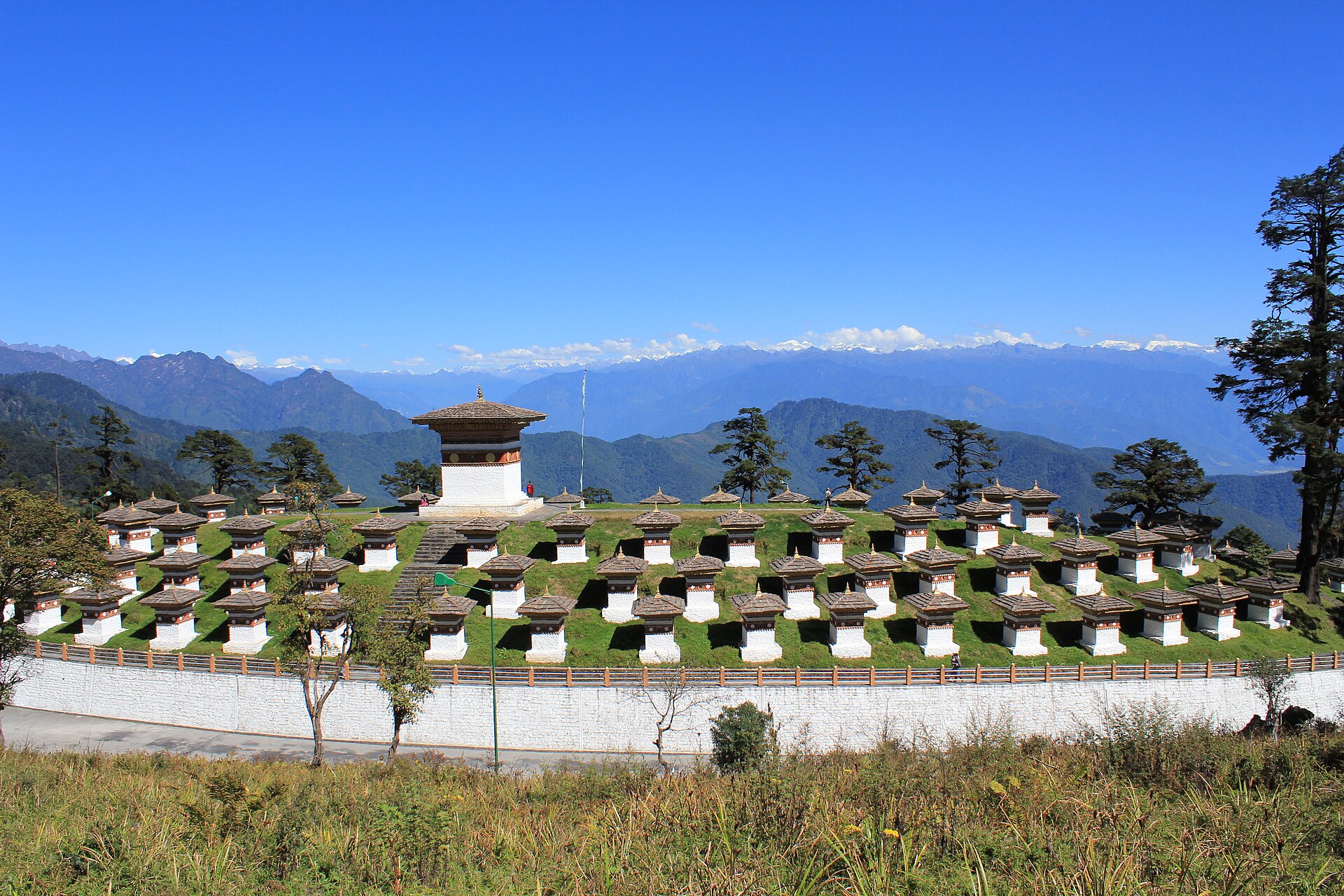
Stop at the Druk Wangyal Khang Zhang Chortens, the 108 stupas arranged in three layers of 45, 36 and 27 around a main chorten, completed in June 2004. Allow time for it. The pass is a viewpoint, and on a clear morning it is among the places the trip is built around, though I will not promise a view, because cloud decides that.

I could not find a sourced driving time for the Thimphu to Punakha leg, so I will not invent one. Ask your operator for the current road time, and treat the day as a driving day with sights along it, not a sightseeing day with a drive in the middle.
Day 4: Punakha Dzong, then a slow return toward Paro
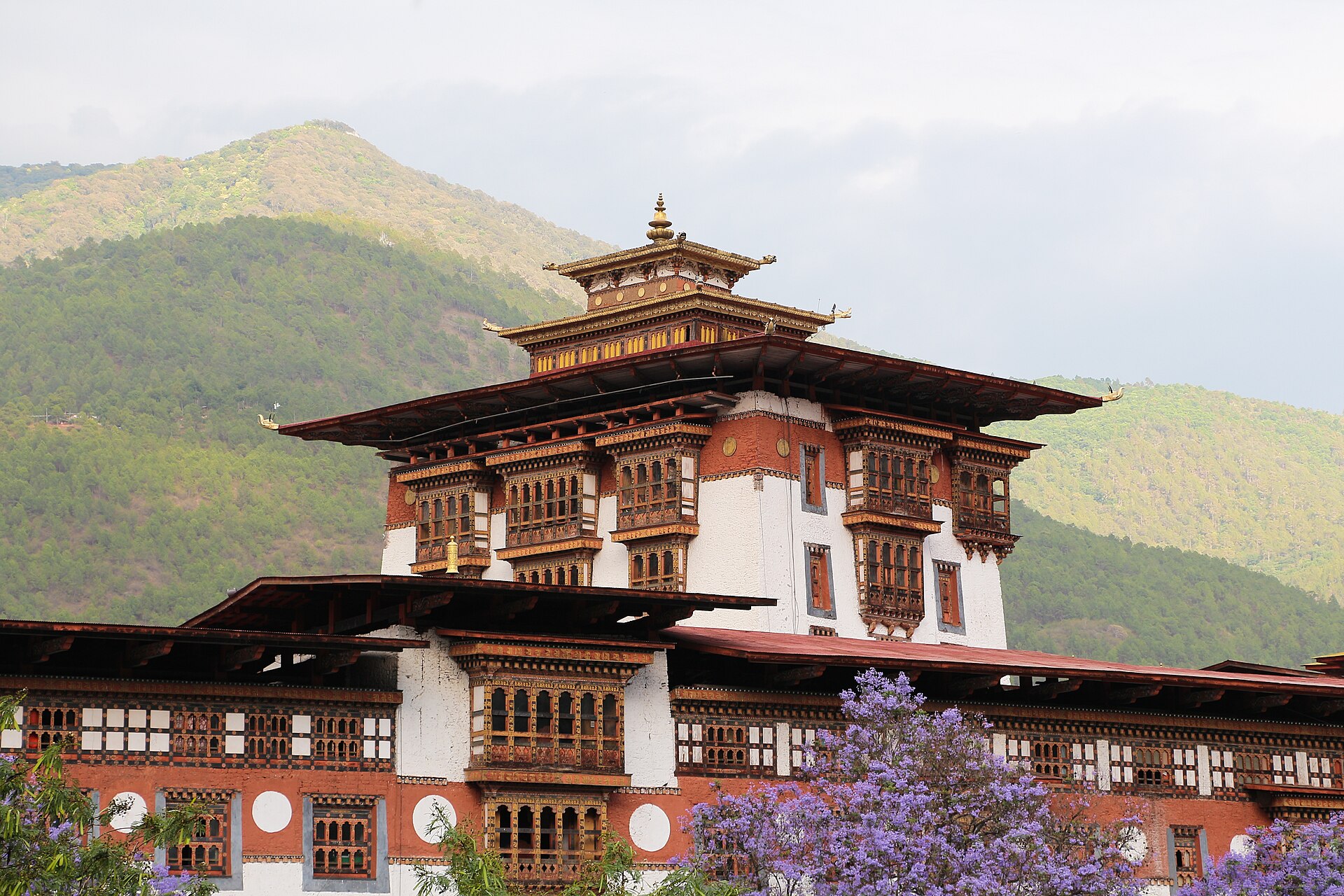
Punakha Dzong is the reason to come this far. Construction began in 1637 and finished in 1638, ordered by the first Zhabdrung Rinpoche, and it stands between the Pho Chhu and Mo Chhu rivers. Punakha is the winter capital, and the dzong was the seat of government until 1955, when the capital moved to Thimphu.
A covered cantilever bridge crosses the Mo Chu to the dzong, and the current one was completed in 2008. Go in the morning if you can, before the light flattens and the groups arrive.

If your dates fall in February or March, the Punakha Dromche and Tshechu festival is usually held then, starting on the ninth day of the first Bhutanese month, per Wikipedia. The exact dates move with the lunar calendar, so check them for your year before you build a trip around them.
In the afternoon, begin the drive back over the pass toward Paro. How far you get depends on the road, so this is a day where you let the driver and the guide set the pace.
Day 5: Tiger's Nest
Paro Taktsang, the Tiger's Nest, is the single most photographed thing in the country and the one stop on this itinerary I would not skip. The monastery sits at 3,120 metres and about 900 metres above the Paro valley, so it is a real hike, not a viewpoint.
Give it the morning, start early, and treat it as the only major thing you do that day. A fire on 19 April 1998 damaged the main building, and the monastery was restored by 2005, per Wikipedia. Wikipedia also reports an entrance fee of Nu. 1,000 for adult visitors since March 2023, and that certain dates on the lunar calendar are reserved for Bhutanese visitors only. I could not confirm either from an official page, so ask your guide for the current fee and whether your date is open to foreign visitors before you plan around it.
Day 6: Spare day in Paro
Everything this day does is protection. The airport runs on daylight and visual conditions only, so a delayed departure the day after is a real possibility, and a spare day inside the country is cheaper than a missed international connection.
If nothing went wrong, use it for the Paro valley at an easy pace, a market, a quieter temple, or simply a late start. Do not stack anything with a fixed time on it.
This is also the day that the money question comes back. It is the night you pay US$100 for the privilege of having slack. Whether that is worth it depends on your onward flight, and the next section tests exactly that.
Day 7: Fly out of Paro
Leave Paro in daylight, on a flight booked with a margin. If your onward connection from Delhi, Kathmandu, Bangkok or elsewhere is on the same day, you are the traveller most exposed to a daylight-only airport. Build your onward flight so that a one day delay does not cost you a non-refundable ticket.
Days against budget: the real decision
Here is the decision the angle promised. A Bhutan trip has fixed costs per night, a floor of travel days at each end, and a limited amount of sight value per day. Changing the number of nights changes all three.
| Nights | What you can do | What you give up | Fixed cost per adult (SDF + visa) |
|---|---|---|---|
| 4 | Paro, Thimphu, and Tiger's Nest, with no Punakha | Dochula, Punakha, any buffer | US$440 |
| 5 | Adds Punakha, with little slack | The spare day | US$540 |
| 6 | The route above, with a spare day | The east, Haa, Bumthang | US$640 |
| 7 | Adds one extra night in Punakha or Paro | Nothing, but pay for slack twice | US$740 |
Four nights suits someone connecting through the region and drops Punakha. Seven suits someone who dislikes driving days. For most first trips six is the sensible middle: the shortest plan that includes the pass, the dzong and the hike and still leaves a day for a daylight-only airport. That is a judgement, not a measured result.
Key Takeaways
| Point | Details |
|---|---|
| The fee is per night, and it comes first | US$100 per adult per night for most international visitors, on rates stated to run from 1 September 2023 to 31 August 2027. Nothing has been announced for after that. |
| Six nights means a fixed US$640 per adult before anything else | Six nights of SDF at US$100 plus the one-off US$40 visa fee. This is my arithmetic on the published rates. |
| The visa is separate and non-refundable | US$40 per person, applied for in advance through an operator, a hotel or the Department of Immigration, with a passport valid at least six months past departure. |
| The guide rule is disputed between sources | Some operators say a licensed guide is required throughout. Another says Paro and Thimphu are free, and a guide is required beyond them. Ask for the regulation in writing. |
| Paro airport flies by daylight and sight only | At 2,235 metres in a valley, with visual-only, sunrise-to-sunset operations, so a spare day before departure is cheap insurance. |
| The route is Paro, Thimphu, Punakha, Paro | Dochula Pass at about 3,100 metres on the way, Punakha Dzong built in 1637 to 1638, and Tiger's Nest at 3,120 metres. |
| Each extra night costs US$100 before hotels and food | The decision between four, six and seven nights is a budget decision first and a sightseeing decision second. |
Where this plan breaks
It assumes the SDF is still US$100 on your dates. The discount is stated to run to 31 August 2027, and what follows is not announced. If your trip is near or after that date, the plan's fixed cost is unknown, and every night in the table above could cost more.
It assumes a guide for the Punakha leg and nothing more. If the strict version of the rule is the current one, a guide is needed from the first day, and the guide cost is a line in the budget on every day, not just three of them. Neither case changes the route, but the second changes the price.
It assumes your flight out is not on the same day as an onward connection. The airport operates by daylight and visual conditions. One cancelled or delayed departure and Day 7 becomes Day 8, at another US$100 night plus a room.
It assumes Tiger's Nest is open to you on your date. Wikipedia reports certain lunar calendar dates are reserved for Bhutanese visitors only. I could not find the list, so ask before you commit a hike day to a specific date.
How Planytera handles a trip like this
Planytera is an AI trip planner built by a solo developer, available on iOS, Android and the web. You describe the trip and it builds a day-by-day itinerary, ready in moments. A few things matter specifically for a trip shaped like this one.
Pacing as a setting. The reason this route puts Tiger's Nest on Day 5 and keeps Day 2 empty is altitude and fatigue, not tourism. Planytera builds the day-by-day structure from your pacing preferences, so a gentle start and a single big day per stretch are things you ask for instead of rearranging by hand.
Re-pacing without a rebuild. If a flight into Paro is late or the road over the pass is slow, the days around it should shift together rather than force you to start over. That matters on a short trip where each night carries a fixed fee.
Per-person cost estimates and split costs. Because the SDF is charged per person per night, the trip total is easy to get wrong in a group. A running per-person figure helps you see what a fifth, sixth or seventh night does to the budget before you commit, and split costs tracks who owes whom without moving anyone's money.
Offline access. Mobile coverage on mountain roads and in remote valleys is not something to rely on. A saved trip keeps your itinerary and notes available without a connection.
It does not book flights, hotels, the visa or the SDF, and it does not track live prices. The fee, the visa, the guide and every hotel are still arranged directly, through an operator or the official portals.
Frequently asked questions
How much does the Bhutan Sustainable Development Fee cost?
US$100 per adult per night for most international visitors. Wikipedia, citing the Department of Immigration, gives the validity as 1 September 2023 to 31 August 2027, and the UK Foreign Office also states US$100. Children's thresholds differ between sources, and nothing is announced for after August 2027.
Do I need a licensed guide in Bhutan?
Sources disagree. Some operators say a licensed Bhutanese guide is required by law for the whole stay. One operator says you can travel independently in Paro and Thimphu, and a guide is required beyond those two districts. The UK Foreign Office page does not say a guide is mandatory, and the tourism page I could reach did not address it. I could not confirm it from a Bhutanese government page, so ask your operator for the rule that applies to your route, in writing.
How much is the Bhutan visa?
The visa application fee is US$40 per person, non-refundable. The Foreign Office says you can arrange it through a Bhutanese tour operator, a hotel, or the Department of Immigration's website. Your passport must be valid for at least six months after the date you plan to leave Bhutan.
Is seven days enough for Bhutan?
For the western circuit of Paro, Thimphu and Punakha, six nights is workable and is the shortest plan I would recommend that still leaves a spare day. Eastern Bhutan and places like Haa and Bumthang would turn it into mostly driving. The choice between four, six and seven nights is mostly a budget decision, because each extra night adds US$100 in fee per adult.
Why does Paro airport matter for planning?
It sits at 2,235 metres in a mountain valley, with one runway, and flights run only in daylight under visual conditions, with extra restrictions in the windy season. That makes delays a normal risk rather than a rare one, which is why the plan keeps a spare day at the end and advises against a same-day non-refundable onward connection.
What does a week in Bhutan actually cost?
The fixed part is knowable: six nights is US$600 in SDF plus a US$40 visa, so US$640 per adult. The rest depends on hotel, transport and guide. One operator, Little Bhutan, gives a rule of thumb of roughly US$250 to US$450 per person per day all-in, SDF included. That is an operator estimate rather than a government figure, so use it as a rough range and ask for a written quote.
Sources and further reading
- GOV.UK: Bhutan entry requirements, for the US$40 visa fee, the US$100 daily fee, passport validity and who can arrange the visa.
- Wikipedia: Visa policy of Bhutan, for the SDF validity dates of 1 September 2023 to 31 August 2027, which it attributes to Department of Immigration pages.
- Windhorse Tours: What is the SDF and how much is it, for the rate, the child discounts and the point that the fee covers no food or accommodation.
- Breathe Bhutan: Understanding the Sustainable Development Fee, for the claim that Paro and Thimphu can be visited independently and the guide rule beyond them.
- Ambo Tours: Bhutan visa and entry, for the contrasting claim that a licensed guide is required for the full visit.
- Little Bhutan: Bhutan Sustainable Development Fee, for the child rates, the note that nothing is announced after August 2027, and the all-in daily cost rule of thumb.
- The Nation Thailand: Why travellers still pay Bhutan's US$100 nightly fee, for the visa fee, payment in advance and the use of the funds.
- Bhutan official tourism site, for the visa portal link, and for the absence of a stated guide rule.
- Wikipedia: Paro Airport, for elevation, daylight visual-only operations, the runway and the distance to Thimphu.
- Wikipedia: Paro Taktsang, for elevation, height above the valley, the 1998 fire, the restoration and the reported entrance fee.
- Wikipedia: Dochula Pass, for the elevation range and the 108 chortens.
- Wikipedia: Punakha Dzong, for the construction dates, the river confluence, the floods and the festival timing.
Recommended
More from the Planytera blog.