Blog19 min read
New Zealand South Island: 10 Days of Real Drive Times
A 10 day South Island itinerary built on published drive times, the Milford Sound arithmetic, and the one region you should cut to make it work.
By Dom
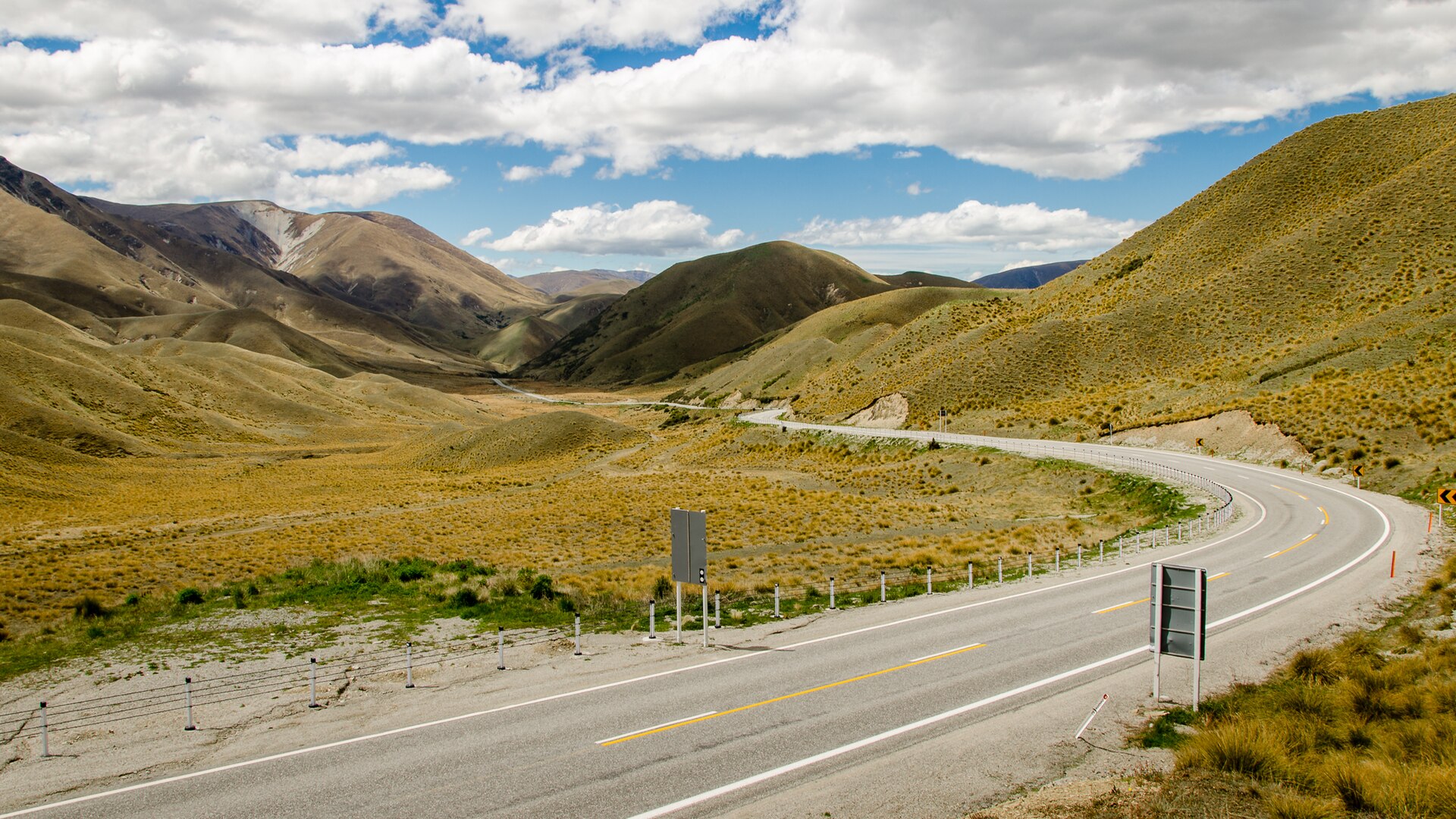

The South Island looks small on a map, and that is the whole problem.
Christchurch to Queenstown is one finger-width. Queenstown to Milford Sound looks like a morning. Two dots that sit close together on a national map turn out to be separated by an alpine pass, a one-lane bridge, a stretch of road with no fuel on it and a tunnel with a traffic light at each end.
Tourism Industry Aotearoa, which runs the official DriveSafe site for visiting drivers, puts it in one sentence: "New Zealand is a small country, but driving times can often take longer than expected due to our winding roads."
That is not a warning about being slightly late. It is the constraint that decides how many places a ten day trip can hold, and the answer is fewer than almost every published South Island itinerary claims.
The number that reframes the whole trip
DriveSafe publishes a leg-by-leg breakdown of the classic Christchurch to Queenstown route, the spine of nearly every South Island holiday. Here it is as published.
| Leg | Distance | Driving time |
|---|---|---|
| Christchurch to Geraldine | 167 km | 2 hr 30 min |
| Geraldine to Tekapo | 89 km | 1 hr 15 min |
| Tekapo to Aoraki/Mt Cook | 103 km | 1 hr 30 min |
| Aoraki/Mt Cook to Wanaka | 206 km | 2 hr 45 min |
| Wanaka to Arrowtown | 56 km | 1 hr |
| Arrowtown to Queenstown | 21 km | 20 min |
| Total | 642 km | 9 hr 20 min |
Nine hours and twenty minutes of moving, before a single photograph, coffee, toilet stop or short walk. And that is the version that already skips things.
DriveSafe's own recommendation for this route is the part worth reading twice: "You can get to Queenstown from Christchurch in a day. The South Island however has so much to offer that it would be a real crime to rush through. In a perfect world you should plan between 4 - 7 days for this spectacular trip alone."
Four to seven days for one leg of what most people sell as a ten day island tour. The same page gives the return route without retracing, via Cromwell, Alexandra and Oamaru, as 564 km and 8 hours. A full loop back to Christchurch is therefore roughly 1,200 km and about 17 hours of driving as published, and that loop does not include Fiordland or the West Coast.
Why the times are what they are
None of this is because New Zealand roads are bad. It is because they are a different kind of road from the one most visitors learned to drive on.
The open road limit is 100 km/h, and it is a limit, not an average. Some expressways allow 110 km/h where signposted and roadworks drop to 30 or 50 km/h. On State Highway 8 over the Lindis Pass, the number on the sign has very little to do with the speed you will hold.
Most of the network is one lane each way. Overtaking happens in designated passing lanes or not at all. A single yellow line on your side means no overtaking, a double yellow means none in either direction, and if five or more vehicles are queued behind you on the open road you are required to pull over and let them past.
One-lane bridges are normal. Signs say which direction gives way, and the big arrow has right of way. There are many of them on the West Coast, and each one is a full stop.
You are probably driving on the wrong side. New Zealand drives on the left. DriveSafe flags this for visitors from the United States and continental Europe, along with the rules that catch them out: give way to the right, no "first to arrive goes first", no left turn on red.
Fatigue is the real speed limit. The official advice is blunt: "Plan to drive only 1-2 hours at a time, with regular breaks." It also says to spend your first night in your arrival city rather than collecting a car and driving off jet-lagged. An itinerary that lands you in Christchurch and puts you in Tekapo the same afternoon ignores both.
Alcohol. The blood alcohol limit is 0.05% for drivers over 20 and zero under 20. On a route through Central Otago wine country, pick the driver before the tasting.
The Milford Sound arithmetic
This is where itineraries break most often, and the numbers are published plainly by the Department of Conservation.
From Queenstown: "Queenstown to Milford return is 600 km (360 miles) and takes 12-14 hours." DOC follows it with a recommendation, not a suggestion: "We recommend that you plan your return trip to Milford from Te Anau."
From Te Anau: "Te Anau to Milford and back is 240 km (144 miles). An eight hour day is needed if you plan to take in the scenic sights and short walks along the way, and do a boat cruise on Milford Sound."
Operators publish figures that line up with that. RealNZ sells its coach and cruise day trip from Queenstown as a "12 hour full day experience" and the same trip from Te Anau as a "7 hour full-day experience". Southern Discoveries describes the Queenstown drive as "about 5 hours each way" and the Te Anau drive as "2-2.5-hour drive each way".
Subtract one from the other and you get the useful number: Te Anau sits roughly two and a half hours from Queenstown, and moving your base there for two nights converts a 12 to 14 hour endurance day into an 8 hour one that includes the walks and the cruise. That single decision is the highest-value change most South Island itineraries need.

What the Milford Road actually asks of you
DOC's driver guidance for State Highway 94 is short and every line of it is operational.
There is no fuel. "There are no shops or fuel stations between Te Anau and Milford Sound." Fill the tank in Te Anau, and take food and water with you. Public toilets exist only at Te Anau, Knobs Flat and Milford.
There is barely any phone signal. "There is limited mobile phone coverage outside of Te Anau." There is a card phone at Knobs Flat, a satellite phone at the Homer Tunnel for emergencies only, and a card phone at Milford.
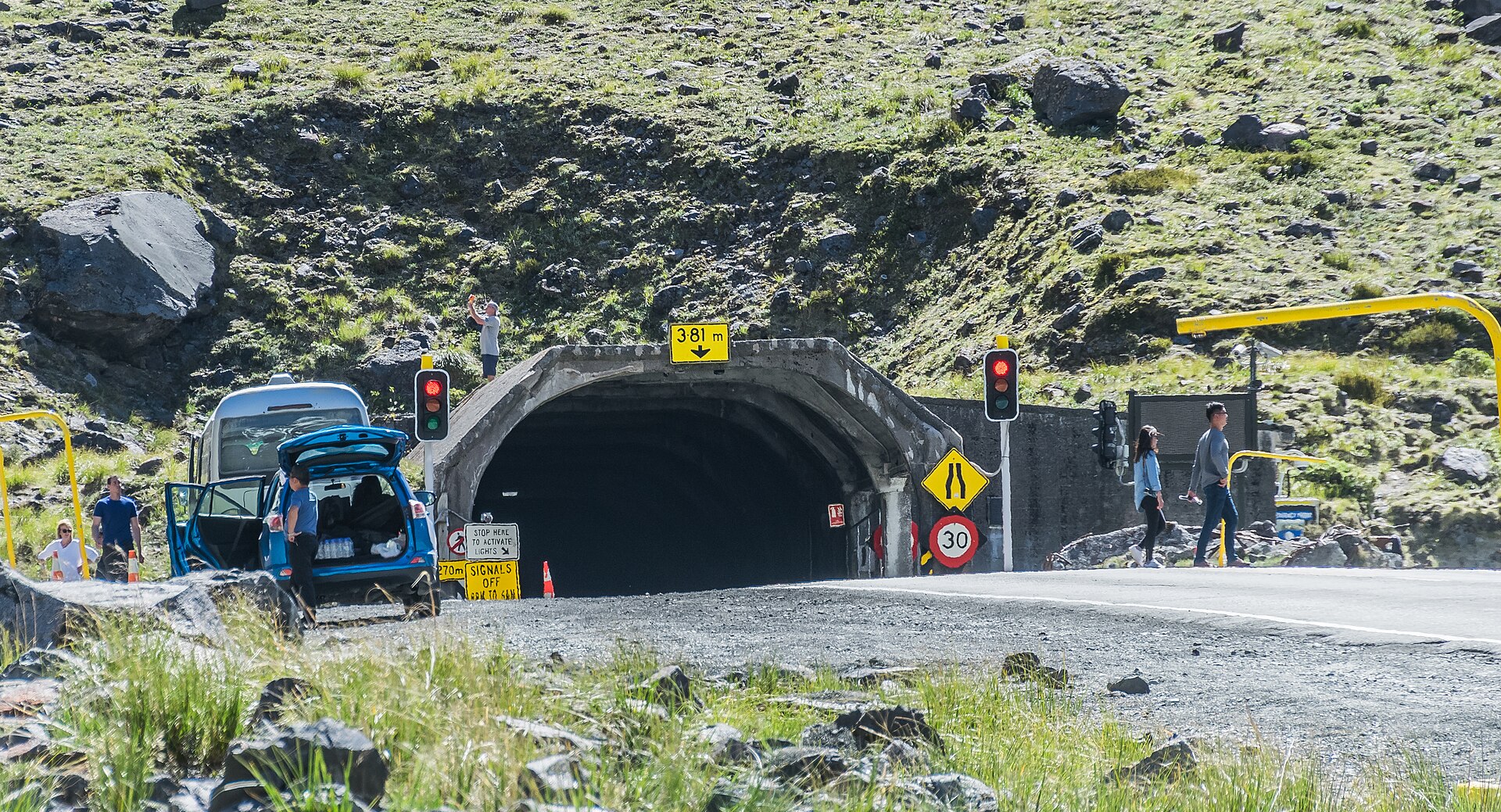
The tunnel is a queue. Traffic lights over summer peak periods control the single-lane Homer Tunnel and "can create delays of up to 20 minutes." Build that into the day rather than discovering it.
Part of it is a no-stopping zone. The section between the Hollyford Road junction and The Chasm is a Restricted No Stopping Zone because it is an avalanche area. That is not advice about photography.
Winter is a different road. DOC's advice for May to September: conditions "can be extremely challenging", the road is often covered in snow and ice, snow chains may be required and can be rented in Te Anau, and because traffic is thin it is "advisable to leave later in the morning from 9 am onwards". The closing line of that section is the honest one: "If you are not confident about driving in winter conditions, take a bus."
Do not feed the kea. DOC says so explicitly for this road. The alpine parrots are curious and destructive, and they will strip the rubber trim off a parked car.
The cruise, and what it costs
Prices move, so treat these as the published range rather than a quote. RealNZ lists a Classic Cruise of 1 hour 40 minutes from NZD $169 and a Signature Cruise of 2 hours from NZD $175. Southern Discoveries lists a 1 hour 45 minute Nature Cruise from NZD $143.20 and a 2 hour 15 minute Discover More Cruise from NZD $199. The coach and cruise packages cost more and remove the drive: RealNZ from NZD $292 out of Queenstown, from NZD $249 out of Te Anau. With one driver in the group, that is a fair trade rather than a soft option.
On the weather, published rainfall figures for Milford Sound disagree. One widely cited figure gives a mean annual rainfall of 6,813 mm across 182 rain days a year; Southern Discoveries publishes around 7,000 mm and "more than 200 days a year". The shape is not in dispute. Rain is the default state, up to 250 mm can fall in 24 hours, and the waterfalls the fiord is famous for are a function of it. A wet Milford day is not a ruined one.
A ten day shape that works
Christchurch in, Queenstown out, one direction, five bases in ten nights. Every leg below uses the published figures already quoted.
| Nights | Base | The day | Driving |
|---|---|---|---|
| 1 | Christchurch | Land, sleep, collect the car in the morning | none |
| 2 to 3 | Lake Tekapo | Inland Scenic Route through Geraldine, Burkes Pass, Mt John | 256 km, 3 hr 45 min |
| 4 | Aoraki/Mount Cook village | Lake Pukaki, then the Hooker Valley Track | 103 km, 1 hr 30 min |
| 5 to 6 | Wanaka | Lindis Pass and Tarras, a lake day, Rob Roy or Mt Iron | 206 km, 2 hr 45 min |
| 7 to 8 | Te Anau | Crown Range to Queenstown, then south to Fiordland | about 260 km, 3 hr 30 min |
| 9 | Te Anau | The Milford day, out and back | 240 km, 8 hr day |
| 10 | Queenstown | North to Queenstown, fly out next morning | about 180 km, 2 hr 30 min |
That is roughly 1,250 km and, counting the Milford day properly, somewhere near 22 hours behind the wheel across ten days. Spread over the trip it is a little over two hours a day, which is exactly what DriveSafe's "1-2 hours at a time" guidance can absorb. Compressed into a seven day version of the same route, it is not.
Three things this shape does deliberately.
Two nights each in Tekapo, Wanaka and Te Anau. A single night means you arrive tired and leave early, and never see the place in daylight without a windscreen in front of it. Three of the five bases get a day with no packing in it.
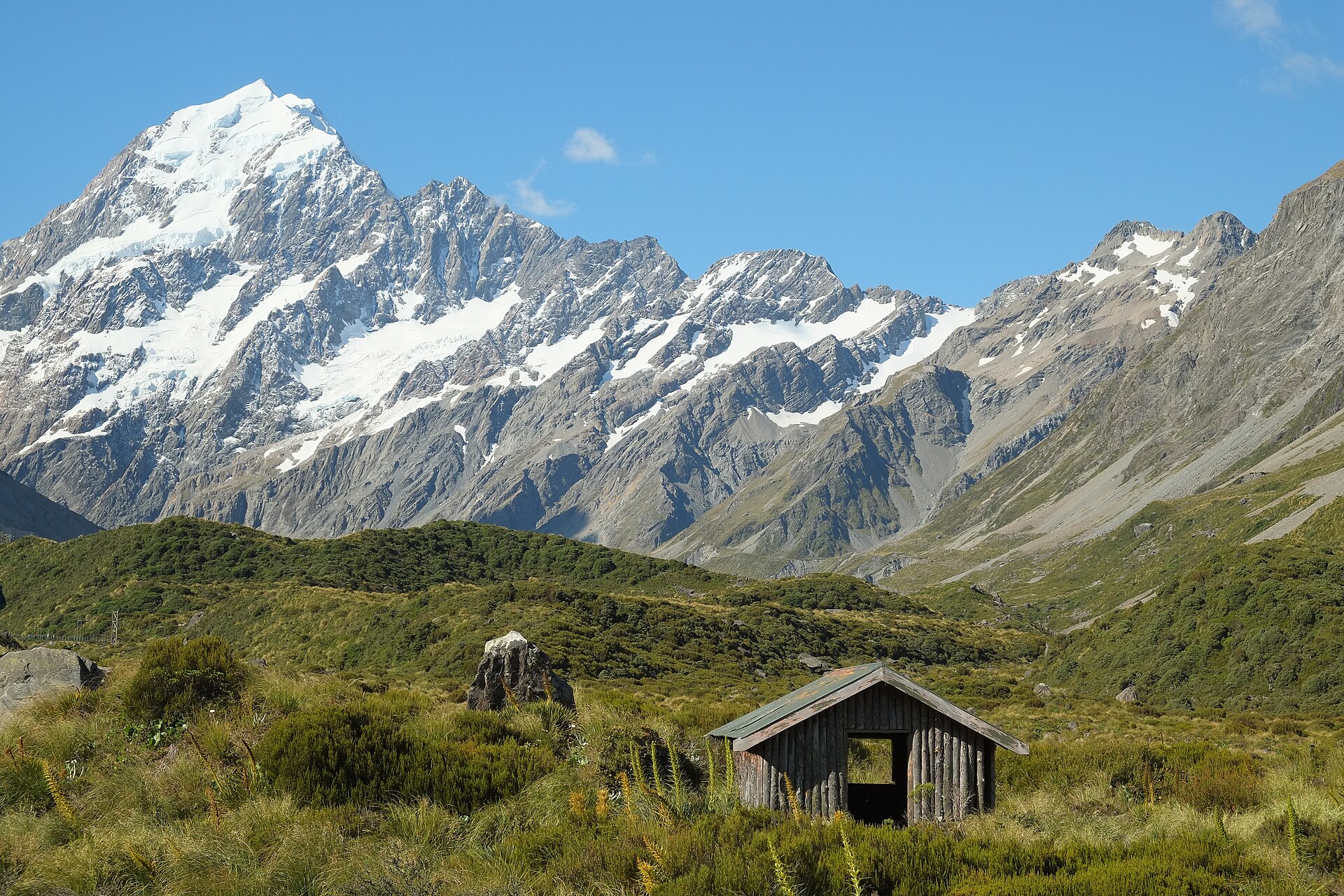
Aoraki gets its own night. The village sits inside the national park at the end of State Highway 80, and DOC describes it as "a very small alpine village" with a day shelter, a visitor centre, a petrol station and limited café, restaurant and bar options. The nearest supermarkets are an hour away at Twizel or an hour and a half at Tekapo. Staying there is what gets you onto the Hooker Valley Track before the tour buses.
The Milford day is a day, not a detour. It has a base either side of it and nothing else in it.

The West Coast variant, and what it costs you
Anyone who has seen a photograph of Franz Josef wants the glaciers in the trip. In ten days you can have Fiordland or the West Coast, not both, and DOC's own numbers say why.
Westland Tai Poutini National Park has road access on State Highway 6 only: from Hokitika in the north, "approximately one and a half hours drive", or from Haast in the south, "approximately two hours drive". The Blue Pools car park on the Haast Pass road sits 1 hour 10 minutes from Wanaka and 1 hour 10 minutes from Haast. Add those and Wanaka to Franz Josef is about four hours twenty of driving, before you stop at anything on a road that exists to be stopped at. Coming back east, Arthur's Pass National Park is "a two hour drive from Christchurch in the east, and about one and half hour's drive from Greymouth on the west coast". That is a five to six hour day to finish on.
So the West Coast version runs Christchurch, Arthur's Pass, Franz Josef for two nights, Haast Pass to Wanaka for two nights, Queenstown. It is a good ten days. It has no Milford Sound in it, and no Aoraki either unless you cut something else.
The honest verdict. If it is your first South Island trip and you have ten days, take Fiordland and skip the West Coast. Milford is the thing people fly across the world for, and the Fiordland version keeps Aoraki as well. If you have already done Milford, or you are travelling in the depths of winter when the Milford Road is at its least forgiving, the West Coast version is the better trip.
One extra reason to respect the West Coast rather than squeeze it in: DOC notes the park "lies in the path of the prevailing westerly winds, which can bring heavy rain at any time of the year, with up to five metres falling annually", and that sandflies are prevalent. Wet weather there is not a bad day, it is the climate.
What is worth booking, and what is not
Accommodation in the small bases, early. Aoraki/Mount Cook village and Te Anau are the two that hurt. Neither has a fallback town twenty minutes down the road.
A Great Walk, if you are somehow still in time. The 2026/27 Milford Track season runs 1 November 2026 to 30 April 2027, last departure 28 April 2027, and bookings opened in May 2026, so if you are reading this in August the peak dates are gone. DOC's hut fees are NZD $152 per adult per night for international visitors in season and NZD $106 for New Zealand adults, which makes three nights NZD $456 per international adult before transport. Camping is not permitted on the Milford Track at all.
The day-walk substitutes, which need nothing. The Routeburn is on the same road as Milford and DOC lists real day options off it: Key Summit, Earland Falls, Lake Howden and the Routeburn Nature Walk. The Hooker Valley Track is 10 km return and 3 to 4 hours. These fit an itinerary; a Great Walk is a trip in itself.
Your Milford cruise, a day or two out. Not months. The boats run on schedules rather than scarcity, and you want to be able to move it when the weather does.
Your entry paperwork, before you fly. Most visa-waiver travellers need a New Zealand Electronic Travel Authority, priced by Immigration New Zealand from NZD $17, cheaper through the official app than the website, valid for two years, with 72 hours to allow for processing. The International Visitor Conservation and Tourism Levy of NZD $100 is paid at the same time and is not refunded even if the application is declined. You can drive on a current valid licence if it is in English; if it is not, you need an international driving permit or an approved translation, and you must carry the original licence too.
Not much else. Lake Tekapo, the Lindis Pass, the Crown Range, Wanaka's lakefront, the Blue Pools and the Milford Road itself are free, open and decidable on the morning.
Key Takeaways
| Point | Details |
|---|---|
| Christchurch to Queenstown is 9 hr 20 min of driving | DriveSafe's published legs total 642 km via Geraldine, Tekapo, Aoraki and Wanaka. The same site says to plan 4 to 7 days for that route alone. |
| Milford from Queenstown is a 12 to 14 hour day | DOC gives the return as 600 km and recommends you go from Te Anau instead, where the same day is 240 km and about 8 hours. |
| Move your base to Te Anau for two nights | It is roughly two and a half hours from Queenstown and it is the single change that makes a Fiordland day sane. |
| There is no fuel between Te Anau and Milford | And limited mobile coverage past Te Anau. Fill up, carry food, and expect up to 20 minutes at the Homer Tunnel lights in summer. |
| Drive 1 to 2 hours at a time | The official visiting-driver advice, and the reason a two-hour daily average works while a six-hour day does not. |
| Pick Fiordland or the West Coast, not both | Wanaka to Franz Josef is about 4 hr 20 min of driving on DOC's figures. Ten days does not hold both regions properly. |
| Aoraki/Mount Cook deserves its own night | The village is small, the nearest supermarket is an hour away, and the Hooker Valley Track is 3 to 4 hours. |
| Great Walks were booked in May | The 2026/27 Milford Track season runs 1 November 2026 to 30 April 2027 and peak dates went early. Day walks need no booking. |
| Budget NZD $117 before you land | An NZeTA from NZD $17 plus the NZD $100 visitor levy, paid together, non-refundable. |
Where this plan breaks
It assumes the weather cooperates on exactly one day. The Milford day is the only fixed point in the itinerary and it is in the wettest inhabited place in the country. The plan above has two nights in Te Anau so the day can slide by one, which is the minimum insurance. If the Milford Road closes for snow or avalanche risk, that insurance is gone and the answer is the cruise you can rebook or the trip you do not take.
Ten nights is nine driving days with no spare one. There is no weather day, no sick day and no mechanical day in it. Twelve nights changes the character of the trip more than any change of route does.
Winter is a different itinerary and this is not it. These are summer-shaped days. From May to September the Milford Road may require chains, Arthur's Pass and the Crown Range get snow, daylight is short, and DOC's own advice for the Milford Road is to leave later in the morning rather than earlier. A winter version needs fewer bases and shorter legs, not the same plan in a puffer jacket.
One driver is a real constraint. New Zealand road driving is concentration-heavy in a way motorway miles are not: winding, single lane, unfamiliar side. Nine driving days on one licence is a lot. Add the second driver to the rental if there is one.
The one-way rental has a cost this article cannot quote. Christchurch pickup and Queenstown drop-off is standard and both cities have depots, which DriveSafe notes, but one-way fees vary by company and season enough that any number here would be stale. Get the quote before committing to the route, because looping back to Christchurch adds a published 564 km and 8 hours.
Every driving time quoted is a moving time. None includes fuel, food, a viewpoint, a toilet, roadworks or twenty minutes at the tunnel.
How Planytera handles a trip like this
Planytera is an AI trip planner built by a solo developer, available on iOS, Android and the web. You describe the trip and it produces a day-by-day itinerary, ready in moments. On a drive-shaped trip, three things carry most of the weight.
Multi-stop pacing across five bases. Christchurch, Tekapo, Aoraki, Wanaka, Te Anau and Queenstown is five moves in ten nights, and the quality of this trip lives entirely in how those nights are distributed rather than in the list of sights. Setting the pace once and letting the days arrange themselves around the transfers is a different job from writing five separate day plans and hoping the joins hold.
Offline access. Coverage past Te Anau is limited by DOC's own description, and the Milford Road, the Haast Pass and stretches of the Lindis are no better. Saved trips keep the itinerary, maps and notes readable with no signal, which matters most on precisely the days you are moving.
Re-pacing without starting over. This itinerary has one fixed point and nine flexible ones. When the Milford day slides, or the West Coast variant replaces Fiordland, or a two-night base becomes three, the rest of the plan should follow rather than need rebuilding from day one.
Per-person cost estimates. A rental, fuel across 1,250 km, ten nights of beds in towns with limited supply and a cruise ticket each add up quickly. Seeing the per-person figure before committing helps when a group is splitting a vehicle, and split costs then tracks who owes who without anyone maintaining a spreadsheet and without moving anyone's money.
Frequently asked questions
How long does it really take to drive from Christchurch to Queenstown?
DriveSafe's published legs for the scenic route through Geraldine, Tekapo, Aoraki/Mount Cook and Wanaka total 642 km and 9 hours 20 minutes of driving. The direct road is shorter, and the sources disagree on the shared portion: DOC gives Christchurch to Aoraki/Mount Cook as 4.5 hours against DriveSafe's 5 hours 15 minutes, because they route it differently. Either way, DriveSafe recommends 4 to 7 days on this route rather than one.
Can I do Milford Sound as a day trip from Queenstown?
You can, and the Department of Conservation recommends you do not. It gives Queenstown to Milford and back as 600 km taking 12 to 14 hours, and says plainly to plan the return trip from Te Anau instead. From Te Anau the same day is 240 km and around 8 hours including the walks and a cruise. If Queenstown is your only base, take the coach and cruise package rather than driving it yourself.
Is 10 days enough for the South Island?
Enough for one arc, not for the island. Ten days covers Christchurch, the Mackenzie Country, Aoraki/Mount Cook, Wanaka, Fiordland and Queenstown, or a West Coast version with the glaciers instead of Fiordland. Adding both regions plus Dunedin, the Catlins, Kaikoura or Abel Tasman turns the holiday into a driving schedule.
Do I need snow chains in New Zealand?
In winter, on some roads, yes. DriveSafe's advice for June to August is to carry tyre chains you know how to fit and use. DOC says snow chains may be required on the Milford Road, that they can be rented in Te Anau, and that you should know how to fit them before setting off. Check the road status first, and if you are not confident in snow and ice, take a bus.
What do I need to enter New Zealand as a tourist?
Most visa-waiver travellers need a New Zealand Electronic Travel Authority, which Immigration New Zealand prices from NZD $17, says is cheaper through the official app than the website, and asks you to allow 72 hours for. It is valid for two years and allows visits of up to 3 months, or 6 months for UK citizens. Separately, the International Visitor Conservation and Tourism Levy is NZD $100, paid at the same time as the NZeTA, and it is not refunded even if your application is declined.
Can I still book the Milford Track?
For the 2026/27 season, probably not at the dates you want. That season runs from 1 November 2026 to 30 April 2027 with the last departure on 28 April 2027, and bookings opened in May 2026, with the popular dates going quickly. The huts cost NZD $152 per night for an international adult in season and camping is not allowed on the track. If you missed it, the day walks off the same roads are the answer: Key Summit and Earland Falls on the Routeburn, and the Hooker Valley Track at Aoraki.
Useful sources and further reading
- DriveSafe: Christchurch to Queenstown, the leg-by-leg distances and driving times used throughout, published by Tourism Industry Aotearoa.
- DriveSafe: Planning Your Trip, for the licence rules, the 1 to 2 hour driving guidance and the advice to rest in your arrival city.
- DriveSafe: On the Road, for speed limits, one-lane bridges, the five-vehicle rule, alcohol limits and winter chain advice.
- DOC: Milford Road tips for drivers, for the Te Anau and Queenstown journey figures, fuel, phone coverage, the Homer Tunnel and winter conditions.
- DOC: Aoraki/Mount Cook National Park and the Hooker Valley Track, for drive times, the village's facilities and the new 189 metre swing bridge.
- DOC: Milford Track and Routeburn Track, for the 2026/27 season dates, hut fees and day-walk options.
- DOC: Westland Tai Poutini National Park, Arthur's Pass National Park and the Blue Pools Track, for West Coast and Haast Pass road times, rainfall and sandflies.
- RealNZ: Milford Sound experiences and Southern Discoveries: Milford Sound cruises, for current cruise durations and prices.
- Immigration New Zealand: NZeTA and paying the International Visitor Levy, for the entry costs.
- Southern Discoveries: Milford Sound weather and Milford Sound weather, the two rainfall figures that disagree.
Recommended
More from the Planytera blog.