Blog19 min read
2 Weeks in Vietnam: North to South, or South to North?
A fourteen day Vietnam plan, the honest answer on which direction to travel, and why the domestic flight beats a 31 hour train every time.
By Dom


Every Vietnam forum thread argues about direction. North to south, or south to north, defended with real conviction on both sides.
It is close to the least important decision you will make.
Vietnam is 1,726 km of railway from end to end, and the country's shape commits you to a single line whichever way you point. What decides whether your two weeks work is not direction. It is whether you accept that the middle of the trip is a flight.
This is a fourteen day plan built on that, and it starts with the thing the direction debate is really a proxy for.
Direction does not fix the weather
People argue about direction because they have read that Vietnam has three climates and they are hoping the right sequence threads between them. It does not, and the numbers show why.
| Region | Dry and pleasant | Wet |
|---|---|---|
| North (Hanoi, Ha Long, Sapa) | roughly November to April, cool | June to September |
| Centre (Hue, Da Nang, Hoi An) | roughly January to August | September to December |
| South (Ho Chi Minh City, Mekong) | January to April | May to November |
In October the north is beautiful and the centre is at its worst. In July the centre and the south are workable and the north is in its monsoon. There is a narrow window around February to April where all three behave at once, and it is also the busiest and most expensive time of year.
The middle band is the one to take seriously. Hue receives around 2,800 mm of rain a year and does not spread it evenly: about 755 mm falls in October and 620 mm in November, against 45 mm in March. Da Nang, an hour down the coast, takes roughly 650 mm in October. Tropical cyclones follow the same calendar, with the dangerous window on the central coast running from early September to around 10 December. Hoi An sits on the Thu Bon river and floods in that window often enough that its ground floors are built for it.
Here is what settles the argument. Whether you start in Hanoi or Saigon, you reach central Vietnam in roughly the same week of a fourteen day trip, because it is in the middle of the country. Reversing your direction moves your Hoi An days by two or three at most. It does not move them out of the season.
Why the domestic flight wins
Now the decision that actually matters.
The romantic version of Vietnam is the Reunification Express, end to end, watching the country pass the window. It is a genuinely good experience and a terrible use of a fourteen day trip. The numbers are not close.
| Hanoi to Ho Chi Minh City | Time | Notes |
|---|---|---|
| Flight | about 2 hours in the air | Vietnam Airlines alone lists 26 to 32 flights a day on the route |
| Train, SE1 | 31 hours 25 minutes scheduled | 1,726 km, an average of roughly 55 km/h |
| Train, SE2 northbound | 31 hours 35 minutes scheduled | published times across all services range from about 30 to 36 hours |
Two hours against thirty one and a half. On a fourteen day trip that single choice is worth more than a day and a half of daylight, before the delay allowance a single-track railway earns.
Frequency is the other half of the argument. Hanoi to Ho Chi Minh City is one of the busiest domestic air corridors on earth: OAG ranked it fifth worldwide in August 2026 with 955,263 scheduled seats in the month, and its position moves around inside the top five, fourth for the whole of 2025 and second in January 2026. A missed flight is an inconvenience rather than a lost day. The intermediate hops are the same story. Vietnam Airlines lists about 1 hour 20 minutes for Hanoi to Da Nang with 20 flights a day, and 50 flights a day on Da Nang to Ho Chi Minh City.
So: fly the two long legs. Everything else in this itinerary is a short road or rail transfer. One caveat on the low cost carriers: fare rules on the cheapest domestic tickets are narrow and checked baggage is often an add-on, so read what your fare includes before comparing it against a full service ticket.
The one train ride worth keeping
Skipping the Reunification Express end to end does not mean skipping Vietnamese trains. It means taking the right 103 km of them.
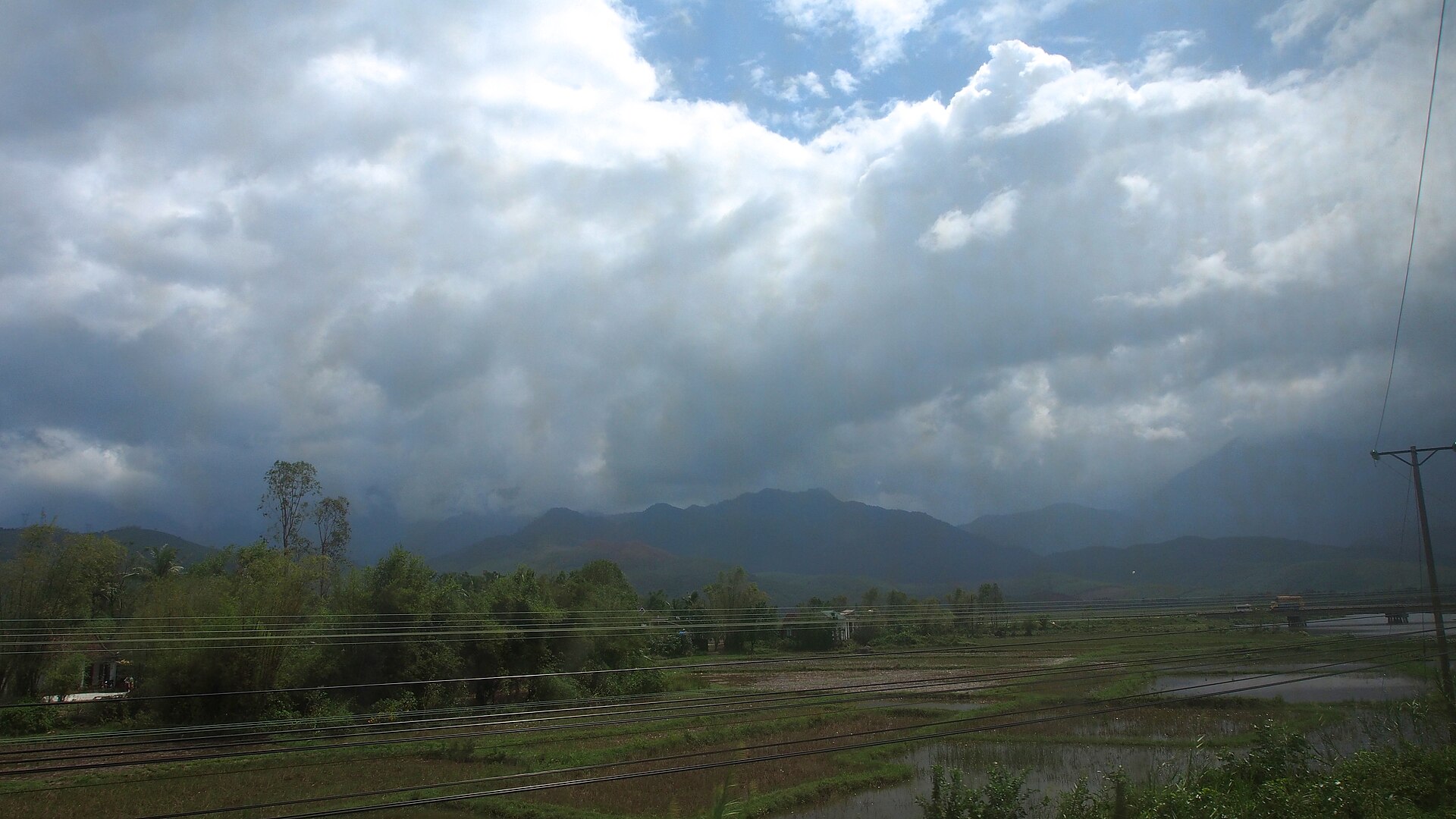
The Hue to Da Nang line crosses the Hai Van Pass. The track is cut into the mountainside above the sea, the road takes the tunnel underneath, and the train takes the slow scenic way over. The argument for it is not nostalgia. It is that this leg is genuinely better by train than by car, which is not true of any other leg in Vietnam.
Vietnam Railways runs a dedicated tourist service on it, the "Connecting Central Heritage" train, launched with the Hue and Da Nang tourism departments and numbered HD1 to HD4. Southbound, HD1 leaves Hue at 07:45 and reaches Da Nang at 10:35; HD3 leaves at 14:25 and arrives at 17:40. The carriages are refurbished with wide windows for the pass, which is the entire point. Ordinary Reunification Express services cover the same stretch in roughly two and a half to three hours for far less. Either works. Sit on the sea side.

So which direction, then?
With the weather argument removed, direction comes down to three things that are all logistics.
Your long haul fare, not your preference. Flying into Hanoi and out of Ho Chi Minh City, or the reverse, is normally cheaper in total than returning to your arrival city, and it saves a wasted internal flight. Price the open jaw before you commit to a shape.
Jet lag against the harder city. Ho Chi Minh City is louder, hotter and denser than Hanoi, and the Old Quarter is a gentler first morning than District 1 traffic. If you expect to be wrecked for two days, starting in Hanoi is kinder. If you sleep well on planes it makes no difference.
A rule at Tan Son Nhat that only affects one direction. From 15 April 2026, arrivals at Ho Chi Minh City's Tan Son Nhat airport are asked to complete a digital arrival card online before flying, through the immigration department's pre-arrival portal. Sources disagree on how hard the requirement is: UK government travel advice describes it as encouraged rather than mandatory, while several travel trade reports call it compulsory for all foreign arrivals. It takes a few minutes and no fee is published for it, so do it either way. It applies at Tan Son Nhat rather than nationwide, so arriving into Hanoi makes it a departure-day task instead.
The verdict: take whichever direction your fare prefers. If fares are level, go north to south, because Hanoi is easier on a jet-lagged first day and it puts the beach at the end rather than the middle.
The fourteen days
This runs north to south. To reverse it, read it upwards, and move nothing else.
Days 1 and 2: Hanoi
Land, and schedule nothing for the first afternoon beyond walking and eating.
The Old Quarter is the compact part and the part worth basing in. The Temple of Literature, Hoan Kiem lake, the Ho Chi Minh Mausoleum complex and the Vietnamese Women's Museum are all short hops. The mausoleum keeps restricted morning hours and closes for annual maintenance, so check its schedule rather than assuming a Tuesday morning works.
Day 3: Ninh Binh as a day trip
Ninh Binh is roughly two hours south of Hanoi and gets called the inland Ha Long Bay, which is lazy but not wrong: the same limestone towers, standing in rice paddies rather than sea.
Take the Trang An boat route. Tickets are 250,000 dong per person and the boats are rowed on a loop through a chain of caves and temples. There are several numbered routes with different cave counts, so pick one at the ticket office rather than being assigned it. Tam Coc is an out and back on the river rather than a loop, so you see less for the same effort.
Days 4 and 5: Ha Long Bay
Hanoi to Ha Long is about two and a half hours on the Hanoi to Hai Phong to Ha Long expressway. The old route on Highway 18 takes three and a half to four hours, and cheaper transfers sometimes still use it, so ask which road yours takes.
An overnight cruise is the right shape for the bay, because day trips spend more time on the road than on the water. Budget cabins start in the low hundreds of US dollars per person for one night and the range above that is effectively unlimited. Ask any operator two things directly: whether the separately charged bay sightseeing fee is included, because published figures for it disagree, and which bay you actually sail in. Ha Long proper is the busiest, while Lan Ha and Bai Tu Long are quieter and sold under the same headline.
Day 6: Fly to Da Nang, transfer to Hoi An
The first flight, about an hour and twenty minutes in the air on a route Vietnam Airlines alone runs twenty times a day. Da Nang airport to Hoi An is roughly 30 km and 40 to 50 minutes by taxi or Grab. Take an afternoon departure and you lose almost nothing from the day.
Days 7, 8 and 9: Hoi An
Hoi An is the part people extend, and giving it three nights rather than two is the single best adjustment available inside fourteen days.
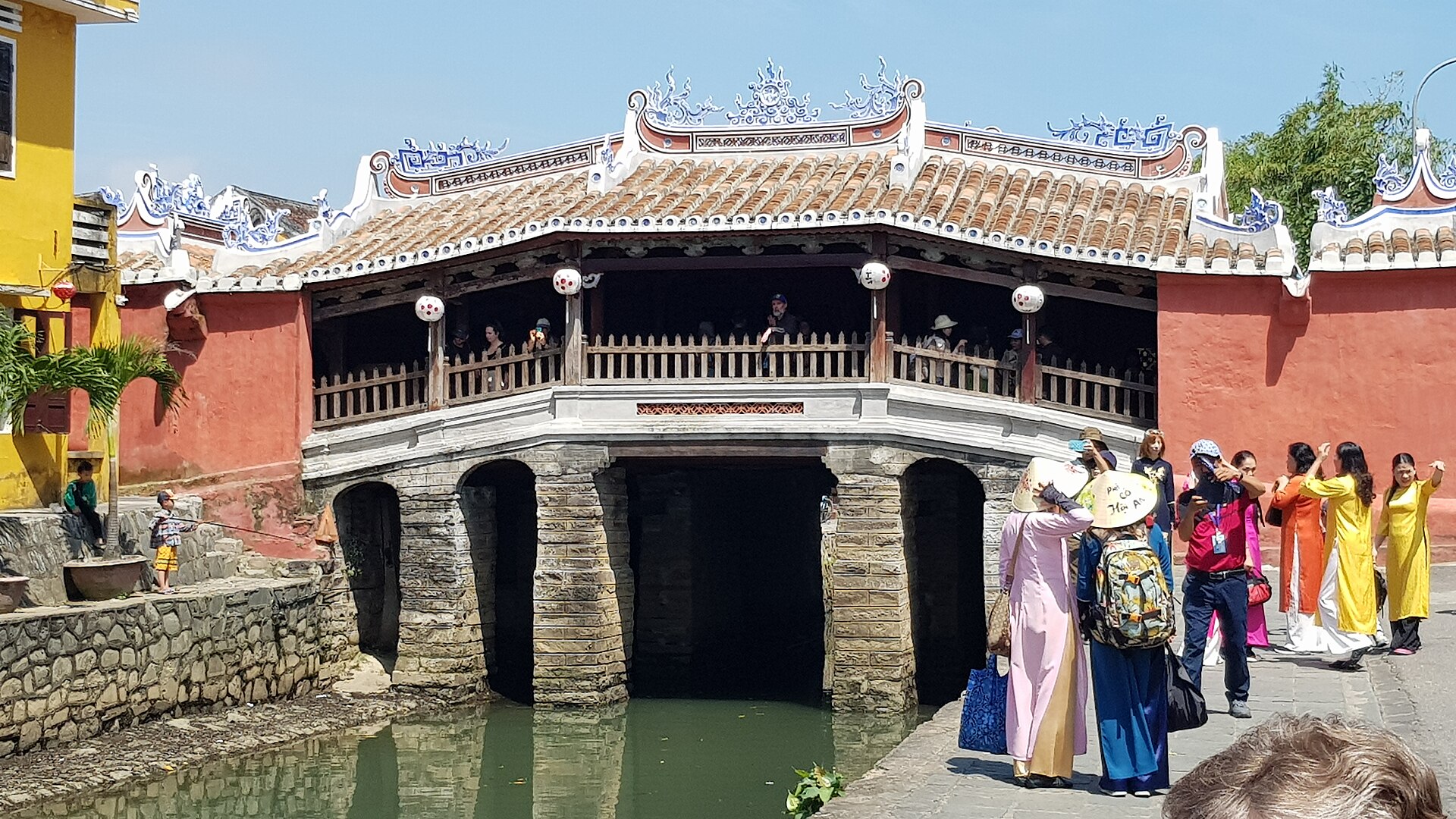
The Ancient Town ticket for foreign adults is 120,000 dong, and it is not an entry fee for the town: walking the streets, crossing the bridges, eating and watching the lanterns at night are free. The ticket is a booklet of five tear-off coupons admitting you to five of roughly 22 ticketed heritage buildings, among them the assembly halls, the old merchant houses and the Japanese Covered Bridge. Da Nang tourism material has been reported as describing a revised structure with an 80,000 dong option and validity of up to three days, so both figures are in circulation. Buy at an official booth.
Beyond the old town: An Bang and Cua Dai beaches, the My Son Sanctuary ruins about an hour inland, the tailors, and a cooking class.

Day 10: Hue, over the pass
Transfer to Da Nang station and take the train north over the Hai Van Pass, arriving in Hue by late morning or early evening depending on the service.
Hue was the imperial capital and the Imperial City is the reason to come. Prices here are the one item in this post where published figures disagree outright: adult admission to the Imperial Citadel appears as both 150,000 and 200,000 dong across current sources, and a combined route ticket taking in the Citadel plus the tombs of Minh Mang, Tu Duc and Khai Dinh is quoted at around 530,000. Buy at the gate and pay what is on the board. The tombs are spread along the Perfume River outside the city and need half a day and a driver, so with only an afternoon, do the Citadel and skip them.
Day 11: Fly to Ho Chi Minh City
Second flight. Da Nang has 50 departures a day to Ho Chi Minh City, which makes it the more flexible of the two central airports even allowing for the transfer back down the coast. Land, get into District 1 or District 3, and use the afternoon for the War Remnants Museum. It is the most affecting thing in the city and it is not a light hour.
Days 12 and 13: Ho Chi Minh City and one day out
The city itself is a day: the Reunification Palace, the Central Post Office, Ben Thanh market for an hour at most, and street food in Districts 3, 4 and 5.
The day out is a choice of exactly two, and you should not attempt both. Cu Chi Tunnels is half a day north of the city, with published entry figures disagreeing across a range of roughly 90,000 to 135,000 dong depending on the site and the source, which is a rounding error against the transport. The Mekong Delta is a full day and a genuinely different landscape from anywhere else on this trip: My Tho and Ben Tre are close enough to do in a day, while Can Tho and its floating market need an overnight that does not fit here.
If you have never seen a river delta, take the Mekong. If the war history is why you came, take Cu Chi.
Day 14: Fly home
Long haul departures from Ho Chi Minh City are usually in the evening, so you get a real final morning.
What actually needs booking ahead
Vietnam is largely a turn-up country and the exceptions are short. Book your Ha Long cruise, because the good boats fill and this is the one booking where the operator changes the experience. Book domestic flights as soon as your dates are fixed, not because they sell out but because Vietnamese domestic fares climb steeply toward departure. Book the heritage train over Hai Van if you want that specific service, because it is two pairs of trains a day rather than a rolling timetable.
Then there is Tet. The first day of the lunar new year in 2027 falls on Saturday 6 February, with the national break running several days around it and the exact dates confirmed by the government late in the preceding year. Flights, trains and buses fill weeks ahead, many businesses close, and prices rise. A wonderful time to be in Vietnam and an impossible time to improvise in it.
Everything else, including every ticket mentioned in this post, you buy at the door.
Money, paperwork and a map that changed
The visa. Vietnam runs two parallel systems and people mix them up. A list of nationalities including British citizens can enter visa-free for up to 45 days for tourism. Separately, the e-visa, applied for at the government portal, is valid for up to 90 days in single or multiple entry form. The fee is widely published as US$25 single and US$50 multiple, though the portal does not print it on its landing page, so confirm it at the payment step. On fourteen days the exemption covers you if you qualify, and the e-visa is the fallback if you do not.
The passport rules are stricter than most. Six months validity beyond your arrival date, at least two blank pages, and no physical damage. Travellers have been refused entry and exit over damaged passports, so a water-warped cover is worth replacing before you fly.
The map changed in 2025 and the guidebooks have not caught up. On 1 July 2025 Vietnam consolidated its 63 provinces and centrally governed cities into 34. Quang Nam was dissolved into Da Nang, so Hoi An is now administratively part of Da Nang city, and Thua Thien Hue became the centrally governed city of Hue. The places did not change, but addresses, official listings and booking forms did. A hotel address that no longer matches the province in your guidebook is the merger, not a mistake.
Cash still matters. Cards work in hotels, chains and central-district restaurants. Markets, street food, local buses and small operators want dong. Grab works in every major city and removes the fare negotiation entirely.
Two changes coming, neither of which helps you yet
Vietnam's National Assembly approved the north to south high speed railway in November 2024: 1,541 km from Ngoc Hoi in Hanoi to Thu Thiem in Ho Chi Minh City, designed for 350 km/h, target completion 2035. Reported construction start dates disagree, a ceremonial groundbreaking in December 2025 against official schedules pointing at the first sections beginning in late 2027. Either way it is not a railway you will ride on this trip.
The nearer change matters more. Long Thanh International Airport, about 40 km east of Ho Chi Minh City, is targeted by the government for commercial flights in the final quarter of 2026, with reports pointing at long haul services transferring off Tan Son Nhat. That date has moved before. If you are booking into 2027, confirm which airport your long haul flight uses, because 40 km of Ho Chi Minh City traffic is not something to discover on the day.
Key Takeaways
| Point | Details |
|---|---|
| Direction is a logistics call, not a weather strategy | You reach central Vietnam mid-trip either way. Reversing moves your Hoi An days by two or three, not out of the wet season. |
| Fly the two long legs | About 2 hours in the air Hanoi to Ho Chi Minh City against 31 hours 25 minutes on the SE1. Vietnam Airlines alone runs 26 to 32 flights a day, and OAG ranked the route the fifth busiest domestic corridor in the world in August 2026. |
| Keep one train: Hue to Da Nang | 103 km over the Hai Van Pass. Vietnam Railways runs a tourist service, HD1 07:45 to 10:35 and HD3 14:25 to 17:40. |
| October and November are the centre's worst months | Hue takes about 755 mm of rain in October and 620 mm in November, against 45 mm in March. Cyclone risk runs to around 10 December. |
| Hoi An's ticket is 120,000 dong | Five coupons for five of roughly 22 sites. Walking the town, the bridges and the night market costs nothing. |
| Hue's ticket prices are genuinely disputed | Published adult figures for the Imperial Citadel appear as both 150,000 and 200,000 dong. Buy at the gate. |
| Book the Ha Long cruise, and little else | Ask whether the bay sightseeing fee is included, and which bay you actually sail in. |
| Tet 2027 starts 6 February | Transport fills weeks ahead and much of the country closes. Plan around it or into it deliberately. |
| The provinces merged in July 2025 | 63 became 34. Hoi An is administratively in Da Nang now, Hue is its own city. Addresses changed, places did not. |
Where this plan breaks
Sapa does not fit, and pretending it does is how the trip goes wrong. It is about 320 km from Hanoi and roughly five and a half to six hours each way by express bus on the Lao Cai expressway. Two travel days plus two nights is four days out of fourteen, and they have to come out of Ha Long, Hoi An or the south. If the northern mountains are why you are going, build a different trip around them and drop the Mekong. Wedging both in gives you a rushed version of each.
The centre is one weather system, and it can take the whole middle of your trip. Hoi An, Da Nang and Hue are within about 100 km of each other. A typhoon or a flood does not hit one of them, it hits your entire days 6 to 10. There is no local Plan B, only a plan that moves you south early, and that is only possible if you have not prepaid every night.
Two internal flights means two airport days that look like nothing on paper. Written down as "fly to Da Nang" it reads like a morning. Each one eats a check-in, a transfer at both ends and a security queue. Budget most of a day.
It assumes one long haul flight each way. Connect through a third city on both ends and fourteen days becomes twelve and a half usable ones, at which point Ninh Binh is the first thing to cut and the Mekong is the second.
How Planytera handles a trip like this
Planytera is an AI trip planner built by a solo developer, available on iOS, Android and the web. You describe the trip and it produces a day-by-day itinerary, ready in moments. On a country shaped like Vietnam, three things do most of the work.
Multi-stop pacing across five bases. This is a trip where the transfers, not the sights, decide whether the days work. Two flights and three road transfers across fourteen days looks fine in a list and falls apart on a calendar. Setting the pace once and letting the days arrange themselves around the transfers is a different job from writing five city plans and hoping the joins hold.
Re-pacing without starting over. Central Vietnam is the part most likely to be rearranged by weather. Move a night from Hue to Hoi An, or pull the southern flight forward a day, and the rest of the plan stays consistent instead of being rebuilt from day one.
Offline access. Coverage is good in the cities and thinner on the water in Ha Long, on the Hai Van line and out in the delta. Saved trips keep the itinerary, maps and notes readable with no signal, which matters most on the days you are moving.
Frequently asked questions
Should I travel north to south or south to north in Vietnam?
Either. Central Vietnam sits in the middle of the country, so you reach it mid-trip whichever way you go and the weather does not change. Let your flights decide: an open-jaw booking into one end and out of the other is usually cheaper than a return and saves a wasted internal flight. If fares are level, north to south is marginally kinder, because Hanoi is a gentler first jet-lagged morning.
Should I take the Reunification Express or fly?
Fly the long legs. The SE1 is scheduled at 31 hours 25 minutes from Hanoi to Ho Chi Minh City over 1,726 km, against about 2 hours in the air on a route Vietnam Airlines alone flies 26 to 32 times a day. The exception worth making is the 103 km from Hue to Da Nang over the Hai Van Pass, which is better by rail than by road.
Is two weeks enough for Vietnam?
For the north, the centre and the south at a reasonable pace, yes, provided you fly the two long legs and accept five bases. It is not enough to add Sapa, which needs two travel days plus two nights, or to reach Can Tho and the far Mekong Delta. If those matter, cut something else rather than compressing everything.
When is the worst time to visit central Vietnam?
October and November. Hue takes around 755 mm of rain in October and 620 mm in November against 45 mm in March, and the tropical cyclone window on the central coast runs from early September to around 10 December. Hoi An floods in that period often enough to be normal rather than rare. The north is at its best in October, which is exactly why no single month works everywhere.
How much is the Hoi An Ancient Town ticket?
120,000 dong for foreign adults, buying five coupons for five of roughly 22 ticketed heritage buildings. Walking the streets, crossing the bridges, eating and seeing the lanterns at night are free. A revised structure with an 80,000 dong option and validity of up to three days has been reported in Da Nang tourism material, so both figures are in circulation. Buy from an official booth.
Do I need a visa for Vietnam?
It depends on your passport. Nationals of a list of countries including the United Kingdom can enter visa-free for up to 45 days as tourists. Otherwise the e-visa covers stays of up to 90 days in single or multiple entry form, at a fee widely published as US$25 and US$50. Either way your passport needs six months validity beyond your arrival date, two blank pages and no damage.
Useful sources and further reading
- UK government travel advice for Vietnam, the 45 day visa exemption, 90 day e-visa, passport validity rules and the Tan Son Nhat digital arrival card.
- Vietnam National e-visa portal, the official application site, and the Immigration Department pre-arrival portal for the digital arrival card.
- Vietnam Airlines Hanoi to Ho Chi Minh City and Hanoi to Da Nang for official flight times and daily frequencies.
- OAG busiest routes, the seat figures and world ranking for Hanoi to Ho Chi Minh City.
- Vietnam Railways online booking, the official ticketing site, and the SE1/SE2 timetable summary for scheduled end-to-end journey times.
- Climates to Travel: Vietnam and Hue for regional rainfall figures and the typhoon calendar.
- Vietnam consolidates from 63 to 34 provinces, the July 2025 administrative merger.
- Long Thanh International Airport commercial launch, the government's own reporting on the target date.
Recommended
More from the Planytera blog.