Blog18 min read
North Coast 500 Itinerary: Why 5 Days Is Too Few
A North Coast 500 plan built on passing place etiquette, the official driving rules most guides skip, and the arithmetic that kills a five day loop.
By Dom
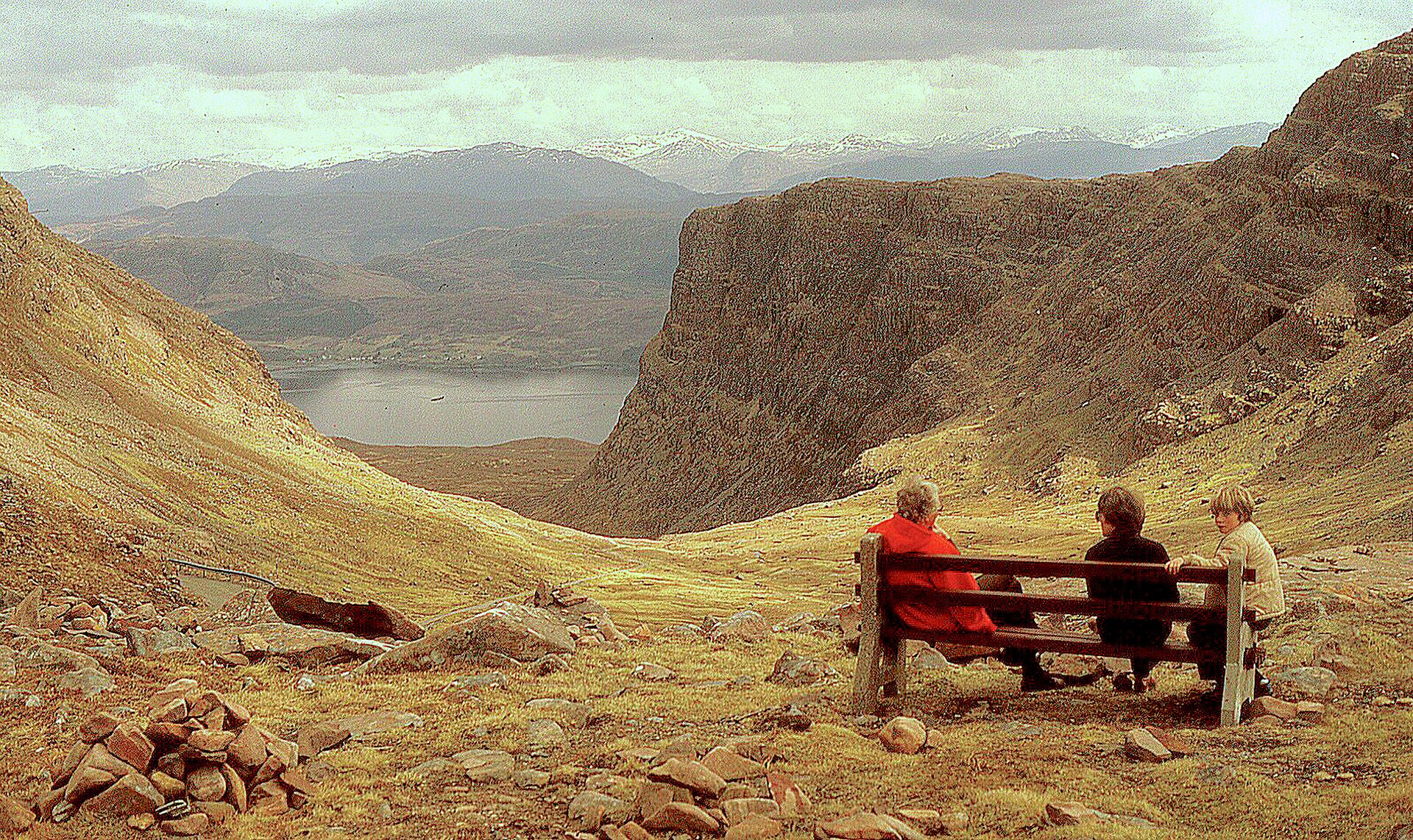

Most North Coast 500 itineraries are sightseeing lists. Castle, beach, gorge, sea stack, distillery, repeat. That framing assumes the driving is the boring connective tissue between the good bits.
On this route the driving is the route. The NC500 is 516 miles starting and finishing at Inverness, looping through the Black Isle, Easter Ross, Caithness, Sutherland and Wester Ross, and a meaningful share of those miles are on roads only wide enough for one vehicle. How well the week goes is decided less by which viewpoints you pick than by whether you can use a passing place properly, and whether you gave yourself enough days to drive slowly.
So this starts with the passing place, and then does the arithmetic on five days.
The passing place is the skill the route asks for
A single track road is not a narrow two-lane road. The official NC500 guidance puts it plainly: "A single track road permits two-way travel but is not wide enough in most places to allow vehicles to pass one another." Passing places are what make two-way travel possible, and they are marked with a white diamond or square shaped signpost that may be on either side of the road.
The legal baseline is Rule 155 of the Highway Code, short enough to read in full:
"These are only wide enough for one vehicle. They may have special passing places. If you see a vehicle coming towards you, or the driver behind wants to overtake, pull into a passing place on your left, or wait opposite a passing place on your right. Give way to road users coming uphill whenever you can. If necessary, reverse until you reach a passing place to let the other vehicle pass. Slow down when passing pedestrians, cyclists and horse riders."
Rule 156 is one sentence: "Do not park in passing places."
That is the law. How it works in practice comes from the NC500's own road safety page.
Left means pull in, right means wait opposite. The part visitors most often invert. If the passing place is on your left, drive into it. If it is on your right, stop level with it and stay on your own side so the oncoming driver can pull in and pass you. Crossing the road into a passing place on the right puts you on the wrong side of a blind single-track road.
Whoever is nearer, moves. The convention is that "it is usually the vehicle closest to the passing place that pulls in and waits for the oncoming vehicle to pass." Not who arrived first, and not who is bigger.
Reversing is normal, not a failure. Both the Highway Code and the NC500 guidance treat reversing back to a passing place as an ordinary manoeuvre. If you are not comfortable doing it, that is a real constraint on which roads you should take.
Uphill traffic has priority where you can give it. A car that loses momentum on a steep single-track climb has a harder job restarting than one rolling down.
Passing places work backwards too. If someone has been sitting behind you, pull in on your left and wave them through. The official advice notes the vehicle behind may be a doctor or nurse on the way to a patient, or an emergency vehicle.
Do not travel in convoy. Missing from nearly every itinerary, and the most useful line here if you are travelling as two cars. Many passing places fit one vehicle, so travel roughly one passing place apart. Three cars arriving at a passing place built for one creates a standoff that has to be unpicked by reversing.
The wave. Return the raised hand or headlight flash from drivers you give way to. It is why the system runs on courtesy rather than confrontation.
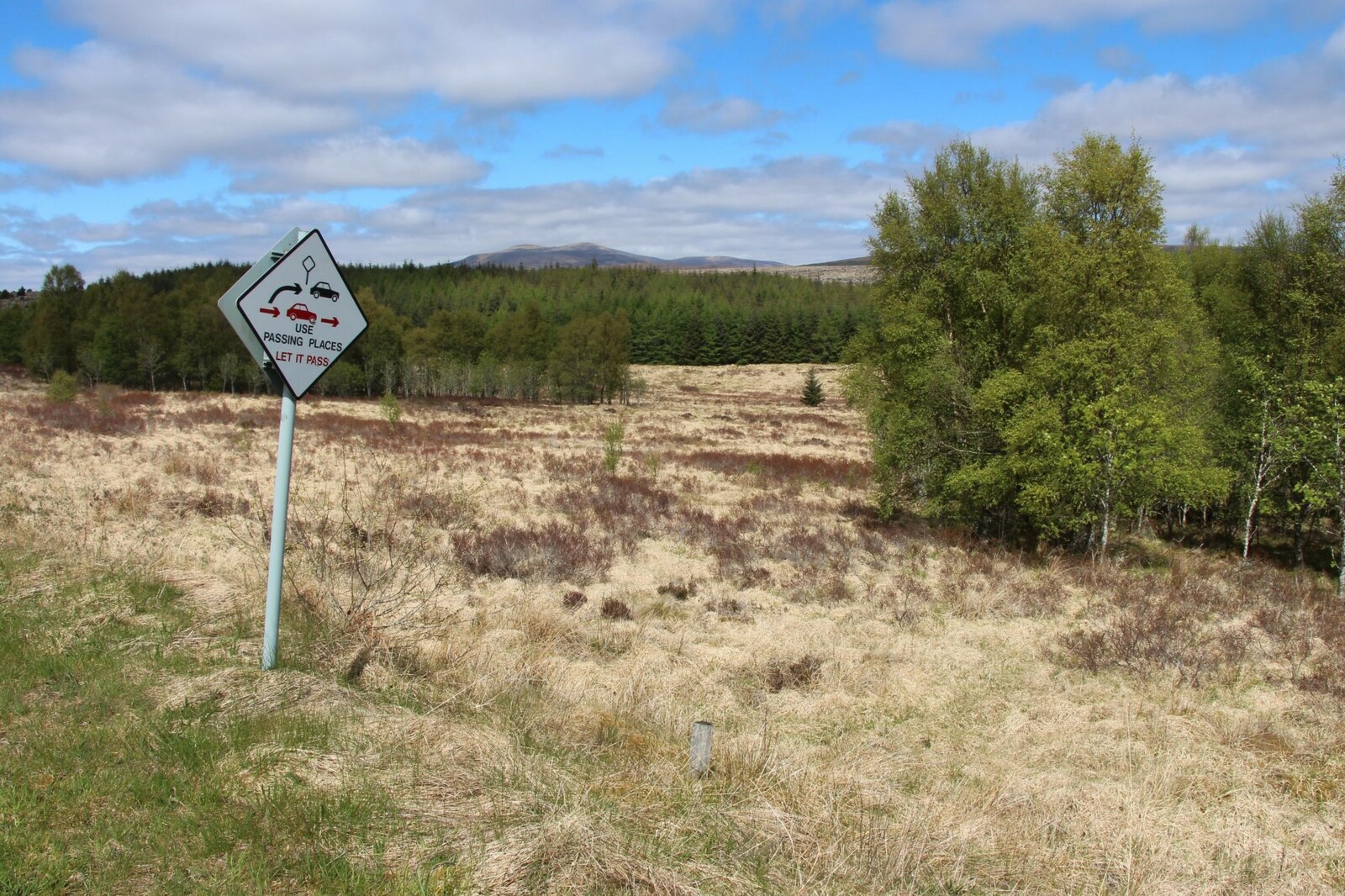

The three things that actually cause the jams
None of the three is inexperience.
Parking in them. A passing place with a car in it has been deleted from the road. The NC500 guidance extends the ban to field accesses and the road itself, and asks drivers to wait for a layby. Where passing places sit several hundred metres apart, one parked car forces a reverse of that whole distance.
Driving too fast to stop. The official advice for country roads is to drive at a speed that lets you stop within the distance you can see to be clear, and on a single track road within half that distance, because the other half belongs to whoever is coming the other way. That halving is what makes single-track driving slow, and safe.
Refusing to give way. Two drivers nose to nose with a queue building behind both. The convention resolves it: nearer vehicle moves, uphill vehicle has priority.
One more. The Highway Code asks for at least 1.5 metres when passing cyclists at up to 30 mph and more above that, at least 2 metres and under 10 mph for horse riders, and 2 metres for anyone walking in the road. On a single track road that clearance often does not exist, so the answer is to wait rather than squeeze past.
Why five days is too few
The NC500's own advice is to spend "at least five days" on the route, adding that seven or more "will give you a far greater understanding" of the area. VisitScotland says allow five to seven days or more. Read quickly, that becomes "five days is the answer." Read carefully, five is the floor below which the organisers stop recommending the trip.
516 miles over five days is about 103 miles a day, which sounds gentle. Two published figures show why it is not.
| Figure | Value | Source |
|---|---|---|
| National speed limit, single carriageway | 60 mph | Highway Code, quoted by NC500 |
| Average free flow car speed on those roads | 48 mph | NC500 road safety page |
| Average free flow car speed on those roads | 51 mph | Department for Transport, 2022 |
The two averages disagree. The gap matters less than what they share: both sit well under the posted limit, and both are measured on ordinary national speed limit single carriageways under free flow conditions, not on single track roads with passing places.
Take the more generous. At 51 mph, 516 miles is a little over ten hours of pure driving with no stops, no traffic, no sheep on the road and no single-track sections at all. At the NC500's own 48 mph it is a bit under eleven. Every one of those assumptions is false for large parts of this route.
So a five day loop is not two hours of driving a day. On the worst days it is realistically double that before you have looked at anything, and it arrives with no spare capacity. That matters here more than on most road trips:
- The weather is a scheduling input, not a mood. Four seasons in one day is the official framing, and it is accurate.
- Roads close. The Bealach na Ba shut on New Year's Day 2026 and did not reopen until 14 January, reported as its longest closure in many years. Winter is the extreme case, but the principle holds year round.
- The best parts are detours. Applecross, the Drumbeg road, Achmelvich, Cape Wrath, Dunnet Head: none are on the shortest line between two points.
- There is nowhere to make time up. The extra hour you would use to claw back a lost afternoon is on the same single track road that cost you the afternoon.
The honest verdict. Five days completes the loop and shows you the coastline through a windscreen. Seven lets you stop. Ten lets you add Applecross, an island day or a walking day without deleting something else. If five is genuinely all you have, the better trip is half the loop done properly: Inverness up the west coast to Durness and back, or Inverness to Caithness and back down the east.
A seven day shape that works
Anticlockwise, which puts the hardest and most spectacular driving early while you are fresh and leaves the faster east coast for the run home.
| Night | Base | What the day is |
|---|---|---|
| 1 | Applecross or Torridon | Inverness out west, the Bealach na Ba if your vehicle suits it |
| 2 | Gairloch or Ullapool | the Wester Ross coast, Corrieshalloch, the slow road north |
| 3 | Lochinver or Kylesku | Assynt, the Drumbeg road, the most single track of the week |
| 4 | Durness | the northwest corner, Kylesku, Scourie, Smoo Cave |
| 5 | Thurso or John o' Groats | the north coast run through Tongue and Bettyhill |
| 6 | Dornoch or Golspie | Caithness, then south down the east coast |
| 7 | Inverness | the fast leg home, Dunrobin or the Black Isle on the way |
The east coast between Wick and Inverness is the fastest driving of the week and the least dramatic, which is why it belongs at the end when you want to get home rather than at the start when you are impatient. Nights 3 and 4 are the ones to protect: Assynt and the northwest are where the route earns its reputation, and where hurrying does the most damage.
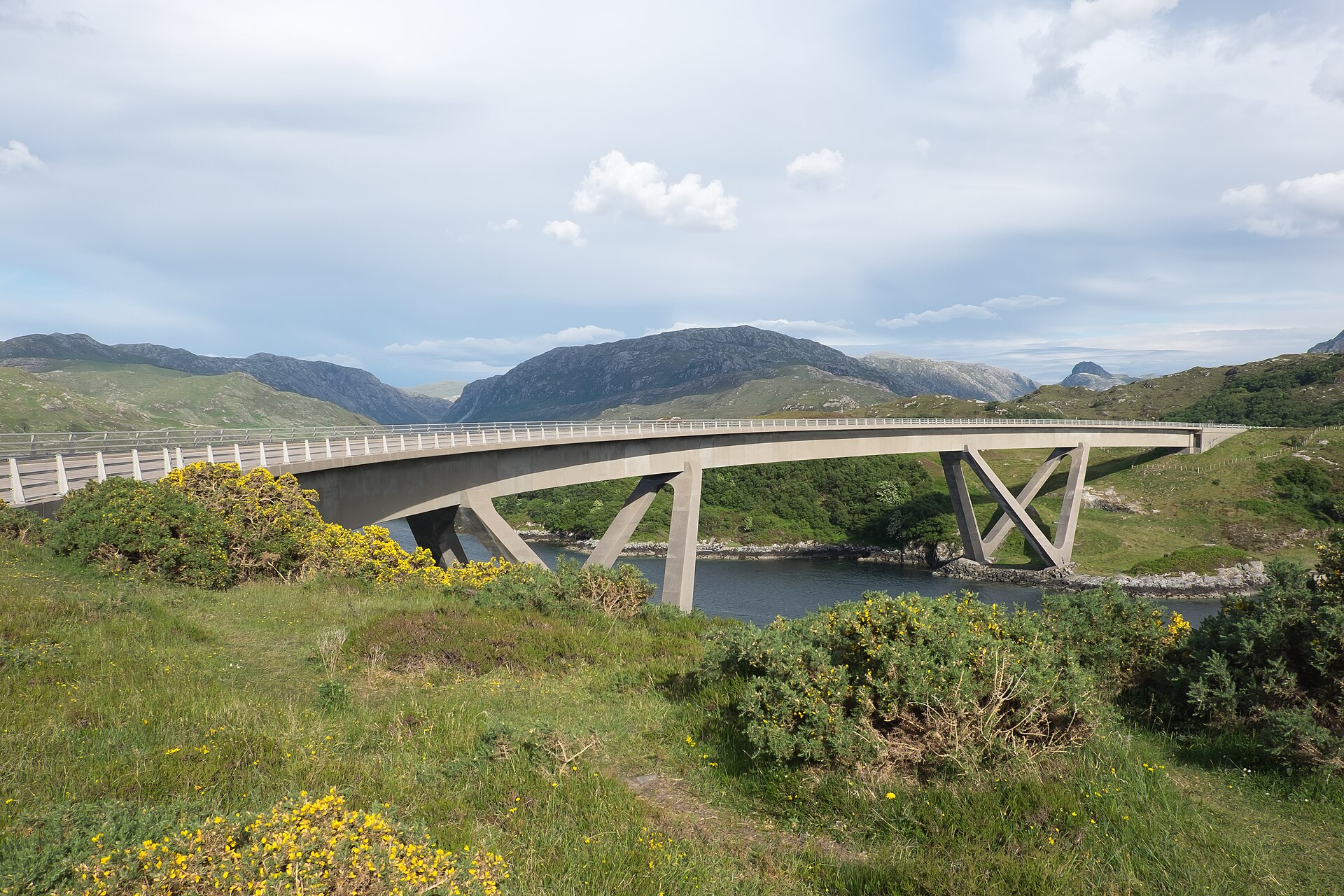

The Bealach na Ba, and when to skip it
The pass over to Applecross is the most famous road on the route and the one most likely to go wrong. It is single track, it is two-way, and it climbs from sea level to the summit in roughly 6 km, commonly described as the greatest continuous ascent of any road climb in the United Kingdom. The sign at the Kishorn end quotes a height of 2,053 ft and gradients of 1 in 5, with hairpin bends, and advises that it is not suitable for learner drivers, large vehicles or caravans. Sources disagree on the summit height, with about 626 m and 630 m both in circulation. The gradient and the hairpins are the parts you feel.
The vehicle rule is not advisory. The official guidance asks motorhomes larger than a standard VW T5 conversion, roughly 16 to 18 ft, to take alternatives on two named roads: the A832 instead of the Bealach na Ba, and the A894 instead of the B869 Drumbeg road. The stated reasoning is that it came from professional drivers who know the road and from local breakdown services, and that one vehicle stuck sideways blocks the road completely, including for emergency vehicles.
The published test is the clearest sentence on the whole site: "If you cannot accurately reverse your vehicle several hundred yards on a narrow single track road, you cannot safely drive over this road."
That is a fair self-assessment for a car driver too. If reversing a hired estate uphill around a blind hairpin with a drop on one side is not something you want to do, take the coast road via Shieldaig instead.
Vehicles, campervans and where you can actually sleep
Scotland's access rights are generous and widely misunderstood, and the misunderstanding lands on exactly the vehicle type the NC500 attracts most.
The Scottish Outdoor Access Code covers "lightweight camping in a tent, in small numbers and for no more than two or three nights in one place." The same code states that "access rights don't include motor vehicles."
Wild camping in a tent is a right you exercise responsibly. Parking a campervan overnight in a layby is not the same thing and is not covered by it. The legal options for a vehicle are campsites, aires and designated overnight parking, most charging a modest amount and most filling in summer for the same small-village reasons as the hotels.
Fuel. The gaps between filling stations on the northwest coast are long enough that the sensible habit is to fill up when you see a station rather than when the gauge asks, and to assume the one you were counting on may be shut on a Sunday evening. The same goes for charging an electric car: one occupied charger in a village with one charger is a two hour problem.
Alcohol. Scotland's drink-drive limit is lower than the rest of the UK: 22 micrograms of alcohol per 100 millilitres of breath, against 35 in England, Wales and Northern Ireland. On a route lined with distilleries this catches visitors out. Many will hand a driver samples to take away instead.
Midges, weather and the shape of the day
The Highland midge decides more itineraries than the forecast does.
Numbers peak in July and August, decline through September, and are finished off by the first frosts of autumn. The insects are crepuscular, most active around dawn and dusk, precisely when you want to be at a viewpoint or outside a tent. A dull, overcast day can produce substantial biting at midday too, while bright sun suppresses it.
The reliable defence is wind. Sources put the threshold differently, with one conservation source giving 8.8 km/h, about 5.5 mph, as the speed above which midges cannot fly, and others putting it nearer 6 mph. The practical rule is the same either way: an exposed headland with a breeze is comfortable, a sheltered glen at dusk in still air is not. They are also seldom found above about 500 m.
So put the outdoor parts of the day in the middle of it, carry repellent, and treat a still, humid, overcast evening in Assynt as an indoor evening. The far north is not reliably cold in summer or mild in winter, it is reliably changeable, so any plan with a fixed activity on a fixed day has a failure mode. The fix is slack rather than better forecasting.
What is worth booking, and what is not
Most of this route needs no ticket. The coastline, beaches, passes and viewpoints are free and always open. The short list that benefits from planning:
Accommodation, everywhere, as far ahead as you can. This is the one that ruins trips.
Dunrobin Castle, at Golspie on the east coast, is open annually from 1 April to 31 October and closed outside that window entirely, which is a trap for shoulder-season trips. In 2026 it runs 10:00 to 17:30 from April to September, last entry 16:30, and 10:30 to 17:00 in October, last entry 16:00. Admission covering castle, museum and gardens is £16 for an adult aged 17 and over, £14 concession, £10 for a child aged 6 and over, and £47 for a family of two adults and up to three children.
Any island day. Orkney from the Caithness coast, or Lewis and Harris from Ullapool, means committing to a sailing timetable that will not move for you. Check the operator's current season and times directly, and treat the crossing as the fixed point the day bends around.
Nothing else, really. Smoo Cave, the beaches, Dunnet Head, Kylesku, the Bealach itself: all decidable on the morning, which is a large part of why the route is enjoyable.
Key Takeaways
| Point | Details |
|---|---|
| Five days is the floor, not the recommendation | The official advice for the 516 mile loop is at least five days, with seven or more giving a far better trip. Five leaves no slack for weather or road closures. |
| Left, you pull in. Right, you wait opposite | Rule 155. Never cross the road into a passing place on your right. |
| Do not park in passing places | Rule 156, one sentence, and the single biggest cause of avoidable jams on the route. |
| Do not travel in convoy | Most passing places fit one vehicle. Travel about one passing place apart. |
| Larger motorhomes are asked to avoid two roads | Anything above roughly a VW T5 conversion should take the A832 instead of the Bealach na Ba and the A894 instead of the B869 Drumbeg road. |
| A campervan is not wild camping | The access code covers lightweight tent camping and states that access rights do not include motor vehicles. |
| Scotland's drink-drive limit is lower than the rest of the UK | 22 micrograms per 100 ml of breath, against 35 elsewhere in the UK. |
| Midges peak in July and August, at dawn and dusk | Wind above roughly 5.5 to 6 mph grounds them. Still, overcast, sheltered evenings are the bad ones. |
| Book beds early, tickets rarely | The northwest has few rooms and no fallback town. Almost everything else can be decided on the morning. |
Where this plan breaks
It assumes your vehicle can do the roads you picked. A large hire motorhome and an Applecross night are incompatible, and that only becomes obvious at the bottom of the pass with nowhere to turn. Decide the vehicle and the route together.
Seven days still has no weather day in it. The shape above works when nothing goes wrong. One closed pass, one late sailing or one unsafe driving day and something has to be cut. Nine or ten days changes the character of the whole trip.
Two drivers matter more here than the vehicle does. Single track driving is concentration-heavy in a way motorway miles are not, and tired is when passing place judgement gets worse. Add the second driver to the rental.
Shoulder season closes things quietly. Dunrobin shuts on 31 October, and boat trips, cafés and small attractions keep their own seasons. An April or October plan built from summer blog posts will find half of it closed.
The route is a marketing line, not a legal one. There is no single official road numbered NC500 and no one way system on it. Locals use these roads to get to work, to hospital and to school, which is what the NC500's own visitor pledge exists to address.
How Planytera handles a trip like this
Planytera is an AI trip planner built by a solo developer, available on iOS, Android and the web. You describe the trip and it produces a day-by-day itinerary, ready in moments. For a route like this, three things matter more than the sightseeing list.
Offline access. Mobile coverage in Assynt, on the north coast and around Applecross is patchy at best, and an itinerary you cannot open in a layby is not an itinerary. Saved trips keep the full plan, maps and notes available with no signal.
Re-pacing without rebuilding. This is the trip where the plan changes. A pass closes, a day runs two hours longer than it looked, the weather turns an outdoor day indoors. Swap a stop or re-pace a day and the rest of the week stays in sync instead of needing to be built again from the start.
Per-person cost estimates. Fuel, beds and a hire car across a week in a region with limited supply add up quickly, and seeing the per-person figure before committing helps when a group is splitting a vehicle. Split costs then tracks who owes who, without anyone maintaining a spreadsheet and without moving anyone's money.
Frequently asked questions
How do you use a passing place on a single track road?
If the passing place is on your left, pull into it. If it is on your right, stop opposite it and stay on your own side so the other driver can pull in and pass. Whichever vehicle is closest to the passing place is the one that moves, and you give way to traffic coming uphill where you can. Reversing back to a passing place is normal. They also work for traffic behind you: if a queue has built up, pull in and let it go. Never park in one.
Is five days enough for the North Coast 500?
It is the minimum the organisers will recommend, not the sensible target. The official advice is at least five days, with seven or more giving a far better trip. 516 miles over five days is about 103 miles a day, and on roads where average free flow speed is measured at 48 to 51 mph, with much of the driving slower still, that leaves no room for weather or a closed road. If five days is all you have, do half the loop properly instead.
Can I drive a motorhome on the North Coast 500?
Most of it, yes. The official guidance asks motorhomes larger than a standard VW T5 conversion, about 16 to 18 ft, to take alternatives on two roads: the A832 rather than the Bealach na Ba, and the A894 rather than the B869 Drumbeg road. The published test is whether you can accurately reverse several hundred yards on a narrow single track road. If you cannot, that road is not safe for you.
Can I sleep in a campervan anywhere in Scotland?
No. The Scottish Outdoor Access Code covers lightweight camping in a tent, in small numbers, for no more than two or three nights in one place, and states that access rights do not include motor vehicles. Sleeping in a van in a layby is not wild camping under the code. Use campsites, aires or designated overnight parking, and book them in summer like a hotel.
When is the best time to drive the NC500?
Late spring and early autumn give the best combination of long days, open attractions and lighter traffic. Midsummer has the longest daylight and the worst midges, peaking in July and August. Winter brings dramatic scenery and real risk of closures, including the Bealach na Ba, which shut on New Year's Day 2026 and stayed closed until 14 January. Whichever you pick, check seasonal attractions are open: Dunrobin runs only from 1 April to 31 October.
How bad are the midges, really?
Bad in the right conditions and absent in the wrong ones. They peak in July and August and are most active around dawn and dusk, and a dull overcast day can produce biting at midday too. Wind is the defence: sources put the speed at which they cannot fly somewhere between about 5.5 and 6 mph and disagree on the exact figure. A breezy headland is fine, a sheltered still glen at dusk is not. They are also seldom found above about 500 m.
Useful sources and further reading
- North Coast 500 road safety, the official guidance on single track roads, passing places, convoys, speed and motorhome restrictions.
- Planning your North Coast 500 adventure, the official route length and recommended duration.
- The NC500 Visitor Pledge, the responsible-travel commitment the route asks visitors to make.
- Highway Code, rules 103 to 158, for rule 155 on single track roads and rule 156 on parking in passing places.
- Highway Code, rules 159 to 203, for rule 163 and the clearances required when passing cyclists, horse riders and pedestrians.
- VisitScotland: North Coast 500, for suggested duration and responsible travel guidance.
- Scottish Outdoor Access Code: camping, for what wild camping covers and the statement that access rights do not include motor vehicles.
- Vehicle speed compliance statistics for Great Britain: 2022, the Department for Transport free flow speed figures.
- Highland Council road safety advice for the NC500, Police Scotland's single track road guidance.
- Dunrobin Castle: plan a visit, 2026 opening season, hours and admission prices.
- Trees for Life: Highland biting midge, midge season, behaviour and the wind speed that grounds them.
- Bealach na Ba, the ascent, summit height figures and the pass's characteristics.
Recommended
More from the Planytera blog.