Blog17 min read
8 Day Galapagos Islands Itinerary
An eight day Galapagos plan built on the fact that the National Park licenses each boat to one fixed route, not one you design yourself.
By Dom
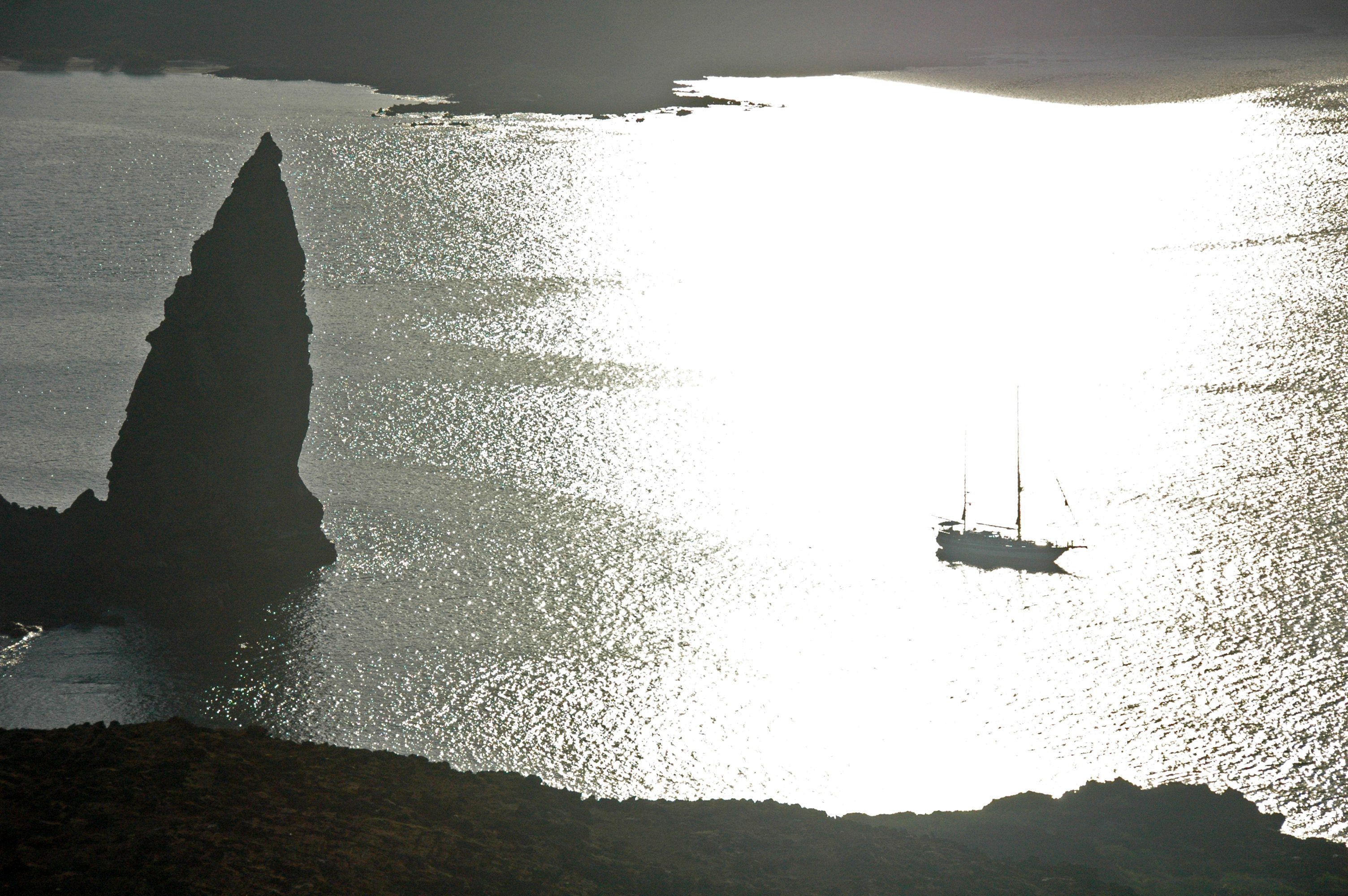

Most itinerary planning starts with a map and a list of what you want to see. A Galapagos itinerary starts with a boat, because the boat is the itinerary. Every vessel licensed to carry tourists through the islands operates on a route approved in advance by the Galapagos National Park Directorate, a document called a patente, and that route is not a suggestion. It names the exact visitor sites, the order you see them in, and often the time window for each one, and the operator cannot swap a site out because your group would rather see something else.
That is the opposite of how most trips get planned. On a normal ten day loop through a country, you choose the stops. Here, you choose a boat, and the boat already has its eight days decided. Two boats both marketed as "8 day Eastern and Central Islands" cruises will run close to the same sites in close to the same order, set by the park rather than by either operator, and a traveler who books on price or cabin class without checking the actual route can end up with a very different week than they pictured.
This plan walks through what shapes an eight day Galapagos trip before you ever pick a departure date: what the park charges and how you pay it, how the fixed-route system actually works, where a land-based alternative does and does not substitute for a boat, and a real eight day route pattern multiple current operators run, so you know what you are agreeing to before you book.
The park licenses the boat, not your week
Galapagos tourism is tightly capped by design. Every vessel authorized to carry tourists has to submit a pre-planned itinerary to the National Park authorities for approval, and once it is approved the vessel has to follow it strictly. The approval document is the patente, issued under Ecuador's environmental regulations for Galapagos tourism operations, and it spells out which visitor sites a given boat may enter, in what order, and inside what visitation windows. The Park runs its own patrol boats and periodically checks that a vessel is actually where its patente says it should be.
This system traces back to a 2012 overhaul: the Park ruled that no vessel could revisit the same visitor site within a 14 day window, which is why operators running longer trips split their itineraries into alternating routes, commonly labeled Itinerary A and Itinerary B, so a 15 day circumnavigation does not double back on itself. For an eight day trip the effect is simpler but just as rigid: your boat runs one loop, once, and the loop was fixed long before you searched for a departure date.
The practical upshot is that choosing a Galapagos cruise means choosing among a short list of published, already-fixed routes rather than commissioning a custom one. Operators describe it candidly when asked directly: itineraries cannot be customized by the companies selling them, because the companies are not the ones who set them.
What it costs before you pick a boat
Two government fees apply to every visitor regardless of which boat or land-based plan you choose, and both changed in the last two years in ways that catch travelers working from older guides.
The Galapagos National Park entrance fee doubled on 1 August 2024, following approval by the Galapagos Governing Council (CGREG) that February. Foreign tourists aged 13 to 64 now pay $200, up from $100; foreign children 12 and under pay $100. Visitors from Andean Community and Mercosur countries pay a reduced $100 (child $50), and Ecuadorian nationals pay $30, up from $6, with minors, seniors and residents with disabilities at $15. The increase was the first in 26 years and is earmarked for conservation and local infrastructure, according to Ecuador's tourism ministry at the time. This fee is paid on arrival, in cash, at the airport on Baltra or San Cristobal; bring clean, undamaged bills, since torn or heavily worn notes are commonly reported as refused at official counters.
Separately, every visitor needs a Transit Control Card (TCT), a $20 per person migration document issued by CGREG. As of 29 May 2025, the TCT moved to a digital process: you pre-register online through CGREG's own portal, entering passport, flight and accommodation details, and receive a QR code. That does not replace the in-person part; you still have to present yourself at the CGREG counter at the Quito or Guayaquil airport, before checking in for your Galapagos flight, to have the card validated against your passport and boarding pass. Skipping the online step does not block travel, but it pushes the paperwork to the counter rather than doing it in advance.
Both fees are separate from your flight and from whatever the boat or hotel charges, and both are per person: roughly $440 to $800 in government fees alone for a couple, before a single night is booked.
Picking a boat is picking a route
There is no direct international flight to the Galapagos. You fly domestically, either from Quito, where every routing makes a stop in Guayaquil before continuing, or directly from Guayaquil, a flight of roughly 1 hour 45 minutes. LATAM Ecuador and Avianca Ecuador are the main carriers on the route, landing at Baltra (airport code GPS, serving Santa Cruz) or San Cristobal (SCY), depending on which island your boat departs from.
Once aboard, Park regulation caps every licensed naturalist guide at 16 passengers; smaller expedition-style boats often run closer to 12. No one enters a visitor site without a certified guide present, and that guide is working from the same patente the vessel is licensed under.
Most eight day cruises on the market now are built as a single fixed loop rather than a split A/B route, since the 14 day no-repeat rule mainly binds longer circumnavigations. A representative pattern, matching several current operators' published 8 day Eastern and Central Islands routes, runs: Santa Cruz on arrival, North Seymour, Santa Fe, South Plaza, an overnight repositioning to Genovesa for its seabird colonies, San Cristobal (commonly including a Kicker Rock excursion), Española, and Floreana, before returning to disembark. A Western-route 8 day boat instead runs toward Isabela and Fernandina for the volcanic western islands; a Southern-route boat leans toward Floreana and Española. These are genuinely different trips built around different wildlife and landscape, and the route name in a boat's marketing is the thing worth confirming before deposit, not after.

The land-based alternative, and what it still cannot reach
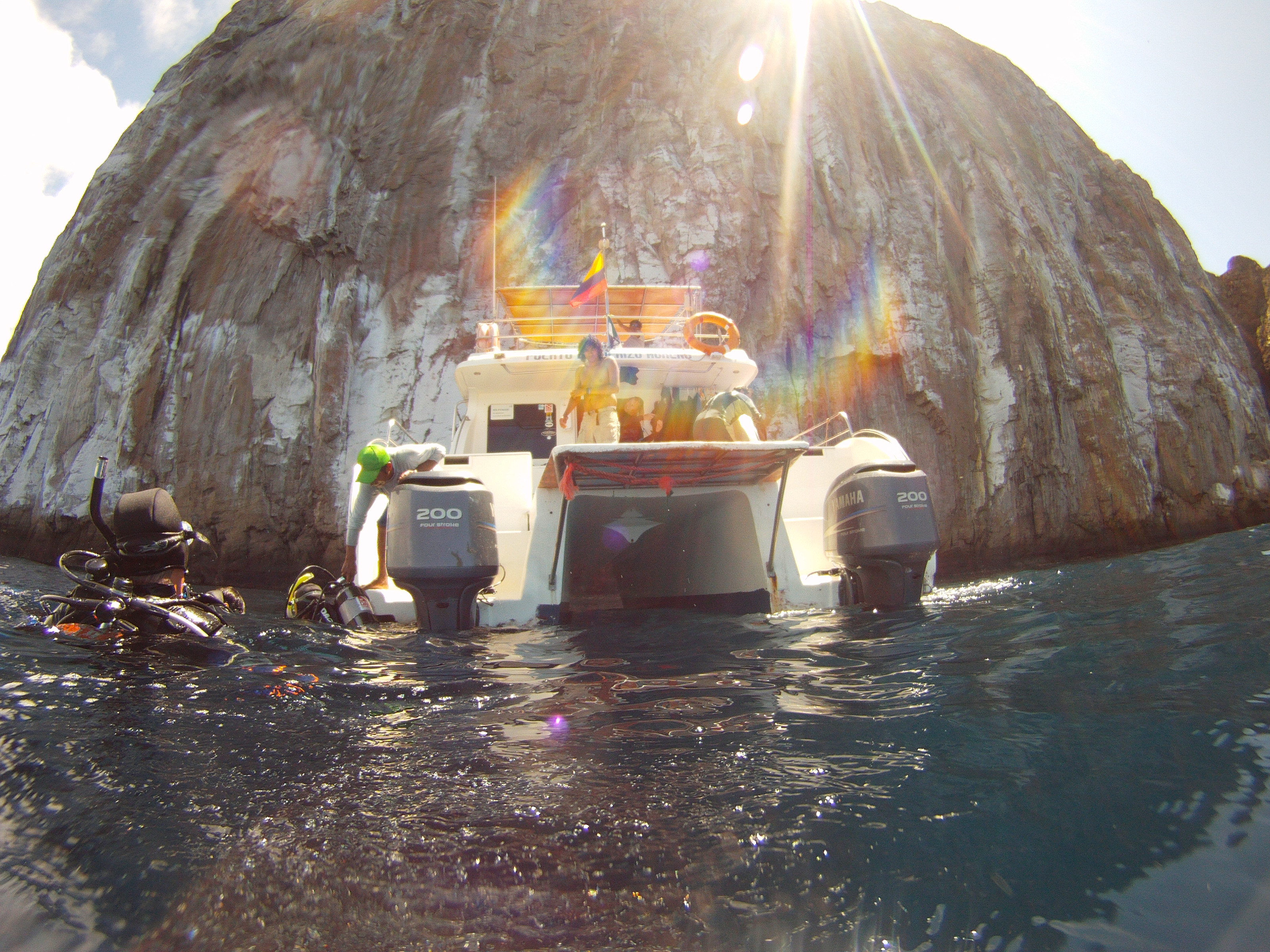
Not everyone wants eight nights on a boat, and a land-based itinerary is a real alternative: base out of hotels on the islands and take day trips by smaller boat rather than living aboard a liveaboard for the week. Only three islands allow overnight stays by visitors at all, San Cristobal, Santa Cruz and Isabela, so a land-based plan necessarily moves between a subset of those rather than threading the full archipelago the way a cruise can.
This is where the fixed-route logic shows up again from a different angle. A land-based trip gives you more day-to-day choice than a single cruise patente does, since you are not locked into one boat's sequence for the whole week. But it trades that flexibility for real reach: Fernandina Island and its famously undisturbed wildlife, and Genovesa's seabird colonies, are not reachable on a land-based day trip under current operator guidance. Those sites sit far enough from the inhabited islands, and inside visitor-site rules structured around overnight cruise access, that only a liveaboard itinerary reaches them. From Isabela, land-based day trips do reach strong alternatives, including the Los Tuneles snorkeling site and Las Tintoreras' resting white-tip reef sharks, and inter-island boat transfers generally run 2 to 4 hours depending on the route.
The honest comparison: a land-based trip is a legitimate way to see a meaningful slice of the islands with more schedule control and typically a lower total cost, but it is not a substitute for a cruise if the western and far-northern wildlife, Fernandina's marine iguanas and flightless cormorants, Genovesa's red-footed boobies, is the reason you are going.

When to go
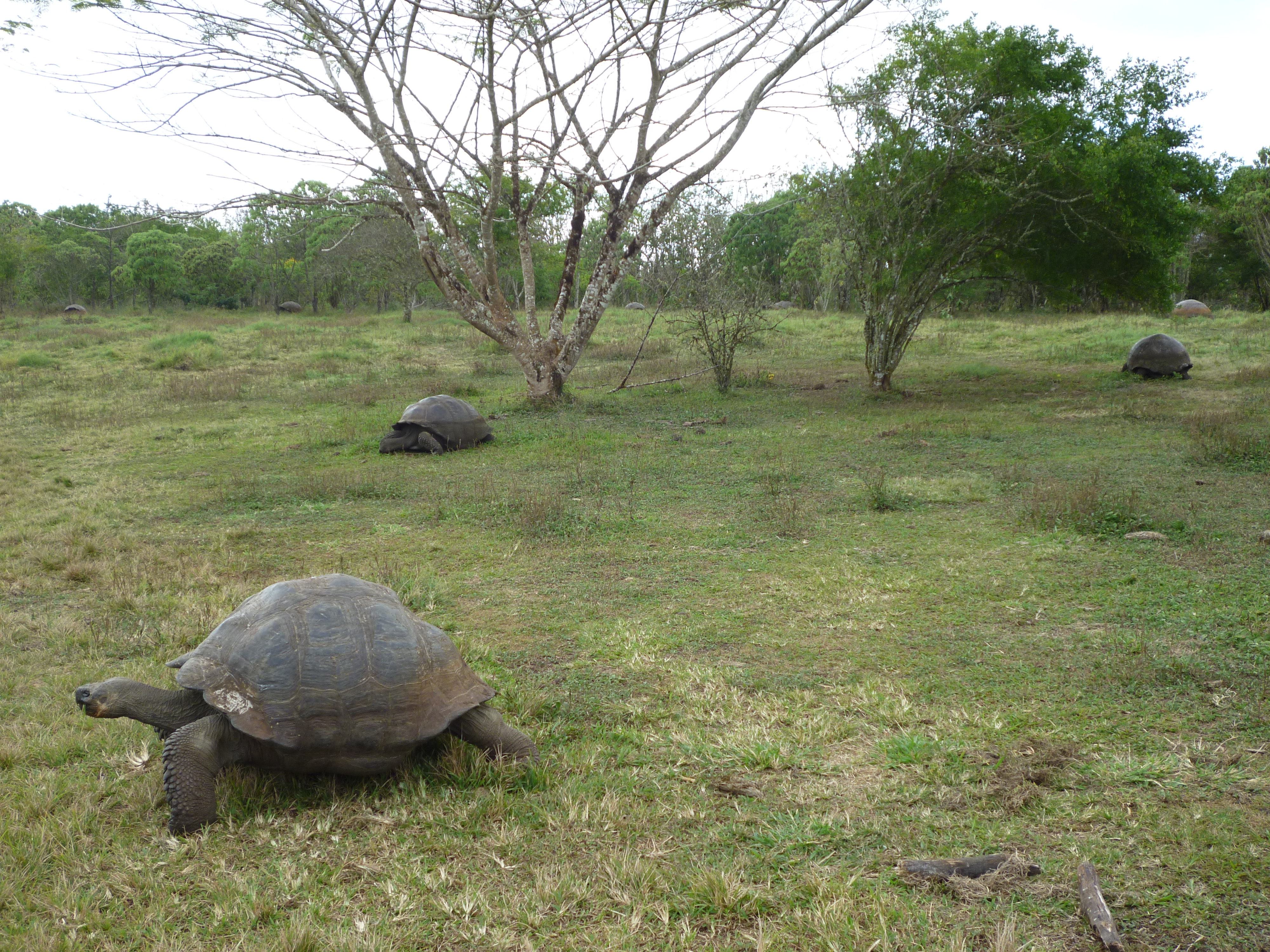
The islands run on two broad seasons rather than a single peak and off-peak split. The warm, wetter season runs roughly December through May, with water at its warmest around February (reported at 25 to 27°C), calmer seas and the best conditions for swimming and snorkeling, alongside brief tropical showers. The cooler, drier garua season runs roughly June through November, named for the morning mist that typically burns off by midday; seas run choppier, winds pick up, and water temperature bottoms out around August at roughly 18 to 19°C, cool enough that a wetsuit is worth packing for snorkeling even though the islands sit on the equator.
Demand does not track the weather cleanly. July and August, the coolest water months, are also peak demand because they align with the Northern Hemisphere summer holiday, and December and January book out around the winter holidays. Boats carry as few as 16 to 20 guests, so a handful of cabin bookings is the difference between available and sold out. Operators and booking guides commonly recommend booking 6 to 12 months ahead for a high season departure, and 12 to 18 months ahead if you need a fixed date for a group, charter or milestone trip. September is commonly cited as the cheapest month to go.
Key Takeaways
| Point | Details |
|---|---|
| The boat's route is fixed by the National Park, not the operator | Every licensed vessel runs on a Park-approved patente naming its visitor sites, order and timing; it cannot be customized trip to trip. |
| The Park entrance fee doubled in August 2024 | Foreign adults now pay $200, children under 12 pay $100, paid in cash on arrival at Baltra or San Cristobal. |
| The Transit Control Card is a separate $20 fee, now digital | Pre-register online since May 2025 for a QR code, but in-person validation at the Quito or Guayaquil airport counter before your flight is still required. |
| A land-based trip cannot reach Fernandina or Genovesa | Only San Cristobal, Santa Cruz and Isabela permit overnight stays, and current operator guidance places those two islands' wildlife out of reach without a cruise. |
| Guides are capped at 16 passengers each by Park regulation | You cannot enter a visitor site without a certified naturalist guide present. |
| High season books out 6 to 12 months ahead | Small vessel capacity (often 16 to 20 guests) means July, August, December and January departures sell out early. |
| Garua season (roughly June to November) is cooler and choppier | Water runs as cool as 18 to 19°C around August; the warm season (roughly December to May) peaks near 25 to 27°C around February. |
| No direct international flight exists | All Galapagos-bound travel connects through a domestic flight from Quito (via a Guayaquil stop) or direct from Guayaquil, landing at Baltra or San Cristobal. |
The eight days
The pattern below matches several current operators' published 8 day Eastern and Central Islands routes. It is a real, representative loop, not a template you can reassemble: the exact sites and order on your actual booking depend on which boat's patente you book, and a Western or Southern route runs a genuinely different week.
| Day | Where | What shapes the day |
|---|---|---|
| 1 | Santa Cruz (Baltra arrival) | Fly in, transfer to the boat, afternoon visit near the airport channel |
| 2 | North Seymour, Santa Fe | Land iguanas and frigatebirds on North Seymour, snorkeling off Santa Fe |
| 3 | South Plaza, repositioning | Sea lion colonies and prickly pear cactus forest, overnight sail toward Genovesa |
| 4 | Genovesa | Red-footed and Nazca booby colonies, Darwin Bay |
| 5 | San Cristobal | Kicker Rock snorkeling or diving excursion, depending on the boat's activity offering |
| 6 | Española | Waved albatross (seasonal), blow hole, sea lion beaches |
| 7 | Floreana | Post Office Bay, Devil's Crown snorkeling |
| 8 | Santa Cruz (Baltra departure) | Return transfer, departure flight |
Day 1, arrival. Build the day around the flight, not an activity. Most international connections land in Quito or Guayaquil the day before, since the Galapagos flight departs in the morning and a same-day connection leaves no slack if the first leg runs late.
Days 2 to 3, Eastern islets. North Seymour and Santa Fe are close to Baltra and commonly the first full excursions on an Eastern and Central route; South Plaza adds a cactus forest over red volcanic rock before the boat repositions overnight toward Genovesa, the longest sailing leg of the week.
Day 4, Genovesa. The seabird colonies here are why some travelers choose an Eastern and Central route over a Western one, and this is one of the two islands a land-based day trip cannot reach at all.
Day 5, San Cristobal. Kicker Rock (Leon Dormido) is a frequent stop on this leg, though whether it is a snorkel or scuba excursion depends on the boat's own activity program, not the patente.
Days 6 to 7, Española and Floreana. Española's waved albatross colony (present roughly April through December) and Floreana's Post Office Bay, an 18th century whalers' tradition still active today, plus Devil's Crown's snorkeling.
Day 8, departure. Return transfer to Baltra and the flight out. Build a buffer rather than a tight same-day international connection; Galapagos flight schedules are limited and a missed morning departure has few same-day alternatives.
Where this plan breaks
Assuming you can adjust the route after booking. The single most common disappointment in Galapagos trip reports is a traveler who books a boat expecting a custom or flexible week and discovers the patente is fixed. If a specific island matters enough to plan the whole trip around, confirm it is on that boat's actual published route before paying a deposit, not during final planning.
Showing up without cash for the entrance fee. The $200 Park fee, doubled since August 2024, is commonly reported as cash-only at the Baltra or San Cristobal arrivals counter. A traveler who assumes a card will work, or who arrives with only large or worn bills, risks a scramble on arrival day.
Treating the digital TCT as the whole requirement. Pre-registering online for the QR code is real progress over the old paper-only process, but it does not remove the in-person counter step at the mainland airport before your Galapagos flight. Skipping the online step just pushes the full process to the counter; skipping the counter step entirely is not an option.
Expecting a land-based trip to match a cruise's wildlife list. San Cristobal, Santa Cruz and Isabela cover real, strong wildlife sites, but current operator guidance is consistent that Fernandina and Genovesa are out of reach without a liveaboard. A land-based plan built around seeing "everything" will come up short on those two specifically.
Booking a high-season date late. With vessels capped at roughly 16 to 20 guests, a July, August or December departure can sell out 6 to 12 months ahead. A plan built the way a flexible domestic trip gets planned, a few weeks out, routinely runs into a sold-out boat rather than a price increase.
How Planytera handles a trip like this
Planytera is an AI trip planner built by a solo developer, available on iOS, Android and the web. You describe the trip and it produces a day-by-day itinerary, ready in moments. On a trip where the core week is not yours to sequence, three things matter more than the sightseeing list.
Pacing around a boat week you do not control, rather than fighting it. Once a boat and its patente are booked, the eight days in the middle of the trip are fixed. Planning the days before and after, the Quito or Guayaquil connection, a possible land-based extension on Santa Cruz or Isabela, around that fixed block, rather than trying to re-sequence it, is the actual planning problem for this trip.
Re-pacing without rebuilding the week. Inter-island and domestic Galapagos flights run on a limited daily schedule, and a delay on the mainland connection can shift your arrival into the islands by a day. Adjusting the days around that shift and letting the surrounding plan resync beats redoing the whole itinerary.
Saved trips and shared plans. A Galapagos cruise is usually booked through an operator or agent well before the surrounding travel is finalized. A shared, read-only plan link keeps everyone, you, a travel partner, whoever booked the boat, looking at the same itinerary as the mainland connections and any land-based extension get locked in.
Frequently asked questions
Can I customize a Galapagos cruise itinerary?
No, not in the way you can on most trips. Every vessel licensed to carry tourists operates under a patente, a route approved in advance by the Galapagos National Park Directorate that fixes which visitor sites it goes to, in what order, and inside what time windows. Operators cannot swap sites in or out at a traveler's request; choosing a cruise means choosing among already-published, already-fixed routes.
How much does an 8 day Galapagos trip actually cost?
A 2026 cost breakdown puts the cruise itself at roughly $3,000 to $9,500 or more per person for eight days, depending on vessel class, on top of the $200 Park entrance fee, the $20 Transit Control Card, round-trip domestic flights commonly cited at $250 to $600, and $200 to $400 in guide and crew tips. All-in per person, that runs roughly $3,800 up past $11,000 for the most luxury boats.
Is a land-based Galapagos trip cheaper than a cruise, and what do I give up?
It is generally the lower-cost option, since you are paying for hotel nights and day-boat excursions rather than a full liveaboard week. The tradeoff is reach: only San Cristobal, Santa Cruz and Isabela allow overnight stays, and current operator guidance is consistent that Fernandina Island and Genovesa's seabird colonies are not reachable on a land-based day trip. If those two sites are a priority, a cruise is the only way to reach them.
What is the Transit Control Card and how do I get it now?
It is a $20 per person migration document required of every visitor to the Galapagos, administered by the Galapagos Governing Council (CGREG). Since 29 May 2025 the process is digital: you pre-register online before traveling and receive a QR code, but you still have to present yourself at the CGREG counter at the Quito or Guayaquil airport, before checking in for your Galapagos flight, for in-person validation against your passport and boarding pass.
When is the best time to visit the Galapagos?
It depends on what you want from the trip rather than a single best window. The warm season, roughly December through May, brings calmer seas and the warmest water, near 25 to 27°C in February, which favors swimming and snorkeling. The garua season, roughly June through November, runs cooler and mistier, with water as cool as 18 to 19°C around August, and overlaps with the year's highest demand because it lines up with the Northern Hemisphere summer holiday. Neither season is objectively better; they trade comfort for different conditions.
Do I need a visa for Ecuador and the Galapagos?
Most travelers from the US, Canada, the EU, the UK, Australia and New Zealand can enter Ecuador visa-free for up to 90 days within a 12-month period, with a passport valid at least six months beyond arrival. The Galapagos adds its own separate requirement on top of that, the $20 Transit Control Card, which is an entry and tracking document rather than a visa. A yellow fever certificate is only required of travelers arriving from, or who have spent extended time in, specific South American countries the Ecuadorian health ministry lists as endemic; it does not apply to a direct trip from North America or Europe.
Useful sources and further reading
- Primicias: Entra en vigencia el incremento de costos para visitar Galápagos, for the August 2024 Park entrance fee increase and the full tariff breakdown by visitor category.
- Travel Market Report: Galapagos National Park Entry Fees to Double from August 2024, independently confirming the fee change and effective date.
- LATA: Ecuador announces increase to Galapagos National Park entry fees, for CGREG's approval date and the purpose of the increase.
- Think Galapagos: Galapagos Transit Control Card (TCT), the new online process, for the May 2025 shift to a digital TCT and the airport validation requirement that remains.
- Gobierno de Galápagos: step by step TCT online, the official CGREG page describing the online pre-registration steps and stay limits.
- Galapatours: why do Galapagos cruises have fixed itineraries, for how the patente system works and why operators cannot customize routes.
- CNH Tours: cruise itineraries move to 14 night loops as of February 2012, for the origin of the 14 day same-site rule that shapes longer circumnavigations.
- GreenGo Travel: exclusive guide ratio, for the Park's 1-guide-to-16-passenger regulation.
- A Luxury Travel Blog: what places can you see without a cruise in the Galapagos, for which islands allow overnight stays and which visitor sites a land-based trip cannot reach.
- Ecoventura: how far in advance to book a luxury Galapagos cruise, for booking-window guidance and peak-season sell-out patterns.
- Aracari: best time to travel to Galapagos, for seasonal water temperature and weather patterns.
- Galapagos Insiders: Galapagos cruise cost 2026, for current per-person cost ranges by vessel class and included extras.
Recommended
More from the Planytera blog.