Blog17 min read
10 Days in Kenya and Tanzania: Book the Month, Not the Date
A ten day Masai Mara and Serengeti plan built around the migration's lack of a fixed schedule, so you pick a month and hedge rather than one crossing point.
By Dom
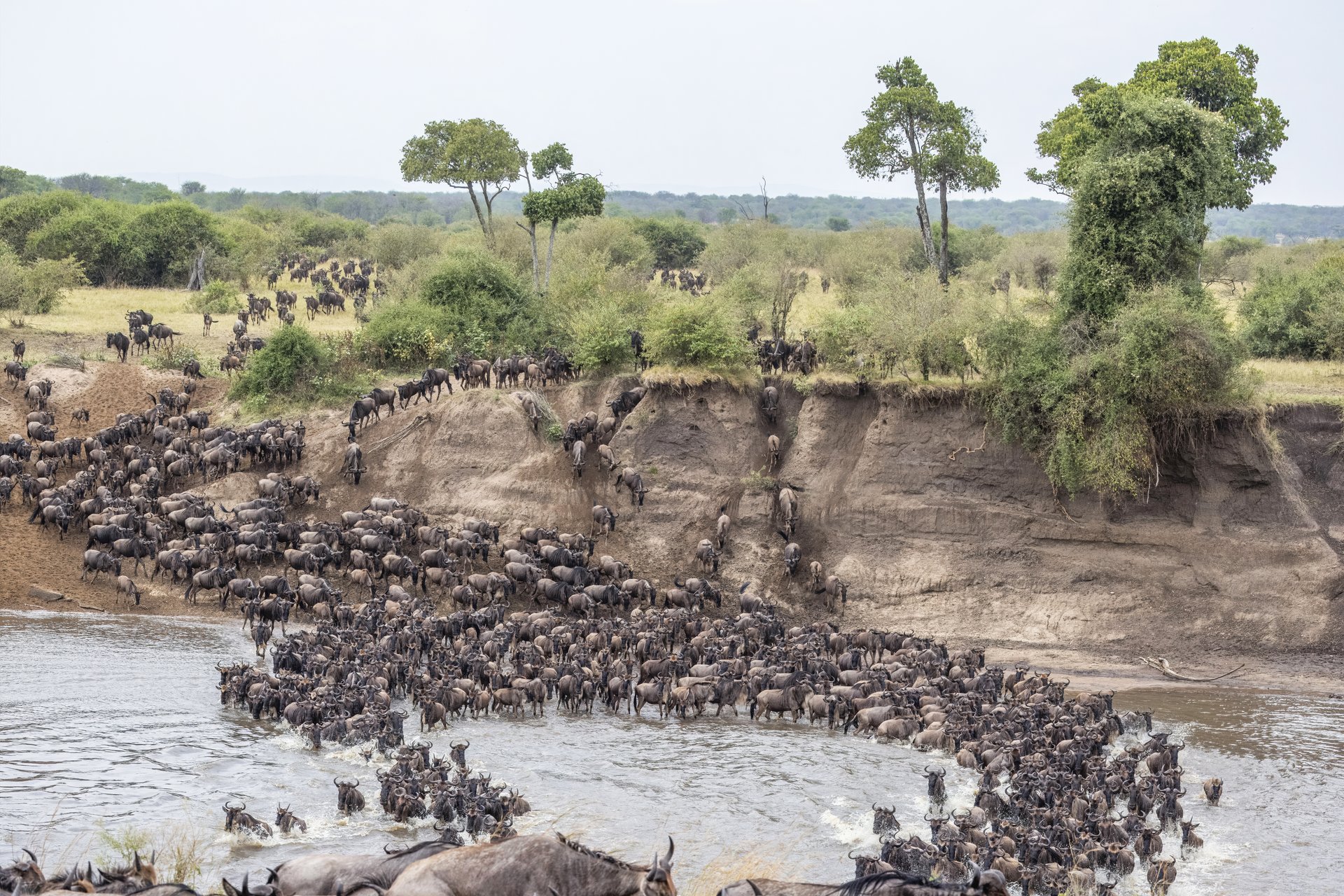

Ask a safari operator which side of the border to book for a given week of the Great Migration and most will not give you a straight answer, because there is not one. The wildebeest do not check a calendar or a map before they cross the Mara River, and the river itself sits inside both a Kenyan reserve and a Tanzanian national park depending on which bank the herd is standing on that morning. A plan that books one camp on one side for one fixed date is betting on an animal that has never once kept a schedule.
That is not travel-writer color. Operators who run trips through this landscape every year describe the crossings the same way: no fixed schedule, driven by rain and grass rather than the date on a brochure, and capable of not happening at all for several days running even in the historically busiest weeks. The honest way to plan around that is not to pick a date and hope. It is to pick a month, understand roughly which country the herd tends to favor in that window, and build in enough time and flexibility on the ground that a quiet few days in one location does not sink the trip.
This is a ten day Masai Mara and Serengeti plan built on the operators' own published fee schedules, the two countries' official entry rules, and the real, seasonal, occasionally awkward business of getting between a Kenyan reserve and a Tanzanian park that sit next to each other on the map and are anything but simple to cross between.
The migration moves, the border does not
The Mara-Serengeti ecosystem is one continuous landscape that two different countries happen to administer. The herds, upward of a million wildebeest plus attendant zebra and gazelle, move through it in a broadly predictable annual pattern, but the exact week and exact crossing point in any given year depends on rainfall, and rainfall is not a fixed variable. Multiple current operator guides agree on the shape of the year even while declining to promise dates:
| Roughly when | Roughly where | What is happening |
|---|---|---|
| January to March | Southern Serengeti, the Ndutu area | Calving season, hundreds of thousands of calves born within a few weeks |
| April to May | Central Serengeti | Herds moving north as the short grass plains dry out |
| June | Western Corridor, Serengeti | The Grumeti River crossings, a smaller rehearsal for what comes next |
| July to October | Northern Serengeti and the Masai Mara | Mara River crossings, with August most commonly cited as the highest-probability month on both sides |
| November to December | Back toward Southern Serengeti | The return migration, herds again converging on Ndutu as the short rains green the plains |
Treat every month in that table as a tendency, not a booking guarantee. One current tracker puts the highest-probability window for Mara River crossings at roughly August 12 to September 25 in a typical year, which is itself a fifty day span rather than a date, and even inside that span the operators quoted above are explicit that the herd can sit on one bank for days before anything happens. A trip booked for "the last week of August" is booking the best odds available, not a sighting.
Same ecosystem, two governments, one awkward border
Here is the fact that should shape the itinerary more than any single park fee: the Masai Mara and the Serengeti are not connected by a direct flight, and the overland route between them is genuinely rough.
A seasonal fly-fly-drive connection does exist, run jointly by Safarilink on the Kenyan side and Coastal Aviation on the Tanzanian side, landing at small airstrips near the Isebania border post, Migori on the Kenyan side and Tarime on the Tanzanian side, with a short road transfer through immigration between the two. According to Safarilink's own route page, this service runs only in the high seasons, from 1 July to 31 October and again from 16 December to 31 March, needs a minimum passenger count to operate, and requires every passenger to hold a valid yellow fever vaccination card regardless of where they are flying from. Outside those windows, or without the minimum passengers, the practical options collapse to two: fly the long way via Nairobi and Kilimanjaro, or drive.
Driving the Isebania route directly is described by one Mara-based travel guide as rough on both sides of the border, with border delays of one to three hours on top of a drive that already runs over half a day, commonly requiring an overnight stop rather than a same-day crossing. The alternative Namanga route, further east, covers more distance on better roads but adds hours and vehicle permit costs, and the same source calls it generally impractical next to flying.
The consequence for a ten day plan: the day you cross between the Mara and the Serengeti is not a formality, it is a full day with real constraints, and outside the July to October and mid-December to March seasonal-flight windows, it needs to be planned as a long day, not a quick hop. If your travel month falls outside those windows and you are not driving, check current connection availability before you fix camps on both sides of the border.

What the Masai Mara actually costs, and who runs which part of it
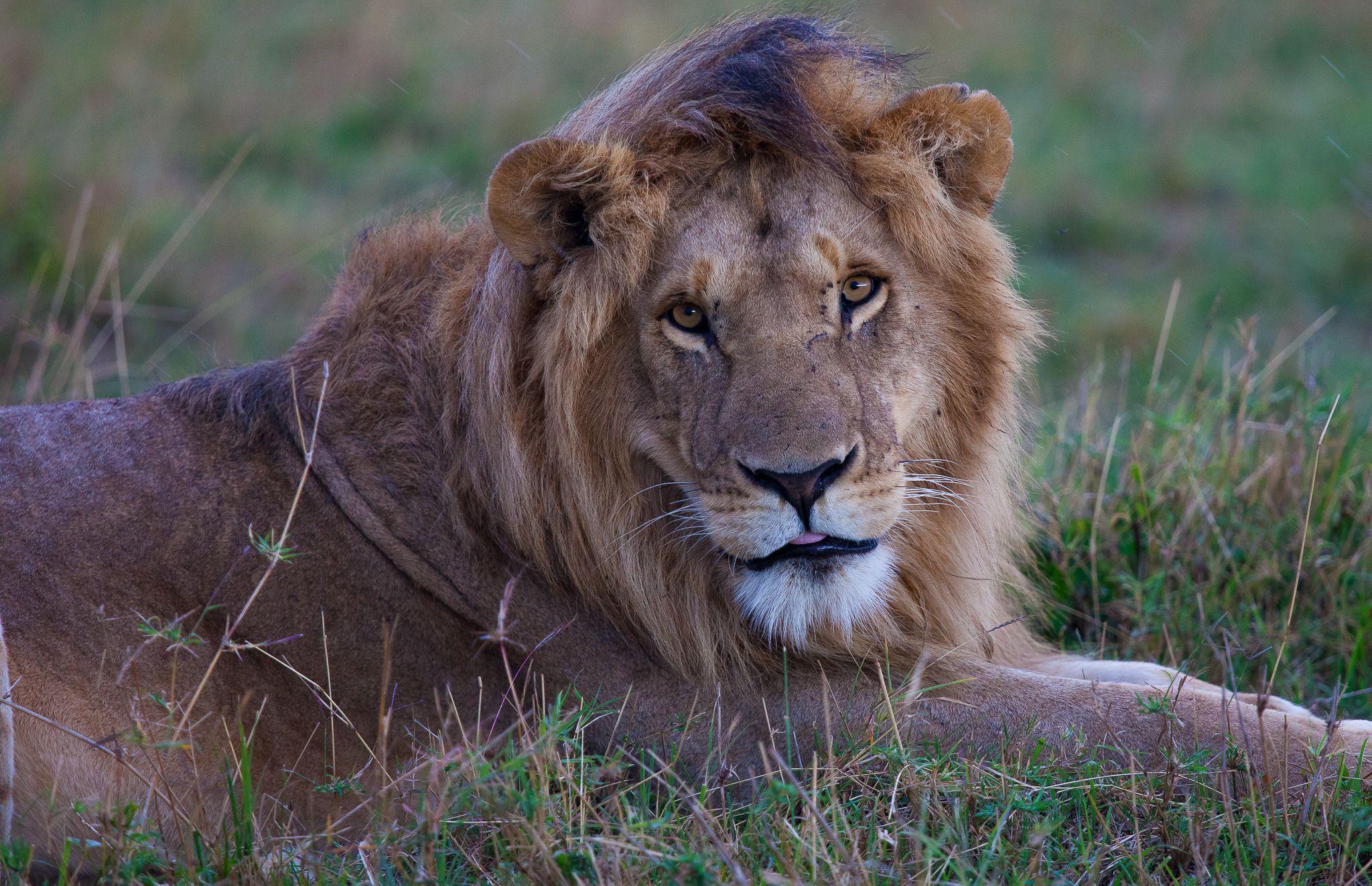
The Masai Mara is not one single administration. The main reserve is run by the Narok County Government, while the western Mara Triangle sector is managed separately by the nonprofit Mara Conservancy, and the two sides sell separate tickets even though a single itinerary can cross between them.
Narok County's published 2026 schedule prices non-resident adult entry at $100 per day from 1 January through 30 June, rising to $200 per day from 1 July through 31 December, with children aged 9 to 17 at roughly half the adult rate and children 8 and under free. Entry is cashless only, card or M-Pesa, no cash accepted. One secondary source describes the Mara Triangle as charging the same headline rates as the main reserve, but the Mara Conservancy's own site did not list specific dollar figures at the time of research, so treat that as a planning estimate rather than a confirmed number, and confirm directly with your camp or operator. What the Conservancy's own site does confirm is that it is cashless only, card or M-Pesa, with no cash accepted under any circumstances, and that visitors need a passport, national ID or birth certificate to establish residency status since a driver's license is not accepted.
The doubling of the non-resident rate on 1 July, right as the migration season begins in earnest, is worth building into a budget rather than discovering at the gate.
What the Serengeti and Ngorongoro actually cost
Serengeti National Park's entrance fee is commonly reported across current operator sites at $70 per day for a foreign non-resident adult and $10 for a child, with Tanzania's 18% VAT added on top, which is why some sources instead quote an all-in figure near $83. Those are not two different fees, they are the same fee reported with and without VAT folded in, and TANAPA's own currently accessible published tariff document online is dated to the 2023/24 season rather than a confirmed 2026 schedule, so treat the $70-plus-VAT figure as the best available reading rather than a screenshot of an official 2026 rate card.
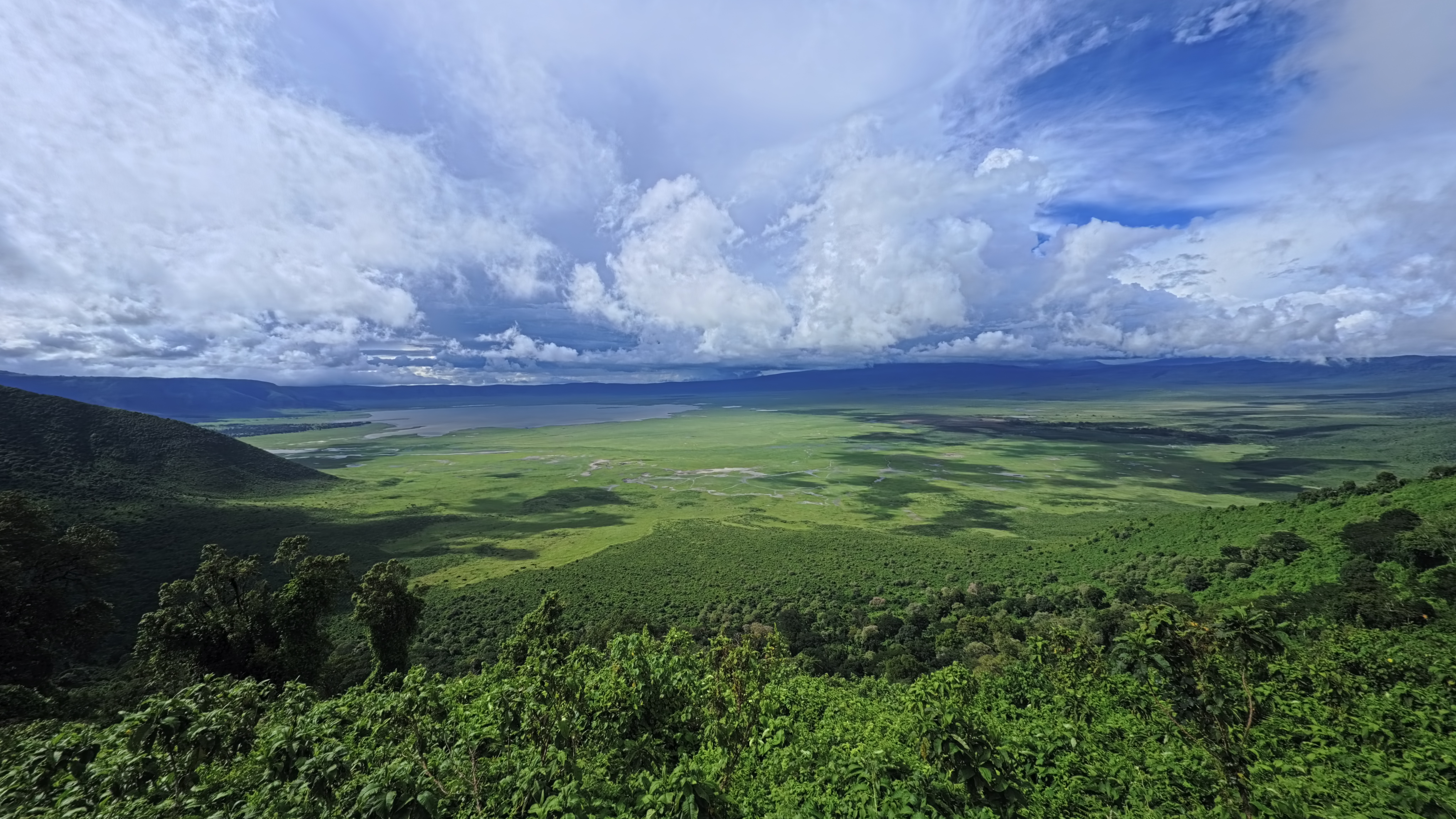
Ngorongoro Conservation Area, the crater you would typically visit on the way between the Serengeti and Arusha, publishes its tariff directly. The Ngorongoro Conservation Area Authority's own site lists non-resident adult entry at $70.80 and children aged 5 to 16 at $23.60, with children under 5 free, VAT already included in both figures. That entry fee applies whether or not you descend into the crater itself; the crater descent is a separate charge, a $295 per-vehicle service fee for foreign-registered or non-resident vehicles, on top of the entry permit, and payable only by card since cash is not accepted at NCAA gates. A permit, once issued, is valid for one entry within 24 hours.

Entry requirements: two different systems, one shared health rule
Kenya and Tanzania run genuinely different entry systems, and conflating them is an easy way to arrive at the wrong portal.
Kenya abolished its visa system for most nationalities effective 1 January 2024 and replaced it with an Electronic Travel Authorization, applied for only through the official government portal at etakenya.go.ke. Multiple current sources put the standard fee at $30, with processing commonly cited as taking up to a few business days, though official guidance recommends applying at least two weeks before travel rather than relying on the fastest possible turnaround. The eTA is required of essentially every non-East African Community visitor, including infants, and this piece could not independently confirm the exact fee and processing-time figures against the eTA portal's own page during research, since the portal's public page did not surface the specific numbers on request; treat the roughly $30 figure as reported consistently across secondary sources rather than independently verified against Kenya's own eTA page text.
Tanzania runs a separate eVisa system through visa.immigration.go.tz, pricing a single-entry ordinary visa at $50 and a multiple-entry visa at $100 for most nationalities, though at least one current guide notes that US passport holders are specifically routed to the $100 multiple-entry product rather than the $50 single-entry one. Processing is commonly cited at roughly 5 to 10 business days. A visa on arrival is also available at major entry points at the same price, though applying online in advance is the generally recommended route.
Yellow fever is the one health rule genuinely shared by both countries, and it is also the one place sources actively disagree, so it is worth stating plainly rather than smoothing over. Both countries' general guidance is that a valid yellow fever vaccination certificate is required only from travelers arriving from, or who have transited more than 12 hours through, a country where yellow fever is endemic, and that a direct flight from the US, UK, Canada or the EU does not trigger the requirement. Where sources disagree is on whether Kenya itself counts as a transit risk for onward travel into Tanzania: some guidance describes Kenya as outside that endemic-transit list, while other guidance groups Kenya with Ethiopia and Nigeria as a connecting country that does trigger the requirement for onward travelers. This itinerary in particular routes travelers from Kenya into Tanzania, and separately, Safarilink's own booking terms for the Mara-Serengeti seasonal flight connection require every passenger on that specific service to hold a valid yellow fever card regardless of origin. Given the disagreement in general guidance and the flight operator's own explicit requirement, the safe read for this specific trip is to travel with a valid yellow fever certificate rather than assume it is unnecessary because you started your journey outside the endemic zone.
The ten days
This plan runs Nairobi into the Masai Mara, across to the Serengeti during a window when the seasonal fly-fly-drive connection operates, down to Ngorongoro, and out via Arusha, with the specific Serengeti sub-region left open since it depends on which month you are traveling.
| Night | Base | What shapes the day |
|---|---|---|
| 1 | Nairobi | Arrive, overnight near Wilson Airport for an early safari departure |
| 2 | Masai Mara | Fly Wilson to the Mara, afternoon game drive |
| 3 | Masai Mara | Full day, Narok reserve or Mara Triangle depending on where the herd is |
| 4 | Masai Mara | Full day, a second conservancy or a river crossing vigil if the migration is present |
| 5 | Masai Mara or Serengeti | The Mara-Serengeti crossing day, seasonal flight or a long overland transfer |
| 6 | Serengeti | Arrive, first game drive in whichever sub-region matches the month |
| 7 | Serengeti | Full day, the same sub-region |
| 8 | Serengeti | Full day, a second sub-region if the month favors splitting time |
| 9 | Ngorongoro | Drive from Serengeti via Naabi Hill Gate, crater descent |
| 10 | Arusha | Drive out, departure via Kilimanjaro International Airport |
Night 1, Nairobi. International flights land at Jomo Kenyatta International Airport; safari flights depart from Wilson Airport across town. The transfer between the two runs 40 to 55 minutes under normal traffic, but during the morning rush between roughly 7:00 and 9:30 AM, the same trip can take 90 minutes or more, so an overnight in Nairobi before an early Wilson departure removes that risk rather than betting a first-morning safari flight on Nairobi traffic.
Nights 2 to 4, Masai Mara. The flight from Wilson to the Mara's airstrips runs about 45 minutes. Three nights allows for game drives in whichever sector, Narok County's main reserve or the Mara Triangle, currently has the stronger wildlife concentration, and gives a realistic window for a river crossing if the migration is present in July through October.
Night 5, the crossing. If your dates fall inside the seasonal fly-fly-drive window, 1 July to 31 October or 16 December to 31 March, this can be a single travel day via the Migori-Isebania-Tarime connection. Outside that window, plan a longer day: the alternative is routing back through Nairobi and Kilimanjaro, or a rough overland crossing that several guides describe as needing an overnight stop rather than a same-day transfer. Book no game drive against this day regardless of route.
Nights 6 to 8, Serengeti. Which sub-region you base in should follow the month-by-month table above rather than a fixed plan: northern Serengeti for July through October crossings, the Western Corridor for June's Grumeti River crossings, central Serengeti for the April-May movement, or Ndutu in the south for January-March calving and the November-December return.
Night 9, Ngorongoro. The drive from central Serengeti to the Ngorongoro Crater rim runs roughly three to four hours via Naabi Hill Gate, and the stretch through the open plains near the gate is itself worth treating as a game drive rather than pure transit. A full crater descent day, at the separate per-vehicle fee above, is the reason to build in this stop rather than driving past it.
Night 10, Arusha. Kilimanjaro International Airport sits roughly 50 to 56 km from Arusha, about an hour's drive under normal conditions, longer in Arusha's afternoon traffic. Build the buffer into a same-day international departure rather than a tight connection.
Where this plan breaks
Booking one camp on one fixed date because a blog said "the crossings peak in late August." Late August is a genuinely strong bet, backed by multiple operator sources, but a bet is not a guarantee, and the same sources are explicit that the herd can sit still for days inside that window. A single-camp, single-date plan has no fallback if the crossing does not happen during your visit.
Treating the Mara-Serengeti connection as a quick hop because the two parks look adjacent on a map. They share an ecosystem, not an easy border. Outside the seasonal fly-fly-drive windows, or without the minimum passenger count that service requires, the realistic options are a long detour via Nairobi and Kilimanjaro or a rough overland crossing that regularly needs an overnight stop.
Assuming Masai Mara fees are flat across the year. Narok County's non-resident rate doubles from $100 to $200 per day on 1 July, exactly as the migration season is building toward its strongest months. A budget built on the January-June rate and used to book a July trip is short by a real amount.
Assuming the yellow fever rule does not apply because your flight started outside the endemic zone. Current guidance disagrees on whether transiting through Kenya into Tanzania triggers the certificate requirement, and the operator running the seasonal Mara-Serengeti flight connection requires the certificate from every passenger regardless of origin. Traveling without it is a real risk of being vaccinated on the spot, quarantined, or denied boarding.
Skipping Ngorongoro to save a day. It is tempting to cut, since it sits geographically between the Serengeti and the Arusha exit, but the crater's own concentrated wildlife and the fact that the drive out already passes it make it an expensive day to give up compared with almost any other day in this plan.
How Planytera handles a trip like this
Planytera is an AI trip planner built by a solo developer, available on iOS, Android and the web. You describe the trip and it produces a day-by-day itinerary, ready in moments. On a route shaped by an animal migration with no fixed schedule, three things matter more than the sightseeing list.
Pacing around a real crossing day, not a rough guess. The Mara-Serengeti transfer can be a single seasonal flight connection or a much longer overland or Nairobi-routed day depending on the month. Planning that day as its own unit, with nothing else booked against it, absorbs the range instead of assuming the best case.
Re-pacing without rebuilding the week. If the migration is quiet in the Mara for the days you are there and stronger in the Serengeti when you arrive, or the reverse, adjusting the days that follow and letting the rest of the trip resync beats redoing the itinerary from scratch.
Saved trips and shared plans. A two-country safari usually means an operator or ground agent handling bookings on both sides. A shared, read-only plan link keeps everyone looking at the same itinerary as the month-dependent choices, which sub-region, which conservancy, get finalized closer to departure.
Frequently asked questions
When is the best time to see the Mara River crossings?
Most operator guides point to July through October as the general window, with August most commonly cited as the highest-probability month, and one current tracker puts the strongest odds at roughly 12 August to 25 September in a typical year. None of this is a guaranteed date. The crossings depend on rainfall and grass conditions, and the herd can go several days without crossing even in the strongest weeks, so plan for several days in the right area rather than a single date.
Should I book the Masai Mara side or the Serengeti side for the migration?
It depends on the month more than on a fixed preference. Broadly, the Mara and northern Serengeti both see crossing activity from July through October since the Mara River runs along the border between them, the Serengeti's Western Corridor has its own Grumeti River crossings in June, and the southern Serengeti around Ndutu is the place to be for calving season from January to March. A plan that commits fully to one side risks missing the herd if it is concentrated on the other side that week.
Is it easy to travel between the Masai Mara and the Serengeti?
Not particularly. There is no direct flight. A seasonal fly-fly-drive connection via Migori and Tarime airstrips near the Isebania border operates only from 1 July to 31 October and 16 December to 31 March, per the operator's own published schedule, and requires a minimum passenger count. Outside that window, the realistic options are a long detour through Nairobi and Kilimanjaro, or a rough overland crossing that several guides describe as needing an overnight stop rather than a same-day transfer.
Do I need a visa for Kenya and Tanzania?
The two countries use different systems. Kenya replaced its visa requirement with an Electronic Travel Authorization on 1 January 2024, applied for online at etakenya.go.ke, commonly reported at a $30 fee. Tanzania uses a separate eVisa system through visa.immigration.go.tz, priced at $50 for a single entry or $100 for multiple entries for most nationalities, with a visa on arrival also available at major entry points. Apply for each separately; one does not cover the other.
Do I need a yellow fever vaccination certificate?
Both countries generally require one only from travelers arriving from, or transiting more than 12 hours through, a country where yellow fever is endemic, and a direct flight from the US, UK, Canada or the EU does not typically trigger the requirement on its own. Current guidance disagrees on whether transiting through Kenya counts toward that requirement for onward travel into Tanzania, and the operator running the seasonal Mara-Serengeti flight connection requires a valid certificate from every passenger regardless of origin. Given that disagreement, travel with a valid certificate rather than assume you are exempt.
How much do Masai Mara and Serengeti park fees actually cost?
The Masai Mara's Narok County sector charges non-resident adults $100 per day from January through June 2026 and $200 per day from July through December 2026. Serengeti National Park is commonly reported at $70 per day plus Tanzania's 18% VAT, close to $83 all in. Ngorongoro Conservation Area's own published tariff lists $70.80 per adult, VAT included, plus a separate $295 per-vehicle fee if you descend into the crater. Confirm current rates with your operator before budgeting, since Tanzanian park fees in particular have not always had a current year's schedule publicly posted at the time of booking.
Useful sources and further reading
- Ngorongoro Conservation Area Authority: tariffs, the official published entry and crater descent fees.
- Mara Conservancy: conservation fees, for the Mara Triangle's cashless payment policy and ID requirements.
- Safarilink: Masai Mara to Serengeti route information, for the seasonal fly-fly-drive connection's operating dates, schedule and yellow fever requirement.
- Masai Mara Travel: Masai Mara to Serengeti by road and air, for overland route conditions and alternative air routings.
- Kenya eTA official portal, the government application site for Kenya's Electronic Travel Authorization.
- Tanzania Immigration Services: eVisa guidelines, the official eVisa application portal and guidance.
- Chalo Africa: Kenya health and vaccinations and Tanzania health and vaccinations, for yellow fever entry guidance for both countries.
- Masai Mara National Reserve: entry fees and Kenya Peaks: Masai Mara National Reserve entrance fees, for Narok County's current seasonal pricing.
- Safari Bookings: how to get to Serengeti, for Arusha to Serengeti driving and flight times.
Recommended
More from the Planytera blog.