Blog19 min read
10 Days in Patagonia: Wind, Windows and Booked Beds
A ten day Patagonia plan built on published wind statistics, the mandatory refugio bookings that gate Torres del Paine, and 2026 park fees from the official portals.
By Dom

Most Patagonia itineraries are written as if the constraint were distance. It is not. The constraint is that on the Chilean side you cannot legally walk into the mountains without a bed already booked in your name, and on both sides the wind decides which of your planned days actually happens.
Those two facts change the order you plan in. Beds first, then flights, then sightseeing. Almost every guide does it the other way round, which is why so many trips arrive with a route and no way to sleep on it. This is a ten day plan built the correct way round, using the numbers the parks and operators publish themselves, with the widely repeated figures that turned out to be wrong called out rather than quietly passed on.
The wind is not weather, it is a scheduling input
Argentina's Servicio Meteorológico Nacional publishes climate normals for El Calafate Aero, the airport most Patagonia trips fly into. The wind figures cover 2011 to 2020, and they are the single most useful table in this article.
| Month | Mean wind speed | Days classed as strong wind |
|---|---|---|
| December | 24.4 km/h | 21.6 |
| November | 23.9 km/h | 20.1 |
| January | 23.2 km/h | 20.1 |
| October | 18.9 km/h | 14.9 |
| March | 18.1 km/h | 14.2 |
| May | 11.8 km/h | 6.3 |
| Year | 17.6 km/h | 158.3 |
Read the right-hand column twice. El Calafate averages 158.3 strong-wind days a year, and roughly 20 of the 31 days in each of November, December and January qualify: the windiest months in the record are exactly the months the whole world visits. The extremes are worse than the averages suggest. The highest daily maximum is 117 km/h from the south-west on 10 January 2017, and every month of the year has a recorded daily maximum above 94 km/h.
A Patagonia itinerary therefore needs spare days for the same reason an Iceland itinerary does. Not because something will definitely be cancelled, but because the odds of a bad day landing on your one fixed appointment are high enough to plan around. It also means the shoulder months are underrated: March and October carry roughly two thirds of the strong-wind days of December and January.
You cannot walk into Torres del Paine
This is the rule that catches people out, and it is not a recommendation.
The official park site states it plainly: to walk the W or the Macizo Paine circuit you must hold confirmed accommodation bookings in the refugios and campsites inside the park, and "sin ellas no podrá ingresar al área de montaña", without them you cannot enter the mountain area. Rangers check. There is no walk-up option, no wild camping, and no sleeping in your car at a trailhead.
Two concessionaires run everything inside the park:
- Las Torres Patagonia runs the eastern sector: Central, Chileno and Cuernos.
- Vertice Patagonia runs the west and north: Paine Grande, Grey, Dickson and Los Perros.
They sell separately, on separate systems, and a W trek almost always needs both. That is the practical reason bookings start early: you are not filling one calendar, you are aligning two. Two roadside campsites, Serrano and Pehoé, need no reservation, and day hikers on Base Torres or a full-day walk are outside the rule entirely, so a viewpoint-and-day-walks trip can be planned far later than a W trek can.
What the park entry itself costs, and why the internet is wrong about it
In December 2025, Chilean media reported a historic increase: an adult foreigner paying CLP 46,000 would pay CLP 80,900, under a route-based structure covering Full day, Base Torres, Circuito W and Circuito Macizo Paine. CONAF postponed the whole thing from 1 January to 1 May 2026, and when the new system arrived it described something simpler: a single-day entry and an entry for two or more days, valid for a continuous period of up to 10 days.
Here is what the official sales portal, pasesparques.cl, is actually selling as of August 2026.
| Ticket | International adult | Chilean or resident adult |
|---|---|---|
| Daily | CLP 32,400 | CLP 9,400 |
| More than one day | CLP 48,500 | CLP 14,200 |
| Under 12 | free | free |
No CLP 80,900. No route-priced tickets. Guides still describing an "up to three days" and "more than three days" split are describing the structure that ended on 30 April 2026. Buy from pasesparques.cl, which is the portal CONAF's own park page points at, and check the price against your own travel dates rather than against any article, including this one.

The beds are the budget
This is the part that surprises people who think of trekking as the cheap way to travel. Inside Torres del Paine, it is not.
Las Torres Patagonia publishes these rates for the 2026 to 2027 season:
| What | November 2026 to March 2027 | October 2026 and April 2027 |
|---|---|---|
| Bed in a mountain stay (Central, Cuernos) | from USD 230 per person | from USD 200 per person |
| Fully equipped camping, double occupancy | USD 160 per person | USD 150 per person |
| Full board (breakfast, box lunch, dinner) | USD 140 per person | USD 140 per person |
Single occupancy in a fully equipped tent is USD 290 and USD 270, and full board over Christmas and New Year rises to USD 190. A bed plus full board in high season is therefore around USD 370 per person per night, and a fully equipped tent plus full board is around USD 300.
Vertice Patagonia, on the western half of the same trek, publishes very different numbers for Paine Grande:
| What | Price |
|---|---|
| Single bed | USD 66 |
| Campsite, per person | USD 13 |
| Four-season tent, up to 2 people | USD 58 |
| Sleeping bag and foam mattress, per person | USD 38 and USD 16 |
| Full board | USD 110 |
| Half board | USD 76 |
Vertice notes that the dollar rates apply only to foreigners not resident in Chile, on presentation of a passport and a valid entry card.
The gap is large enough to shape the route. A bed at Paine Grande with full board is USD 176; the equivalent night on the eastern sector is roughly double. Carrying your own tent and bag for the Vertice nights and paying for a serviced night only where you need it is the lever with the most travel in it. Carrying your own food is harder: any heat source is prohibited inside the park under Ley 20.653, cooking is allowed only in designated areas with non-fuel stoves, Las Torres bans stoves outright in the Chileno sector, and penalties run to CLP 2,000,000 or three years in prison.
The catamaran is the hardest constraint in the plan
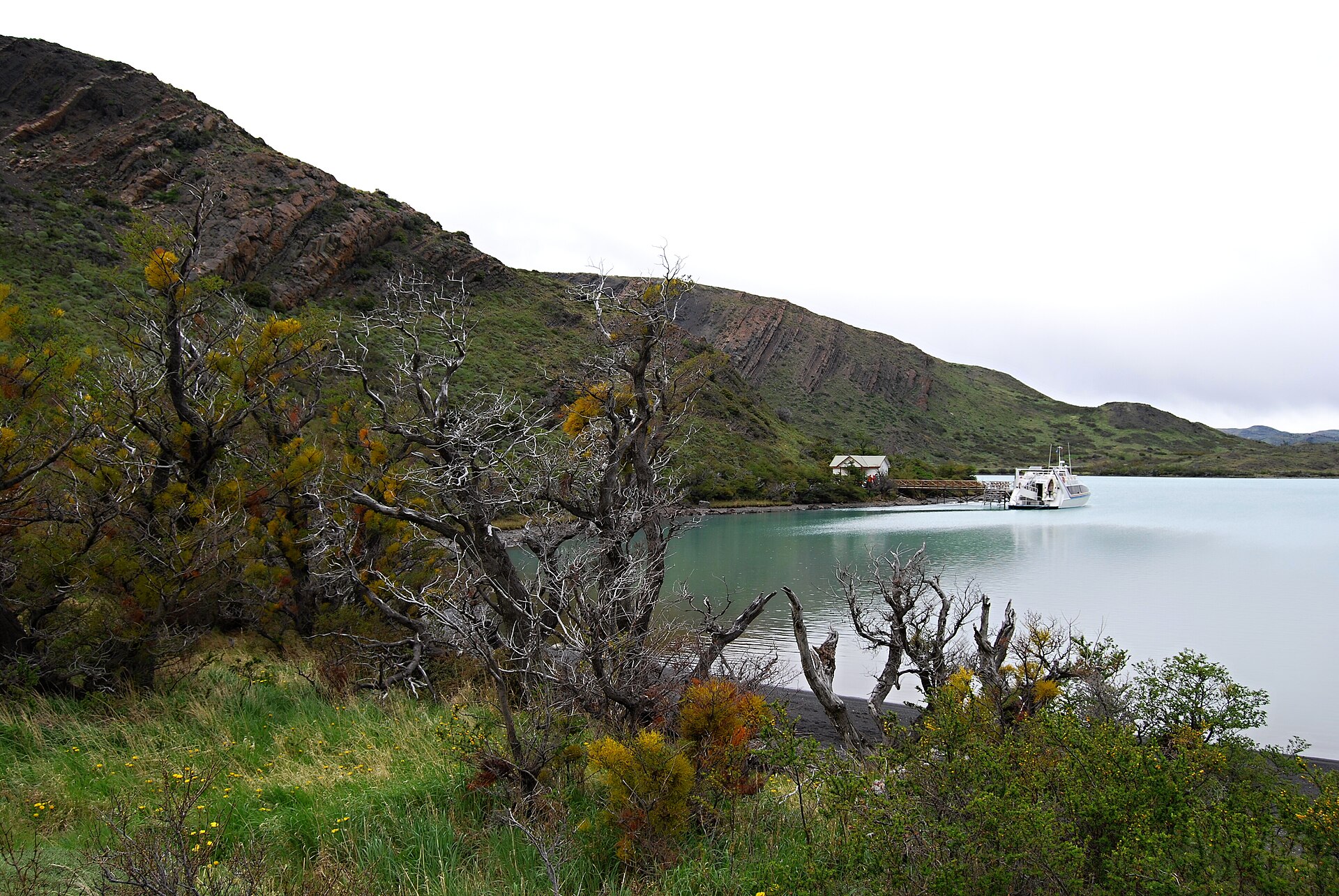
Almost every W itinerary crosses Lago Pehoé between Pudeto and Paine Grande on the Hielos Patagónicos catamaran. It is the only practical way onto the western arm without a very long walk in. The operator publishes a fare of CLP 28,000 (USD 31) per leg, and this schedule for the coming season:
| Period | Pudeto to Paine Grande | Paine Grande to Pudeto |
|---|---|---|
| 1 to 15 October 2026 | 10:30, 18:00 | 11:20, 18:40 |
| 16 to 31 October 2026 | 10:30, 16:15, 18:00 | 11:20, 17:00, 18:40 |
| November 2026 to March 2027 | 08:30, 10:30, 16:15, 18:00 | 09:20, 11:20, 17:00, 18:40 |
| 16 to 30 April 2027 | 10:30, 17:30 | 11:20, 18:10 |
Four sailings a day at the peak of the season, dropping to two in early October and late April. In winter it runs on the 15th and the 30th of each month at 11:00 and not otherwise.
The operating rules matter as much as the times:
Baggage is capped and the cap is small. One bag of 60 litres or less, maximum 55 by 40 by 20 cm, 10 kg. Anything beyond that is subject to availability and a surcharge at the dock. That is a daypack, not a loaded multi-day trekking pack, and it is the detail most W trek guides omit entirely.
Check-in closes 15 minutes before departure, a no-show forfeits the whole ticket, changing the date costs CLP 5,000 or USD 5, and cancelling at least 72 hours ahead refunds CLP 23,000 of the CLP 28,000. After that there is no refund at all.
Weather can cancel it. The operator reserves the right to adjust schedules or cancel for weather or force majeure, and its liability is limited to the value of the ticket. It does not cover the accommodation, the bus or the flight you miss as a result. Given the wind numbers above, price that risk in rather than assuming it away.
Two sailings do not run on 25 December or 1 January: the 08:30 out of Pudeto and the 09:20 back.
Buses to Pudeto from Puerto Natales are run by Bus-Sur, Buses Gómez, Turismo Zaahj and Buses Base Torres, stopping at Laguna Amarga, Pudeto, Administración and Lago Grey. The catamaran's own advice is the correct one: pick your bus to match a sailing, not the other way round.
What is shut, and what needs a guide
Two live restrictions as of August 2026, both from CONAF and the official ticketing portal.
The Macizo Paine circuit, the O, is closed. It has been shut since May and is closed initially until 31 October 2026, with reopening subject to an assessment of weather and safety conditions at the time. If you are planning the full circuit for the coming season, that is a conditional reopening, not a scheduled one.
Base Torres requires an accredited specialised guide from 27 April to 30 August 2026, or for as long as the winter conditions justifying the measure persist. CONAF's winter regulation limits groups to four people per guide, requires an accredited assistant for five to eight, and a second guide from nine. Mandatory kit includes poles, micro crampons or crampons, torch, goggles, gloves, gaiters and warm waterproof clothing, and non-compliant guides and providers are refused entry.
CONAF also prohibits walking the trails without daylight, notes that most fatal accidents in the park have involved people walking alone, and bans drones for recreational and private use.
The Argentine half is cheaper, and books differently
Cross into Argentina and the mechanics change completely. Los Glaciares has no mandatory accommodation booking, El Chaltén is a village you can walk out of straight onto a trail, and the money is a fraction of the Chilean side. What it has instead is a ticketing quirk that strands people at the trailhead. Administración de Parques Nacionales publishes these access fees, in force from 1 June 2026:
| Ticket | General | Argentine national | Provincial resident |
|---|---|---|---|
| Daily pass | ARS 50,000 | ARS 25,000 | ARS 8,000 |
| 3-day Flexipass | ARS 100,000 | ARS 50,000 | ARS 16,000 |
| 7-day Flexipass | ARS 175,500 | ARS 87,500 | ARS 28,000 |
A 50% discount applies to a second day within 72 hours of first entry, students with Argentine accreditation pay ARS 15,000, and children under six, Argentine pensioners, local residents, people with disabilities and their companion, and Malvinas veterans are exempt.
Run the arithmetic before you buy. Two days at the general rate with the second-day discount is ARS 75,000, which beats the 3-day Flexipass. The Flexipass only starts paying from the third day. Anyone doing Perito Moreno plus two or three walking days out of El Chaltén should count their park days first.
Registration at the park information centre is mandatory for climbing and for trekking in remote areas, and required for trails between May and September.
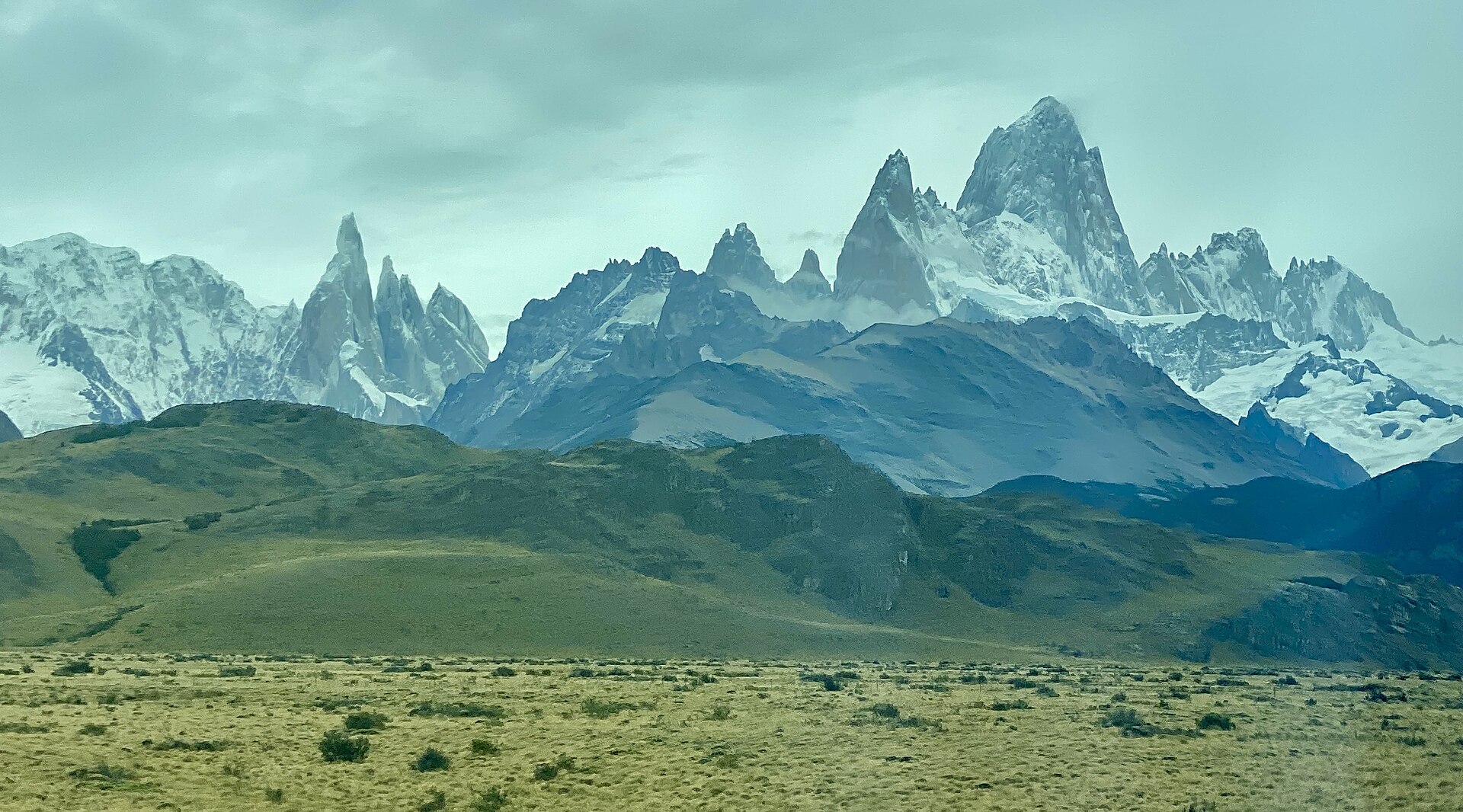

El Chaltén's headline walk, Laguna de los Tres, is commonly given as a 20 km-plus return day of 8 to 10 hours, climbing from around 400 m to about 1,180 m at the viewpoint. Published distances vary by a couple of kilometres depending on where a source starts measuring in the village, so treat the time as the useful number. The final kilometre is the steep part, and the part that holds snow longest.
A ten day shape that works
This is a two-country plan with one border crossing, built to give the wind somewhere to go.
Days 1 and 2, Puerto Natales. Fly into Punta Arenas and transfer up, or fly into El Calafate and reverse the whole thing. Use the second day to buy park entry, collect hired gear and confirm both refugio bookings. Puerto Natales is the last place with a supermarket, a pharmacy and a bank.
Days 3 to 6, Torres del Paine. Four nights, three walking days, arranged so the two big ones, the Base Torres viewpoint and the Valle del Francés, do not sit back to back. As a W trek that is one night on the eastern sector and two on the western, with the catamaran on the day you move.
Day 7, the crossing. Puerto Natales to El Calafate by international bus over the Cerro Castillo and Cancha Carrera border posts, commonly leaving in the morning and generally described as five to seven hours depending on the border. Treat it as a travel day and nothing else.
Day 8, Perito Moreno. The glacier road, the walkways, and back. The only day with no walking commitment, which makes it the natural place to absorb a weather slip from Torres del Paine.
Days 9 and 10, El Chaltén. Three hours up Ruta Nacional 40 and Ruta Provincial 41 from El Calafate, with several departures a day. Two nights buys one full walking day plus a short one, enough for Laguna de los Tres or Laguna Torre but not both properly.
If you have an eleventh night, put it in El Chaltén. It is the cheapest bed in the itinerary and the place where an extra morning most often converts a cloud day into a clear one.
What to skip
Skip the O circuit unless you have a fallback. Its reopening depends on conditions assessed at the time, and building a trip around a conditional reopening is building it around someone else's judgement call.
Skip trying to do both countries in seven days. The border day costs most of a day in each direction. Under about nine nights, pick one side.
Skip December and January if you have any flexibility at all. They are the two windiest months in the SMN record, the most expensive weeks in both concessionaires' price tables, and the hardest to book. March delivers most of the same trip.
Key Takeaways
| Point | Details |
|---|---|
| You cannot enter the W or the O without booked beds | Confirmed refugio or campsite reservations are mandatory and checked. Two separate operators, two separate systems, both usually needed. |
| 158 strong-wind days a year at El Calafate | SMN normals for 2011 to 2020. Around 20 of them in each of November, December and January, against 6.3 in May. |
| Park entry is CLP 32,400 daily or CLP 48,500 for more than a day | International adult rates on the official pasesparques.cl portal in August 2026. The widely reported CLP 80,900 is not what is being sold. |
| Beds inside Torres del Paine run to USD 370 a night | Las Torres from USD 230 plus USD 140 full board in high season. Vertice's Paine Grande is USD 66 plus USD 110. |
| The catamaran caps your bag at 60 litres and 10 kg | CLP 28,000 per leg, check-in 15 minutes before, no refund inside 72 hours, and four sailings a day at peak. |
| The Macizo Paine circuit is closed until 31 October 2026 | Reopening is subject to an assessment of conditions, not a fixed date. |
| Base Torres needs an accredited guide until 30 August 2026 | Four walkers per guide, with mandatory winter kit, or for as long as winter conditions last. |
| El Chaltén park tickets are online and card only | The Zona Norte portals do not take cash. Los Glaciares general entry is ARS 50,000 from 1 June 2026. |
| Two Argentine park days beat the 3-day Flexipass | ARS 50,000 plus a half-price second day within 72 hours is ARS 75,000, against ARS 100,000. |
Where this plan breaks
It assumes your refugio dates are the dates you want. They very often are not. Two operators with limited beds means the availability you find, rather than the route you drew, decides which direction you walk the W and which valley you get on which day. Book first, then write the itinerary around what you got.
The catamaran is a single point of failure. Miss it, or have it cancelled for wind, and the western arm of the W is not reachable that day. There is no second operator and no road. The only real mitigation is not planning a same-day connection from a sailing to a long bus.
The wind numbers are from El Calafate, not from inside the park. El Calafate sits on the Argentine steppe at 199 m, and the Paine massif funnels and accelerates wind in ways an airport apron does not. The SMN table is the best published series on this itinerary and it is still a conservative proxy for what a ridge above Lago Nordenskjöld does at three in the afternoon.
Winter is a different itinerary entirely. From May to September the O is shut, Base Torres needs a guide, the catamaran runs twice a month, and daylight is short. Everything above is shaped for October to April.
The border adds paperwork on top of time. Chile requires every person entering to make an individual sworn declaration to the SAG about animal and plant products in their luggage, and fresh fruit, honey and raw meat are not admissible. An apple left in a pack pocket from the Argentine side is a real problem at Cerro Castillo, not a theoretical one.
How Planytera handles a trip like this
Planytera is an AI trip planner built by a solo developer, available on iOS, Android and the web. You describe the trip and it produces a day-by-day itinerary, ready in moments. On a trip shaped like this one, four things do most of the work.
Multi-stop pacing across two countries. Puerto Natales, the park, El Calafate and El Chaltén is four bases and one international border in ten nights, and the quality of the trip lives in how those nights are distributed and where the spare day sits rather than in what there is to see in each place.
Offline access. There is no useful mobile signal on most of the W, limited coverage on the Ruta 40 stretch to El Chaltén, and none at a Fitz Roy trailhead. Saved trips keep the itinerary, maps and notes readable with no connection.
Re-pacing without starting over. This plan has several fixed points, a catamaran sailing, a border bus, a booked bed, and a lot of flexible ones. When a walking day gets blown out and slides onto the Perito Moreno day, the rest of the plan should follow rather than need rebuilding from day one.
Per-person cost estimates. Refugio beds, full board, park entry in two currencies, catamaran legs and international buses add up in a way that is hard to hold in your head. Seeing the per-person figure before committing helps, and split costs then tracks who owes who without anyone keeping a spreadsheet and without moving anyone's money.
Frequently asked questions
Do I really need to book refugios in Torres del Paine in advance?
For the W or the Macizo Paine circuit, yes, and it is enforced rather than advised. The official park guidance says accommodation bookings in the in-park refugios and campsites are mandatory and that without them you cannot enter the mountain area. Day hikers on Base Torres or a full-day route are not covered, and the roadside campsites at Serrano and Pehoé take walk-ins. Everyone else needs confirmed reservations, usually across both operators, before arriving.
How much does it cost to enter Torres del Paine in 2026?
On the official pasesparques.cl portal in August 2026, an international adult pays CLP 32,400 for a daily pass and CLP 48,500 for more than one day, with under-12s free. Chilean and resident adults pay CLP 9,400 and CLP 14,200. Ignore guides quoting the "up to three days" split, which ended on 30 April 2026, and the CLP 80,900 figure that circulated in December 2025: the portal is not selling it.
When is the best month to visit Patagonia?
March or October, if you can move. The SMN normals for El Calafate put mean wind at 18.1 km/h in March and 18.9 km/h in October against 24.4 km/h in December, with roughly 14 strong-wind days a month rather than 20 or more. You lose daylight and some services run reduced schedules, including the catamaran, which drops to two sailings a day in early October and mid-April. In exchange you get calmer air, lower shoulder-season refugio rates and a park you can book.
Can I hike the O circuit in the 2026 to 2027 season?
Not yet, and possibly not on the dates you want. The Macizo Paine circuit has been closed since May 2026 and is closed initially until 31 October 2026, with reopening subject to an assessment of the weather and safety conditions at the time. That is a conditional reopening. If the O is the reason for the trip, keep a W-shaped fallback that uses the same refugio nights.
How do I get from Torres del Paine to El Chaltén?
In two legs, and not in one day. Puerto Natales to El Calafate by international bus crosses at Cerro Castillo and Cancha Carrera, generally described as a five to seven hour day depending on the border queue. From El Calafate, buses run to El Chaltén several times daily along Ruta Nacional 40 and Ruta Provincial 41, a journey the local tourist information puts at three hours. Operators include Chaltén Travel, Cal-Tur, TAQSA and Lengas.
Do I need a guide to walk to the Torres viewpoint?
Between 27 April and 30 August 2026, yes. The official portal lists an accredited specialised guide as mandatory on the Base Torres trail for that window, or for as long as the winter conditions justifying it last. CONAF's winter rules cap groups at four people per guide, with an accredited assistant from five to eight and a second guide from nine. Outside the winter measure the trail has been walkable unguided, but check the portal for your dates rather than assuming.
Useful sources and further reading
- Servicio Meteorológico Nacional: Estadísticas Climatológicas Normales 1991 to 2020, the El Calafate Aero station tables used for every wind figure here, including the caveat about three-observation stations under-recording maxima.
- pasesparques.cl, Parque Nacional Torres del Paine, CONAF's official sales portal, for current entry prices, opening hours, the Base Torres guide requirement and the Macizo Paine closure.
- CONAF: new tariff system from 1 May 2026 and the postponement notice, for what changed and when.
- CONAF: Parque Nacional Torres del Paine and prohibited activities, for the fire prohibition under Ley 20.653, the drone ban and the daylight rule.
- Parque Nacional Torres del Paine: reservation systems and CONAF on the winter guide requirement, for the mandatory accommodation rule, sector operators, group ratios and required equipment.
- Las Torres Patagonia: Cuernos mountain stay, Chileno camp and Vertice Patagonia: Paine Grande, for 2026 to 2027 rates, meals, gear hire and the Chileno stove ban.
- Catamarán Lago Pehoé, the operator's own schedules, fares, baggage limits, check-in rule and cancellation terms.
- Administración de Parques Nacionales: Los Glaciares tarifas and the national access fee table, for the June 2026 prices, Flexipass options and the online-only rule for the Zona Norte.
- SAG: entering Chile, for the mandatory sworn declaration at the border.
- El Chaltén tourist information: buses, for operators, the three hour journey and the road route.
Recommended
More from the Planytera blog.