Blog18 min read
7 Days in the Norwegian Fjords: Ferries Are the Plan
A seven day fjord itinerary built around the boats, with the 2026 ferry fares, what AutoPASS actually costs a hire car, and which crossings you cannot book.
By Dom
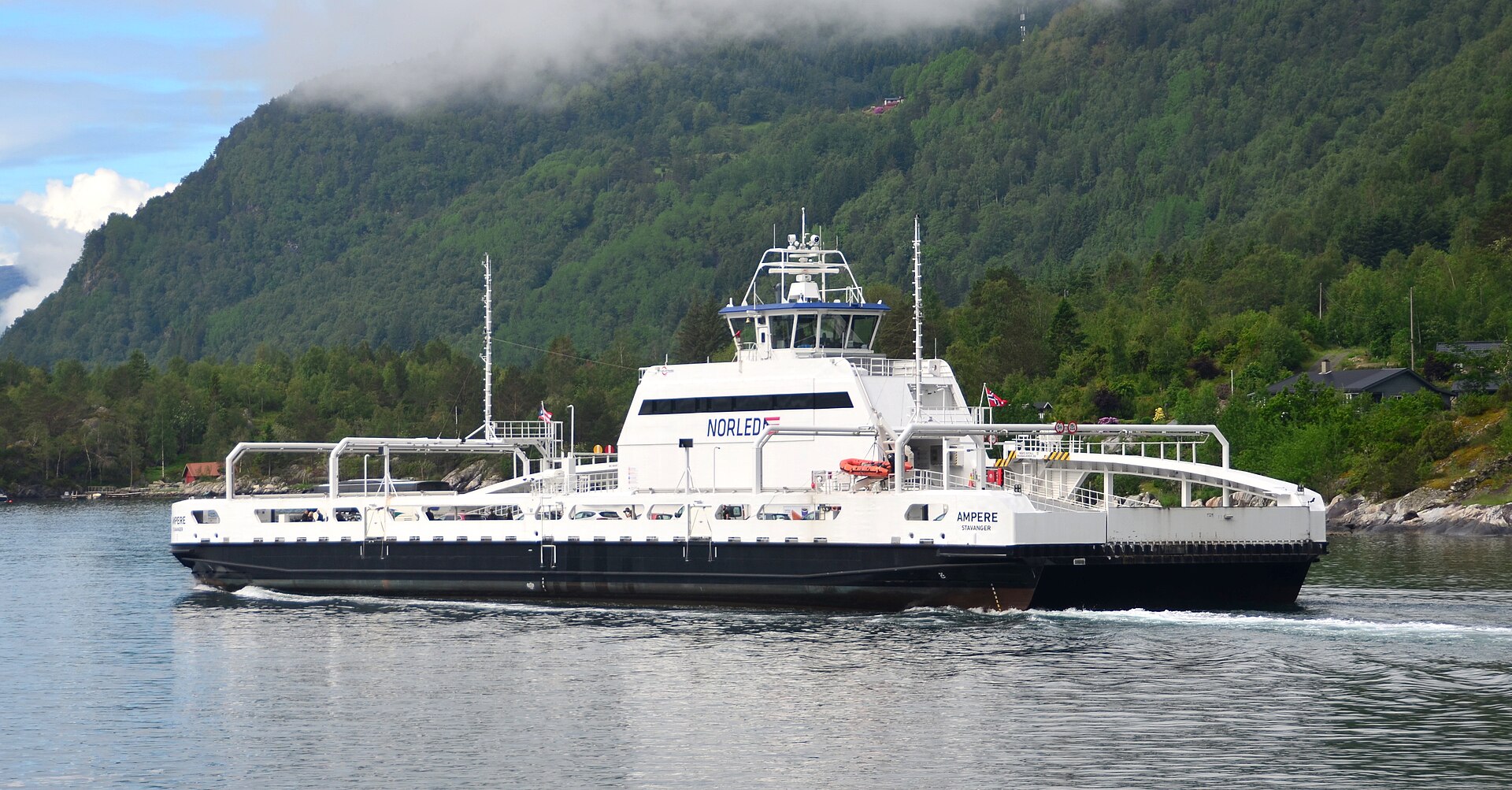

Most fjord itineraries treat the boat as a line item. Day 4, take the ferry to Geiranger. Day 5, fjord cruise. As though the sailing were a taxi that happens to float.
It is the other way around. A fjord is a hole in the road network. Western Norway's road map is a set of fragments stitched together by boats, and the boats have timetables, tariffs and seasons that do not bend. You do not build an itinerary and then look up ferry times. The ferry times decide which nights are possible, and everything else fits into what is left.
That is not a complaint. Norwegian ferries are excellent, and one of them is the reason electric shipping exists. But the planning error most visitors make is treating two completely different kinds of boat as if they were the same thing, and then being surprised by the bill or the queue. So this starts with the difference.
Two very different things are both called a ferry
The road ferry is a piece of road. Crossings like Mannheller to Fodnes on the Rv5, Hella to Vangsnes on the Rv13, or Lavik to Oppedal on the E39 are numbered national or county roads that happen to be wet for a few kilometres. They run all year, several times an hour on the busy ones, and they behave like infrastructure rather than a tour. You drive on, you drive off, and the crossing is usually between ten minutes and half an hour.
The single most useful consequence, and the one nobody tells visitors: on these ferries you pay for the vehicle and the driver, and everybody else travels free. Skyss, the public transport authority for Vestland, states it plainly. Four adults in a car cross the Sognefjord for the price of a car.
The tourist ferry is a ticketed attraction. Geiranger to Hellesylt and the Nærøyfjord cruise between Flåm and Gudvangen look like ferries, and one of them carries cars, but they are commercially run sightseeing sailings. They charge per person, they run a season rather than a year, and the fares are an order of magnitude apart. Fjord1's published 2026 price list for Geiranger to Hellesylt:
| Ticket | 2026 price |
|---|---|
| Adult, one way | NOK 420 |
| Child, one way | NOK 210 |
| Children under 4 | Free |
| Return | 50% off the return leg |
| Motorcycle | NOK 650 |
| Car up to 6 m, including driver | NOK 810 |
| Car 6 to 10 m, including driver | NOK 1,550 |
| Car 10 to 14 m, including driver | NOK 2,000 |
| Car 14 to 17 m, including driver | NOK 2,200 |
| Car up to 6 m, driver plus 4 passengers | NOK 1,650 |
| Bicycle or kayak | NOK 100 |
Read the last few rows against the rule above. On a road ferry, a family of five in a car pays for the car. On this crossing, the same family pays NOK 1,650, because the passengers are the product. That is not a rip-off, it is a different business.
Published journey times for this crossing disagree, which is worth knowing before you build a connection around it. Fjord1 says about 65 minutes, Havspor's timetable says about 45, and Wikipedia describes a 20 km trip taking just over an hour. Assume an hour. The seasons disagree too: Fjord1 and Visit Geiranger both give April to October, while Havspor's high season table runs 22 May to 30 September 2026 with 16 departures each way on a weekday, first at 08:00 and last at 18:30. Both can be true at once, with a thinner shoulder service either side, but an April or October crossing needs checking on the operator's own page rather than a blog's.
How you pay on a road ferry, and what a hire car does to it
There is no ticket window. Norway's road ferries run on AutoPASS for ferry, which is licence plate and tag based, and the discounts are large enough to matter.
- An AutoPASS tag with no other agreement gets you 10% off the vehicle fare, automatically.
- An AutoPASS for ferry prepayment agreement gets you 50% as a private customer, or 40% as a business.
- With no tag and no agreement at all, your plate is read as you drive aboard and a full-price invoice is posted to the registered owner, plus a NOK 35 invoice fee per invoice.
The prepayment agreement is the interesting one, and also the one most visitors should skip. You load an account up front, and for 2026 the amounts are NOK 2,200 for vehicles up to 8 m, NOK 10,600 for 8.01 to 17.50 m, and NOK 20,100 for anything over 17.51 m. Halving a week of ferry fares is real money, but only if a week's crossings exceed the float you have parked with the scheme, and the balance is not something you get back at the airport.
The rental car is where this quietly goes wrong. You do not own the plate. The invoice goes to the rental company, who pass it on with their own administrative charge attached, and you will not see the total until after you are home. Ask at the desk which arrangement the car is on before you drive away. Some routes also run higher summer rates, which AutoPASS notes applies to certain connections in summer 2026.
Zero emission vehicles get a further reduction on many connections but not all, and the size varies by route, so check your specific crossings on the AutoPASS fare calculator rather than assuming an electric hire car crosses cheaply everywhere.
The free ferries, and why you cannot build a budget on them
Some Norwegian crossings genuinely cost nothing, for the vehicle and everyone in it. The rule is passenger volume, not geography. The government set aside NOK 59 million for free travel on connections that carried fewer than 100,000 passengers in 2019, with the first routes going free on 1 July 2022 and more added on 16 August 2023. Over a hundred routes across six counties are in the scheme.
Two catches. The counties were given discretion over how to spend the money, so some routes that met the threshold did not become free. And the threshold is aimed at quiet crossings by design, which means the ferries on the main tourist spine of western Norway are mostly not in it. A free ferry is a nice surprise on a detour to somewhere small. It is not a budget line.
Seven days, arranged around the boats
Bergen in, Ålesund out. Doing it as a loop back to Bergen wastes most of a day on the return leg, and the one-way car drop fee is usually cheaper than the day you buy back.
| Night | Base | The crossing that shapes the day |
|---|---|---|
| 1 | Bergen | none, arrival day |
| 2 | Flåm or Aurland | Nærøyfjord cruise, or the express boat up the Sognefjord |
| 3 | Flåm or Aurland | Mannheller to Fodnes on the Rv5, out and back into Sogn |
| 4 | Balestrand or Sogndal | Hella to Vangsnes or Hella to Dragsvik on the Rv13 |
| 5 | Loen or Stryn | none, the road day through Fjærland and Nordfjord |
| 6 | Geiranger | Hellesylt to Geiranger, the one you book |
| 7 | Åndalsnes or Ålesund | Eidsdal to Linge on the Fv63, then Trollstigen |
Day 1, Bergen. Do not drive on arrival day. Bergen is a real city with a Hanseatic waterfront and a funicular, and it is the last place for a week where a supermarket is open late.
Day 2, into the Sognefjord. Two genuinely different ways to do this, and the choice sets the character of the trip.
If you have a car, drive the E16 through Voss and the tunnels to Flåm, and spend the afternoon on the Nærøyfjord cruise between Flåm and Gudvangen. Visit Bergen's listing puts the 2026 season at 20 April to 15 October and adult fares from NOK 550 one way, NOK 815 return, with a child fare of NOK 275 for ages 4 to 15. Other listings quote higher, around NOK 595 one way, so treat these as the bottom of a range and buy from the operator. The run is worked by all-electric carbon fibre catamarans, and Future of The Fjords was carrying passengers on zero emission power in this fjord years before the law required it.
If you are not driving, take Norled's express boat from Bergen to Flåm instead. It runs 1 April to 31 October, leaves Bergen at 08:00 and Flåm at 15:30, takes about five and a half hours, calls at Vik, Balestrand, Leikanger and Aurland, and costs NOK 1,295 one way for an adult. It carries no vehicles at all. As a way of seeing Norway's longest and deepest fjord, roughly 205 km long and about 1,308 m at its deepest, it is hard to beat, and it is a legitimate reason to do the whole trip without a car.
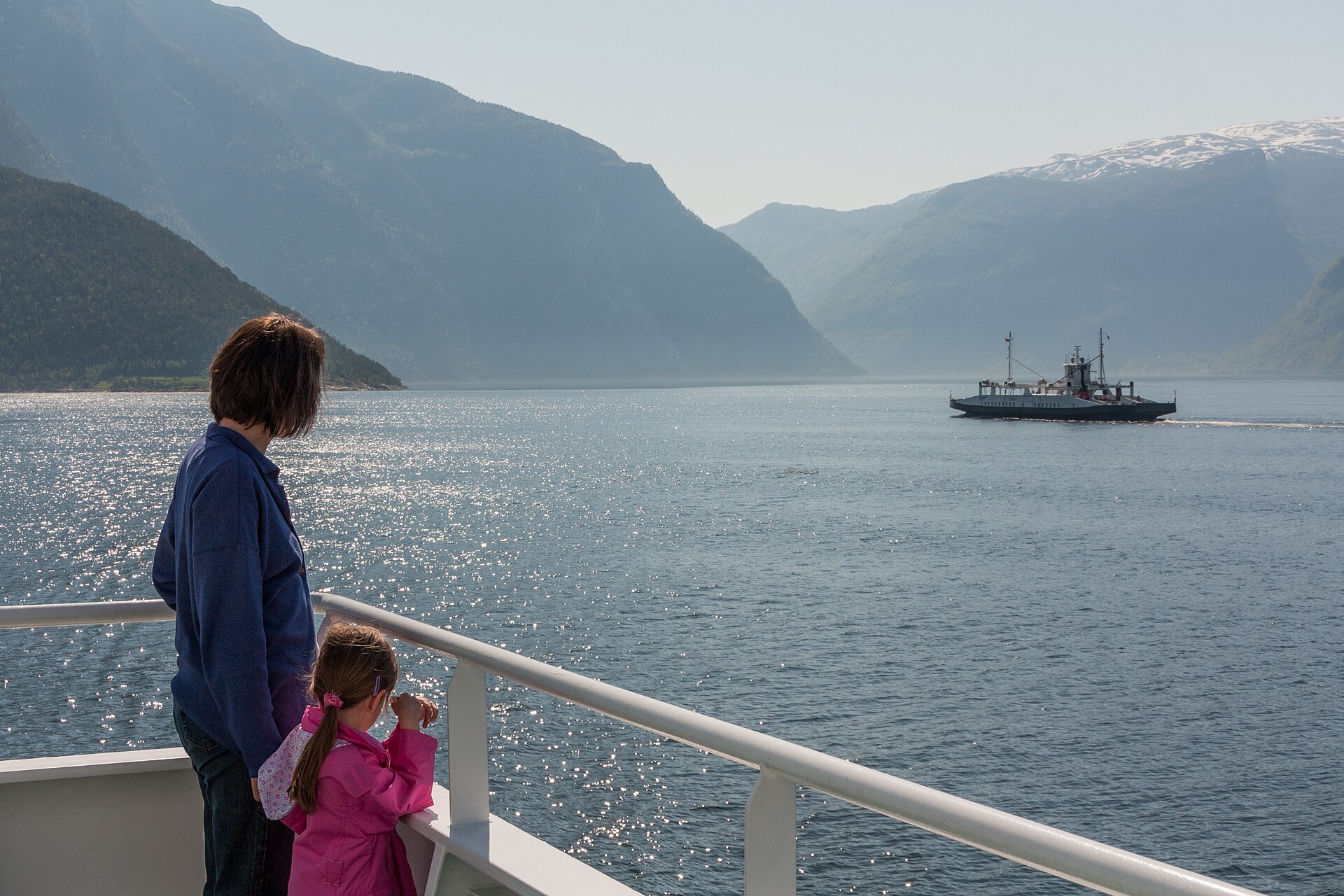

Day 3, the Rv5 crossing. Mannheller to Fodnes is the textbook road ferry: 2.8 km, about 15 minutes, departures roughly every 20 minutes, run by Norled. It is the crossing that makes Sogndal, Lærdal and the inner Sognefjord reachable from Flåm without a very long detour, and you will use it without thinking about it, which is the compliment.
Day 4, along the north shore. Hella to Vangsnes on the Rv13 is another 15 minute Norled crossing, and Hella to Dragsvik puts you on the Balestrand side. Balestrand is small, wooden and considerably calmer than Flåm, which by mid-afternoon in July is a cruise port.
Day 5, the road day. Fjærland, the tunnel north to Skei, and on into Nordfjord to Loen or Stryn. No ferry, which is exactly why it belongs here: you need one day in a fjord week where nothing is timetabled.
Day 6, into Geiranger. Hellesylt to Geiranger is the one sailing on this itinerary that behaves like an attraction. Book it. It is also the only one where turning up and hoping is a real risk, because the quay is shared with cruise passengers doing the same crossing.
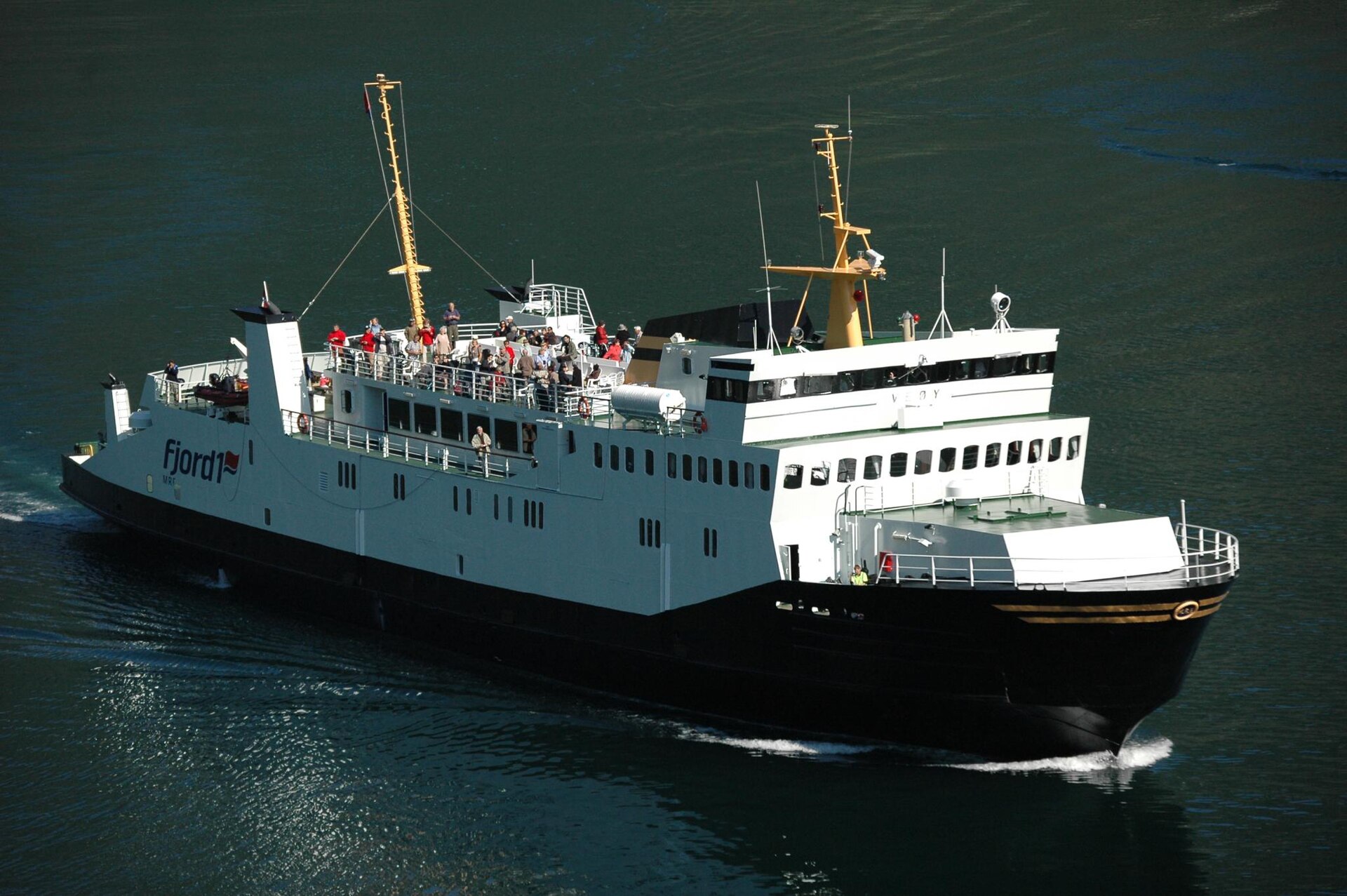

Day 7, out over Trollstigen. Geiranger to Eidsdal on the Fv63, over the Ørnevegen hairpins. Eidsdal to Linge is 2.5 km and about 13 minutes with Fjord1. Then Valldal, Trollstigen, and down to Åndalsnes or on to Ålesund.
Trollstigen deserves its own note, because it has been unreliable. The road was shut for most of 2024 after a series of rockfalls and reopened on 11 July 2025 once rockfall protection work was done, with Møre og Romsdal county saying it was then considered safe enough for traffic while keeping standing routines to close it during heavy rain. The 2026 season opened on 27 April, unusually early against a normal mid-May start. It is open and it is spectacular. It is also a mountain road with a live rockfall management regime, so check it on the morning rather than assuming, and have the E136 through Romsdalen in your back pocket.
What actually needs booking, and what does not
The list is shorter than most guides suggest, and it splits along the same line.
Book the tourist sailings. Hellesylt to Geiranger, and the Nærøyfjord cruise between Flåm and Gudvangen. Both are ticketed attractions with finite capacity on named departures, and both share their quays with cruise ship traffic in summer.
Book beds, everywhere. Geiranger, Flåm and Loen are villages with a village's worth of rooms and a cruise port's worth of demand. This is the reservation that decides whether the week works.
Book the Flåm Railway if it matters to you. A scheduled tourist train on a busy line, with finite seats.
Do not try to book the road ferries, because you cannot. Mannheller to Fodnes, Hella to Vangsnes, Eidsdal to Linge and the rest are turn up and drive on. In July, get to the quay one sailing early on the crossings that feed a cruise port.
Skip the packaged version unless you want it done for you. Fjord Tours sells the Bergen Railway, Flåm Railway and Nærøyfjord cruise as Norway in a Nutshell, listed from NOK 2,698 depending on where you start and finish. Every component is separately buyable from Vy, Flåmsbana and the cruise operator. The package buys coordination, not access, and if you are driving it buys very little at all.
What changed for 2026
Three things, and two of them are new enough that most itineraries online have not caught up.
The World Heritage fjords went zero emission on 1 January 2026. Since that date, passenger ships below 10,000 gross tonnes must run on energy sources producing no direct carbon dioxide or methane while inside the Geirangerfjord and the Nærøyfjord. The same requirement extends to ships of 10,000 GT and above from 1 January 2032. The rule sits in amendments to Norway's environmental safety regulations, with implementation guidance in the Maritime Authority's circular RSR 04-2025. Temporary exemptions of up to two years exist for smaller ships without shore power access, but cannot run past 31 December 2029.
For a visitor this mostly means the sightseeing boats got quieter, which in a fjord is not a small thing. It also means the mix of vessels calling at Geiranger is shifting.
Norway got a visitor levy. The law entered into force on 1 July 2026. It lets a municipality charge 3% of the accommodation price excluding VAT on paid overnight stays, including hotels, guesthouses, campsites and short term rentals. It is voluntary, it has to be adopted by local by-law, and it is limited to municipalities that can show tourism places a particularly heavy burden on them. The earliest any municipality can actually collect is 1 January 2027, so a trip taken now will not pay it, and a trip planned for next summer to somewhere like Geiranger might.
Trollstigen is properly back. After a season lost to rockfalls, 2026 opened on 27 April with a full summer season planned.
Key Takeaways
| Point | Details |
|---|---|
| Road ferry and tourist ferry are different products | One is numbered road you drive across; the other is a ticketed sightseeing sailing priced per head. |
| Passengers ride free on road ferries | You pay for the vehicle and the driver. Everyone else in the car crosses at no charge. |
| You cannot book a road ferry | First come, first aboard. The mitigation is arriving a sailing early in July and August, not a reservation. |
| AutoPASS: 10% with a tag, 50% with prepayment | The prepayment agreement needs NOK 2,200 loaded for a car in 2026, so it rarely pays for one week. |
| No tag means an invoice by post | Your plate is read anyway, and a NOK 35 fee is added per invoice. With a hire car it arrives with the rental firm's markup. |
| Geiranger to Hellesylt is priced per person | NOK 420 an adult in 2026, NOK 810 for a car up to 6 m including the driver, NOK 1,650 for a car with four passengers. |
| Two sailings need booking, the rest do not | Hellesylt to Geiranger and the Nærøyfjord cruise. Beds matter more than either. |
| The World Heritage fjords are zero emission from 2026 | Ships below 10,000 GT since 1 January 2026, larger ships from 1 January 2032. |
| The visitor levy exists but is not chargeable yet | Law in force 1 July 2026, 3% of accommodation excluding VAT, earliest collection 1 January 2027. |
Where this plan breaks
It assumes the connections hold, and connections are where fjord trips fail. A road ferry you missed by one car costs twenty minutes. A road ferry you missed by one car, at the end of a day where the tourist sailing you booked leaves at a fixed time from the other side of a mountain, costs the booking. Never chain a bookable sailing directly onto an unbookable crossing without an hour of slack.
Published times for the same sailing genuinely disagree. Geiranger to Hellesylt is quoted at 45 minutes, at 65 minutes, and at just over an hour by three different sources. Where sources conflict, take the slowest and check the operator's own timetable close to the date.
Seven days on this route has no weather day. Western Norway rains, and Trollstigen closes in heavy rain by design. If a day goes, something has to be deleted, and the thing you delete is usually the thing you booked.
The shoulder season closes the water, not just the attractions. The Bergen to Flåm express boat runs 1 April to 31 October. The Nærøyfjord cruise is listed at 20 April to 15 October for 2026. Geiranger to Hellesylt runs thinner outside its high season table. A November plan built from a July itinerary has holes no amount of driving will fill.
Cruise ships change the arithmetic in a way a map cannot show you. On a day when two ships are berthed at Flåm or Geiranger, the queue at the quay, the seats on the sailing and the tables in the village are all competing with several thousand people who arrived at once. The fix is timing: go early, or go on a day nothing is in.
A campervan is a different trip financially. Every fare table above steps sharply by vehicle length. On Geiranger to Hellesylt a car up to 6 m is NOK 810 and a 6 to 10 m vehicle is NOK 1,550, and the AutoPASS prepayment float jumps from NOK 2,200 to NOK 10,600 at 8 m. Measure the vehicle before you price the week.
How Planytera handles a trip like this
Planytera is an AI trip planner built by a solo developer, available on iOS, Android and the web. You describe the trip and it produces a day-by-day itinerary, ready in moments. On a route built out of crossings, three things matter more than the sightseeing list.
Offline access. Coverage in the inner Sognefjord, on the Fv63 over the mountains and in the long tunnels is patchy, and a plan you cannot open at a ferry quay is not a plan. Saved trips keep the full itinerary, maps and notes available with no signal.
Re-pacing without rebuilding. This is the trip where one missed sailing moves everything after it. Swap a stop or re-pace a day and the rest of the week stays in sync, instead of needing to be built again from the start.
Per-person cost estimates. Fjord ferries price by vehicle on some crossings and by head on others, which makes a week genuinely hard to estimate in your head. Seeing the per-person figure before you commit helps, particularly when a group is splitting one car. Split costs then tracks who owes who, without anyone maintaining a spreadsheet and without moving anyone's money.
Frequently asked questions
Do I need to book ferries in Norway?
Only the tourist sailings. Norway's road ferries, the numbered crossings like Mannheller to Fodnes on the Rv5 or Eidsdal to Linge on the Fv63, cannot be reserved at all: they are first come, first aboard, and they run frequently enough that a missed sailing usually costs minutes rather than a day. The commercial sightseeing sailings are the opposite. Hellesylt to Geiranger and the Nærøyfjord cruise between Flåm and Gudvangen are ticketed attractions on named departures, they share quays with cruise ship traffic in summer, and both should be booked ahead.
How much do Norwegian ferries cost?
It depends on which kind you are on. On road ferries you pay for the vehicle and the driver only, and every other passenger travels free, with an AutoPASS tag taking 10% off and a prepayment agreement taking 50%. On the commercial crossings you pay per person. Fjord1's published 2026 list for Geiranger to Hellesylt is NOK 420 for an adult and NOK 210 for a child one way, NOK 810 for a car up to 6 m including the driver, and NOK 1,650 for a car with the driver and four passengers.
What is AutoPASS for ferry and do I need it in a hire car?
It is the plate and tag based payment system for Norway's road ferries. A valid tag alone earns 10% off. A prepayment agreement earns 50% for private customers but requires loading an account first, NOK 2,200 for a car in 2026, so it rarely pays for a single week. With neither, the plate is still read on boarding and a full-price invoice is posted to the registered owner with a NOK 35 fee added. In a rental car that owner is the rental company, who forward the charge with their own administrative fee, so ask at the desk what arrangement the car is on before you drive off.
Are any ferries in Norway free?
Yes, but not the ones on the main fjord route. The government funded free travel on connections that carried fewer than 100,000 passengers in 2019, starting 1 July 2022 with more added on 16 August 2023, covering over a hundred routes across six counties. Counties had discretion over the funding, so not every qualifying route went free, and the scheme targets quiet crossings by design. Treat a free ferry as a bonus on a detour, not as a budget assumption.
Is seven days enough for the Norwegian fjords?
It is enough for one coherent stretch, which is the right way to use it. Bergen, the Sognefjord, Nordfjord and Geiranger with an exit at Ålesund is a full week with no padding. What seven days will not do is add Lofoten, the Hardangerfjord and the Atlantic Road on top, which is what many published itineraries attempt. Every extra region costs a travel day and a set of crossings, and the crossings are the part that does not compress.
What changed in the fjords for 2026?
Three things. Since 1 January 2026 passenger ships below 10,000 gross tonnes must operate with no direct carbon dioxide or methane emissions inside the Geirangerfjord and the Nærøyfjord, with ships of 10,000 GT and above following on 1 January 2032. Norway's visitor levy law entered into force on 1 July 2026, allowing approved municipalities to charge 3% of the accommodation price excluding VAT, though the earliest collection date is 1 January 2027. And Trollstigen, closed for most of 2024 by rockfalls and reopened in July 2025, opened its 2026 season on 27 April.
Useful sources and further reading
- AutoPASS for ferry, the official scheme page, for the 10%, 50% and 40% discount tiers.
- AutoPASS prices and prepayment, for the 2026 prepayment amounts by vehicle length.
- AutoPASS frequently asked questions, for what happens with no tag and the NOK 35 invoice fee.
- AutoPASS free ferry connections, for the under 100,000 passenger rule and the routes in the scheme.
- Skyss ferry tickets and prices, for the statement that passengers travel free and you pay for vehicle and driver.
- Fjord1 Geirangerfjord ferry, the operator page and 2026 price list for Geiranger to Hellesylt.
- Havspor: Geiranger to Hellesylt, for the 2026 high season timetable.
- Norled Sognefjord express boat, for the Bergen to Flåm season, times and fare.
- Visit Bergen: Flåm to Gudvangen fjord cruise, for the 2026 season and adult and child fares.
- Norled on MF Ampere, for the first all-electric car ferry and Norway's current electric fleet.
- Lloyd's Register: zero emission requirements in Norwegian heritage fjords, for the 2026 and 2032 thresholds and the exemption window.
- Ny lov om besøksbidrag, the Norwegian government page on the visitor levy.
- Fjord Norway on Trollstigen, for opening and closing information on the road.
- Fergeruter, for individual crossing times, distances and frequencies.
Recommended
More from the Planytera blog.