Blog17 min read
10 Days in Morocco: Real Travel Times, Riad or Hotel
A ten day Morocco plan built around the internal journeys that eat whole days, with official 2026 ticket prices and when a riad beats a hotel.
By Dom
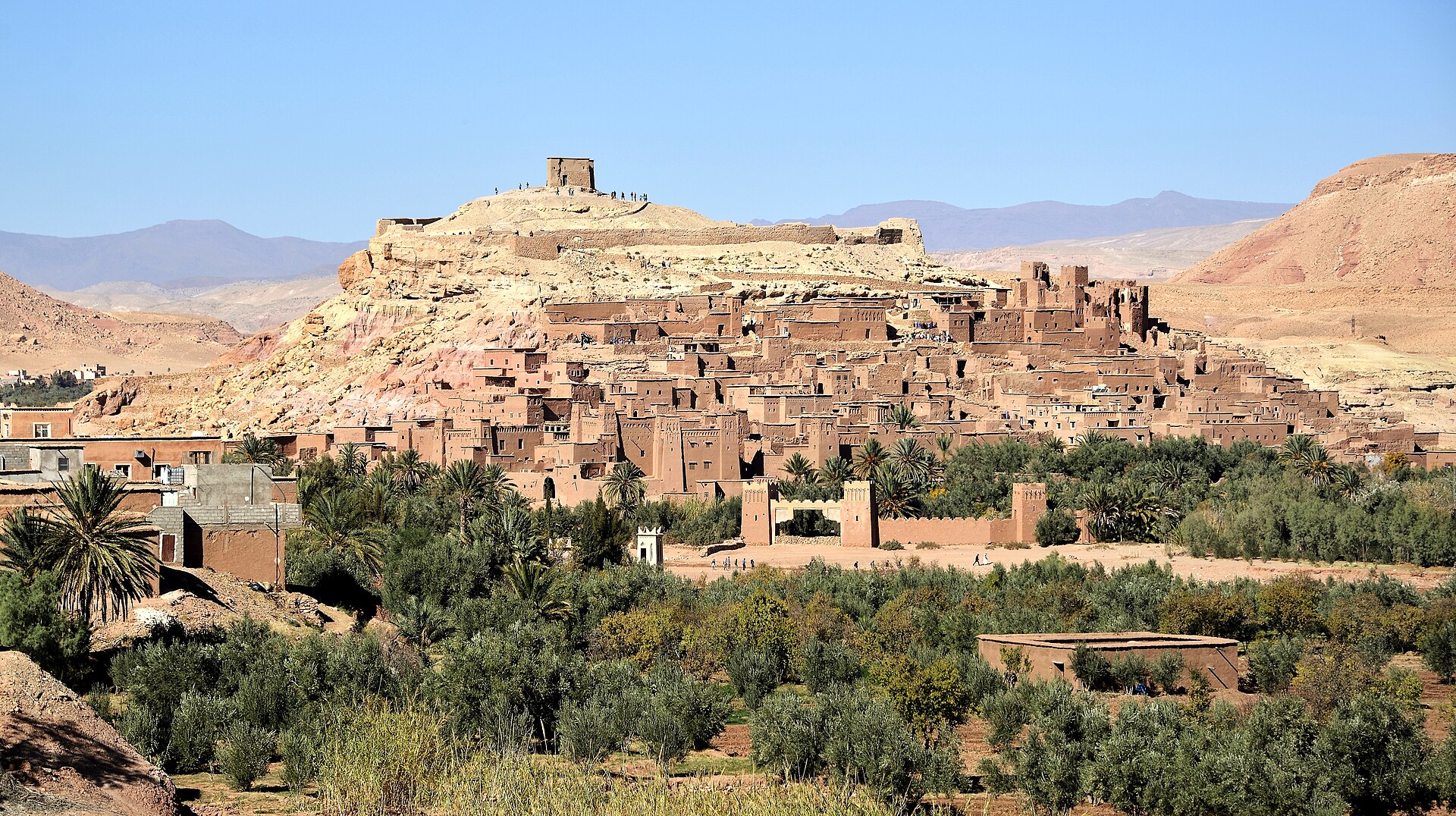

Morocco has two transport systems and most ten day plans are written as though it only has the good one.
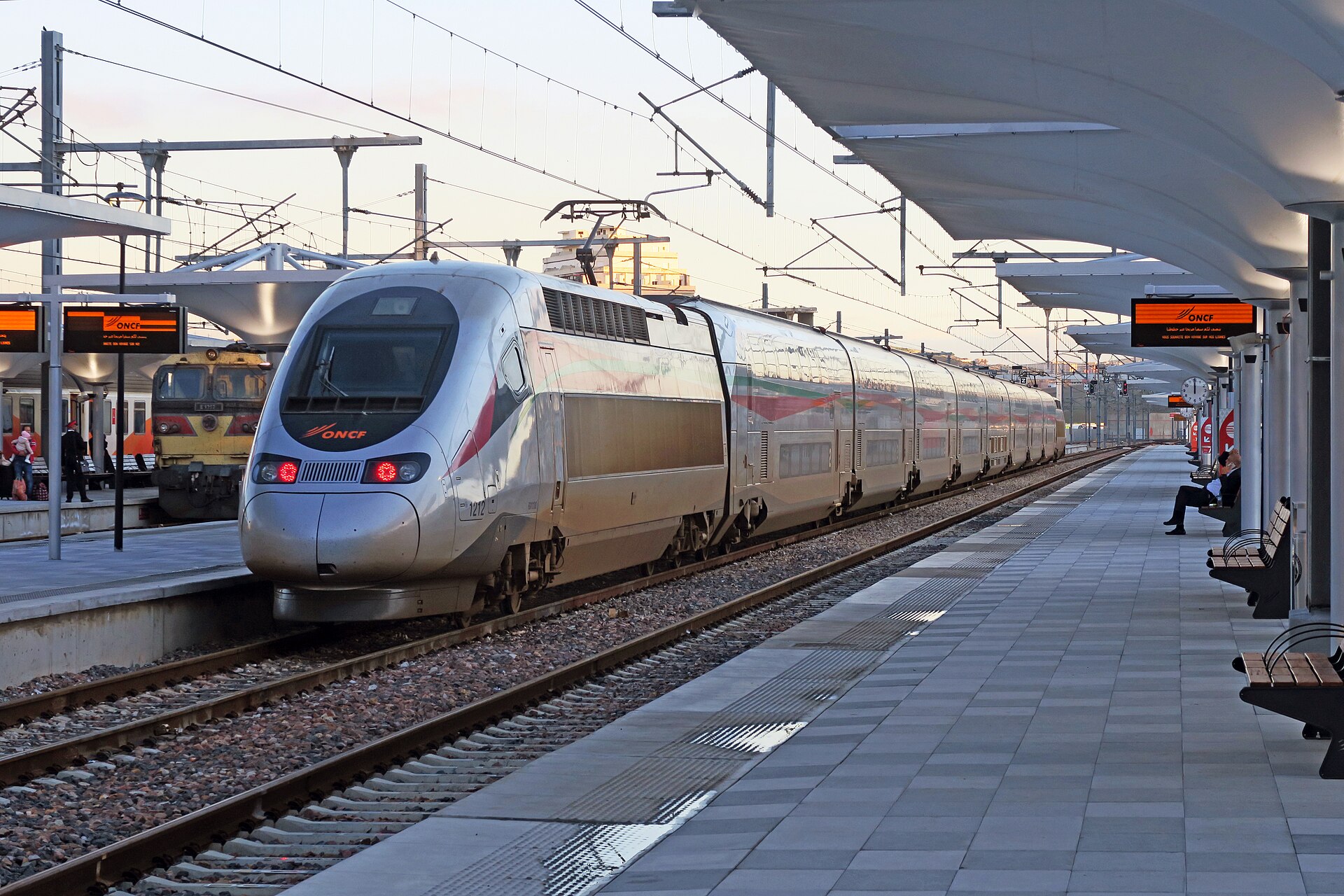
In the north there is a modern railway. Al Boraq covers Tangier to Casablanca in 2h10 on a line built for 320 km/h. Rabat is 1h20 from Tangier. On that corridor, moving between cities costs you an afternoon at most.
Everywhere else, you are on a road. Marrakech to the Sahara is a full day in a vehicle each way. Chefchaouen has no railway station at all. Fes to Marrakech is most of a working day on a train. The plans that fail treat those two systems as if they ran at the same speed, then quietly borrow the sightseeing hours to pay for the driving.
This is a ten day itinerary built the other way round: pick the transfers first, then fit the cities into what is left. It also answers the accommodation question honestly, because riad versus hotel in Morocco is a logistics decision rather than a taste preference.
The travel times nobody budgets for
Here is the table people should read before they book anything. Journey times are what operators and independent timetable surveys publish, and where sources disagree I have given the range rather than picking the flattering end.
| Leg | Realistic time | How |
|---|---|---|
| Tangier to Rabat | 1h20 | Al Boraq high speed |
| Tangier to Casablanca | 2h10 | Al Boraq high speed |
| Casablanca to Marrakech | about 3h to 3h20 | Al Atlas classic train |
| Fes to Marrakech | about 6h30 to 7h30 | Al Atlas, sources disagree on whether the best departures are direct |
| Tangier to Marrakech overnight | 23:25 to 09:01 | ONCF night train, couchette or seat |
| Marrakech to Essaouira | about 3h | Supratours coach, every two to three hours |
| Marrakech to Ouarzazate | about 4h30 to 5h | Coach over the Tizi n'Tichka pass |
| Marrakech to Merzouga | a full day | Sources disagree sharply, see below |
| Tangier to Chefchaouen | about 2h30 to 3h | CTM coach |
| Fes to Chefchaouen | about 4h to 5h | CTM coach |
Three of those deserve a note.
Fes to Marrakech is the leg that breaks itineraries. It is roughly a seven hour day. Sources do not agree on whether the fastest services run through or require a change at Casablanca Voyageurs, and the answer varies by departure. Either way, a day that starts in a Fes riad and ends in a Marrakech riad is a travel day, not a travel morning. Plan it as one.
Marrakech to Merzouga has the worst published data of any leg in the country. One operator listing describes a day service leaving Marrakech at 08:00 and arriving 21:00, thirteen hours. Another source for the same route in reverse quotes seven and a half. A third says there is no through bus at all and you need two or three connections. They cannot all be right. The only safe planning assumption is that the Sahara costs you a full day each way from Marrakech, which is why almost everyone does it as a two night loop with a stop in the Dades or Todra gorges rather than a there-and-back run.
The Tangier to Marrakech night train is the most underrated leg in Morocco. It leaves at 23:25 and arrives at 09:01, so the transfer costs you a hotel night instead of a daylight day. A berth in a shared four person couchette runs around 375 dirhams. If your trip starts in the north and ends in Marrakech, this single decision buys back a day.

What is changing, and why it does not help you yet
Morocco is building a 430 km high speed extension from Kenitra to Marrakech, designed for 320 km/h, with construction formally launched in April 2025 and a target of 2029 ahead of the World Cup. When it opens, Tangier to Marrakech is expected to take about 2h40. That is a genuinely different country to travel in, and it is several years away. For a 2026 or 2027 trip the only useful takeaway is that work on a major corridor is under way, so check for engineering diversions on classic line services around Casablanca before you commit to a tight connection.
Booking trains: the window, and the disagreement about it
ONCF sells online at oncf-voyages.ma. Independent timetable specialists say booking opens three months before departure, raised from one month in 2022. Other travel sites still publish the old thirty day figure, and at least one claims six months. They cannot all be current.
Practical advice that survives the disagreement: buy as soon as your dates are fixed, because the ceiling is at worst three months and the downside of trying early is nothing. Al Boraq uses dynamic pricing, so the fare you see depends on when you look. Published second class figures for the full Tangier to Casablanca run range from about 99 dirhams at the cheap end to around 224 on the day, with another survey putting the advance floor nearer 149. Treat those as a band, not a price list.
The night train and school holiday departures are the ones that genuinely sell out. Everything else you can usually walk up for.
Riad or hotel, and why it is not a style question
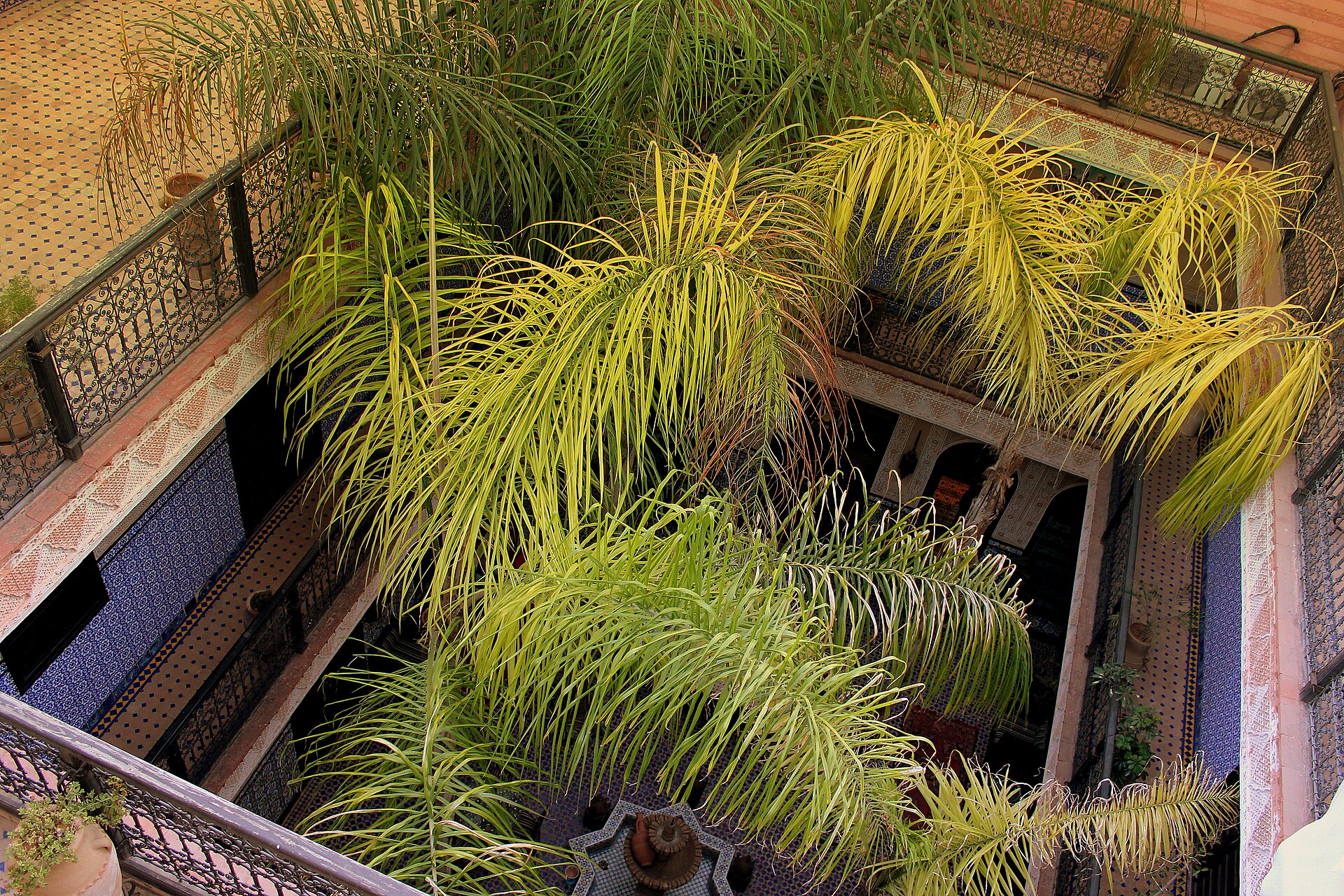
A riad is a traditional house built inward around a courtyard, and in Marrakech and Fes it sits inside the medina. That single fact drives everything else.
The medina is not a place cars go. The lanes were laid out for people and pack animals and are too narrow for a vehicle over most of their length. On arrival day your taxi stops at the nearest gate or square and you walk the last stretch with your luggage, or the riad sends someone with a handcart to meet you. Good riads arrange that as a matter of course. Book one that does not, arrive after dark, and you will spend your first hour in Morocco navigating unlit alleys with a suitcase.
What a riad is genuinely better at. It is quiet in a way a medina hotel on a main street is not, because the building faces its own courtyard. It usually has a handful of rooms rather than a hundred. And it puts you inside the old city, which is where you want to be at 07:00 and 21:00, the two times the medina is worth being in.
What a hotel is better at. Arrival, departure, luggage, lifts, air conditioning that was designed in rather than added, and any night where you land late or leave before dawn. If your flight home is at 06:30, the modern district is the correct answer.

Two practical notes. Many smaller riads prefer cash for extras, and the tourist tax is collected at the property, per person per night, at a rate that varies by city and by the property's official classification. Ask what it comes to when you book rather than being surprised at checkout.
The ten days
This routing runs north to south and ends at Marrakech, because Marrakech Menara has the widest choice of flights home and because it puts the long desert loop at the end.
Days 1 and 2: Tangier and Chefchaouen
Fly into Tangier. It is the one Moroccan arrival that lets you use the fast railway, and it is a gentler introduction than being dropped into the Marrakech medina on day one.
Chefchaouen is about two and a half to three hours by CTM coach. It has no railway station, so anyone telling you to take the train there is describing a country that does not exist. Go for the blue lanes and the Rif setting, accept that it is small, and do not give it more than a night unless you are hiking.
Day 3: south to Rabat or Casablanca
Al Boraq makes this trivial. Tangier to Rabat is 1h20, Tangier to Casablanca 2h10. Rabat is the underrated stop of the two: it is the capital, it is calm, and its old city is manageable in an afternoon.
Alternatively skip the daylight transfer entirely and take the 23:25 night train straight through to Marrakech, arriving 09:01. That converts a travel day into a sleep, at the cost of missing Rabat and Casablanca.
Day 4: Casablanca, for one thing
Casablanca is a working city and not a sightseeing one. It has exactly one attraction that justifies the stop, and it justifies it completely.
The Hassan II Mosque is one of the few mosques in Morocco open to non Muslim visitors, and only on a guided tour. Adult foreigners pay 140 dirhams. Between 15 March and 15 September, tours run Saturday to Thursday at 09:00, 10:00, 11:00, 12:00, 15:00 and 16:00. Friday drops the late morning slots and runs 09:00, 10:00, 15:00 and 16:00. From 16 September to 14 March the 16:00 slot disappears. During Ramadan the schedule shrinks again, to 09:00, 10:00 and 11:00 most days.
Shoulders, torso and knees covered, and shoes come off at the door.
Then take the train to Marrakech, about three hours to 3h20.
Days 5 and 6: Marrakech
Two full days in Marrakech is enough to see it properly and not enough to get tired of it, which is the right amount.
The official prices are worth knowing because much of what is published online is out of date. Through Morocco's Ministry of Culture ticketing portal, foreign adults pay 100 dirhams for the Bahia Palace and 100 dirhams for the Saadian Tombs, with children aged 7 to 13 at 50. Both open 09:00 to 17:00. You will still find guides quoting 70 dirhams; that was the old price. Moroccan nationals enter free on Fridays and on the first day of national and religious holidays, which are the days the sites are busiest with domestic visitors.
The Jardin Majorelle sells tickets online only, through its own site, and is explicit that tickets bought anywhere else will not get you in. The garden runs 08:00 to 18:30 with last entry at 18:00, the Pierre Bergé Museum of Berber Arts 08:30 to 18:00 with last entry 17:30, and the Villa Oasis private garden 08:00 to 17:30, closed Wednesdays.
Jemaa el Fna is best early in the morning when it is a working square, and after dusk when the food stalls are up. The middle of the day is the worst version of it.
Day 7: Essaouira, or a slower Marrakech
Essaouira is about three hours each way by Supratours coach, with departures every two to three hours. That makes it a real day trip rather than a theoretical one, but it is six hours of coach for a walled Atlantic town, and it is windy enough that people who came for a beach day are often disappointed. Do it if you want a break from the heat. Skip it if your desert loop starts the next morning.
Days 8 to 10: the desert loop, done honestly
This is the part that decides whether ten days felt generous or rushed.
The standard loop runs Marrakech over the Tizi n'Tichka pass through the High Atlas, past Ait Benhaddou, to Ouarzazate, then east along the Dades and Todra gorges to the dunes at Merzouga. Marrakech to Ouarzazate alone is four and a half to five hours by coach. Merzouga is most of another day beyond it.
Three nights is the comfortable version and two is the common one. Two buys you one night at a desert camp and a great deal of vehicle time. Three buys you a night in the gorges, which is the part people remember afterwards and the part that gets cut first.
Zagora is the shorter alternative and it is a genuine trade. It is closer to Marrakech than Merzouga, so a two night Zagora trip is far less punishing. The dunes are smaller. If your ten days are already tight, Zagora is the honest choice and Merzouga is the one that will cost you a day you do not have.
Return to Marrakech on day 10 and fly out from there, or stay a final night in a modern district hotel if your flight is early.
What actually needs booking ahead
Morocco is largely a turn up country. These are the exceptions.
The Jardin Majorelle. Online only, on the official site, and the warning about third party tickets is theirs, not mine.
The Tangier to Marrakech night train, particularly couchettes, and particularly around Ramadan and Moroccan school holidays.
Your desert tour, because the vehicle, the driver and the camp are one booking and the good operators fill up.
A riad that meets you. Confirm in writing that someone will meet your taxi at the gate with a cart. This matters most for a late arrival.
Everything else, including the Ministry of Culture monuments and the Hassan II Mosque tours, you can generally buy at the door. Check the mosque schedule the day before rather than booking far out, because it moves with the season and with Ramadan.
Money, documents and the closed currency
Entry. British nationals can visit for up to 90 days without a visa, and passports need an expiry date at least three months after the date of arrival. Check your own government's advice if you hold a different passport, because the rules are not uniform.
The dirham does not travel. You can take up to 2,000 dirhams into or out of Morocco, and you must declare foreign currency worth 100,000 dirhams or more. In practice this means you change money on arrival, not before you fly, and you spend down or change back your leftover cash before you leave rather than carrying a wad home.
Cash matters more than in Europe. Taxis, the medina, tips for the person who wheels your bag to the riad, and often the tourist tax at your accommodation. Cards work in hotels, larger shops and restaurants in the new districts, and not in most of the places you will actually be.
Petit taxis run inside the city, grands taxis run between towns. The petit taxi is metered in principle. Agree the fare or insist on the meter before you get in, and treat the first quoted airport price as an opening position.
Key Takeaways
| Point | Details |
|---|---|
| Morocco has a fast north and a slow everywhere else | Al Boraq does Tangier to Casablanca in 2h10. Fes to Marrakech is about seven hours. Do not average them. |
| The night train buys back a day | Tangier 23:25 to Marrakech 09:01, couchette around 375 dirhams. A transfer that costs a hotel night instead of a daylight day. |
| Merzouga is a full day each way | Published times range from seven and a half hours to thirteen. Zagora is the shorter, honest alternative. |
| Chefchaouen has no railway station | It is a coach journey, about 2h30 to 3h from Tangier and 4h to 5h from Fes. |
| Bahia Palace and the Saadian Tombs are 100 dirhams | Official Ministry of Culture price for foreign adults, 09:00 to 17:00. Guides still quoting 70 are out of date. |
| Hassan II Mosque is guided visits only | 140 dirhams for adult foreigners, on a fixed seasonal timetable that shortens in winter and again in Ramadan. |
| Jardin Majorelle is online only | Bought anywhere else, the ticket does not work. |
| Riad for the medina, hotel for the early flight | Cars cannot reach a medina riad. Confirm someone meets you with a cart. |
| The dirham is a closed currency | 2,000 dirhams in or out, so change on arrival and spend down before you go. |
| Book trains as soon as dates are fixed | Sources disagree on whether the window is one, three or six months. Early is free. |
Where this plan breaks
Two nights in the desert is the compromise almost everyone makes, and it is the wrong one if you are prone to car sickness. The Tizi n'Tichka is a long sequence of switchbacks and the gorge roads are no gentler. If that is you, do Zagora, or do the Atlas as a day trip from Marrakech and skip the dunes entirely. A plan that makes you miserable for two days is not a good plan.
Summer heat in Marrakech and the interior is a scheduling constraint, not a packing note. The old city has little shade and the desert has none. In high summer the workable hours are early morning and evening, and the middle of the day belongs to a courtyard. Any itinerary that has you walking the souks at 14:00 in July has not been thought about.
Ramadan changes the itinerary, not just the atmosphere. In 2027 it is expected to run from around 8 February to 10 March, with the exact start set by moon sighting. Opening hours shorten, the Hassan II Mosque runs a reduced tour schedule, many restaurants close during daylight, and trains fill with people travelling to family. None of that is a reason to avoid Morocco, and the evenings are wonderful, but a plan built for ordinary hours will not survive contact with it.
The ten days assume one long flight, not two. Connect through Europe on both ends and you have eight and a half usable days, at which point the desert loop stops fitting. Cut Essaouira first, then Chefchaouen.
Fes is missing from this routing, and that is deliberate. Fes plus Chefchaouen plus the desert plus Marrakech does not fit into ten days without a seven hour train that eats a whole day. If Fes is non negotiable for you, drop the desert and run Tangier, Chefchaouen, Fes, Rabat, Marrakech instead. It is a good trip. It is a different one.
How Planytera handles a trip like this
Planytera is an AI trip planner built by a solo developer, available on iOS, Android and the web. You describe the trip and it produces a day-by-day itinerary, ready in moments. On a country like Morocco, three things carry most of the weight.
Multi-stop pacing. This is the trip shape where the travel time is the plan. Five bases across ten days, with legs ranging from a 1h20 high speed hop to a full day in a vehicle, goes wrong on paper because transfers get written down as "morning" and then take until dusk. Setting the pace once and letting the days distribute around the transfers beats rebuilding a spreadsheet every time a night moves.
Dietary handling set once. Moroccan cooking is more accommodating than most people expect, but the details catch people out: tagines are frequently lamb or chicken by default, and the stock under a vegetable dish is not always vegetarian. Setting vegetarian, vegan, gluten-free or halal at the trip level means the plan is built around it rather than you asking the same question at every table.
Shared plans and split costs. Morocco is a common group trip, and the group version involves several people paying for different things across ten days: one covers the desert tour deposit, another the riad, a third the coach tickets. Share a read-only link or invite people to vote on activities, and let split costs track who owes who. It does the arithmetic and never touches anyone's money.
Frequently asked questions
Is ten days enough for Morocco?
For one region plus the desert, comfortably. For Tangier, Chefchaouen, Fes, Marrakech and Merzouga all together, no. The Fes to Marrakech leg alone is about seven hours by train, and the desert loop is a full day of driving in each direction. Pick either Fes or the Sahara for a ten day trip, not both.
How long is the train from Marrakech to Fes?
Around six and a half to seven and a half hours. Sources disagree on whether the fastest departures run direct or require a change at Casablanca Voyageurs, and it varies by service. Either way it consumes a day, so treat it as a travel day rather than a morning transfer.
Should I stay in a riad or a hotel in Morocco?
Both, on different nights. A riad puts you inside the medina, which is where the old city is worth being early and late, and it is quiet because it faces its own courtyard. A hotel is better for arrival and departure logistics, lifts, luggage and very early flights. The thing to know is that cars cannot reach most medina riads, so confirm the riad will meet your taxi at the gate with a handcart.
How far in advance should I book Moroccan trains?
As soon as your dates are firm. Sources disagree on the sale window, with independent rail specialists saying three months, some travel sites still quoting the older thirty days, and others claiming six. Al Boraq uses dynamic pricing, so early usually means cheaper, and the night train couchettes are the ones that genuinely sell out.
How much does the Hassan II Mosque cost to visit?
140 dirhams for adult foreigners, 70 for residents and foreign students, 30 for Moroccan students and children over six, free under six. Visits are by guided tour only, on a fixed timetable that adds a 16:00 slot between 15 March and 15 September, drops it in winter, and shortens further during Ramadan.
Can I take Moroccan dirhams home with me?
Only a small amount. The limit is 2,000 dirhams in or out of the country, and foreign currency worth 100,000 dirhams or more has to be declared. Change money after you arrive rather than before you fly, and spend down or convert back what you have left before you head to the airport.
Useful sources and further reading
- Hassan II Mosque Foundation, the official guided visit timetable and the 140 dirham price.
- Morocco Ministry of Culture ticketing, official prices and hours for the Bahia Palace, Saadian Tombs, Badii Palace, Menara Pavilion and the Almoravid Koubba.
- Bahia Palace ticket page and Saadian Tombs ticket page, the 100 dirham foreign adult rate.
- Jardin Majorelle for opening hours and the online-only ticketing rule, with sales at tickets.jardinmajorelle.com.
- UK government travel advice for Morocco, the 90 day visa-free stay, passport validity and the 2,000 dirham currency limit.
- Seat 61 guide to Moroccan trains, Al Boraq journey times and fares, the night train schedule and the booking window.
- CTM for intercity coach routes and fares.
- Kenitra to Marrakech high speed line, the 430 km extension, its 2029 target and the expected 2h40 Tangier to Marrakech time.
Recommended
More from the Planytera blog.