Blog18 min read
4 Day Rome Itinerary: Which Tickets You Must Book
A four day Rome plan built around which timed tickets are genuinely mandatory, which are sold at a markup, and what you can still walk up to in 2026.
By Dom
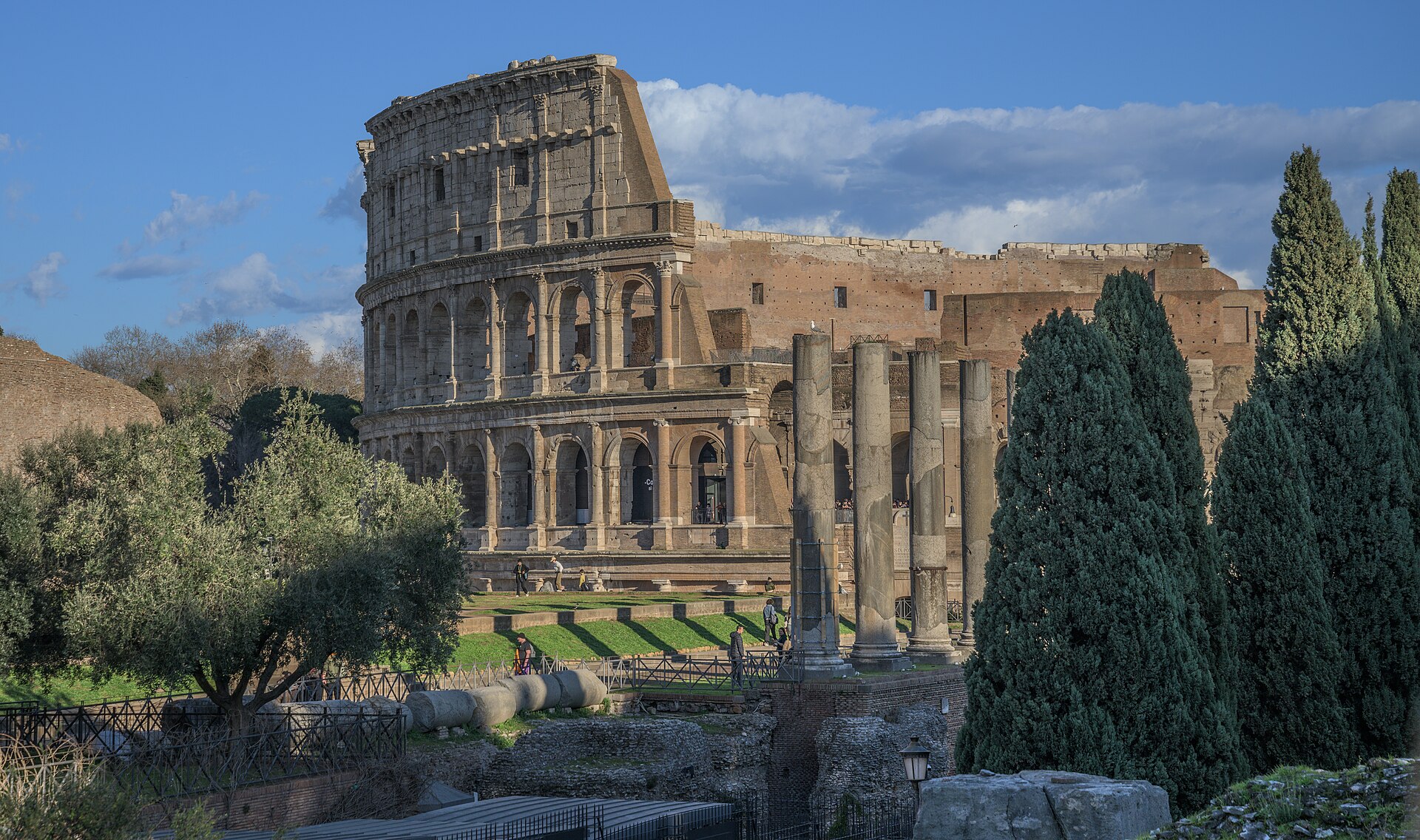

In April 2025 the Italian competition authority fined seven companies just under 20 million euro over Colosseum tickets. CoopCulture, which had run the official ticket office since 1997, took 7 million of that. Six tour operators took the rest: Tiqets, GetYourGuide, Walks, Italy With Family, City Wonders and Musement.
The finding describes exactly the experience most visitors have. The regulator found that base-price tickets were systematically unavailable, partly because operators bought them in bulk using bots, and that this "forced consumers to turn to tour operators and platforms that resold tickets bundled with additional services (for example a guide, pick-up, skip-the-line) and at considerably higher prices".
That is the whole planning problem for Rome in one paragraph. Some tickets genuinely have to be booked ahead at a fixed time. Others do not, and the business of telling you they do is what got fined. This itinerary is built around telling the two apart.
What actually needs a timed ticket
Here is the honest split, from each site's own ticketing page rather than from a resale platform.
| Site | Timed slot required? | Official adult price | Bought where |
|---|---|---|---|
| Colosseum, Roman Forum and Palatine | Yes, and the ticket carries your name | €18 (24 hours) | ticketing.colosseo.it |
| Galleria Borghese | Yes, hard cap of 180 people per shift | €16 plus a €2 reservation fee | The gallery's own ticket office |
| Domus Aurea | Yes, Friday to Sunday only | €26 with the guided tour and VR, €18 without | ticketing.colosseo.it |
| Vatican Museums and Sistine Chapel | No, but the queue is the reason to | €20 on the door, €20 plus €5 online | tickets.museivaticani.va |
| Pantheon | A fixed entry slot, but availability is not the problem | €7 | Musei italiani site or app, or on site |
| Trevi Fountain basin | No, open-dated ticket | €2 | fontanaditrevi.roma.it, or card at the gate |
| Capitoline Museums | No | €15, or €20.50 while a major exhibition runs | museicapitolini.org |
| Baths of Caracalla | No | €8, with no presale fee at all | Musei italiani site or app |
| St Peter's Basilica | No | Free | No ticket exists |
Two sites are the real constraint: the Colosseum and the Borghese. Everything else on a four day Rome trip is either walk-up or a queue you can beat by turning up early.
The Colosseum. Tickets go on sale 30 days before your visit date, and every ticket is nominative, meaning it carries the holder's name. The Ministry of Culture introduced that rule on 18 October 2023 as an anti-scalping measure, alongside a second on-site ticket office at Largo della Salara Vecchia and a split of the sales allocation, 55 per cent to individual visitors and 25 per cent to tour operators. From 9 May 2026 the name on a ticket can be changed only once, and only up to midnight seven days before the visit. A ticket bought in somebody else's name is not a bargain, it is a problem at the turnstile.
The Borghese. Reservation is mandatory and the reason is physical: 180 visitors per shift, shifts every hour, a visit that lasts two hours. No amount of paying more creates a slot that does not exist. The last shift of the day is cheaper, at €11 plus the €2 fee.
The gap between an official price and a resale price is almost always a service you did not ask for. That is not illegal and the tour is sometimes good, but you should know which you are buying. The clean test is the number: the Colosseum's own page lists €18 full, €2 reduced for EU citizens aged 18 to 25, and €11.50 for Roma Pass holders, with the arena and underground a separate €24 ticket. Nothing else exists at an official price.
Getting in and getting around
From Fiumicino. The Leonardo Express runs non-stop to Roma Termini in 32 minutes for €14, every 15 minutes, first departure from Termini 04:50 and last from the airport 23:27. The FL1 regional train is cheaper and stops at Trastevere, Ostiense and Tiburtina, which is better if you are not staying near Termini.
Around the city. A single BIT ticket is €1.50 and lasts 100 minutes on buses and trams, or one metro trip. Multi-day tickets went up on 1 July 2025: 24 hours €8.50, 48 hours €15, 72 hours €22, seven day CIS €29. An increase of the BIT to €2 has been floated in ATAC's business plan and reported in the Italian press, but it needs Regione Lazio approval and has not happened, so ignore any guide quoting it as current. On this itinerary you will use transport perhaps twice a day, and four singles in a day costs €6, less than the 24 hour pass. Buy singles.
One real change worth knowing: Metro line C reached the centre in December 2025, with new stations at Colosseo/Fori Imperiali (interchanging with line B) and Porta Metronia. Guidebooks printed before that tell you line C stops short of anywhere useful. It no longer does.
The Roma Pass, and whether it pays. The 72 hour card is €62.90 for two free sites plus unlimited transport. Do the arithmetic: 72 hours of transport is €22, the Colosseum €18, the Capitoline Museums €15, so €55 for the same three things. The 48 hour card at €38 covers one free site plus €15 of transport. Neither pays on a normal four day trip. Where the card earns its keep is the discounted rate afterwards: the Colosseum's own page lists €11.50 for Roma Pass holders once the free entries are used.
Accommodation tax. Rome charges a nightly contributo di soggiorno per person, capped at the first 10 consecutive nights. From the city's own tariff schedule: €4 at a one star hotel, €5 at two stars, €6 at three, €7.50 at four, €10 at five, €6 for a B&B or a short-term rental, €3.50 at a hostel. Four nights for two people in a four star hotel is €60 your booking confirmation probably did not include.

The four day itinerary
The two sites with hard capacity limits get fixed anchors, one on day one and one on day three. The other days are built so that a cancelled plan costs you nothing.
Day 1: Ancient Rome, with the one booking that matters
08:30. The Colosseum park opens at 08:30, with last admission at 18:15 between 29 March and 30 September, 17:30 from 1 to 24 October, and 15:30 through the winter. Book the earliest slot you can get. Your €18 ticket is valid for 24 hours at the Roman Forum and Palatine, either side of your Colosseum time, which is the part people misread as "same day only". The Colosseum itself limits you to 75 minutes on the standard ticket, which is enough: it is a ruin you walk around, not a museum you work through.
10:30. Out into the Roman Forum and Palatine on the same ticket. This is where the time goes and it is the better half. Give it three hours if the weather allows, with the Palatine last for the view down into the Forum.
Mid-afternoon. Stop. Rome in summer at two in the afternoon on the Palatine, with no shade, is a bad idea disguised as an itinerary.
Late afternoon. The Capitoline Museums, five minutes uphill from the Forum exit. €15 normally, €20.50 when a major exhibition is running (it was €20.50 from 13 May to 19 July 2026). Booking online adds a €1 presale fee and buying at the desk on the day adds nothing, which tells you how far this is from a Colosseum situation.
Day 2: The Vatican, early, and the fee you can choose not to pay
08:00. The Vatican Museums open at 08:00 Monday to Saturday, last entry 18:00, closing 20:00. They close on Sundays except the last of the month, when entry is free from 09:00 to 14:00 with last admission at 12:30. That free Sunday is genuinely free and genuinely chaotic. If you are patient, take it.
The pricing is unusually honest here. It is €20 at the door and €20 plus a €5 fee for the "Skip the Line" online booking. You are being sold a queue position for €5, and told so. In July and August that is worth paying. In November it very often is not. Treat the Sistine Chapel as the end of a long corridor rather than a destination: it is roughly a two hour walk through the museums to reach it.
Midday. St Peter's Basilica. Entry is free and no ticket exists. Anyone selling you basilica entry is selling you a tour, or a queue position, or both.
The dome is the paid part. Booked through the Vatican's own site it is €17 by stairs and €22 with the lift, both including a reserved basilica visit with a digital audio guide. The basilica also sells dome tickets on site subject to remaining availability, and the Vatican does not publish that price on its own pages, so I am not going to invent one. If you want certainty, book. If you want to save money, ask at the desk inside the portico. The lift skips the first 231 steps of 551 and you still climb the last 320, so there is no shame in stopping at the terrace.
Afternoon. Castel Sant'Angelo, ten minutes along the river, and this is where 2026 has handed you a genuine deal. The standard ticket rose to €18 on 1 July 2026. But from 3 August to December 2026, under a programme called "I lunedì di Castello", entry between 14:00 and 20:00 is €5. If your Vatican day can be a Monday, make it a Monday and do the castle in the afternoon for less than a third of the price.
Day 3: Borghese in the morning, then a walk with no tickets in it
09:00. Galleria Borghese, the one other booking you cannot improvise. Tuesday to Sunday, 09:00 to 19:00, last entry 17:45, shifts on the hour and a two hour visit. €16 plus the €2 reservation fee, €2 for EU citizens aged 18 to 25, free under 18, and the reservation is mandatory even when the entry itself is free. Two hours is exactly right for it. The Bernini sculptures are the reason to go and they are in the first rooms, so do not race through them to reach the paintings.
11:00. Out into the Villa Borghese gardens and down through the Pincio to Piazza del Popolo. This is the best free hour in Rome and it books nothing.
Afternoon. The centro storico on foot, in this order: Piazza del Popolo, along Via del Corso, the Trevi Fountain, the Pantheon, Piazza Navona, Campo de' Fiori. All of it walkable, none of it needing a slot.
Two things have changed here and both are recent. The Pantheon is €7, up from €5 on 1 July 2026, with a €2 reduced rate for EU citizens aged 18 to 25, free for under 18s and Rome residents, and free on the first Sunday of the month. It is open 09:00 to 19:00, last entry 18:30. Its own page warns that buying from unauthorised resellers may mean being refused entry.
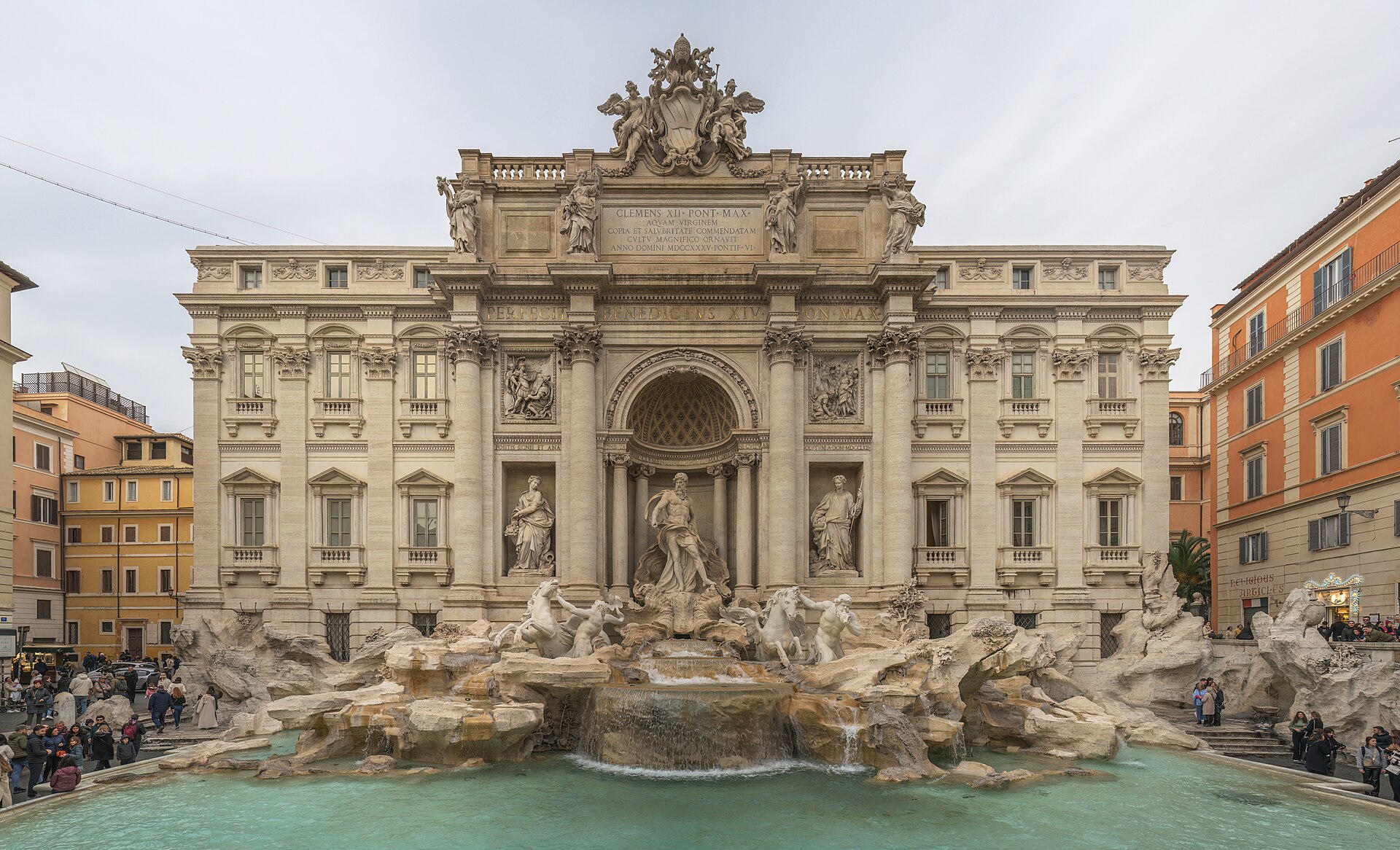
And the Trevi Fountain now charges. Since 2 February 2026 the lower basin area is gated, and non-residents pay €2 to go down the steps to the water, from 09:00 to 22:00, or from 11:30 on Mondays and Fridays, last entry 21:00. Above the basin is still free, and after 22:00 the whole thing is free and open. Tickets are open-dated, sold online at fontanaditrevi.roma.it, at civic museums and tourist info points, or by card at the entrance.

Day 4: The day the tickets stop mattering
By day four the famous sites are done, and this is the day most itineraries waste on a fifth church. Three better options.
Ostia Antica. Rome's port city, largely intact, almost empty compared with anything inside the walls. €18 full, €2 reduced for EU citizens 18 to 25, valid for eight consecutive days across every site in the park. Open from 08:30, closing at 19:00 from 1 April to 30 September and earlier in winter, last entry an hour before, closed Mondays, free on the first Sunday of the month. Reached on the suburban line from Piramide.
The Baths of Caracalla. €8 full, €2 reduced, sold through the Ministry's Musei italiani site or app with no presale fee at all, or at kiosks on site by card. It is the cheapest major ruin in Rome by a distance and the scale of the surviving walls is the point. Check the day before you go: the Ministry's own listing shows the site closed on Mondays, while other listings show a short Monday morning opening, and they disagree.
Trastevere and the Janiculum. No tickets at all. Cross the river, walk up the hill for the view back over the city, come down for lunch. If the previous three days have gone badly, this is the one to keep.
The Domus Aurea, Nero's buried palace, is the fourth option and the one with a catch: Friday to Sunday only, visits every 15 minutes from 09:00 to 16:30, €26 with the guided tour and VR headset or €18 without. If your day four is not a Friday, Saturday or Sunday it simply is not available.
What to skip, and why
Any "skip the line Colosseum ticket" over €18. You are buying a tour. Buy it deliberately if you want a guide, at a price you agreed to, not because a search result told you the official site was sold out.
The Roma Pass, on a four day trip. The arithmetic above does not work at €38 or €62.90.
A rental car. Rome's centre is a restricted traffic zone with camera enforcement, and everything here is walkable or one metro stop. A car is a parking problem with a fine attached.
The third and fourth basilica. San Giovanni in Laterano and Santa Maria Maggiore are magnificent and free, and they are also the point at which most people stop looking. One is plenty in four days.
What four days in Rome costs
Per person, excluding accommodation and flights, at the prices verified above.
| Line item | Four days | Notes |
|---|---|---|
| Airport transfer | €28 | Leonardo Express both ways at €14 |
| Local transport | €6 to €18 | Singles at €1.50, or a 72 hour pass at €22 if you insist |
| Colosseum, Forum and Palatine | €18 | €24 if you want the arena and underground |
| Vatican Museums | €20 to €25 | The €5 online fee is optional and sometimes worth it |
| Galleria Borghese | €18 | €16 plus the €2 reservation fee |
| Capitoline Museums | €15 to €20.50 | Higher while a major exhibition runs |
| Pantheon and Trevi basin | €9 | €7 and €2 |
| Day 4 site | €8 to €26 | Caracalla €8, Ostia Antica €18, Domus Aurea €26 |
| Accommodation tax | €12 to €40 | Four nights at €3.50 to €10 per person per night |
Food is the variable this table cannot guess at. Rome runs from an espresso standing at a bar to a three hour dinner in Testaccio, and both are the correct answer on different evenings.
Key Takeaways
| Point | Details |
|---|---|
| Only two sites truly need booking | The Colosseum, released 30 days ahead with your name on the ticket, and the Borghese, capped at 180 people per two hour shift. |
| The resale problem is documented | In April 2025 Italy's competition authority fined CoopCulture and six operators just under €20 million over Colosseum ticket availability and bot buying. |
| €18 is the Colosseum price | Full price, 24 hours, covering the Forum and Palatine. €24 for the arena and underground. Anything higher is a tour. |
| St Peter's is free and has no ticket | Only the dome is paid: €17 by stairs or €22 by lift through the Vatican's own site. |
| The Vatican €5 is a real, optional fee | €20 at the door, €20 plus €5 online for skip-the-line. In August, pay it. In November, think about it. |
| Two prices changed on 1 July 2026 | The Pantheon went €5 to €7, Castel Sant'Angelo to €18. Older guides are wrong on both. |
| Castel Sant'Angelo is €5 on Monday afternoons | From 3 August to December 2026, entry between 14:00 and 20:00, rather than €18. |
| The Roma Pass does not pay here | €62.90 for 72 hours against roughly €55 of the same components bought separately. |
| The Trevi basin now costs €2 | Since 2 February 2026 for non-residents. Above the basin is free, and after 22:00 everything is. |
Where this itinerary tends to break
The Colosseum slot decides the trip, and it is booked first. Tickets appear 30 days ahead. If you are planning six weeks out you cannot book yet, and nothing is wrong. If you are planning six days out in July you may genuinely find nothing, and at that point a guided tour is a reasonable purchase rather than a rip-off. Buying one is fine. Believing it was your only option all along is not.
Day 3 collapses if the Borghese slot lands in the afternoon. The plan assumes a morning shift. If you get 15:00, swap days 3 and 4 entirely rather than compressing the centro storico walk into the remaining daylight.
August is not the same trip. The Forum and Palatine are effectively shadeless and become genuinely unpleasant between roughly midday and four. Everything outdoors moves to early morning or evening, and the indoor sites absorb the middle of the day.
Sundays and Mondays remove things. The Vatican Museums close on Sundays except the last of the month. The Borghese and Ostia Antica close on Mondays. Two of the four days above stop working if you land on the wrong pair.
First Sunday of the month cuts both ways. The Colosseum park, the Pantheon and Ostia Antica are all free that day, which is a real saving and a real crowd. Decide in advance whether you are taking the money or the space.
How Planytera handles a trip like this
Planytera is an AI trip planner built by a solo developer, available on iOS, Android and the web. You describe the trip you want and it builds a day-by-day itinerary, ready in moments. Four things it does map onto the problems above.
Changing one thing keeps the rest in sync. The Borghese slot you actually get is the thing most likely to break this plan. Move it and the surrounding days re-order rather than leaving you with two half-days that do not fit together.
Pacing is a setting, not an accident. Rome in August is a different trip from Rome in March, and the difference is mostly how much walking sits between two indoor stops. Ask for a slower day and the itinerary re-paces instead of just deleting things.
Offline access covers the parts with no signal. Save a trip and the itinerary, maps and notes stay available without a connection. Rome's metro is underground and the Vatican Museums are two hours of thick walls.
Group trips settle up without a spreadsheet. Share a read-only link, or invite people to vote on which sites make the cut, and use split costs to track who owes who. It does the arithmetic and never touches anyone's money, and there are no cards to link.
It also checks visa and e-visa requirements once you set your passport.
Frequently asked questions
Do I really need to book Colosseum tickets in advance?
Yes, for a specific time slot, and the ticket carries your name. Tickets are released 30 days before the visit date on the park's own site, at €18 for 24 hours covering the Colosseum, Roman Forum and Palatine. There is also an on-site ticket office, expanded in 2023 as part of the anti-scalping measures, so a sold-out website is not always the end of it.
Why are Colosseum tickets always sold out?
Because for years they were being bought in bulk. In April 2025 Italy's competition authority fined CoopCulture, the ticketing concessionaire from 1997 to 2024, €7 million for knowingly contributing to the sustained unavailability of base-price tickets, and fined six tour operators for buying tickets with bots.
Is St Peter's Basilica free?
Yes, and there is no entry ticket to buy. The only paid element is the dome, which the Vatican's own booking site sells at €17 by stairs and €22 with the lift, both including a reserved basilica visit and a digital audio guide. Anyone selling you "entry to St Peter's" is selling a tour or a queue position.
Should I pay the €5 Vatican Museums online booking fee?
It depends on the month. The museums are €20 at the door and €20 plus €5 for the online skip-the-line booking, so the fee buys a queue position rather than the ticket. In peak summer it is worth it. Outside it, arriving at the 08:00 opening usually does the same job for nothing.
Is the Roma Pass worth it for four days?
Usually not. The 72 hour card is €62.90 for two free sites plus transport, and the same combination bought separately (transport €22, the Colosseum €18, the Capitoline Museums €15) comes to about €55. It suits someone doing five or six paid sites in three days, which four days in Rome rarely is.
How much is the Trevi Fountain now?
€2 for non-residents to enter the gated basin area at the foot of the fountain, since 2 February 2026. Access runs 09:00 to 22:00, or from 11:30 on Mondays and Fridays, last entry 21:00. Viewing from above the basin is free at any time, and after 22:00 the whole area is free and open.
Useful sources and further reading
- AGCM press release PS12603, the April 2025 decision fining CoopCulture and six operators.
- Ministry of Culture on nominative Colosseum tickets, the 18 October 2023 anti-scalping measures.
- Colosseum, Roman Forum and Palatine ticket, the €18 price and what it covers.
- Full Experience Underground and Arena, the €24 two day ticket.
- Colosseum opening times and tickets, seasonal hours, free days and the 30 day sale window.
- Domus Aurea, the €26 and €18 tickets and the Friday to Sunday schedule.
- Vatican Museums prices and tickets, the €20 and €5 figures, hours and the last-Sunday arrangement.
- St Peter's dome with lift and with stairs, the Vatican's own booking pages.
- Galleria Borghese ticket information, the €16 plus €2, the 180 person cap and the two hour shifts.
- Pantheon visitor page, the €7 price from 1 July 2026 and the reseller warning.
- Castel Sant'Angelo price change and I lunedì di Castello, the €18 and €5 tickets.
- Trevi Fountain entry ticket, Roma Capitale's announcement of the €2 charge, and the new museum tariff system from 1 February 2026.
- Capitoline Museums tickets, prices and the €1 presale fee.
- Baths of Caracalla, the €8 ticket sold with no presale fee.
- Ostia Antica visitor information, the €18 eight day ticket and seasonal hours.
- ATAC BIT ticket at €1.50, and Rome's fares from 1 July for the €8.50, €15, €22 and €29 tickets.
- Roma Pass, the €38 and €62.90 prices from the city tourism board.
- Rome accommodation tax rates, the official tariff schedule.
- Fiumicino Airport trains, the €14 Leonardo Express and its 32 minute journey.
- New Metro line C stations, Colosseo/Fori Imperiali and Porta Metronia.
Recommended
More from the Planytera blog.