Blog17 min read
7 Days on the Amalfi Coast
A seven day Amalfi Coast plan built around the SS163's summer plate restrictions, where the bus and ferry are the itinerary, not the backup plan.
By Dom
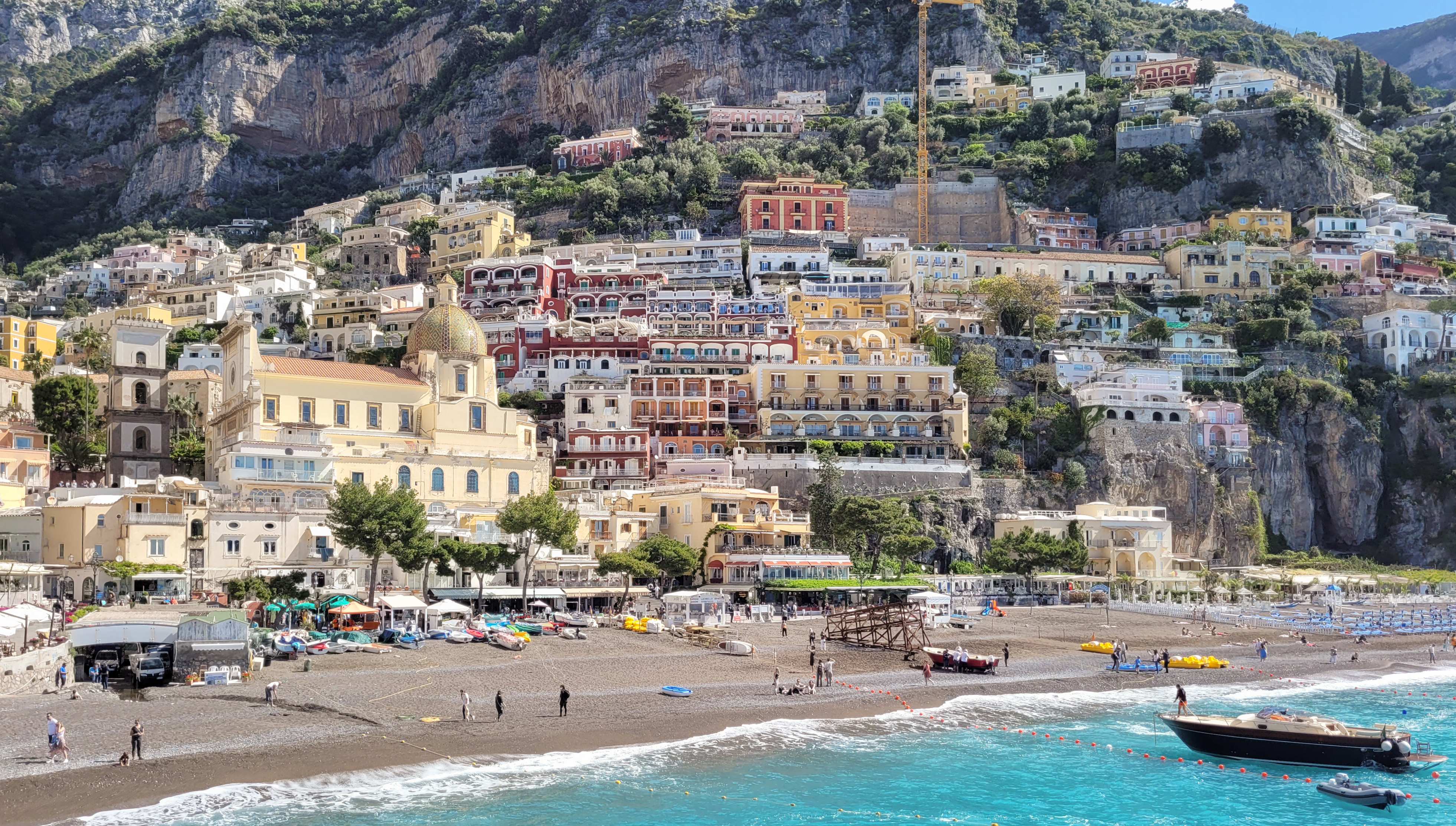

Most Amalfi Coast plans treat the rental car as the default and the bus as the fallback for whenever parking looks hard. That is the wrong way round. The Strada Statale 163, the single road that connects every town on this coast, is one lane and a painted centreline for long stretches, and for large parts of the summer it is legally closed to half the cars on it at any given time. A tourist rental car is not on the exemption list. Once you accept that, the SITA bus and the Travelmar ferry stop being a backup plan and become the actual spine of the week.
This plan builds the week around that fact instead of discovering it on day one. It treats the ferry as unreliable by design, since a hydrofoil that cannot run in rough seas is a real constraint, and it fits a hike, a boat cave and a Capri day into a week that answers to two separate timetables instead of one dashboard GPS.
Every price, hour and rule below comes from a page that was opened and read, or an official-adjacent source publishing the operator's own timetable. Where sources disagreed, this post says so and gives the range. Confirm anything with a fine attached against the posted notice for your dates, since Italian traffic ordinances get renewed and reissued most years.
Why you are probably not driving this coast
The SS163 Amalfitana runs roughly 40 kilometres between Vietri sul Mare, just outside Salerno, and Positano, through nine municipalities. For long stretches it is barely two lanes wide, with a cliff on one side and a drop to the sea on the other, and tour coaches and delivery vans routinely have to reverse to let each other pass at a blind curve.
On top of the road's own geometry, an alternating-plate traffic restriction (targa alterna) has run on the SS163 in some form since 2019, under an ANAS ordinance, and the 2026 calendar published by the Distretto Costa d'Amalfi and confirmed on the Comune di Praiano's own site runs like this:
| Period | When it applies |
|---|---|
| 30 March to 6 April (Easter) | Daily |
| 25 April to 2 May | Daily |
| 1 June to 31 July | Saturdays, Sundays and public holidays |
| 1 August to 30 September | Every day |
| 1 to 31 October | Saturdays, Sundays and public holidays (3 to 4, 10 to 11, 17 to 18, 24 to 25, and 31 October specifically) |
The restriction runs from 10:00 to 18:00 on those dates. On even-numbered calendar dates, cars whose plate ends in an even digit cannot use the road; on odd dates, odd-ending plates are banned. For most of a July or August week, half the cars on this coast are locked out of the SS163 for eight hours in the middle of the day, exactly the stretch of a seven day trip when you would want to move between towns.
The exemption list, per the Comune di Praiano notice, covers residents of the coast's municipalities, disabled permit holders, taxis and licensed NCC drivers, emergency and police vehicles, non-resident workers with an employment contract on the coast, motorbikes and scooters, and hotel guests, though only on their check-in and check-out days. That last point is worth flagging: several English-language travel guides describe a blanket exemption for anyone with a hotel booking, while the official municipal notice is explicit that it covers only the arrival and departure day. A standard tourist rental car is not on the list at all. Fine amounts vary by which secondary source you read, some citing a flat figure near €60 and others citing a wider range typical of this class of Italian traffic violation, so treat no single number here as confirmed; read the posted ordinance for your dates.
Vehicles longer than 10.36 metres, including anything towing a trailer, are separately banned from the SS163 from 6:30 a.m. to midnight year-round, the rule that keeps large tour coaches off the road during the same hours the plate restriction is active.
The SITA bus is the backbone, and it has its own failure mode
SITA Sud runs the coastal bus route from Sorrento through Positano to Amalfi, with a separate onward connection from Amalfi to Salerno, so a Positano-to-Salerno trip usually means changing buses in Amalfi. Departures run roughly every 30 to 60 minutes through the day, more frequently in July and August, from around 6:30 a.m. to about 10:00 p.m., though exact times shift with the season, so check the current timetable rather than assuming last year's holds.
A single ticket runs roughly €2.50 to €4 depending on distance. A CostieraSITA 24-hour pass costs €10 for unlimited rides on SITA Sud buses across the coast's towns, or €12 for a version that also covers Positano's local shuttle buses. Tickets are not sold on board; buy them in advance at tabaccherie (tobacco shops, marked by a white T), newsstands and some bars in every town on the route.
The failure mode is capacity, not punctuality. In peak season the bus from Amalfi toward Sorrento can already be full by the Positano stop, and the two SITA stops in Positano routinely have lines watching two or three buses pass with no room to board. The narrow road caps how large a bus SITA can run, so this is a structural constraint, not a bad day. Build slack into any afternoon you plan to leave by bus in July or August, and board near the start of a route (Sorrento or Salerno) rather than a mid-route stop like Positano, where an already-full bus simply will not stop.

The ferry is faster, and it is the first thing bad weather cancels
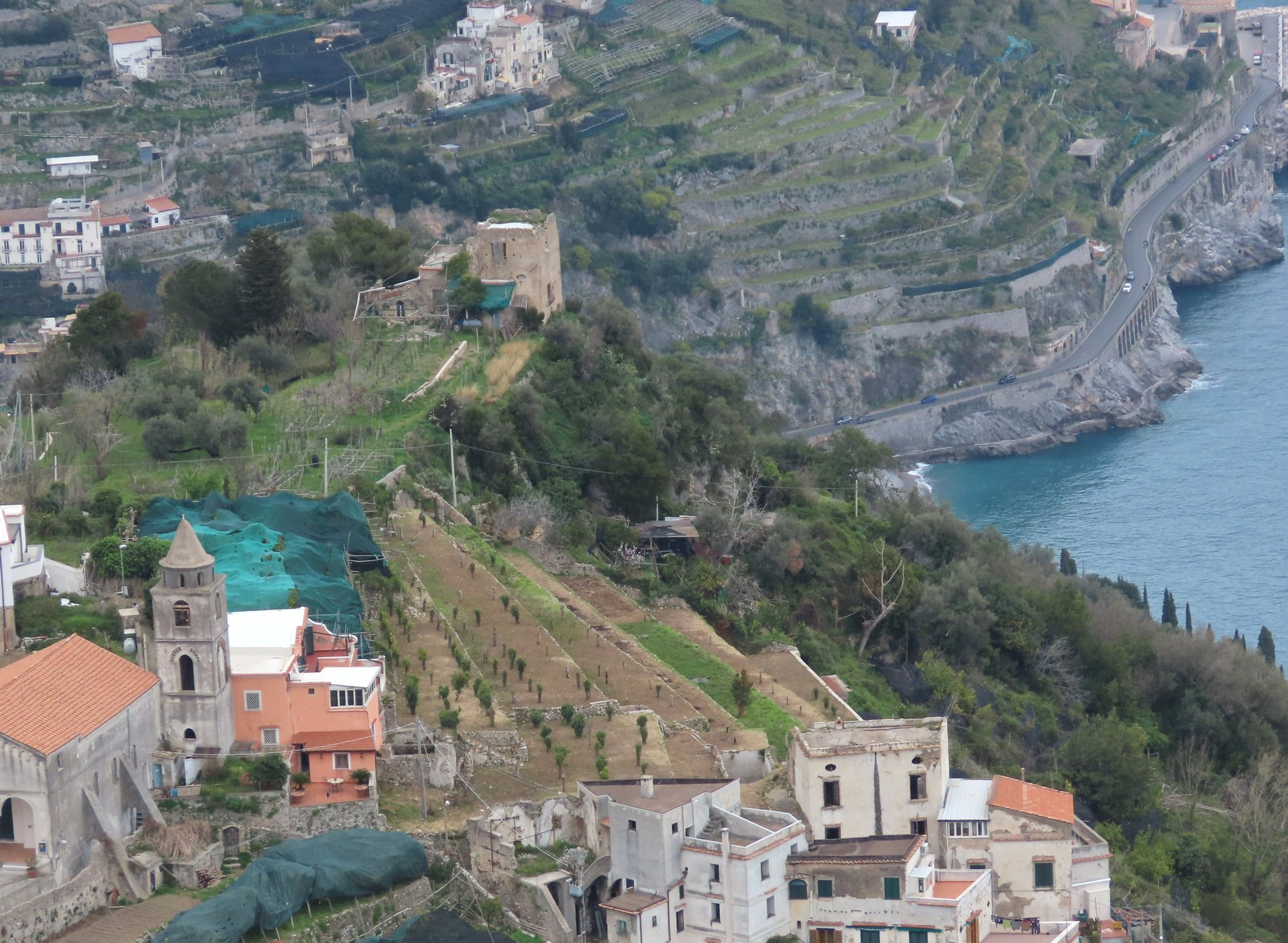
Travelmar runs the coast's local ferry network, in a season that generally runs April through October. Reported fares put Amalfi to Positano at about 20 minutes from €10, Amalfi to Salerno at about 25 minutes from €12, and Positano to Salerno at about 70 minutes from €17. Separate operators, including NLG, Alicost and Caremar, run the longer hop to Capri: from Positano roughly 40 to 50 minutes for around €27.50 to €30, and from Sorrento, where more companies compete, quoted fares run anywhere from about €14 to the high €20s depending on operator and class. That spread is wide enough to check two or three operators' own sites rather than book the first price you see.
The ferry is the faster, more scenic way between towns, and it skips the SS163's bus queues entirely. It is also the leg least in your control. Positano has no real harbour, just an open landing, so services here suspend first when the sea is rough, and a cancelled sailing can turn into a day on a bus that is already at capacity. Do not schedule a ferry-dependent morning, like a Capri trip, on the same day as a flight home.
Getting to the coast in the first place
Naples Capodichino is the nearest major airport. The Curreri Viaggi bus runs direct from the airport to Sorrento, about 8 departures a day, for around €10 and roughly 80 minutes, per the operator's published guide; confirm the current timetable at curreriviaggi.it, since shuttle schedules shift by season. A taxi or private transfer runs closer to €90 to €100 for the same trip.
From Naples city, the EAV Circumvesuviana commuter train runs to Sorrento roughly every 30 minutes, taking about 75 minutes, for around €5, on a timetable EAV updates through the year at eavsrl.it. It also stops near Pompeii, useful if your week includes a ruins day.
The other approach is via Salerno, under an hour from Naples on Trenitalia or Italo's high-speed services, with demand-based pricing rather than one fixed fare. From Salerno, Travelmar ferries and SITA buses both run up the coast, so it works as an arrival point if your week starts at the Amalfi or Ravello end instead.
The seven days
This plan bases in or near Sorrento, since it sits at the end of the Circumvesuviana line, has the widest choice of onward buses and ferries, and is generally cheaper to sleep in than Positano or Amalfi themselves. Swap the base to Praiano or Minori if you would rather sleep closer to the coast's midpoint; the logic of each day holds either way.
| Day | Focus | Transit |
|---|---|---|
| 1 | Arrive, settle in | Curreri bus or Circumvesuviana to Sorrento |
| 2 | Amalfi and Atrani | Ferry or SITA bus |
| 3 | Ravello | SITA bus via Amalfi |
| 4 | Positano | Ferry (weather permitting) or SITA bus |
| 5 | Path of the Gods hike | SITA bus to Bomerano, walk to Positano |
| 6 | Capri | Ferry from Sorrento |
| 7 | Pompeii, then depart | Circumvesuviana |
Day 1: Arrive and do nothing ambitious
Long-haul travel plus a first encounter with Italian train and bus ticketing is enough for one day. Get to Sorrento, buy a couple of SITA tickets or a CostieraSITA pass for tomorrow so you are not hunting for a tabaccheria at 7 a.m., and eat dinner somewhere within walking distance.
Day 2: Amalfi and Atrani
Amalfi town is the obvious anchor: the cathedral steps, the old paper mills, and the Emerald Grotto a short boat ride up the coast at Conca dei Marini. The grotto is open daily from 10:00 to 16:30, admission €10 for adults and €5 for children 6 to 12 with under-6s free, and there is no advance booking, you pay at the site. It can close without notice in rough seas, the same condition that grounds the ferries, so have a backup plan. Reach it by land via a stairway and lift from the SS163, or by boat from Amalfi's Molo Pennello for roughly €10 round trip, with the grotto entrance fee separate.
Atrani, one cove over from Amalfi, is small enough to see on foot in under an hour and gets a fraction of the crowds; walk it in the late afternoon before heading back.
Day 3: Ravello
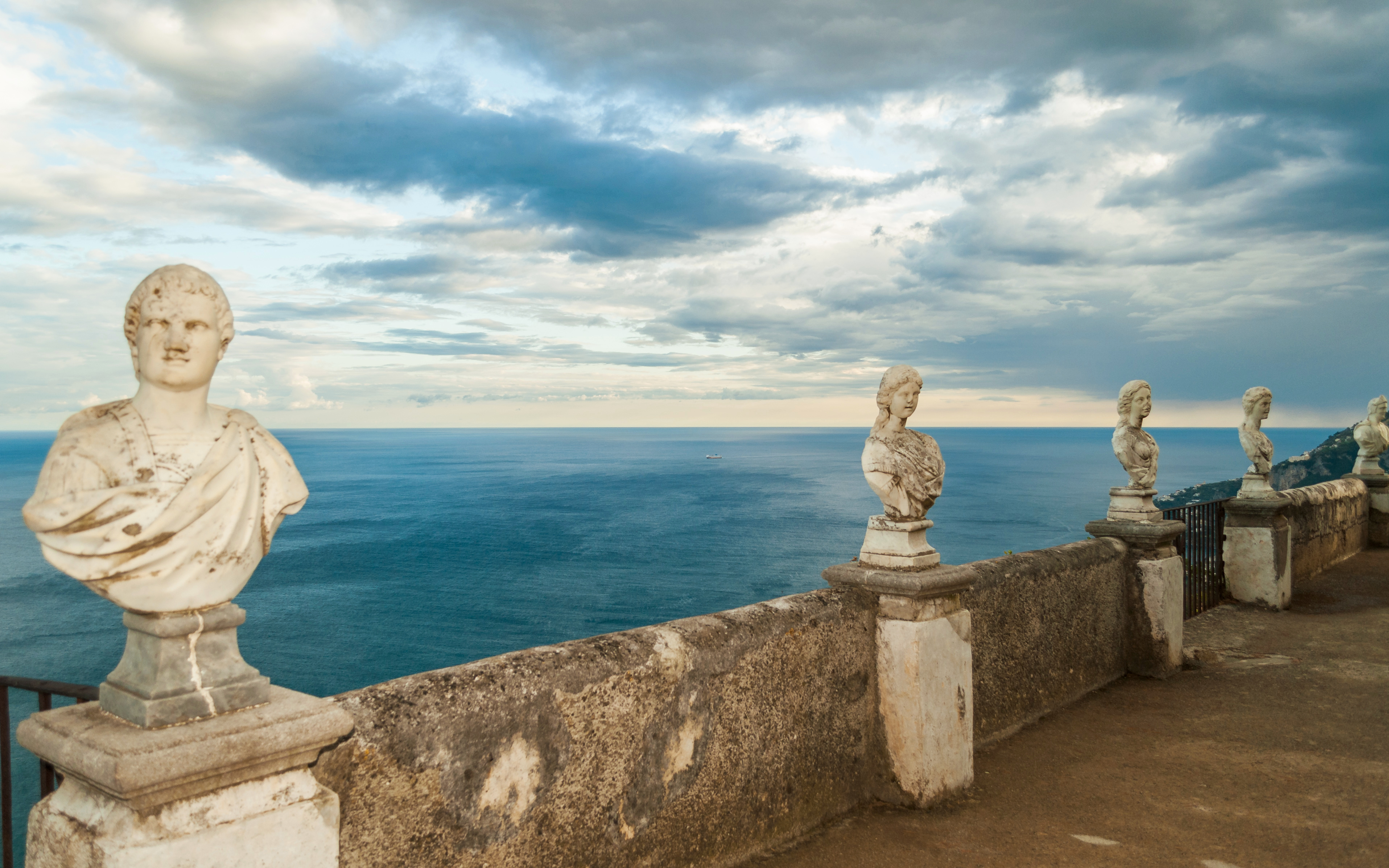
Ravello sits above the coast road, reached by a SITA bus connection from Amalfi, and it is the one town on this itinerary genuinely worth a full day rather than a stop. Villa Rufolo and Villa Cimbrone both have their own gardens and their own admission; Villa Cimbrone's are open daily from 9:00 to 18:00 with a €10 ticket, though the villa's own site notes closures for restoration work at points in the year, so check current hours before you build a whole day around the Terrace of Infinity. Ravello's altitude also means a noticeably cooler afternoon than the towns at sea level, worth knowing if your week lands in the middle of a August heatwave.

Day 4: Positano
Positano is the coast's most photographed town and its most transit-constrained one. If the ferry is running, it is the easiest way in and out, landing you close to the beach without the SITA bus queues. If the sea is rough, the bus is the only way in, and this is exactly the kind of day the overcrowding problem described above tends to bite, since Positano is a mid-route stop rather than a start point. Arrive earlier in the day rather than later, and do not plan a same-day onward connection to a dinner reservation somewhere else on the coast.
Day 5: The Path of the Gods
The Sentiero degli Dei is a roughly 7-kilometre trail running from Bomerano, a hamlet above Agerola, down through Nocelle to Positano, with sea views along most of its length. It is free, self-guided, and I found no active closure or permit requirement for it in current trail guides, though Italian coastal trails in general are prone to landslide closures after heavy rain, so check a current trail-status source (the local Agerola or Positano tourist office, or a hiking-specific site) in the days before you go rather than relying on this post's snapshot. Reach the Bomerano trailhead by SITA bus, changing in Amalfi, and finish by descending into Positano on foot via Nocelle, or by bus if the descent stairs are more than you want on tired legs. Carry water and start early; there is little shade for most of the route and August heat on an exposed ridge trail is a real risk, not a mood.
Day 6: Capri
A Capri day trip is entirely a ferry-timetable exercise. Boats run from Sorrento most frequently, with NLG, Caremar, Alilauro and Laser Capri competing on the route; reported one-way fares span roughly €14 to the high €20s depending on operator, for a crossing of about 25 to 30 minutes, with sailings from around 7:15 a.m. to roughly 7:25 p.m. On Capri, the Monte Solaro chairlift from Anacapri's Piazza Vittoria runs about 12 minutes each way, roughly €11 one-way or €14 return, with hours that shrink outside peak summer. Buy your return ferry for a specific sailing if the schedule allows: this is the one day of the week with a hard deadline, and missing the last realistic boat means sleeping on Capri.
Day 7: Pompeii, then depart
If your flight allows it, Pompeii sits directly on the Circumvesuviana line back toward Naples, making it a workable stop on departure day rather than a separate excursion. The site is open 9:00 a.m. to 7:00 p.m. (last entry 5:30 p.m.) from April through October and 9:00 a.m. to 5:00 p.m. (last entry 3:30 p.m.) the rest of the year, per the park's own site. As of new pricing from 12 January 2026, the standard ticket is €20 and the Pompeii+ ticket, which adds the Villa of the Mysteries, Villa Diomede, Villa Regina and the Antiquarium in Boscoreale, is €25; a 3-day ticket is €30. Entry is free under 18 and on the first Sunday of each month, with a reduced rate for EU citizens aged 18 to 25. Since March 2026 the park has capped daily entries at 20,000 with named, non-transferable tickets, so book ahead rather than assuming a walk-up ticket on a summer morning.
What to skip
Driving yourself in July, August or September. Between the plate restriction and the road's own width, a rental car here in peak season is a liability, and it is not exempt from the alternating-plate rule.
An open-ended Capri return. Buy a ticket for a specific sailing back rather than trusting there will be room on whatever boat you show up for at 6 p.m. in August.
A same-day pairing of Capri or Positano with a fixed departure. Both days depend on a boat that can be delayed or cancelled by weather, so do not put a train, a flight or a dinner reservation directly after either.
Key Takeaways
| Point | Details |
|---|---|
| The SS163 has a summer plate restriction | Alternating odd/even plates, 10:00 to 18:00, daily in August and September 2026, weekends in June, July and October |
| Rental cars are not exempt | The published exemption list covers residents, taxis, disabled permits, emergency vehicles, coast workers and hotel guests on arrival/departure days only |
| The bus is the backbone, but it fills up | SITA Sud buses from mid-route stops like Positano and Amalfi can be full before they arrive; board near Sorrento or Salerno when possible |
| Ferries are the fast option and the first thing weather cancels | Positano has no sheltered harbour; a rough-sea day pushes everyone onto the already-strained bus |
| Buy bus tickets before you're at the stop | SITA tickets are sold at tabaccherie and newsstands, not on board |
| The Emerald Grotto and the ferry share a weather dependency | Both close in rough seas, so pair a grotto day with a backup plan |
| Capri is a hard-deadline day | Buy a specific return sailing; missing the last realistic boat means an unplanned night on the island |
| Pompeii now caps at 20,000 named tickets a day | Book ahead rather than counting on a walk-up ticket, effective since March 2026 |
Where this itinerary tends to break
A rental car booked out of habit. Adding a car "for flexibility" is backwards here: it adds a legal restriction buses, ferries and taxis do not carry, on top of a road that punishes unfamiliar drivers.
No bus-based fallback on a ferry day. Every ferry-dependent day, Amalfi, Positano, Capri, needs a bus fallback priced and understood in advance, because a cancelled sailing is a normal Tuesday on this coast, not a rare event.
A Capri day with no fixed return sailing. The day works right up until the last realistic ferry, at which point it either works completely or fails completely.
Assuming last year's timetable still holds. SITA and Travelmar both adjust departure counts and hours season to season; a schedule from a blog post is a starting point, not a guarantee.
How Planytera handles a trip like this
Planytera is an AI trip planner built by a solo developer, available on iOS, Android and the web. You describe the trip you want and it builds a day-by-day itinerary, ready in moments. A week where two separate transit systems, one with a hard weather dependency, decide whether a day happens at all is exactly the kind of plan where the order of days matters more than the list of towns.
Sequencing around a hard deadline. A Capri day has one real constraint: get back on a boat before the last realistic sailing. Planning nothing directly after it, rather than stacking a train connection right behind, matches how the day actually has to go.
Re-pacing when a day falls through. If the sea is rough and the Positano ferry or the Emerald Grotto closes for the morning, shifting that day's plan and letting the days around it resync beats scrapping the week and starting over.
Offline access for the moments a signal will not help anyway. A SITA ticket line or a shadeless ridge on the Path of the Gods is not where you want to be re-downloading a map. Saved trips keep the itinerary, maps and notes available without a connection.
Group trips get a vote and a shared plan. A coast this transit-dependent is easier to coordinate as a shared, read-only itinerary than as separate confirmation emails for two ferry operators and a bus pass. Split costs tracks who owes who without touching anyone's money.
It does not book buses, ferries or grotto tickets. Those stay yours to buy, and on this coast, several of them have to be bought in person, at a tabaccheria, before you board.
Frequently asked questions
Can I rent a car and drive the Amalfi Coast in summer 2026?
You can, but the SS163 runs an alternating-plate restriction from 10:00 to 18:00 on set dates, daily through August and September 2026, weekends in June, July and October, plus the Easter and late April to early May holiday windows. A standard tourist rental car is not on the published exemption list, which covers residents, taxis, disabled permit holders, emergency vehicles, coast-based workers and hotel guests only on arrival and departure days.
Is the SITA bus really that crowded?
In July and August, yes, at peak travel times. Buses departing Amalfi can already be full by the time they reach Positano, and both Positano stops commonly have lines watching several buses pass with no room to board. It is a structural limit of a fleet sized for a narrow road, not an occasional bad day. Boarding near a route's start, Sorrento or Salerno, avoids the worst of it.
What happens if the ferry is cancelled?
The SITA bus is the fallback, and on the rough-weather day that cancels a ferry, that bus is also carrying everyone else whose boat just got cancelled. Positano has no sheltered harbour, so its ferry services suspend first in bad seas. Build a bus-based backup into any ferry-dependent day, and do not schedule a ferry morning directly before a flight or train.
Do I need to book the Path of the Gods hike in advance?
No booking or permit turned up in current official or trail-specific sources for the Sentiero degli Dei; it is a free, self-guided trail. Coastal trails in Italy are prone to landslide closures after heavy rain, so check a current trail-status source, such as the Agerola or Positano tourist office, in the days before you go.
How far ahead should I book Pompeii tickets?
Since March 2026, Pompeii caps entries at 20,000 named, non-transferable tickets per day, sold through one official seller. The standard ticket is €20 as of the pricing update effective 12 January 2026. Book ahead rather than counting on a walk-up ticket, particularly in the April to October high season.
What is the fine for breaking the plate restriction?
Sources disagree, with some citing a fine near €60 and others citing a higher range typical of this class of Italian traffic violation, so this post will not hand you a number it cannot confirm from the posted ordinance. Read the current notice for your travel dates, published by the Distretto Costa d'Amalfi and the coast's individual comuni.
Useful sources and further reading
- Ordinanza ANAS targhe alterne 2026, Comune di Praiano
- Ordinanza ANAS targhe alterne, Distretto Costa d'Amalfi
- Traffic Regulation on the Amalfi Coast (PDF), Distretto Costa d'Amalfi
- SITA Sud bus schedule, positano.com
- Ferry schedule, positano.com
- Emerald Grotto visitor information, positano.com
- New admission fees from 12 January 2026, Pompeii Archaeological Park
- Pompeii official site, opening hours
- Curreri Viaggi, Naples Airport to Sorrento
- EAV Circumvesuviana, Naples to Sorrento
- Sorrento to Capri ferry operators and fares, bluekeys.it
- Mount Solaro chairlift, Capri
- Villa Cimbrone gardens, Ravello
Recommended
More from the Planytera blog.