Blog19 min read
10 Days in Croatia: The Cruise Timetable Decides Your Day
A ten day Croatia plan built from the Dubrovnik Port Authority's own 2026 ship list, the two fast boats north, and the hours the Old Town is really yours.
By Dom
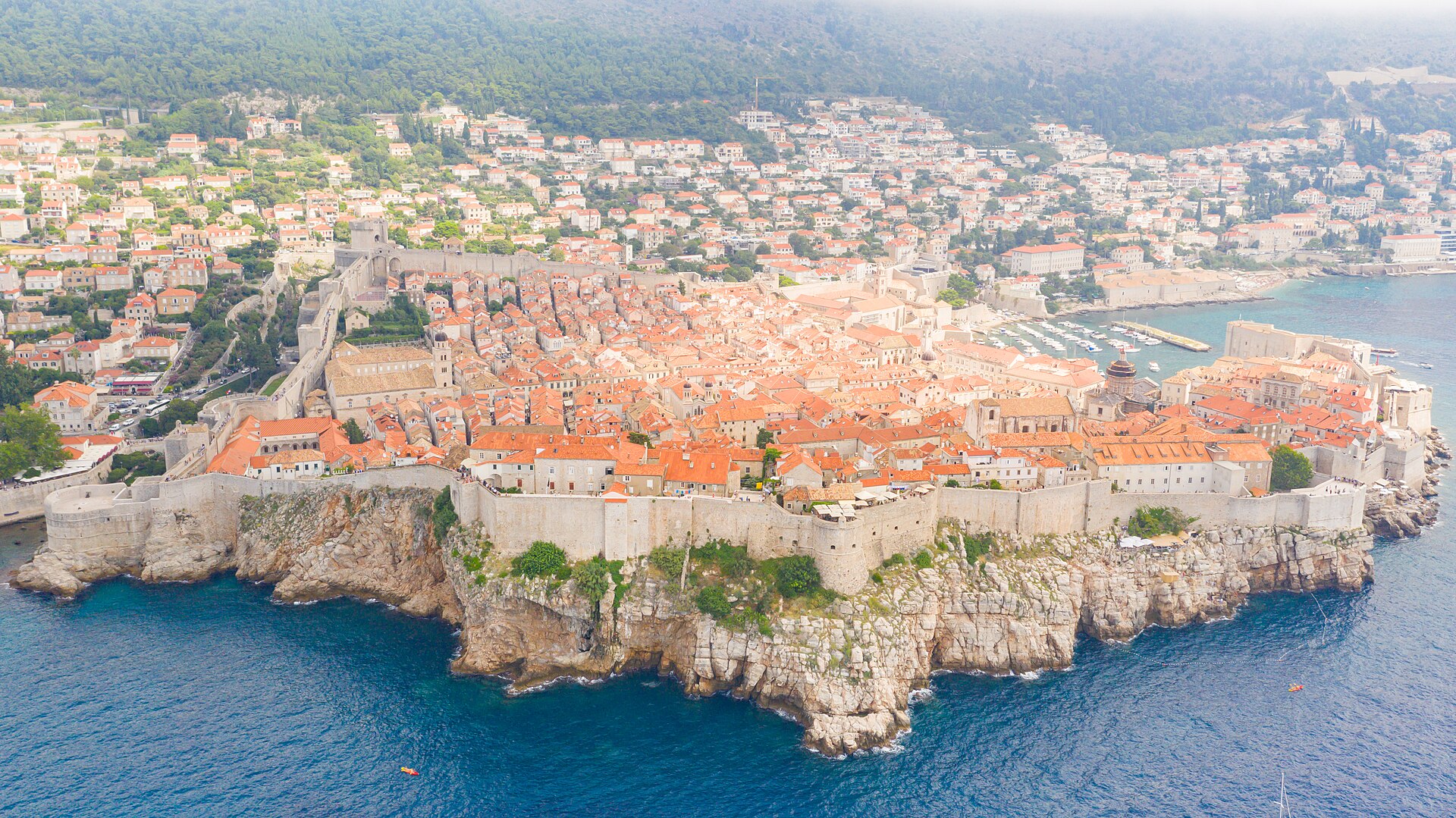

Most Croatia itineraries treat Dubrovnik crowds as weather: bad luck, unknowable, something you shrug about afterwards. They are not. The Dubrovnik Port Authority publishes every scheduled cruise call for the year as a downloadable PDF, ship by ship, with the arrival time, the departure time, the berth and the gross tonnage. It is public, it is free, and it is on the internet right now for 2026.
Read it and the day stops being a lottery. You learn that 461 calls are scheduled across 242 separate dates, that on the vast majority the ships tie up before nine in the morning and sail again in the evening, and which dates carry one small expedition boat rather than two ships of over 100,000 gross tons at once.
That document reorganises a Croatian itinerary more than any opinion about which island is prettiest. This is a ten day plan built from it, from the two fast boats that run the coast, and from the published prices and hours of the places you will actually queue for.
What the Port Authority's own list says
The 2026 schedule opens with a sentence the port wrote itself: because Dubrovnik "has limited accommodation possibilities" as a cruise destination, it has "decided to limit the number of cruise ship calls per day," and asks operators to "try to arrange Your visit for days with lower level of occupancy." Then it prints the whole year.
| Month | Scheduled calls |
|---|---|
| January | 10 |
| February | 8 |
| March | 14 |
| April | 28 |
| May | 58 |
| June | 57 |
| July | 60 |
| August | 68 |
| September | 64 |
| October | 61 |
| November | 26 |
| December | 7 |
| Total | 461 |
One thing falls out immediately. September and October are not the quiet shoulder. October carries 61 calls against July's 60. The heat drops, the crowd does not.
Now the part that changes your day. Sort the 2026 list by day of the week and Saturday is consistently the lightest: 39 calls across the year against 82 on Thursday and 78 on Wednesday. Between May and October, only twelve dates have no scheduled call at all, and five of those twelve are Saturdays.
The ships arrive before breakfast and leave after dinner
Filter the May to October list down to the 220 calls by ships of 50,000 gross tons or more, the ones that land thousands of people at once, and the pattern is almost mechanical:
- 173 of those 220 arrive between 06:00 and 09:00.
- 214 of the 220 sail again the same day, most of them between 18:00 and 21:00.
- 68 dates have two or more of these large ships in port together.
- 47 dates have at least one ship of over 100,000 gross tons.
So the Old Town's difficult window is roughly 09:00 to 18:00, and it is difficult on most days rather than a few. What you get in exchange is a genuinely quiet early morning and a genuinely quiet evening, on almost every date, all season.

Where the two-ship rule and the timetable disagree
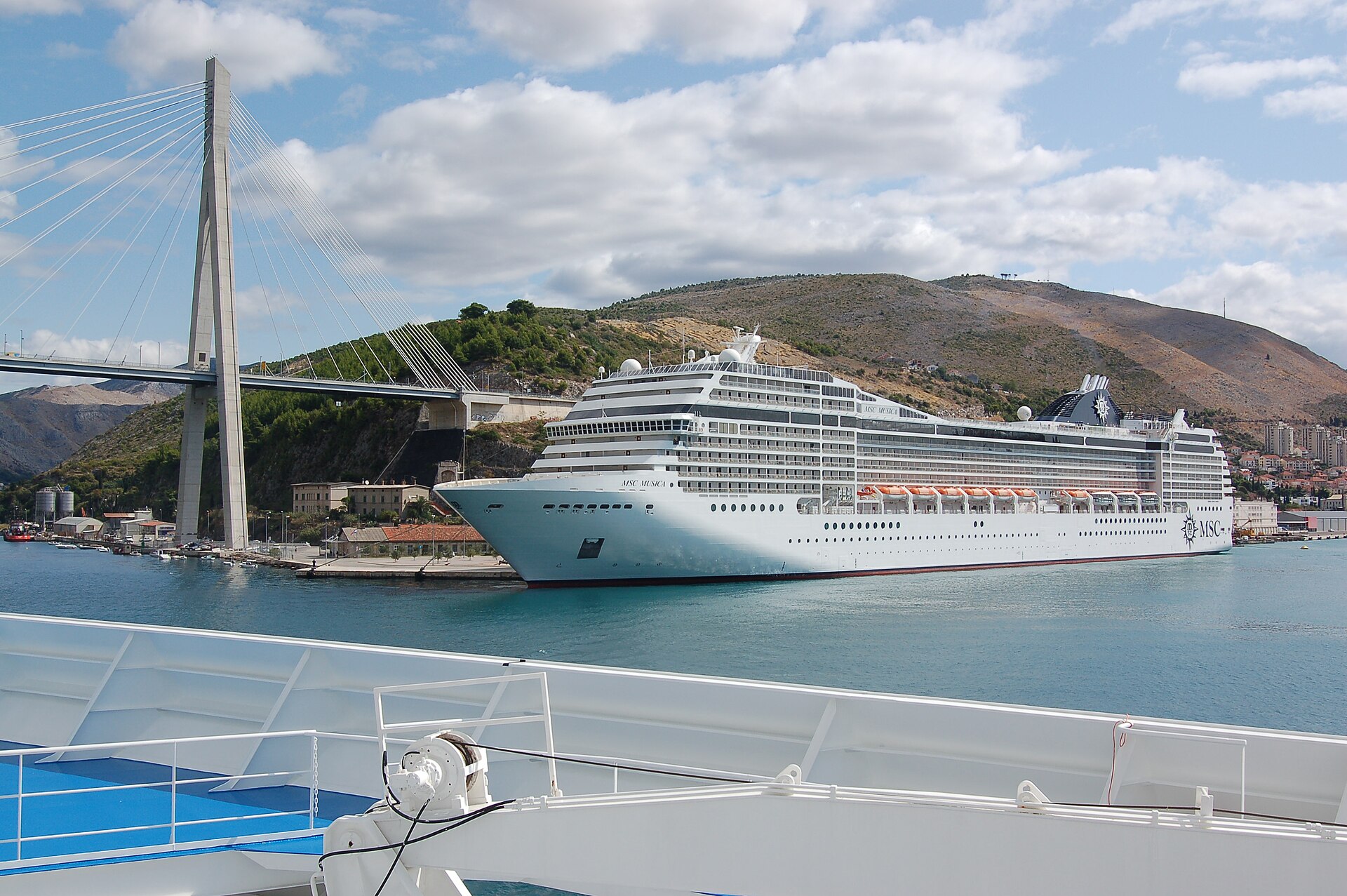
You will read that Dubrovnik caps arrivals at two ships and 5,000 passengers a day. That came out of a 2019 memorandum between the city and the Cruise Lines International Association, widely reported at the time, and the city has repeated the figure since.
The published 2026 schedule does not match it in the obvious way. Of the 242 dates with calls, 50 carry three ships and five carry four. That is 55 dates above two.
Before treating that as a broken promise, look at what a call is. Several of those third and fourth arrivals are boats like ATHENA and ARTEMIS: 58 metres long, 1,206 gross tons, carrying a few dozen people. A day with three calls can be one big ship and two small ones and still sit under a passenger cap. Calls and passengers are different units, and the cap is written in passengers.
So the schedule tells you about ships and berths, not heads. It is still the best instrument available, because a 140,000 gross ton ship is a reliable proxy for a lot of people and a 1,200 ton one is not. The Port Authority separately expects around 661,094 cruise passengers across 2026, more than 60,000 of them embarking or disembarking at Gruž rather than passing through.
The walls, and the ticket most people buy wrong
The walls are the reason the queues exist. The Society of Friends of Dubrovnik Antiquities runs them and publishes working hours of 08:00 to 19:30, open every day except 25 December. Three rules from their own site do more damage to a loose plan than the price does:
- The ticket is valid for one tour and re-entry is not possible. You cannot walk half of it, go for lunch and come back.
- The end of working hours is the last entry, not the moment you must be off. If the sign says 19:30, you may enter at 19:30.
- Sales are final. The webshop's terms state that ticket purchases "can therefore not be cancelled, modified or upgraded," and an unused print-at-home ticket is not refundable.
Now the price. The Society does not publish a price list anywhere on its public site; the number only appears inside the checkout. Croatian media and every guide put the main season adult ticket at €40, about €15 in winter, with children 7 to 18 reduced and under-7s free, and the ticket also admits you to Lovrjenac Fortress. Note the asymmetry the Society's own FAQ spells out: a walls ticket gets you into Lovrjenac, but a Lovrjenac ticket does not get you onto the walls without paying more at the gate.
Here is the part worth acting on. The Dubrovnik Pass, the city's official pass, sells at €40 for one day, €50 for three days and €60 for seven in its 2026 summer season, which its own ticketing system dates from 1 March to 30 November. The one-day pass costs the same as the walls ticket alone and adds the museums and the city buses. There is no case for the standalone walls ticket at full price when a day pass costs the same. For three nights in Dubrovnik, the three-day pass at €50 is €10 more than a single wall walk.
Two supporting details, both from official price lists rather than blogs. Lokrum Reserve gives 30% off its adult ticket to seven-day pass holders and 20% to three-day holders, and Mljet National Park gives 30% off to weekly pass holders. Neither discount is advertised loudly.
The fast boats leave when the ships arrive
Croatia's Dalmatian coast has one useful spine for a visitor without a car: the daily catamaran between Split and Dubrovnik, calling at Hvar and Korčula. In 2026 two operators run it, and both publish their own timetables.
| Service | Route and times | Season |
|---|---|---|
| TP Line 842, HSC Borik | Dubrovnik 08:00, Korčula 10:00, Hvar 11:40, Milna 12:45, Split 13:25 | 1 April to 31 October, daily |
| TP Line 842, return | Split 15:10, Milna 15:45, Hvar 16:30, Korčula 18:10, Dubrovnik 20:20 | as above |
| Krilo, Krilo Tropic | Split 08:00, Milna 08:25, Hvar 09:00, Korčula 10:20, Pomena on Mljet 11:05, Dubrovnik 12:40 | 1 April to 31 October, daily |
| Krilo, return | Dubrovnik 15:30, Pomena 16:50, Korčula 17:30, Hvar 18:50, Milna 19:30, Split 20:00 | as above |
Read the Dubrovnik column. The fast boats north leave at 08:00 and 15:30. The 08:00 departure falls inside the same window in which most of the season's large cruise ships are tying up at Gruž, which is also where the catamarans board. TP Line asks passengers to be at the boarding place at least fifteen minutes before departure. On a morning with two ships alongside, fifteen minutes is optimistic.
Fares are published:
| Leg | TP Line 842 | Krilo |
|---|---|---|
| Split to Dubrovnik | €55.00 | €50 |
| Hvar to Dubrovnik | €55.00 | €50 |
| Korčula to Dubrovnik | €27.50 | €25 |
| Split to Hvar | €25.00 | €25 |
| Mljet, Pomena, to Dubrovnik | not served | €20 |
Children from 3 to 12 travel at half fare on TP Line, and under-3s free. Krilo's own notice adds a detail worth knowing: Hvar's port authority has cut the entry speed into the harbour, so minor delays are possible on every line that calls there.

Ten days, arranged around two timetables
Split at one end, Dubrovnik at the other, and the islands in between rather than as separate expeditions. Fly into Split and out of Dubrovnik if the fares allow; the coast only runs one way and doubling back costs a day.
| Night | Base | The move that shapes the day |
|---|---|---|
| 1 | Split | Arrival |
| 2 | Split | Diocletian's Palace, the market, the ferry port |
| 3 | Hvar | Catamaran out, 09:00 arrival on Krilo |
| 4 | Hvar | None |
| 5 | Korčula | Short hop, about 70 minutes |
| 6 | Korčula | None |
| 7 | Dubrovnik | Arrive early afternoon, walls at opening the next day |
| 8 | Dubrovnik | Walls at 08:00, Lokrum in the afternoon |
| 9 | Dubrovnik | Mljet, or Srđ and the museums |
| 10 | Dubrovnik | Departure |
Days 1 and 2, Split. Split's old town is a Roman palace that people never stopped living in, and it takes a day rather than three. It is also the ferry hub for the central Adriatic, which is the real reason it goes first.
Days 3 and 4, Hvar. Krilo puts you into Hvar town at 09:00 for €25 from Split. Two nights is the right number: one for the town and the fortress above it, one to get out to the Pakleni islands or across the island.
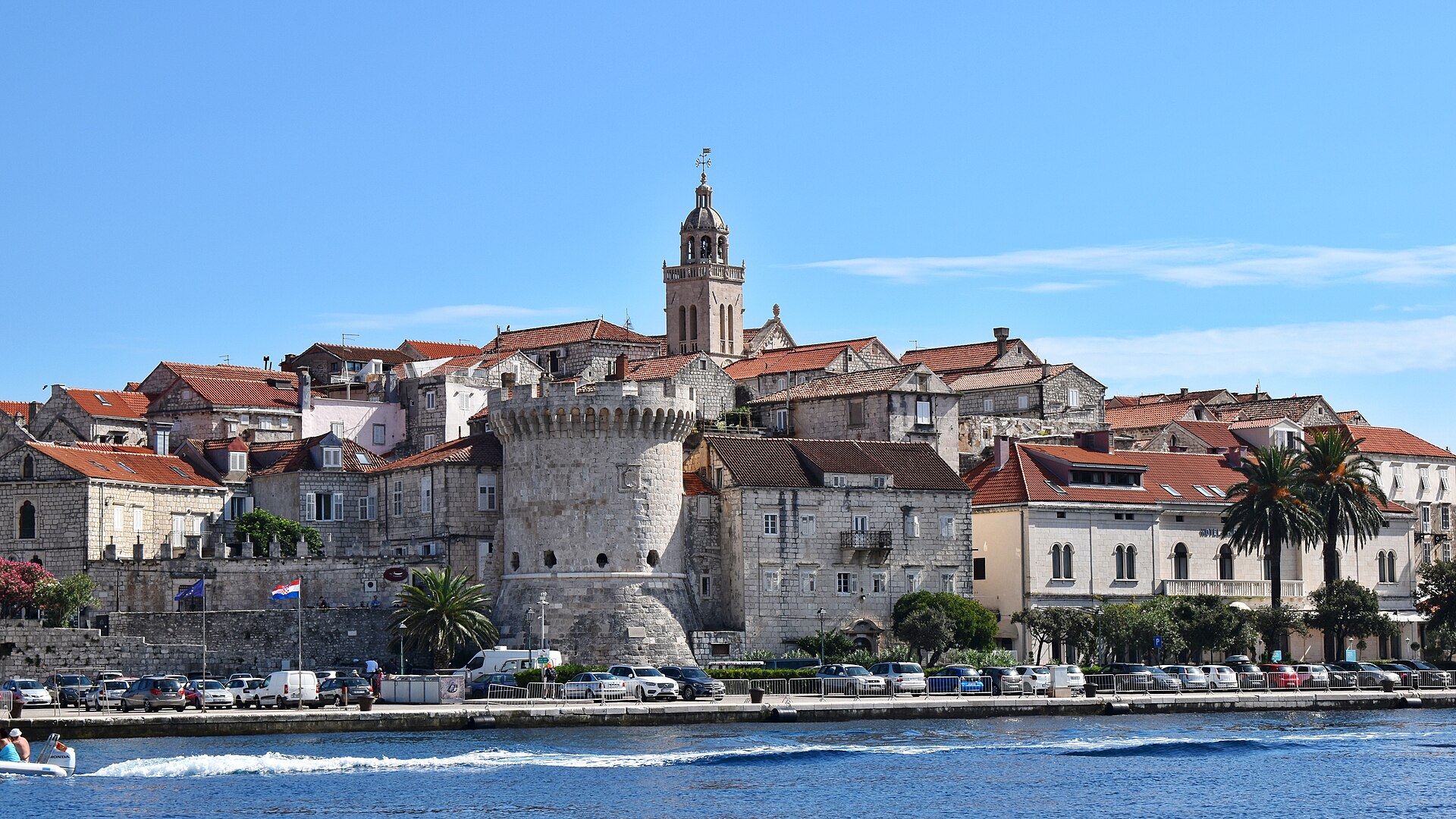
Days 5 and 6, Korčula. Hvar to Korčula is €25 and a little over an hour on either operator. Korčula town is small, walled and considerably calmer than Hvar, and it is the last place on this route where evenings are genuinely quiet.
Day 7, into Dubrovnik. Take the Krilo sailing that arrives at 12:40, not the TP Line boat that arrives at 20:20. You want the afternoon to find your feet, because the next morning starts at eight.
Day 8, the walls at opening. Walls at 08:00, down by 10:00, then the Old Town's small museums while the streets fill. Lokrum in the afternoon: the reserve's ticket office at Luža in the Old City Port works 08:00 to 18:00, the adult ticket is €30, children 7 to 18 are €5 and students €10, and the price covers both the boat and the reserve.
Day 9, Mljet or Srđ, both below. Day 10, out. The airport bus takes about 30 minutes from Ploče gate.
Where to put the day you have spare
Mljet. The national park at the west end of the island is the strongest day trip from Dubrovnik, and it is genuinely a park rather than a beach. The 2026 entrance fee is €30 for an adult from 1 June to 30 September and €20 the rest of the year, children 8 to 18 at €8 and €5, under-7s free. The fee covers the return solar boat to the islet of St Mary in the Great Lake, the electric train and the marked trails, and seven-day Dubrovnik Pass holders pay €21. From Dubrovnik, TP Line's state line 9807 serves Sobra and Polače, with Sobra about an hour and five minutes out and an evening return. The pattern varies by weekday and by season block, so read the operator's own timetable for your date.
Srđ, the hill above the city. The cable car runs April to November only, shut from December to March. Adult return €30, one way €17, children 4 to 12 €8 and €5, under-4s free. Hours move by month: 09:00 to 21:00 in April, out to midnight from June to August, back to 17:00 in November, last departure thirty minutes before closing. The operator states that it stops when wind exceeds the safety threshold and pauses for lightning, so do not schedule it tightly against a flight.
Getting in, out and along the coast
Croatia adopted the euro and joined the Schengen area on the same day, 1 January 2023, with checks at internal air borders lifted on 26 March 2023. The fixed conversion rate is 1 euro to 7.53450 kuna, which is why that number still appears on official price lists. Arriving from outside the EU, expect biometric registration rather than a passport stamp: the Entry/Exit System has been fully operational at the Schengen external border since 10 April 2026.
| Option | Figure | Note |
|---|---|---|
| Dubrovnik airport bus | €10 one way, €15 return | About 30 minutes to Ploče gate, about 35 to Gruž bus station |
| Bus, Split to Dubrovnik | 224 km, about 4h30, from €18.85 | Arriva's own figures for its service; other operators run the corridor too |
| Catamaran, Split to Dubrovnik | 4h40 to 5h25 | €50 to €55 depending on operator |
| Pelješac Bridge | 2,404 m, open since 26 July 2022 | Removes the Bosnian border crossing at Neum, no toll |
The bridge matters more than its length suggests. Before it opened, every road journey between Split and Dubrovnik crossed into Bosnia and Herzegovina twice at the Neum corridor, with two sets of border formalities. Note what has not changed: the A1 motorway still ends near Ploče, and the last stretch to Dubrovnik is state road and the bridge, not motorway. Airport buses are timed to flights rather than to a clock, departing roughly 30 minutes after each arrival, which is convenient going in and needs attention going out.
Weather is a working-hours problem, not a cancellation risk
Croatian state meteorological office figures for the Dubrovnik station, mean monthly values over 1961 to 2024:
| Month | Mean temp | Sunshine hours | Rainfall | Days with rain |
|---|---|---|---|---|
| April | 14.5°C | 214.5 | 87.5 mm | 11 |
| May | 18.7°C | 270.6 | 66.7 mm | 10 |
| June | 22.7°C | 309.4 | 55.5 mm | 7 |
| July | 25.3°C | 350.9 | 32.0 mm | 4 |
| August | 25.4°C | 332.7 | 65.0 mm | 5 |
| September | 21.9°C | 254.7 | 96.2 mm | 7 |
| October | 18.0°C | 201.6 | 125.2 mm | 10 |
Two conclusions. October is a real gamble on the coast, with 125 mm of rain and ten wet days on average, and the cruise schedule stays busy through it. September is the better shoulder month by a wide margin: warmer, drier, more sun, and by the end of it the queues have thinned.
One aside on a number you will meet. Hvar's tourism marketing has long claimed about 2,800 hours of sunshine a year. Add up the state office's monthly means for the Hvar station and you get roughly 2,750, against roughly 2,640 for Dubrovnik. The claim is a slight stretch and the point behind it survives: Hvar is measurably the sunnier of the two.
Key Takeaways
| Point | Details |
|---|---|
| The crowd schedule is published | The Dubrovnik Port Authority's 2026 PDF lists 461 calls across 242 dates, with arrival time, departure time and tonnage for each ship. |
| The hard window is 09:00 to 18:00 | 173 of the 220 large-ship calls between May and October arrive between 06:00 and 09:00, and 214 of 220 sail the same evening. |
| Saturday is the lightest day | 39 calls across 2026 against 82 on Thursday. Five of the twelve May to October dates with no call at all are Saturdays. |
| October is not the quiet month | 61 calls in October against 60 in July, plus 125 mm of rain and ten wet days on the state weather office's Dubrovnik normals. |
| The Dubrovnik Pass costs what the walls cost | €40 for one day, €50 for three, €60 for seven in the 2026 season, against about €40 for the standalone walls ticket. |
| The walls admit one tour only | No re-entry on a single ticket, last entry at the closing time of 19:30, and webshop sales are final and non-refundable. |
| The fast boats leave at 08:00 and 15:30 | TP Line 842 runs Dubrovnik to Split for €55, Krilo runs the reverse and back for €50, both daily from 1 April to 31 October. |
| Mljet is €30 in high summer and includes the boat | The 2026 national park fee covers the return boat to St Mary's islet and the electric train. Weekly pass holders pay €21. |
| The cable car is shut all winter | April to November only, €30 adult return, and it stops for wind or lightning without notice. |
Where this plan breaks
The 08:00 catamaran and the 08:00 wall walk are the same hour. With two Dubrovnik nights rather than three you are choosing between the best hour on the walls and the only morning boat out. Three nights here is not indulgence, it is what makes both possible.
One catamaran a day means one chance a day. From April to October each operator runs a single round trip. Miss it, or have it cancelled in strong wind, and the fallback is the bus, which does not serve the islands. Any leg that cannot slip belongs on a day with a bus alternative, which means the mainland legs.
The published schedule is a schedule. The Port Authority prints "All listed data is subject to change" on the page that hosts it, and cruise itineraries move. Treat it as a strong prior, not a guarantee, and check it again a week out.
One price here is not published officially. The Dubrovnik Pass figures came straight out of the pass's own ticketing system, and the Plitvice, Mljet, Lokrum and cable car figures come from those operators' 2026 price lists. The walls figure does not: the Society publishes no price outside its checkout, so €40 is the widely reported number rather than one I could read off an official page. Everything here was checked in August 2026, which is exactly as durable as it sounds.
Skip Plitvice on this trip. The lakes are magnificent and they are in the wrong half of the country: inland in the north, closer to Zagreb than to Dalmatia, and reaching them from a Split and Dubrovnik route costs two travel days out of ten. If you want them, build a different trip. For reference, the 2026 adult ticket is €40 from June to September, €25 for entry after 16:00, €23 in April, May and October and €10 in winter, with entrances open 07:00 to 20:00 and ticket sales stopping at 17:00.
How Planytera handles a trip like this
Planytera is an AI trip planner built by a solo developer, available on iOS, Android and the web. You describe the trip and it produces a day-by-day itinerary, ready in moments. On a coast where two published timetables set the shape of every day, three things carry most of the weight.
Multi-stop pacing around fixed departures. A single daily catamaran in each direction turns four bases into a chain of immovable objects. Setting the pace once and letting the nights distribute across Split, Hvar, Korčula and Dubrovnik around those departures beats redrawing a grid each time one leg changes.
Re-pacing without starting over. Croatia is full of small reschedules: a wall walk that has to be at opening, a Mljet sailing on a different pattern in July than in September, a cable car that does not run in March. Moving one day and keeping the rest in sync is the difference between an itinerary and a document you stop opening on day four.
Per-person cost estimates and split costs. This trip is a long list of small fixed prices in one currency: €40 here, €30 there, €55 for a boat. Seeing the per-person figure before committing helps, and split costs then tracks who owes who without anyone keeping a spreadsheet and without moving anyone's money.
Frequently asked questions
When is Dubrovnik Old Town least crowded?
Early morning and evening, on almost any date. The Port Authority's 2026 schedule shows 173 of the 220 large cruise ship calls between May and October arriving between 06:00 and 09:00, and 214 of 220 sailing again the same evening, mostly between 18:00 and 21:00. Chasing a ship-free date is close to hopeless: only twelve dates from May to October have no scheduled call at all.
How many cruise ships come to Dubrovnik in a day?
The published 2026 schedule has 461 calls across 242 dates: one ship on 83 of them, two on 104, three on 50 and four on five. That sits above the two-ship figure reported from the 2019 agreement with the cruise industry, but several of the extra calls are vessels of around 1,200 gross tons, and the cap is written in passengers rather than calls. Sixty-eight dates between May and October have two or more ships of over 50,000 gross tons in port together.
Is the Dubrovnik Pass worth it?
For almost anyone walking the walls, yes, because it costs the same. The one-day pass is €40 in the 2026 season, which is roughly what the standalone walls ticket costs, and it adds museums and the city buses. Three days is €50 and seven is €60. The seven-day pass also carries a 30% discount at Lokrum and at Mljet National Park, both confirmed on those operators' own price lists.
How do you get from Split to Dubrovnik?
Three ways. The catamaran takes 4h40 with Krilo or 5h25 with TP Line, runs daily from 1 April to 31 October, and costs €50 or €55. Arriva's bus covers 224 km in about four and a half hours from €18.85, and other operators run the same corridor. Driving is that same road: the A1 motorway ends near Ploče, and the last stretch uses state road and the Pelješac Bridge, open since 26 July 2022, which removed the two Bosnian border crossings at Neum.
Do you need to book Dubrovnik city walls tickets in advance?
No. The Society of Friends of Dubrovnik Antiquities states that reservation is not required and sells tickets at Pile, Ploče and the Maritime Museum entrances as well as online. What matters more than booking is the time you go and the rules attached to the ticket: it is valid for one tour with no re-entry, the closing time of 19:30 is also the last entry, and webshop purchases are final and non-refundable.
What is the best month to visit Croatia's coast?
September, on the numbers. The state weather office's Dubrovnik means put September at 21.9°C with 96 mm of rain and seven wet days, against October's 18.0°C, 125 mm and ten wet days. Cruise traffic is heavy in both, 64 calls against 61, so weather decides it rather than crowds. June is the other good answer: 22.7°C and 55 mm of rain.
Useful sources and further reading
- Dubrovnik Port Authority, and specifically its vessel arrivals and departures page, which hosts the downloadable 2026 cruise ship arrivals schedule used throughout this article.
- MedCruise on Dubrovnik's 2026 season, carrying the port's own figures for calls, expected passengers and home port operations.
- City Walls Dubrovnik, the Society of Friends of Dubrovnik Antiquities, for working hours and the code of conduct, its FAQ on reservations, concessions and Lovrjenac, and the webshop terms on refunds.
- Dubrovnik Pass, the city's official pass, for the one, three and seven day prices and what they cover.
- TP Line for the 2026 timetable and fares on line 842 between Dubrovnik and Split and on line 9807 to Mljet and Lastovo, and Krilo for the Split to Dubrovnik service via Hvar, Korčula and Pomena.
- Mljet National Park price list and Lokrum Reserve, both publishing their full 2026 fees as documents rather than as marketing copy.
- Dubrovnik Cable Car prices and timetable, for the month-by-month operating hours and the wind and lightning rules.
- Plitvice Lakes National Park price list and hours of operation, for the seasonal tickets and the 17:00 cut-off on ticket sales.
- Arriva Croatia for the Split to Dubrovnik bus distance, duration and fare.
- Croatian Meteorological and Hydrological Service, for mean monthly values and extremes at Dubrovnik, Hvar and Split over 1961 to 2024.
- European Commission on Croatia joining the euro and Schengen and on the Entry/Exit System becoming fully operational.
Recommended
More from the Planytera blog.