Blog17 min read
5 Day Finnish Lapland Northern Lights Itinerary
A five day Rovaniemi plan built as four separate aurora chances instead of one, with Finland's own odds, the best months, and where the plan fails.
By Dom
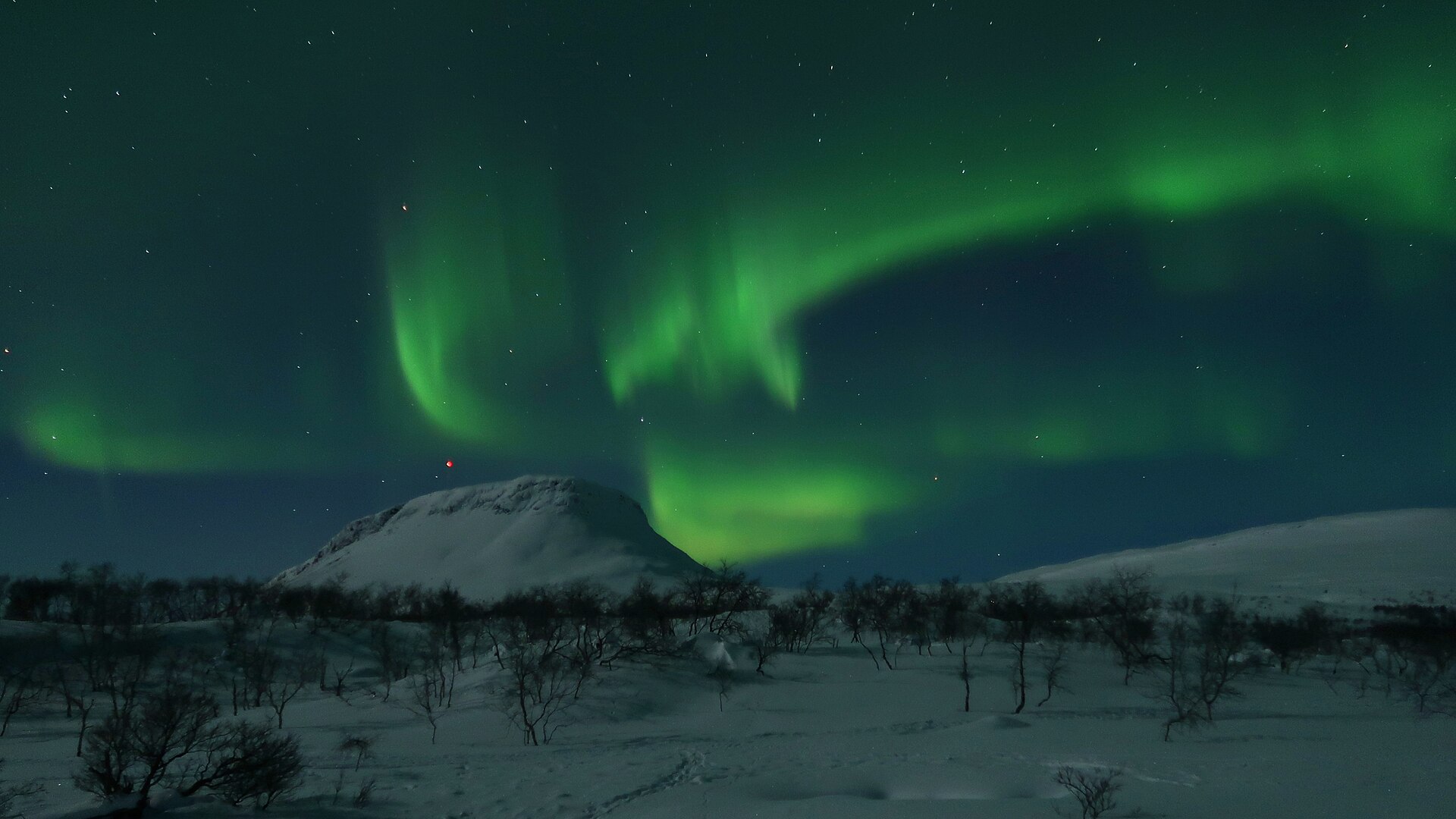

Most northern lights itineraries are sightseeing itineraries with an aurora stapled to the last evening. Reindeer farm, husky ride, Santa, and then on the final night, the lights. As though the sky were a scheduled attraction.
It is not. The aurora needs two things at once: a disturbed magnetic field above you and a sky you can see through. The first is space weather. The second is ordinary Lapland weather. They do not coordinate, and a trip built around a single night is a bet that both show up on the one evening you happened to choose.
So this plan is built differently. It treats five days in Rovaniemi as four separate chances at a clear dark sky, spaced so that one bad weather system cannot take them all, with the daytime filled by things that are worth doing even if the sky never opens. That is the whole idea. Everything below is detail on how to make it work, and where it still will not.
What the official sources actually say about your odds
Start with the numbers, because the marketing around this topic runs ahead of them.
Visit Rovaniemi, the city's tourist board, says the season begins in late August and continues through winter into early spring, to the beginning of April. It also says the lights can be seen on around 150 nights a year in Finnish Lapland "when weather and viewing conditions are favourable." Read that sentence slowly. The 150 is not nights you will see them. It is nights the lights are possible, with the weather condition doing a lot of the work.
The Finnish Meteorological Institute is more specific, and more sobering. On a dark, cloudless night, it says, Lapland ski resorts such as Ylläs, Levi and Saariselkä see auroras on roughly 50% of nights. Further north at Kilpisjärvi it is 75%. Notice what is baked in: dark, and cloudless. Those are the two conditions most nights fail before the aurora even gets a vote. Half of the good nights still have nothing overhead.
Rovaniemi is not named in the FMI figure. It sits south of those resorts, on the Arctic Circle, so treat the 50% as a ceiling for this trip rather than a promise. Some travel sites quote a lower figure for the Rovaniemi area, around 40%, but I could not confirm that against a primary source, so I have left it out of the plan's arithmetic.
Two more points from FMI shape everything that follows:
- Timing. The typical time for displays is around midnight, and a couple of hours either side. A 9 pm tour that returns at 11:30 pm can miss the best window. Plan to be outside late, not early.
- Season shape. Auroras occur fairly evenly through the year, slightly more in spring and autumn. Once the weather is counted, FMI says the best time for seeing them in Northern Finland is March and early April. In Lapland, auroras are "quite common always, even during solar minimum," so you are not gambling on the sun's cycle, only on tonight.
The practical conclusion: you are not trying to find the one good night. You are trying to maximise the number of nights you are positioned, awake and outside, under whatever clear sky the week offers. That is a scheduling problem, which is the kind this blog likes.
Why four chances, not one
Weather in Lapland arrives in systems, not coin flips. A low pressure area can sit over the region for two or three days, which means consecutive cloudy nights are correlated. If your chances are nights 1, 2 and 3 of a five day trip and a system parks overhead, you lose all three at once.
That has two design consequences.
Count nights, not days. A five day trip gives you four overnight stays if you arrive on day 1 and leave on day 5. Do not fly home on a late-night departure from the last day and call it a fifth chance. Tired, packing, and at an airport is not a viewing position.
Keep the nights unattached to specific activities. The mistake in most packaged trips is bundling the aurora to a fixed night: "Night 2: Aurora Hunt." If that is the cloudy night, the money is spent on the wrong evening. The better structure keeps a cheap, flexible option on most nights, and one paid, guided, weather-chasing option you can move.
Here is how the five days break down.
| Night | Chance | Style | Why it is there |
|---|---|---|---|
| 1 (arrival) | First look | Free, walking distance | You land tired, so make it cost nothing and ask nothing |
| 2 | Guided chase | Paid tour, booked flexibly | The night you use a professional's weather judgement |
| 3 | Flex night | Free or cheap, decided that day | The night you spend wherever the forecast points |
| 4 | Reserve | Repeat of the best option | The night that rescues the trip if 1 to 3 failed |
Day 5 is departure and nothing more.
When to go
The same place offers different trips in different months, and the aurora is only one of the variables. Visit Rovaniemi publishes daylight and typical daytime temperatures by month, which is the useful comparison.
| Month | Daylight (Visit Rovaniemi) | Typical daytime temperature |
|---|---|---|
| September | not listed | 5 to 15 °C |
| October | not listed | 0 to 10 °C |
| November | not listed | -10 to 5 °C |
| December | about 2.5 hours | -20 to -10 °C |
| January | about 4 hours | -30 to -15 °C |
| February | about 8 hours | -20 to -15 °C |
| March | about 12 hours | -15 to -5 °C |
The trade-offs that come out of that table:
September and October are mild and there is no snow cover guaranteed. A local photographer quoted by Visit Rovaniemi puts the best autumn window from mid-August, when nights start getting dark, until first snow falls in October or November, with calm ice-free water making reflections possible. The cost is that you are shopping for dark, not for winter. It is also the cheapest time to be outside for several hours.
December and January give you the most darkness, with about 2.5 and 4 hours of daylight respectively, and the coldest temperatures. The darkness is excellent and the cold is a real planning constraint: this is the month to rent the proper thermal gear rather than bring a ski jacket. It is also the busiest and most expensive period of the year.
February and March are the compromise. Daylight returns, so the days become usable for activities, while the nights remain long enough. FMI's own view, once weather is taken into account, is that March and early April are the best. That matches the pattern most people describe: clearer skies, less cloud, still cold, still snowy.
If this were my trip, I would book late February to mid-March. Not because the aurora is stronger then. Because the weather is more cooperative and the days are long enough that you can do things.
Day by day
Day 1: Arrive and make the first night free
Rovaniemi's airport is about 10 km north of the city centre. Uber and Bolt both operate in the city according to the Arctic Centre, and there are public bus options between the airport, Santa Claus Village and the centre. I have not quoted bus fares or frequencies because the sources I found disagree and operators change them seasonally: check linkkari.fi and the airport bus operator for the day you travel.
What matters is where you sleep. The single most useful booking decision in this trip is accommodation that gives you a dark sky without a car. Visit Rovaniemi's first rule for watching is plain: go away from the city lights. Rovaniemi is a city, and city lights wash out the sky. A hotel in the centre is convenient and a poor viewing position.
Two practical approaches:
- Stay a short taxi ride out of town, at a cabin or lodge where you can walk to a dark spot. This turns nights 1, 3 and 4 into free chances.
- Stay in town and rely on tours. It works, but every chance then costs money and you lose the ability to step outside at midnight on a whim.
Check your first evening's sky when you land. If it is clear and you have the energy, walk away from the lights for twenty minutes. If not, sleep. This is the cheapest chance in the plan and the one you are most likely to skip, so book accommodation that makes it unskippable.
Day 2: Daytime for the things that need daylight, then the guided chase
Use the day for what daylight is for. Visit Rovaniemi lists experiences such as snowmobile safaris, a campfire trip and, of course, Santa Claus, who the tourist board notes is in Rovaniemi every day of the year. It is a fair thing to do once, and it is also the least aurora-relevant activity in Lapland, so keep it to the afternoon.
Then, in the evening, the paid chase. Visit Rovaniemi's listing of aurora tours gives a sense of the price range from the operators it lists (all "from" prices at the time I checked, and subject to change):
| Type | Operator-listed starting price |
|---|---|
| Family friendly aurora trail | from 105 € |
| Northern lights tour with a repeat guarantee | from 127 € |
| Three-hour snowmobile safari and campfire | from 149 € |
| Aurora train evening | from 189 € |
| Tour to a hill kota (hut) | from 200 € |
| Electric snowmobile aurora safari | from 206 € |
| Snowmobile photography trip | from 279 € |
| Private lakeside picnic with snowshoeing | from 396 € |
The spread is large and the aurora is the same aurora. What you are buying is not the lights but three other things: someone who reads the cloud forecast and moves the group to a clear patch; transport to a dark place; and warmth and gear. For a first trip, all three are worth paying for once.
The most important line in that list is not the cheapest one. It is "repeat guarantee." Some operators offer a second go if the first night produces nothing. Read the terms before you book, because what counts as a guarantee varies, and it is the feature that directly addresses the problem this itinerary is built around. I have not verified any individual operator's terms, so treat the listing as a prompt to ask, not as a promise.
Book the tour for night 2, but book it with flexibility to move. If the forecast on day 2 is solid cloud and day 3 looks clear, you want to swap. Ask about rebooking before you pay.
Day 3: The flex day
Day 3 is intentionally unplanned in the evening. By now you know three things: what the cloud has been doing, whether night 1 or 2 delivered, and what the next 24 hours look like.
Two outcomes:
1. You have already seen the lights well. Use the evening for something else Lapland does well in the dark: a sauna, a proper dinner, a snowshoe walk. Do not go out again just because the itinerary says to. You can still step outside at midnight, because you chose a lodge where that costs nothing. 2. You have not. This is your best chance. Spend it on the clearest sky the forecast shows, even if that means a second tour with a different operator, or a drive out of town.
During the day, lower-effort options fit best, since you may be up late. The point is not the specific activity. The point is to leave a gap, and be rested for the night.
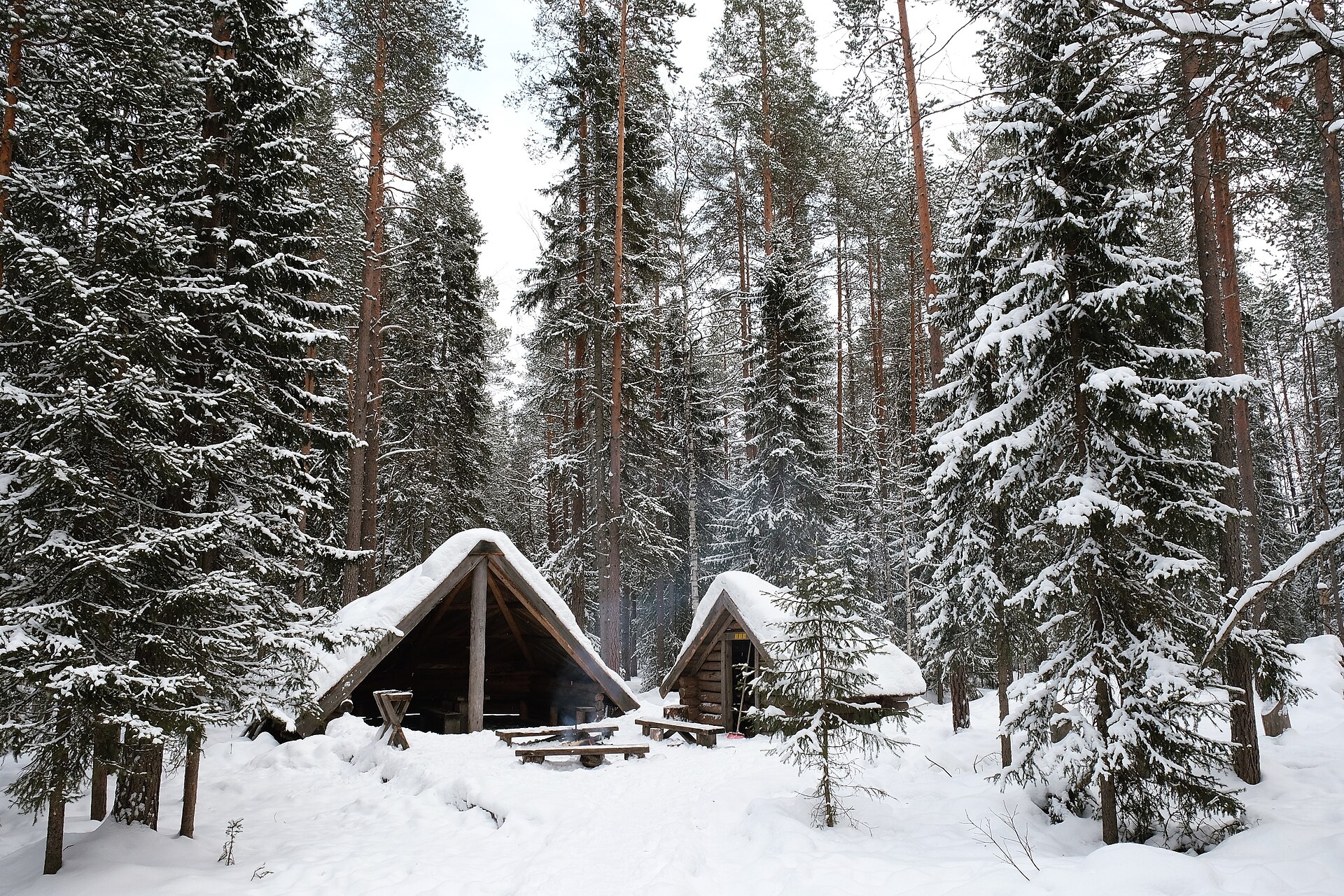

Day 4: The reserve night
This is the night that saves the trip, if it needs saving. Two decisions on the morning:
- If you have seen the lights twice, you are done. Enjoy the day, go to bed on time, and let the departure day be easy.
- If you have not seen them at all, use night 4 on the highest percentage option available: a repeat-guarantee tour if you booked one, or whichever operator is willing to drive furthest for clear sky. A longer drive for clearer sky beats a closer, cloudier one.
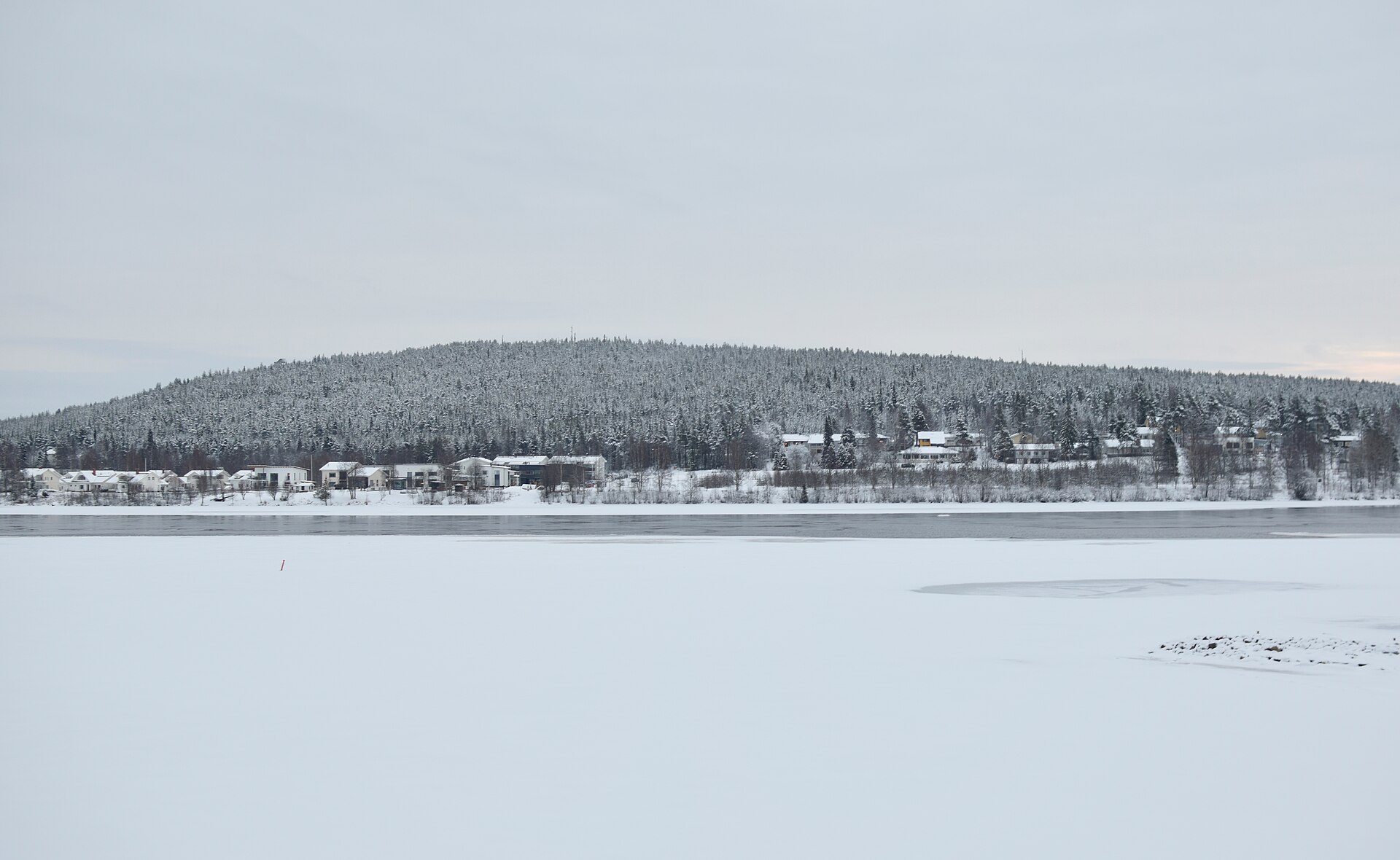
Daytime on day 4 should be light. Ounasvaara, the forested hill right beside Rovaniemi, is the natural choice for a snowy walk.

Day 5: Leave
Fly out in the day. Do not schedule anything. If you left the aurora to this trip alone, you now know whether it worked, and if it did not, the next section is the honest bit.
How to read the sky yourself
You do not need to rely entirely on a guide. The Finnish Meteorological Institute publishes a live view of geomagnetic activity that is worth ten minutes of understanding before you arrive.
The service shows the R-index, which measures how quickly the magnetic field is changing across a 10-minute window, from FMI's own magnetometer stations. FMI colour-codes it: yellow means auroras are possible but usually faint; red means that a visible aurora is very likely. FMI's own guidance is that when activity reaches red at the station closest to you, it is time to go out and watch the sky.
That is useful, and it has a clear limit: the R-index tells you the magnetic field is disturbed. It says nothing about whether you can see the sky. Pair it with a cloud forecast from whichever weather service you trust, and you have the two conditions this trip depends on.
A few habits that cost nothing:
- Check the cloud first. A red reading under solid cloud is nothing. A yellow reading under a clear sky is worth stepping outside for.
- Give your eyes time. Faint displays can look like pale grey cloud until your eyes adapt in the dark. Phone cameras with a night mode often pick up more colour than you see.
- Go out around midnight, and a couple of hours either side, as FMI recommends, not just in the evening.
- Keep it cold-safe. The December and January temperatures in the table above are not a joke. An hour standing still is far colder than an hour of skiing.
What to skip
- Booking only one aurora night. The whole argument above.
- A city centre hotel with no plan to leave it. Convenient for dinner, poor for the sky.
- Fixed-date, non-refundable aurora tours on night 1. You will be tired, and you have no information about the weather yet.
- Chasing the lights by yourself on icy roads in the dark, with a rental car you have not driven in winter. A guided tour exists for this.
Key Takeaways
| Point | Details |
|---|---|
| Two conditions, not one | The aurora needs a disturbed magnetic field and a clear, dark sky on the same night. |
| Official odds are conditional | FMI says roughly 50% of dark, cloudless nights at Lapland ski resorts. That excludes the nights clouds ruin. |
| Season | Late August to early April per Visit Rovaniemi. FMI puts the best of the weather-adjusted window in March and early April. |
| Best viewing hours | Around midnight and a couple of hours either side (FMI). |
| Build four chances, not one | Weather arrives in systems, so spread nights and keep them flexible. |
| Stay outside the city | The first rule for watching is to get away from the city lights. |
| Paid tours: ask about repeats | Operator listings range from 105 € to 396 € and some include a repeat guarantee. Verify the terms. |
| FMI's R-index is free | Red at your nearest station means a visible aurora is very likely. It does not tell you about cloud. |
| Bring winter gear | Typical daytime highs in January are listed at -30 to -15 °C. |
Where this plan breaks
It cannot beat a week of cloud. Four chances is a good design against bad luck, not against a persistent weather system. If the sky is overcast from arrival to departure, no itinerary makes the lights appear. Anyone who tells you otherwise is selling a tour. This is the honest ceiling of the plan, and why the nights are spread rather than doubled up.
The numbers are looser than they sound. The 150 nights a year figure is a count of favourable conditions, not a count of sightings. The 50% is for resort areas on dark, cloudless nights, not for Rovaniemi on a random night. The Rovaniemi-specific figures I saw elsewhere were not from a primary source and I did not use them. Where sources disagree, the lower number is the safer one to plan around.
The guarantee may not cover what you think. I have not read any operator's terms. A repeat offer may be limited by date or availability, and on a five day trip a second go may not fit. Ask before you pay.
Late nights compound. Four late nights in a row, outdoors in the cold, with early daytime activities, is a lot. The plan assumes you let the daytimes slow down on days 3 and 4. If you cram a snowmobile safari, a husky ride and a museum into one day, you will be too tired to stand outside at midnight on the night that finally clears.
Midwinter has too little daylight for a full activity programme. In December Visit Rovaniemi lists roughly 2.5 hours of daylight. Daytime plans in that month have to be short, indoor, or lit. If the daytime content is important to you, March gives more room.
Transport details here are deliberately light. I did not find a current, single-source figure for airport bus fares, frequencies or the overnight train from Helsinki that I could verify, so they are not in this post. Look them up at the operator for your dates rather than trusting a blog's number, including this one.
How Planytera handles a trip like this
Planytera is an AI trip planner built by a solo developer, available on iOS, Android and the web. You describe the trip and it produces a day-by-day itinerary, ready in moments. For a trip built around a night sky that will not follow your schedule, three things matter more than the activity list.
Re-pacing without rebuilding. This is the trip where the plan changes at 4 pm because the cloud moved. Swap a day, move the guided evening to a clearer night, or lighten the following morning, and the rest of the itinerary stays in sync instead of needing to be rebuilt from the start.
Offline access. Out at a dark site, signal is the first thing to go, and a plan you cannot open when you are standing in a field is not much of a plan. Saved trips keep the itinerary, maps and notes available with no signal.
Per-person cost estimates. Aurora tours in the same town can differ widely in price, and a group of friends splitting a snowmobile safari or a private tour needs the per-person figure to compare them. Split costs then tracks who owes who without anyone maintaining a spreadsheet, and without moving anyone's money.
Frequently asked questions
How many nights do I need to see the northern lights in Finnish Lapland?
There is no number that guarantees it. Weather arrives in systems, so consecutive cloudy nights are likely. Travel guides commonly suggest allowing several nights, and four nights fits the four-chance structure in this plan. The purpose of having more nights is not that each night is a fresh coin flip, but that you spread your exposure across different weather.
What is the best month to see the aurora in Rovaniemi?
Sources differ. Visit Rovaniemi gives a season from late August to early April and does not name a peak. The Finnish Meteorological Institute says auroras occur fairly evenly through the year, slightly more in spring and autumn, and that once weather is counted, March and early April are the best. Midwinter has the longest darkness but also the coldest temperatures and the least daylight for activities.
What time of night should I look?
FMI says the typical time for auroral displays is around midnight, and a couple of hours before and after. A tour that gets back at 11 pm can miss the best window, so ask the operator when the group is likely to be out and how long they stay.
Do I need a guided tour, or can I do it myself?
You can do it yourself, and for the first, third and fourth nights this plan assumes you will. What a guide adds is local weather judgement, transport to a dark site, and gear. For a trip of this length, one paid tour is a reasonable middle. Operator-listed starting prices on Visit Rovaniemi run from 105 € to 396 € depending on the format, and some include a repeat option, so ask about it before you pay.
Is the northern lights forecast reliable?
Partly. FMI's R-index shows how fast the magnetic field is changing at its stations: red means a visible aurora is very likely. That tells you about the sky's activity, not about whether you can see it. It says nothing about cloud, which is the more common reason people see nothing, so you need a cloud forecast alongside it.
Is Rovaniemi the best place in Finland to see the aurora?
Not by FMI's numbers. FMI gives roughly 50% on dark cloudless nights for Lapland ski resorts such as Ylläs, Levi and Saariselkä, and 75% at Kilpisjärvi, far further north. Rovaniemi is not named in that figure. What it offers is access: an airport, hotels and a large choice of operators. If you are willing to trade that for odds, a base further north is the better aurora play.
Useful sources and further reading
- Visit Rovaniemi: northern lights season, for the season dates, the 150 nights figure, daylight and temperature by month, and the listed tour prices.
- Finnish Meteorological Institute: auroras in Finland, for the 50% and 75% figures, the midnight timing and the March and early April view.
- Finnish Meteorological Institute: auroras and space weather, for the R-index and the yellow and red thresholds.
- University of Lapland, Arctic Centre: attending information, for the airport's distance from the centre, local bus information and the taxi apps in use in Rovaniemi.
Recommended
More from the Planytera blog.