Blog17 min read
10 Days in Bali: The Traffic and the Boats Decide Your Route
A ten day Bali itinerary built around slow south Bali traffic and the fast boats to Nusa Penida and the Gilis, which get rougher through the afternoon.
By Dom

Most Bali itineraries are drawn as a list of places: Ubud, Uluwatu, Nusa Penida, the Gilis. What they skip is the two things that decide whether the list is realistic, and neither of them is a place.
The first is south Bali's road network. Canggu's Berawa and Batu Bolong areas sit barely a kilometre apart along the beach, but the road route between them runs over 4 km, and during the evening crush that stretch can take over an hour to drive when it would take seven to ten minutes with a clear road. Seminyak to Uluwatu is about 27 km and 40 to 60 minutes in light traffic, but the Bukit Peninsula has only a few roads leading onto the cliffs, so an afternoon or sunset departure can push that past 90 minutes. Bali's one toll road, the Bali Mandara, saves 30 to 45 minutes between Kuta, Sanur, Nusa Dua and Benoa, but it does not reach Uluwatu, so it does nothing for that route.
The second is the sea. Nusa Penida and the Gili Islands are only reachable by open-water fast boat, and the crossings are calmest in the morning. Wind-driven chop builds through the day, most noticeably on the Badung Strait between Bali and Nusa Penida, and operators push afternoon departures later, reroute, or cancel outright when conditions call for it. This is not a rare event: BMKG, Indonesia's meteorology agency, issued a high-wave warning in August 2025 that shut down more than 70 fast boats and 80 to 90 scheduled trips out of Sanur and Padang Bai in a single stretch. Most days are nowhere near that dramatic, but the underlying pattern, calmer mornings and choppier afternoons, is routine enough that booking the first sailing is standard local advice, not caution for its own sake.
Ten days is enough to do Bali properly if the plan respects both of those constraints. It is not enough if it pretends south Bali is one contiguous zone you can zip across on a whim, or that a boat ticket booked for 3 pm is as reliable as one booked for 8 am.
The shape of the trip
| Segment | Nights | Notes |
|---|---|---|
| Ubud | 3 | Inland base, rice terraces, temples, Mount Batur |
| Uluwatu / Bukit Peninsula | 2 | Temple, Kecak, surf beaches |
| Nusa Penida | 2 | Fast boat from Sanur, an island in its own right |
| Gili Air | 2 | Direct boat from Nusa Penida, no motor vehicles |
| South Bali (Seminyak or Canggu) | 1 | Final night, close to the airport |
This route front-loads the inland base (Ubud) before the coast, puts the two boat-only stops back to back so you are not recrossing open water more than necessary, and ends near the airport rather than a long departure-morning drive. It skips Gili Trawangan and Gili Meno, both real trips of their own, and east Bali (Amed, Tulamben) entirely, which does not fit without cutting a stop above.
What south Bali's traffic actually does to a plan
The distances on a map of south Bali are small. Seminyak to Canggu is under 10 km. Kuta to the airport is closer still. The problem is not distance, it is road capacity: narrow two-lane streets built for a fraction of the current traffic, concentrated around a handful of pinch points that every itinerary ends up funnelling through.
Jimbaran is the worst of them. Any route between the airport corridor and Uluwatu passes through it, and during the evening surge (roughly 4 pm to 7 pm) it turns a short leg into a long one. Ubud to Uluwatu is a clear example: the direct route is about 54 km, which GPS estimates at under an hour, but the realistic range through Jimbaran, Kuta and Denpasar traffic is 2 to 2.5 hours, and sunset-hour departures from Uluwatu are the slowest window of the day.
Canggu's own roads are the second problem, and they are self-inflicted rather than a through-traffic issue. The beach roads feeding into Jalan Raya Canggu carry a beach town's worth of scooters, cars and delivery traffic on infrastructure that has not caught up with the town's growth, with traffic building from early afternoon and peaking around 5 pm as everyone converges on the same sunset spots.
The practical response is to schedule around the two daily surges (roughly 7 to 9 am and 4 to 7 pm) rather than through them, and to accept that a same-day plan combining Uluwatu and Seminyak, or Canggu and the airport, needs real slack built in rather than the drive time Google Maps shows you at 10 in the morning.

The boats: book the morning sailing, not the convenient one
Bali has no bridge to Nusa Penida or to the Gili Islands. Every visit to either runs on a fast boat, and the operators, routes and reliability are worth understanding before you book anything.
Sanur to Nusa Penida is the shortest, busiest crossing, roughly 45 minutes with around 21 scheduled sailings a day between about 6:30 am and 5 pm. Fares booked online run roughly Rp170,000 to Rp215,000 (about $10 to $20); counter prices on the day can run higher. Multiple operators run this route, so a cancelled sailing on one company is rarely a cancelled day, but earlier departures give you more room to rebook.
Bali to the Gili Islands runs from three ports (Sanur, Padang Bai and Serangan), with more than 30 combined daily crossings across operators including BlueWater Express, Gili Gili Fast Boat and Marina Group Fast Ferry. Padang Bai to Gili Trawangan is fastest, around 1.5 hours; Serangan's direct crossing takes closer to 2h15. Boat quality varies a great deal between operators, so a stabilised, larger vessel is worth the extra cost if you are prone to seasickness.
Nusa Penida to the Gilis has a direct option, cutting out a return to the mainland: roughly 1h45 to 3 hours depending on the boat and routing, run by operators including BlueWater Express, Eka Jaya and Semaya One. This itinerary uses that leg to move from Nusa Penida to Gili Air without backtracking through Sanur.
Every one of these crossings is calmer in the morning. Sea breeze intensifies through the day, and the Badung and Lombok straits both have a reputation for building chop by early-to-mid afternoon, worse in the windier months (roughly June to August) and the rainy season. This is standard advice from operators and guides alike: book the earliest sailing that fits your plan, especially if the ocean unsettles you.
The extreme version happened in August 2025, when BMKG's regional office in Denpasar issued a high-wave warning covering southern Bali waters, with waves reported up to 4 metres. More than 70 fast boats and 80 to 90 scheduled trips out of Sanur and Padang Bai were suspended in the following days, after a fast boat accident near Sanur Harbour killed three passengers. That scale of shutdown is not a daily occurrence, but it is the sharp end of a pattern that operates in miniature most afternoons: the sea gets rougher through the day, and the schedule bends around it.
Nusa Penida just changed its fee system, and it is not fully settled
If your dates are close to when you are reading this, know that Nusa Penida's ticketing changed shape on 1 September 2026. The island has run a flat harbour entry fee (Rp25,000) for a while. On that date, the Klungkung regency government began phasing in a "One Gate One Destination" system that additionally charges a separate fee at individual sights, rather than one combined ticket. Reported figures for the first wave of sites, including Kelingking Beach, Broken Beach and Angel's Billabong, put the new charge at roughly Rp25,000 for adults and Rp15,000 for children per site, meaning three popular viewpoints in one day runs to roughly Rp75,000 in entry fees alone. Local reporting described queues at Broken Beach and Crystal Bay on the first day, as visitors adjusted to paying at each gate rather than one combined pass. This is genuinely new and still rolling out unevenly, so treat the figures as an estimate to check closer to your dates, not a fixed price.
Nusa Penida's roads are the other real hazard, and a physical one rather than a financial one. The main roads are reasonable; the roads to the actual viewpoints are steep single-lane concrete with blind crests, potholes and loose gravel, consistently harder than anything on mainland Bali. Scooter crashes are the island's most common tourist injury, and the terrain is why. Hiring a car with a local driver for the day, commonly available for somewhere around $45 to $50, is the single biggest safety upgrade if you are not an experienced rider on genuinely bad roads.
Day trip or overnight is a real decision, not a formality. A day trip from Sanur can comfortably cover the west-side highlights (Kelingking, Broken Beach, Angel's Billabong, Crystal Bay), but at the same time as every other day-tripper, including a real queue for the Kelingking viewpoint photo. Adding the east side (Diamond Beach, Atuh Beach) or manta ray snorkelling to the same day usually means spending most of it on the road or the boat rather than at any of it. Staying overnight lets you split east and west across two days and reach the west-side viewpoints before the first boats arrive.
The ten days
Days 1 to 3: Ubud
Land, transfer inland, and let Ubud absorb the arrival day rather than layering sightseeing onto jet lag. The town itself is walkable, and starting away from the coast means you are not fighting south Bali's rush-hour corridors on day one.
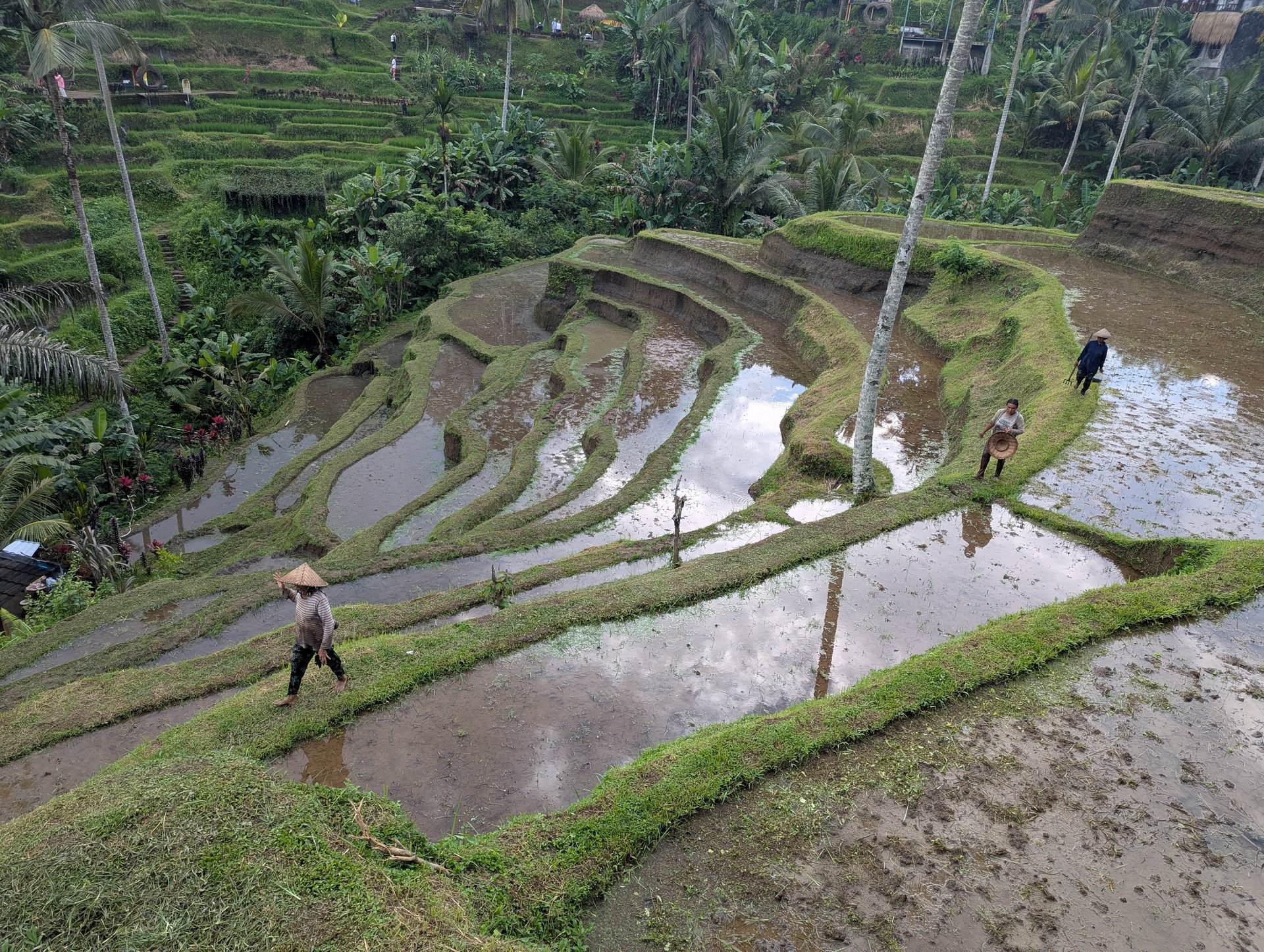
Give one morning to Tegalalang Rice Terrace, a short drive north of central Ubud; entry runs roughly Rp15,000 to Rp25,000 depending on the entrance you use (cash only), plus small per-section donations expected by the farmers whose land the paths cross. Go early, both for the light and to beat the tour groups. The Ubud Monkey Forest is open 9 am to 6 pm with last entry at 5 pm; expect a foreign adult entrance fee around Rp130,000, revised as of April 2026.
Reserve one night for Mount Batur's sunrise trek. A local guide is not optional: the trekking community will not let you start the trail without one, pickup is typically 2 to 3 am, and the trek itself starts around 3:30 to 4 am. A packaged tour with guide, transport and breakfast commonly runs $35 to $50 per person. It is the one commitment in the ten days that runs on almost no sleep, so plan a slow following morning rather than an early transfer day right after it.
Days 4 and 5: Uluwatu and the Bukit Peninsula
The transfer from Ubud to Uluwatu is the trip's longest single road leg: about 54 km, technically under an hour by GPS, realistically 2 to 2.5 hours once Jimbaran, Kuta and Denpasar traffic are in the mix. Leave in the late morning, after the worst of the commuter surge, rather than at the moment Google Maps suggests.
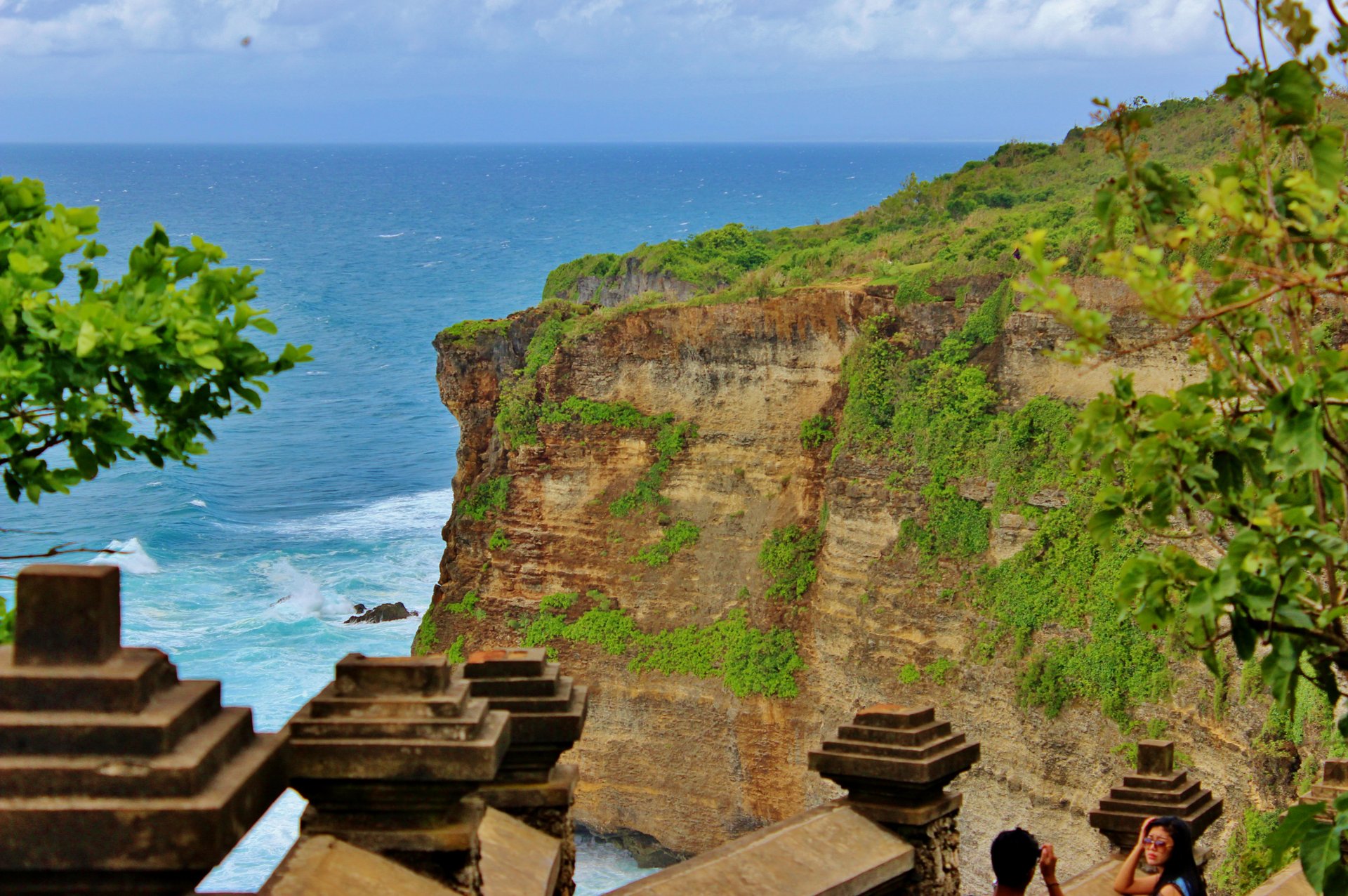
Uluwatu Temple sits directly on the cliff edge; entrance fees are reported inconsistently across sources, somewhere in the Rp50,000 to Rp60,000 range for foreign adults, so treat that as an estimate and pay cash at the gate. The Kecak fire dance, in the temple's cliffside amphitheatre, runs daily 6 pm to 7 pm with gates opening at 4 pm; tickets are Rp150,000 for adults and Rp75,000 for children aged 2 to 9. Heavy rain in the wet season (roughly November to March) can force a cancellation or a move indoors, so keep a backup evening if your dates fall in that window. Hold onto sunglasses and hats: the resident long-tailed macaques are practised at grabbing them.
Spend the second day on the peninsula's beaches, Padang Padang, Bingin or Suluban among them, reachable by short (if occasionally jammed) drives rather than one long transfer. This is also the base with the most reliable surf.
Days 6 and 7: Nusa Penida
Take one of the first sailings from Sanur, both to catch calmer water and for the fullest use of the day on arrival. Base yourself for two nights rather than treating this as a single long day trip.
Day one: the west side, Kelingking, Broken Beach and Angel's Billabong, before the crowds thicken. Day two: the east side, Diamond Beach and Atuh Beach, quieter and further from the harbour where the day-trip boats land. Hire a car and driver for both days rather than a scooter; these roads are the most physically hazardous stretch of the whole trip.
Days 8 and 9: Gili Air
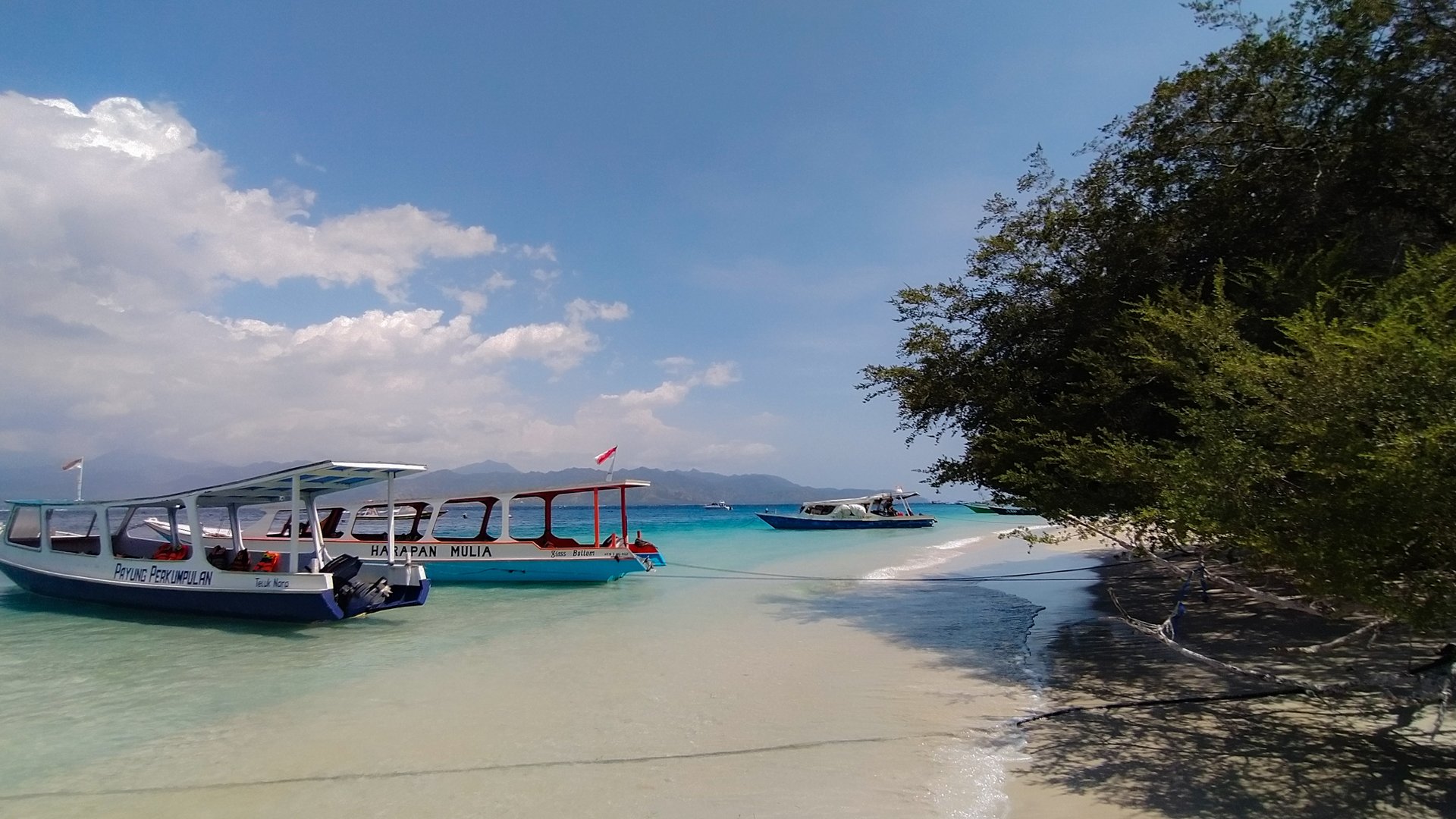
Take the direct boat from Nusa Penida, roughly 1h45 to 3 hours depending on the operator, and pick Gili Air over Trawangan or Meno: it sits between the other two in size and pace, quieter than Trawangan's nightlife, livelier than the near-empty Meno.
None of the three Gili Islands allow motor vehicles, by local ordinance; getting around is on foot, by bicycle, or by cidomo, the local horse-drawn cart. It is a genuinely different pace from the rest of the itinerary, and two nights is enough to register the change without feeling like a detour. Snorkelling straight off the beach is the main activity.

Day 10: Back to south Bali
Take the earliest realistic boat back to the mainland (Padang Bai, Serangan or Sanur) and use the last night in Seminyak or Canggu rather than scheduling a same-day flight straight off a multi-hour crossing. That leaves the final airport transfer a short, known quantity rather than a race against an uncertain boat schedule.
What ten days actually costs
| What | Realistic cost |
|---|---|
| Visa on arrival / e-VOA | Rp500,000 (about $28 to $30), 30 days, extendable once |
| Bali tourism levy (paid once, any point of entry) | Rp150,000 (about $9) |
| Sanur to Nusa Penida fast boat, one way | Rp170,000 to Rp215,000 booked ahead |
| Bali to Gili Trawangan fast boat, one way | From around €20.50 on the fastest (Padang Bai) route |
| Uluwatu Temple entrance | Roughly Rp50,000 to Rp60,000 (sources disagree) |
| Uluwatu Kecak dance ticket | Rp150,000 adult, Rp75,000 child |
| Tegalalang Rice Terrace entry | Roughly Rp15,000 to Rp25,000, cash only, plus small path donations |
| Ubud Monkey Forest entry | Around Rp130,000 for a foreign adult |
| Mount Batur sunrise trek (guide, transport, breakfast) | Roughly $35 to $50 per person |
| Nusa Penida island entry plus per-site fees (new Sept 2026) | Rp25,000 harbour entry, plus roughly Rp25,000 per attraction |
| Car and driver for a full day on Nusa Penida | Roughly $45 to $50 |
At the time of writing, one US dollar bought roughly Rp17,600, though the rate moves and is worth checking close to your travel dates.
Key Takeaways
| Point | Details |
|---|---|
| South Bali's traffic is about road capacity, not distance | Jimbaran is the choke point on almost every south Bali route; the evening surge (roughly 4 to 7 pm) can turn a short drive into a long one. |
| The Bali Mandara toll road doesn't help every route | It links Kuta, Sanur, Nusa Dua and Benoa, but it doesn't reach Uluwatu, so it does nothing for the Seminyak to Uluwatu leg. |
| Book the first boat of the day, not the most convenient one | Sea breeze builds through the day; the Badung and Lombok straits both get choppier by afternoon, and operators do delay, reroute or cancel when conditions call for it. |
| Nusa Penida's fee system changed on 1 September 2026 | A new per-attraction charge stacks on top of the existing harbour entry fee. It is new and still settling in; check current information close to your dates. |
| Nusa Penida's viewpoint roads are the real hazard | Steep, single-lane, and broken in places. A car and driver is the safest way to see the island if you are not an experienced rider on rough terrain. |
| The Gili Islands run no motor vehicles at all | Walking, bicycle or cidomo only, on all three islands, by local ordinance. |
| Mount Batur requires a guide, no exceptions | The local trekking community will not let you start the trail without one; pickup is typically 2 to 3 am. |
Where this plan breaks
Trying to do Uluwatu and Seminyak, or Canggu and the airport, on the same day. Short distances on a map, long ones on the road during the daily surges. A same-day round trip between two south Bali zones without slack either side of the evening peak is the single most common way this itinerary runs late.
Booking an afternoon boat because it fits the schedule better. It might sail on time. It might also be delayed, rerouted or cancelled as the wind picks up, and unlike a missed train, there is often no same-day alternative once operators start pulling sailings. Build a buffer around any crossing you cannot afford to miss, especially the return leg before a flight home.
Riding a scooter on Nusa Penida's back roads without experience. The main roads are fine. The roads to the viewpoints are not, and scooter crashes are the island's most common tourist injury for a reason. This is not a place to learn.
Treating Nusa Penida's new fee structure as settled. It started six days before this article was written, and local reporting already describes uneven rollout and queues. Prices, and which sites charge separately, are worth reconfirming close to your dates rather than trusting any fixed figure, this one included.
How Planytera handles a trip like this
Planytera is an AI trip planner built by a solo developer, available on iOS, Android and the web. You describe the trip you want and it builds a day-by-day itinerary, ready in moments. A few things about it map directly onto the problems above.
Pacing across bases that don't share a transport mode. This trip mixes a road-based inland stretch, a road-based coastal stretch and two boat-only island stops, each with a different kind of risk attached. Setting a pace once and letting the days arrange themselves around transfer days, rather than writing four separate mini-itineraries and hoping the joins hold, is the planning problem the app is built around.
Re-pacing without a rebuild. If a boat crossing gets pushed or cancelled, shifting a night and letting the rest of the plan adjust around it is far less work than starting over.
Offline access on the islands and the boats. Signal is patchy on the crossings and inconsistent on parts of Nusa Penida and the Gilis. A saved trip keeps the itinerary and notes readable without a connection, which matters most on exactly the days you are moving between bases.
Group trips settle up without a spreadsheet. A group Bali trip commonly means one person books the boat tickets, another the villa, a third the Gili Air stay. Share a read-only link, or invite the group to vote on which stops make the cut, and use split costs to track who owes what. It does the arithmetic and never touches anyone's money.
It also checks visa and e-visa requirements once you set your passport, worth doing early given Indonesia's 30-day visa-on-arrival window and single extension.
Frequently asked questions
Is ten days enough for Bali, Nusa Penida and the Gilis?
Yes, for one Gili island and a focused route, if you accept the boat and traffic constraints rather than fighting them. This itinerary gives three nights to Ubud, two to Uluwatu, two to Nusa Penida and two to Gili Air, plus a final night in south Bali before the flight home. Adding a second Gili island means cutting a night from somewhere else, most likely Ubud.
Why does a short drive in south Bali sometimes take an hour or more?
Road capacity, not distance. South Bali's narrow, largely two-lane streets funnel almost every cross-region route through a handful of pinch points, Jimbaran chief among them. The daily surges run roughly 7 to 9 am and 4 to 7 pm; a transfer scheduled inside either window can take two to three times as long as the same drive at 10 am or 9 pm.
Do the fast boats to Nusa Penida and the Gilis really stop running?
They slow down and sometimes cancel, more often in the afternoon than the morning, as wind-driven chop builds on both the Badung Strait (Bali to Nusa Penida) and the Lombok Strait (toward the Gilis). The extreme case was August 2025, when a BMKG high-wave warning suspended more than 70 fast boats and 80 to 90 scheduled trips out of Sanur and Padang Bai. Most days are far calmer, but booking an early sailing over a mid-afternoon one is standard, sensible advice.
What changed with Nusa Penida's entrance fees in September 2026?
The island moved from a single flat harbour entry fee to a "One Gate One Destination" system that also charges separately at individual sights, phased in from 1 September 2026. Reported per-site charges for the first wave, including Kelingking Beach, Broken Beach and Angel's Billabong, are roughly Rp25,000 for adults and Rp15,000 for children per site. It is new enough that local reporting already describes uneven rollout, so treat any specific figure, this article's included, as provisional.
Do I need an international driving permit to ride a scooter in Bali?
Yes, alongside your home licence. Legally riding a scooter in Bali requires an International Driving Permit with a motorcycle ("A") endorsement, your original home licence, your passport and your current visa. Riding without one risks a fine, and more seriously, most travel insurance policies deny an accident claim if you were riding without valid documentation. Enforcement has become noticeably stricter through 2026.
Can I use Grab or Gojek everywhere in Bali?
They are legal across Bali, but pickups, not drop-offs, are informally restricted in parts of Seminyak, central Ubud, Kuta, Sanur, Nusa Dua and sections of Canggu and Uluwatu, where local taxi and driver communities enforce their own rules. If a pickup keeps getting cancelled in one of these zones, walk a short distance to a neutral spot before requesting the ride.
Useful sources and further reading
- The official eVisa website for Indonesia, eVOA information, visa fee and 30 day stay validity.
- Love Bali FAQ, official provincial tourism levy site, the Rp150,000 levy and payment methods.
- The Bali Sun: fast boat services cancelled due to dangerously high waves, the August 2025 BMKG warning and cancellations.
- Klungkung Tourism Office: OGOD coordination notice, official confirmation of the One Gate One Destination programme.
- GoBaliGo: Nusa Penida entry fee changes, reported per-attraction fees and the rollout date.
- Uluwatu Temple official Kecak dance page, ticket prices and showtime.
- Monkey Forest Ubud, official site, opening hours.
- Bali Ferries: Sanur to Nusa Penida fast boat, schedule and fares.
- Ferryhopper: Bali to Gili Islands routes, ports, crossing times and operators.
- Nusa Penida to Gili Islands direct fast boats, direct crossing operators and timings.
- Bali Holiday Secrets: Seminyak to Uluwatu and Ubud to Uluwatu, drive times and peak-hour patterns.
Recommended
More from the Planytera blog.