Blog18 min read
2 Weeks in Sri Lanka: The Two Monsoons Decide Your Coast
A fourteen day Sri Lanka plan built on the two monsoons: which coast your dates give you, what the tickets really cost, and what to skip.
By Dom

"When is the best time to visit Sri Lanka" is the wrong question, and it is the one almost every planning guide answers.
The island is small enough to drive across in a day and it runs two monsoons on opposite schedules. One soaks the southwest while the east sits dry. Six months later they swap. There is no month when the whole coastline is good, and no month when none of it is.
So the question that shapes a fourteen day trip is not when. It is which coast your dates give you, and whether the plan hinges on that instead of fighting it. This is a fourteen day itinerary with a fixed nine day spine and a coast that swaps.
The two monsoons, in numbers
The southwest monsoon, locally Yala, runs roughly mid May to September and hits the southwest coast and the central highlands. The northeast monsoon, Maha, runs roughly mid December to February and hits the north and the east. Between them sit two inter-monsoon periods, in March and April and again in October and November.
Monthly rainfall makes the split obvious. These figures are long-run averages and different climate services publish slightly different ones, so treat them as a shape rather than a forecast.
| Month | Colombo (southwest) | Trincomalee (east) | Batticaloa (east) |
|---|---|---|---|
| January | about 85 mm | about 150 mm | about 270 mm |
| March | about 100 mm | about 55 mm | about 70 mm |
| June | about 205 mm | about 25 mm | about 30 mm |
| August | about 120 mm | about 65 mm | about 50 mm |
| October | about 395 mm | about 215 mm | about 185 mm |
| November | about 365 mm | about 375 mm | about 420 mm |
| December | about 175 mm | about 340 mm | about 470 mm |
Three things fall out of that table, and only the first is widely repeated.
June to August is the east coast's window and the southwest's monsoon. Trincomalee takes around 25 mm of rain in June while Colombo takes around 205 mm. Arugam Bay's surf season runs on the same mechanism: the southwest monsoon blows offshore on the east coast, which is why the reliable waves there are April to October and peak June to September.
January to March is the southwest's window and the east's tail end. Colombo drops to around 85 to 100 mm while Batticaloa is still draining a December that averages around 470 mm.
October and November are bad nearly everywhere, and that is the window people book into. The second inter-monsoon is the only period where both coasts are wet at once, and it carries cyclone activity in the Bay of Bengal. It is why Trincomalee's own worst months are November and December rather than anything in the southwest monsoon.
A live footnote for anyone booking late 2026
The Department of Meteorology's own homepage is currently carrying a NOAA announcement from 13 July: an 81% probability of a very strong El Niño during the October to December 2026 period. Published research on Sri Lankan rainfall associates El Niño years with above-normal second inter-monsoon rain and an enhanced northeast monsoon over the north and east, with the flood and landslide risk that implies.
That is not a forecast for your week and nobody can give you one. It is a reason to weight the southwest and the highlands harder than usual between October 2026 and February 2027, and to check the department's own seasonal forecast rather than a travel blog's month-by-month chart.
The spine: nine days that do not care which monsoon is running
The interior is the reason two weeks works. The Cultural Triangle sits in the dry zone and the hill country is high enough that its problem is cloud rather than a monsoon. Neither is a beach, so neither is wasted by a wet coast.
Nights 1 to 3: the Cultural Triangle
Land at Bandaranaike International and drive north the same day. Colombo is a working capital and it is not what you came for; skipping it entirely on arrival costs you nothing.
Base near Sigiriya or Dambulla for three nights. The Central Cultural Fund publishes the ticket prices in US dollars and converts them daily; on 13 August 2026 its own pricing page carried a rate of 339 LKR to the dollar and these adult prices:
| Site | Adult | Half ticket |
|---|---|---|
| Sigiriya | US$35 | US$20 |
| Polonnaruwa | US$30 | US$15 |
| Anuradhapura | US$30 | US$15 |
| Dambulla | US$3 | US$1.50 |
Plenty of guides still print US$30 for Sigiriya; the Central Cultural Fund's own page says US$35. Dambulla's US$3 is the fund's charge for the archaeological site, not what the Golden Temple complex collects at its own entrance, so carry cash. Every heritage ticket is single entry and the counters run 7:00 to 17:00, which decides your Sigiriya morning: the rock is a long stair climb with almost no shade, and an afternoon start in the dry zone is an unforced error.
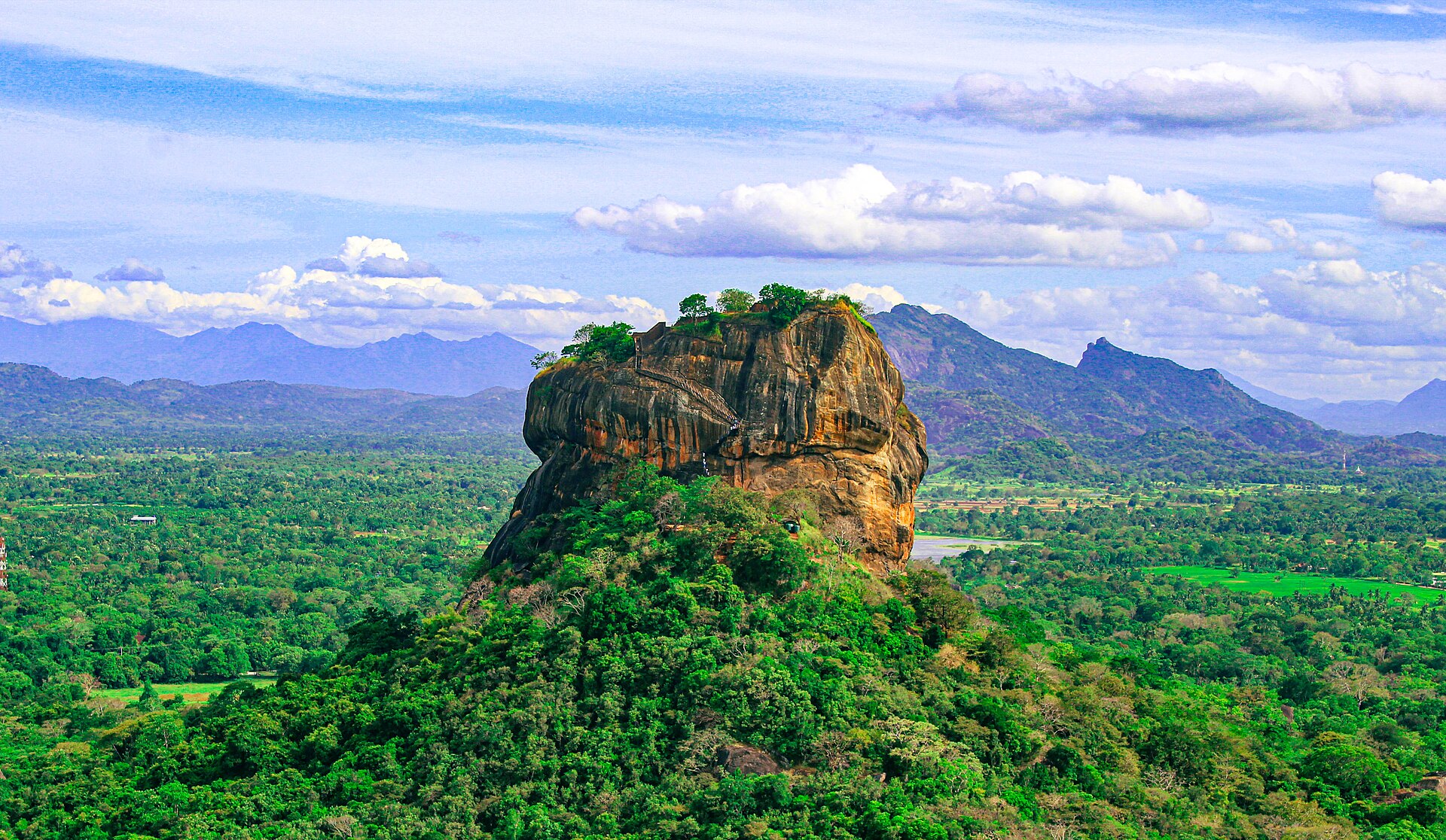
Sigiriya or Pidurangala? Both. Pidurangala is the neighbouring rock, charged separately by the temple that owns it, and it is where you photograph Sigiriya from. Sigiriya is where you see the frescoes, the mirror wall and the water gardens.
Polonnaruwa or Anuradhapura, not both. Same price, same era, and doing both from one base means two long days of ruins in the heat. Polonnaruwa is compact and legible on foot or by bicycle. Anuradhapura is older, larger, more diffuse and still an active pilgrimage site.

Elephants, from the Cultural Triangle. Minneriya and Kaudulla are the parks for the Gathering, when elephants come onto the exposed lake bed as the dry season bites, peaking in August and September. Quoted herd sizes run from around 200 to around 400 depending on who is selling the safari, so book the experience rather than the number.
Nights 4 and 5: Kandy
The Temple of the Sacred Tooth Relic publishes its own prices and times, which is a relief after the national parks. Foreign adults pay LKR 3,000 and visitors from SAARC countries, Thailand and Myanmar pay LKR 2,500, covering the Dalada Museum, the World Buddhist Museum, the Tusker Museum and the Royal Elephant Stable too. The temple opens daily 5:30 to 20:00 and the three thewawa services run 5:30 to 7:00, 9:30 to 11:00 and 18:30 to 20:00. Go during one; the building outside a service is a building.
The Kandy Esala Perahera is a fixed obstacle if your dates touch it, not a bonus. In 2026 the Kumbal Perahera ran 18 to 22 August and the Randoli Perahera 23 to 27 August, with the Diya Kepeema water cutting in the small hours of 27 August and the Dahawal day procession on 28 August. Accommodation prices and traffic behave accordingly. The dates move each year with the lunar calendar and the temple publishes them.
Skip the Pinnawala Elephant Orphanage, which sits on the Colombo to Kandy road and on most package itineraries. A Born Free welfare report documented chaining during musth and training with an ankus, and Responsible Travel removed every trip featuring it from their site in 2008. The Elephant Transit Home at Udawalawe, run by the Department of Wildlife Conservation since 1995, does what Pinnawala's name claims: calves are raised with minimal human contact and released back to the wild, and visitors watch feeding from a platform rather than handling anything.
Nights 6 to 9: the hill country and Ella
This is the train, and the one leg where the transport is the attraction rather than the cost of getting somewhere.
Sri Lanka Railways sells reserved seats through its own site. The rules that matter: reservations open 30 days before travel, the latest you can book is two hours before departure, and you cannot choose your seat, because the system allocates it. Cancellation refunds are 75% more than seven days out, 50% between two and seven days, and nothing inside two days. Second and third class unreserved cars cannot be booked at all and are sold on the day at the station.
Thirty days is a short window for a trip booked months out, so put a reminder in your calendar for the day it opens. That single date is the most time-sensitive thing in this itinerary.
Kandy to Ella is roughly six to seven hours depending on the service, through Nanu Oya (the station for Nuwara Eliya), Haputale and Demodara. Break it into two legs with a night or two in the high country rather than doing it in one sitting, which also puts you within reach of Horton Plains.
Horton Plains and World's End is a morning, not a day. The viewpoint looks out over an escarpment and the cloud builds as the day warms, so the whole thing is a race to be there early. It is also a national park with its own entry fee, not a free hike.
Adam's Peak has a real season: the pilgrimage runs from Unduvap poya in December to Vesak poya in May, both lunar dates that move each year. Inside the season the steps are lit and the tea shops on the route are open. Outside it, the route is unlit and unstaffed. If your trip falls in June or July, this is not a climb you improvise.
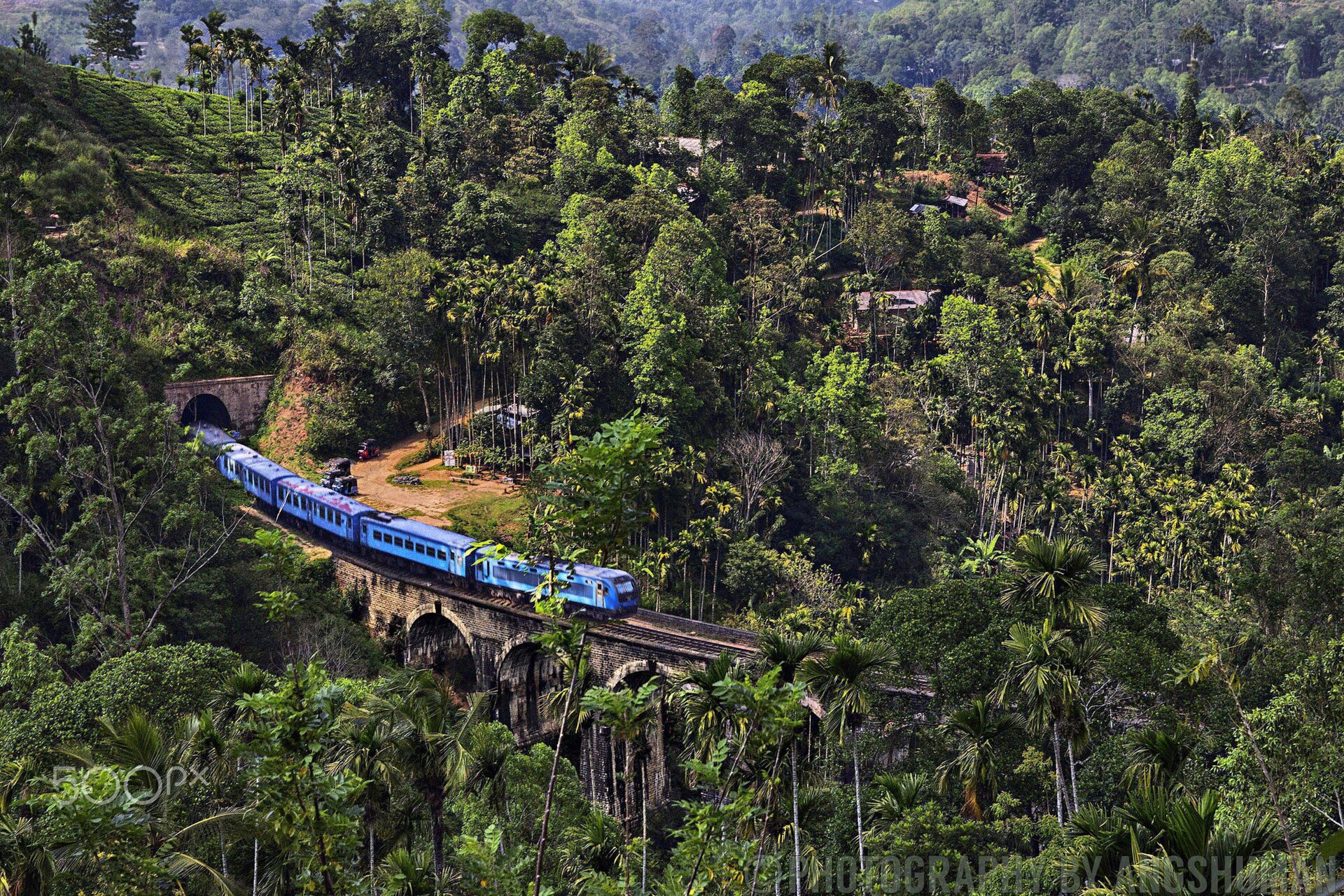

One safety note. The photograph of somebody hanging out of an open train door is the most reproduced image of Sri Lanka, and it has killed people. The Daily Mirror reported a foreign passenger dying after striking a tunnel wall on the Colombo to Badulla line, and the Chinese Embassy in Colombo issued a notice telling its nationals to stay away from train doors after a tourist was critically injured the same way. The doors are open because the stock is old, not because it is safe.
The swap: four nights of coast
Ella is the hinge. From here the trip goes either south or east, and the calendar makes the call.
Version A, December to March: the south coast
Down from Ella to the southern plain, then west along it.
Safari first. Yala is the famous one and Udawalawe is the reliable one: open grassland with a resident elephant population, and the better bet if you want to see something rather than queue for a leopard. Published entrance fees disagree badly. Figures circulating for 2026 put Yala, Udawalawe, Wilpattu and Minneriya around US$40 for a foreign adult and Horton Plains around US$35, while some operators quote US$42.50 for Udawalawe including taxes, and the Department of Wildlife Conservation publishes no public price list. Budget in that region and treat any all-in jeep price as containing a fee you cannot verify.
Yala closes, usually. Block 1, the busiest sector, has generally shut around 1 September to mid October, with the Palatupana and Katagamuwa gates closed while Galge stays open. It is announced year by year, the end date has been extended in drought years, and as of writing no 2026 closure has been confirmed. Check before you build a day around it.
Then the coast. Tangalle and the beaches east of Matara are quieter; Mirissa and Weligama are busier and where the boats go out. Whale watching runs on the same monsoon logic as everything else, and the operators move to Trincomalee for the other half of the year.
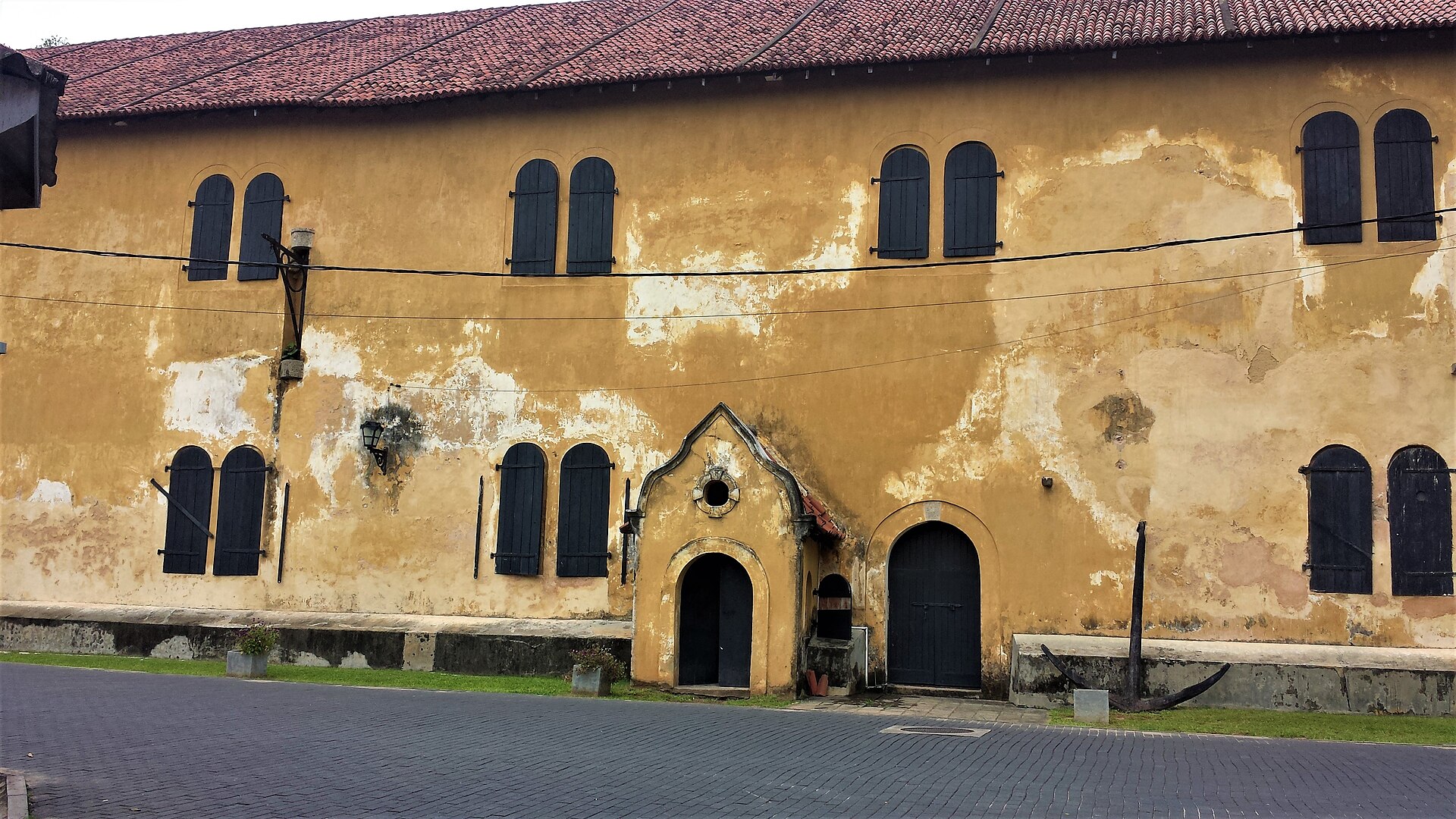
Finish at Galle. The Dutch fort is a walled town you can walk in an evening, and the only place on this itinerary where the built environment is the point rather than a ruin of it. It is also the right last night, because the expressway makes the airport run easy.
Version B, May to September: the east coast
Ella to Arugam Bay is a short hop by Sri Lankan standards, down through Wellawaya and out to the coast. This is the version surfers already know and everyone else skips. Arugam Bay in June, July and August is the driest place on the itinerary, and the point break is the reason the town exists. If surf is not your thing, Trincomalee is the alternative: the same dry window, Nilaveli and Uppuveli for beaches, Pigeon Island offshore, and the whale watching operators that spend the southern winter down at Mirissa.
The cost of Version B is worth stating plainly. The east is thinner on infrastructure, the drive back to the airport is long, and no expressway helps you. It is also emptier, which is the entire point.
Getting around: the numbers that decide the shape
| Leg | Time | Notes |
|---|---|---|
| Colombo to Galle, E01 expressway | about 1 hour | 116 km. About 3 hours on the old coast road |
| Colombo to Matara, E01 expressway | about 1.5 hours | About 4 hours on the A2 |
| Colombo Fort to Kandy, train | about 3 to 4 hours | Depends on the service |
| Kandy to Ella, train | about 6 to 7 hours | The scenic leg, and the one to reserve |
The Southern Expressway is 222 km end to end, and it is the reason the south coast version of this trip closes cleanly and the east coast version does not. There is no equivalent road serving Arugam Bay or Trincomalee.
A car with a driver is the normal way to do Sri Lanka, and the price usually bundles the driver's own accommodation and food, so compare quotes on that basis rather than on the daily rate. The train is worth taking for the hill country leg specifically, not as a general transport strategy: it is slow, it does not reach most of the coast, and unreserved carriages on the Ella line are standing room.
Paperwork, poya days and money
The visa got cheaper, and recently. With effect from 25 May 2026, nationals of 40 countries, including the UK, the USA, Canada, Australia, India, Japan, China and most of the EU, get a tourist ETA free of charge for 30 days with a double entry facility. Singapore and Seychelles are also on the free list at 30 days, Maldivian nationals get 90, and children under 12 of any nationality get 30 days free. If you are not on the list, the ETA is US$50 online for most countries and US$20 for South Asian countries, rising to US$60 and US$25 on arrival. Fees paid before 25 May 2026 are not refundable, and your passport needs six months of validity from your arrival date.
Apply at the government portal, eta.gov.lk. The free tier has not stopped the paid intermediary sites from ranking, and paying an agent for a document that is now free is the most common avoidable cost on this trip.
Poya days. Every full moon is a public holiday, and Sri Lanka Tourism's own site states that on full moon poya days the sale of alcoholic beverages, meats and fish is prohibited. Banks and government offices close, liquor shops shut, and sites get busy with local pilgrims. Hotels handle it in their own way and you should not assume yours will.
Cash. Cards work in hotels and the tourist-facing parts of Colombo, Kandy and Galle. Park gates, temple counters, tuk-tuks and small guesthouses want rupees. Several site entrances quote in dollars and take payment in rupees at that day's rate, so the number on the board moves.
Key Takeaways
| Point | Details |
|---|---|
| Your dates pick the coast, not the country | Southwest monsoon roughly mid May to September, northeast monsoon roughly mid December to February. There is no month that suits both coasts. |
| June to August is the east | Trincomalee averages around 25 mm of rain in June against Colombo's 205 mm. Arugam Bay's surf season is April to October, peaking June to September. |
| January to March is the southwest | Colombo drops to around 85 to 100 mm a month while the east is still draining a December that averages around 470 mm in Batticaloa. |
| October and November are bad on both coasts | Colombo around 395 mm in October, Batticaloa around 420 mm in November, plus Bay of Bengal cyclone activity. |
| The 2026 to 2027 season carries an El Niño advisory | The Department of Meteorology is carrying NOAA's 13 July announcement of an 81% probability of a very strong El Niño for October to December 2026. |
| Train seats open exactly 30 days ahead | Latest booking two hours before departure, seat allocated automatically, unreserved cars not bookable at all. |
| Sigiriya is US$35, and many guides still say US$30 | The Central Cultural Fund's page is the price of record. Polonnaruwa and Anuradhapura US$30 each, Dambulla US$3, counters 7:00 to 17:00. |
| National park fees are genuinely unclear | Around US$40 circulates for Yala and Udawalawe, with US$42.50 quoted for Udawalawe including taxes. The wildlife department publishes no public list. |
| The ETA is free for 40 nationalities from 25 May 2026 | 30 days, double entry, from eta.gov.lk. Otherwise US$50 online, US$60 on arrival. |
Where this plan breaks
Two weeks is not enough for both coasts, and splitting them is the classic mistake. The temptation with fourteen days is to take four nights on the south coast and four on the east. In the months where one of them is good, the other is in its monsoon, so you have spent two travel days to reach worse weather. If you genuinely want both, you want three weeks and a different route.
The Cultural Triangle in April and May is a heat problem, not a rain problem. The dry zone gets hot enough that a midday climb at Sigiriya or a walk around Anuradhapura is genuinely unpleasant, and none of the rainfall tables tell you this. Front-load the mornings and accept losing the middle of the day.
The north is missing, and that is a real omission. Jaffna and the Northern Province run on the northeast monsoon like the east coast, so they slot into the same window as Version B. Adding them costs at least three days that have to come out of the Cultural Triangle or the hill country. Do it as a separate trip.
The road times are the weakest numbers here. Sri Lanka has one real expressway corridor and everything else is a two-lane road shared with buses and tuk-tuks. Any journey not on the E01 takes longer than the distance suggests, and the estimate your driver gives you on the morning is better than the one in any article, including this one. Fourteen days also assumes one long haul flight each way; two connections at each end turns this into twelve usable days.
How Planytera handles a trip like this
Planytera is an AI trip planner built by a solo developer, available on iOS, Android and the web. You describe the trip and it produces a day-by-day itinerary, ready in moments. On a trip shaped like this one, three things do most of the work.
Multi-stop pacing across five bases. Cultural Triangle, Kandy, hill country, Ella and a coast is five moves in fourteen days, and the quality of the trip lives in how those nights are distributed rather than in the list of sights. Setting the pace once and letting the days arrange themselves around the transfers is a different job from writing five separate plans and hoping the joins hold.
Re-pacing without starting over. This itinerary has a deliberate hinge in it. Swapping the last four nights from the south coast to the east, or handing them back to the highlands because October turned out to be October, should not mean rebuilding from day one.
Offline access. Coverage is decent in the towns and patchy in the hill country, in the parks and along the east coast road. Saved trips keep the itinerary, maps and notes readable with no signal, which matters most on the days you are moving.
Frequently asked questions
When is the best time to visit Sri Lanka?
It depends which coast you want. The southwest and the hill country are at their best roughly December to March, when Colombo averages around 85 to 100 mm of rain a month. The east coast is at its best roughly May to September, when Trincomalee drops to around 25 mm in June. October and November are the months to avoid on both coasts, because the second inter-monsoon is wet nearly everywhere and Bay of Bengal cyclones are in play.
Can I see both coasts of Sri Lanka in two weeks?
You can drive it, but you should not plan it. The coasts are on opposite monsoon schedules, so whichever one is good on your dates, the other is in its wet season. Take one coast properly and give the extra days to the Cultural Triangle or the hill country.
How far in advance do I book the Kandy to Ella train?
Reserved seats open exactly 30 days before the travel date and cannot be booked later than two hours before departure, so set a reminder for the day it opens. You cannot choose your seat, because the system allocates it. Second and third class unreserved carriages cannot be reserved at all and are sold at the station on the day, which usually means standing.
Do I need a visa for Sri Lanka?
From 25 May 2026, nationals of 40 countries, including the UK, USA, Canada, Australia, India, Japan, China and most of the EU, get a free 30 day tourist ETA with a double entry facility. Children under 12 of any nationality also get a free ETA for up to 30 days. Everyone else pays US$50 online, or US$20 for South Asian countries, rising to US$60 and US$25 on arrival. Apply at the government portal, eta.gov.lk, and make sure your passport has six months of validity left.
How much are the Sri Lanka heritage site tickets?
The Central Cultural Fund publishes them in US dollars and converts daily. Sigiriya is US$35 for an adult, Polonnaruwa and Anuradhapura are US$30 each, and Dambulla's archaeological ticket is US$3. Every one is single entry and the counters run 7:00 to 17:00. Plenty of guides still print US$30 for Sigiriya, which is out of date. The Temple of the Sacred Tooth Relic in Kandy is separate, at LKR 3,000 for foreign adults.
Should I visit the Pinnawala Elephant Orphanage?
No. A Born Free welfare report documented chaining during musth and training with an ankus, and Responsible Travel removed every trip featuring Pinnawala from their site in 2008. The Elephant Transit Home at Udawalawe, run by the Department of Wildlife Conservation since 1995, raises orphaned calves with minimal human contact and releases them back to the wild, with viewing from a platform at feeding times.
Useful sources and further reading
- Sri Lanka Department of Immigration and Emigration, for the 40 nationality free visa list effective 25 May 2026, and the official ETA fee schedule.
- UK government travel advice for Sri Lanka, for the free ETA, the 30 day validity and the six month passport rule.
- Central Cultural Fund ticket prices, the daily-updated price of record for Sigiriya, Polonnaruwa, Anuradhapura and Dambulla, and the heritage ticketing portal.
- Sri Lanka Railways seat reservation FAQ, for the 30 day booking window, the two hour cutoff and the refund tiers.
- Sri Dalada Maligawa FAQ, for the Temple of the Sacred Tooth Relic's prices, opening hours and thewawa times, and the 2026 Kandy Esala Perahera schedule.
- Department of Meteorology, Sri Lanka, for the NOAA El Niño advisory and the seasonal forecast pages.
- Climates to Travel: Sri Lanka and Trincomalee, for the monthly rainfall figures used above.
- Sri Lanka Tourism public holidays, for poya days and the restrictions that apply on them.
- Responsible Travel on Pinnawala, summarising the Born Free findings and their 2008 decision.
Recommended
More from the Planytera blog.