Blog17 min read
2 Weeks on Australia's East Coast
A fourteen day Sydney to Cairns itinerary built on the real distance involved, since the coast alone is roughly a Boston to Miami run.
By Dom
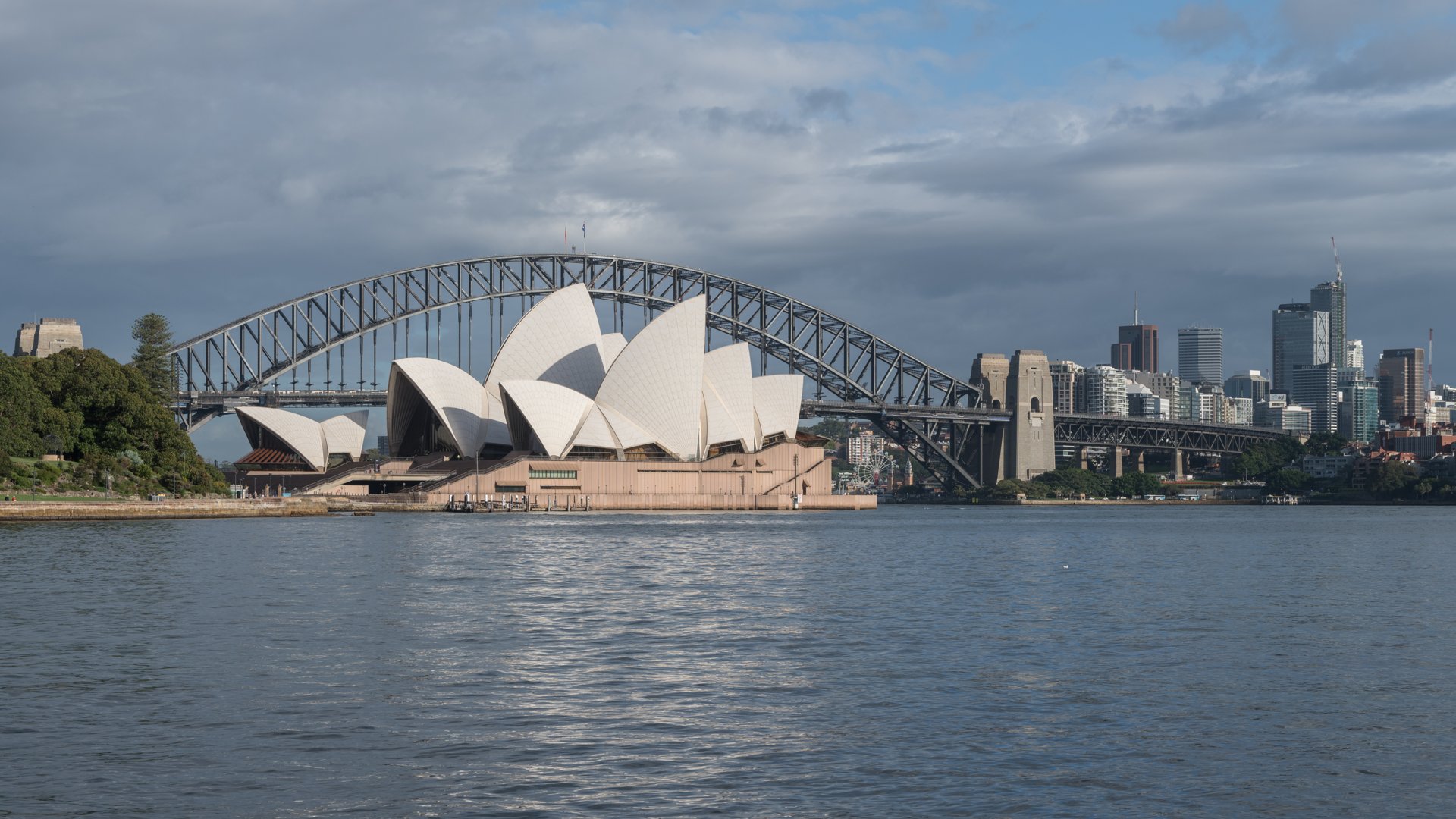

A lot of two week Australia itineraries try to cover Sydney, the reef, and Uluru, and some throw in Perth or the Great Ocean Road for good measure. The map does not support that plan. Sydney to Cairns by road is commonly put at somewhere between 2,400 and 2,600 km depending on the route and the source, a spread close to the roughly 1,500 mile (about 2,400 km) drive from Boston to Miami down the US east coast. That is one coastline, one direction, and it is already most of a fortnight if you stop anywhere along the way.
Uluru sits in the country's dead center, a three and a half hour flight from Sydney and, even with a thin direct Qantas service from Cairns, a destination that wants two or three nights of its own once you are there. Perth is a different coast entirely, over 3,200 km from Sydney by air, closer to five hours in the air than three. Neither fits inside a fourteen day east coast trip without gutting something else. They are not add-ons. They are separate trips wearing the same suitcase.
This is a fourteen day itinerary that stays on the east coast: Sydney, Byron Bay, a Brisbane or Gold Coast link, the Whitsundays, and Cairns with the reef and the Daintree, built on the operators' own published fees, government fee schedules, and current flight route data rather than a itinerary that assumes the outback and the west coast are a short detour.
The coastline you are actually planning against
Start with the numbers that actually disagree, because they do. Driving Sydney to Cairns is quoted at roughly 2,421 km via the Pacific and Bruce Highways by one route calculator, and at roughly 2,590 km over about 29 hours of non-stop driving by another that follows a more coastal alignment. Both are real routes; they just are not the same road. Either way, treat it as a minimum of three to four full driving days if you intend to drive the whole thing rather than fly sections of it, and most travelers doing this coast in two weeks fly at least one long leg.
For comparison, the Boston to Miami drive down the US Atlantic coast on I-95 is commonly put at about 1,489 to 1,500 miles, roughly 2,400 to 2,414 km, over about 23 and a half hours of non-stop driving. The two trips land in the same rough band, a couple of thousand kilometers of coastline, which is the entire point of the comparison: it is a big, single-direction trip on its own, before anyone adds a side trip to the middle of the continent.
Flying is how most people actually cover the distance. Sydney to Cairns direct runs a shortest scheduled time of about 3 hours and 10 minutes, and multiple daily departures are split across Qantas, Jetstar and Virgin Australia, so availability is rarely the constraint; price and timing are. The realistic version of this trip flies the long internal legs and spends the saved days on the ground in Byron Bay, the Whitsundays and around Cairns instead of on a highway.
Perth is not a side trip from the east coast either, it is the other side of the country. The straight-line distance between Perth and Sydney is commonly put at around 3,290 km, and scheduled flight time runs about four hours ten minutes westbound and five hours five minutes eastbound, the difference coming from prevailing winds. Margaret River, Rottnest Island and the Kimberley are each worth their own trip; none of it sits within reach of a fourteen day Sydney to Cairns plan without cutting the reef time that is the reason most people fly this far in the first place.
The fourteen days
This assumes Sydney in, Cairns out, flying the long internal legs rather than driving the whole coast, and it counts nights rather than days since that is what actually determines pace.
| Nights | Base | What shapes the days |
|---|---|---|
| 1 to 4 | Sydney | Harbour, Bondi to Coogee, a Blue Mountains day trip |
| 5 to 6 | Byron Bay | Short flight in, lighthouse walk, beach time |
| 7 | Brisbane or Gold Coast | A one night link on the way to a Whitsundays flight |
| 8 to 10 | Whitsundays (Airlie Beach or an island) | Sailing, Whitehaven Beach, a reef day |
| 11 to 13 | Cairns or Port Douglas | Outer reef day trip, Daintree and Cape Tribulation, Kuranda |
| 14 | Depart from Cairns | Fly home or onward |
Nights 1 to 4, Sydney
Four nights is enough to see the harbor properly without every day being a checklist. The Harbour Bridge Pylon Lookout, the museum built into the bridge's southeast pylon, runs from AU$25 for adults, or AU$35 once it becomes the Sydney Harbour BridgeMuseum from 27 May 2026, a fraction of a full BridgeClimb, which is commonly quoted from the AU$260 to AU$400-plus range depending on the time of day and day of the week. Climbing is a genuine bucket-list item for some travelers and a large, avoidable spend for others; know the gap before booking either one.
Give one full day to the Bondi to Coogee coastal walk, free and one of the better ways to see the eastern suburbs' beaches without a car. Give one day to the Blue Mountains: Scenic World's unlimited day pass, covering the railway, skyway and cableway, is listed from AU$64 for adults on the operator's own site, and Katoomba is roughly a 90 minute train ride from central Sydney.

Nights 5 to 6, Byron Bay
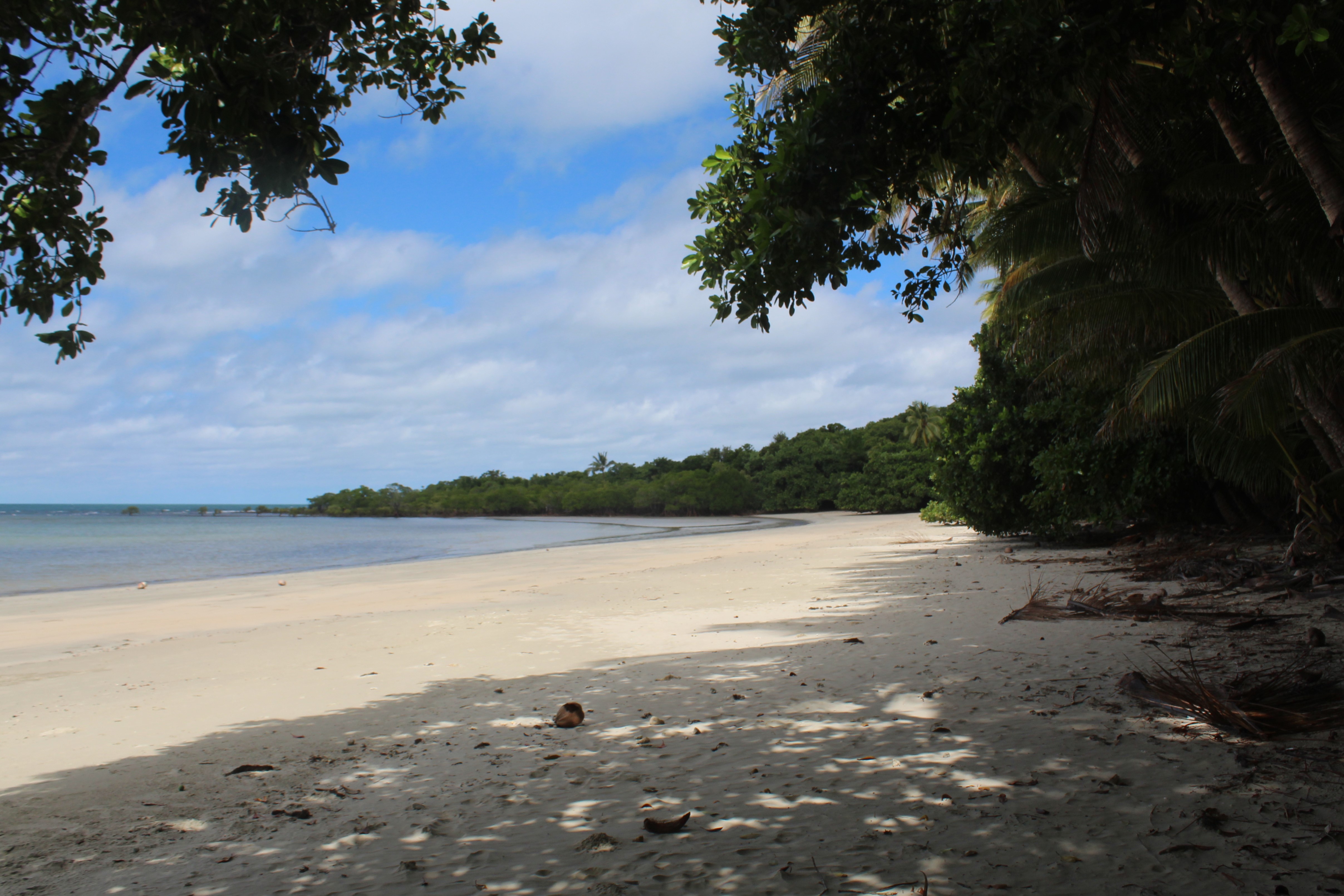
Fly rather than drive this leg. Sydney to Ballina Byron Gateway Airport runs about 1 hour 22 minutes, with more than a hundred flights a week across Qantas, Jetstar, Virgin Australia and Air New Zealand codeshares, so the frequency is genuinely there even if fares move around.
The Cape Byron lighthouse walk itself is free, a 3.7 km loop around the easternmost point of the Australian mainland. The lighthouse precinct's own car park is a different matter: New South Wales National Parks lists it at AU$10 per vehicle per hour for cars, capped at one hour per vehicle per calendar day, which is a strange cap to discover after you have parked for the afternoon. Park in town on Lawson, Middleton or in the Butler Street Reserve instead, all free with time limits, and walk in; it adds 35 to 50 minutes each way but removes the fee entirely.
Night 7, Brisbane or Gold Coast
Treat this as a link night rather than a destination. Byron Bay to Brisbane Airport is about 170 km and roughly two hours by road in normal traffic, longer during the weekday morning peak on the M1, and shuttle buses commonly run closer to three hours with stops. Whichever you choose, book it as the night before your Whitsundays flight rather than trying to make the connection same-day.
Nights 8 to 10, the Whitsundays
Two airports serve the Whitsundays. Hamilton Island Airport takes direct flights from Sydney, Melbourne and Brisbane on Virgin Australia and Qantas and puts you five minutes from the resort itself. Whitsunday Coast Airport at Proserpine, on the mainland, is served by more carriers including Jetstar's budget fares, but sits about 40 minutes from Airlie Beach by road or transfer bus. A new direct Cairns-Hamilton Island service from a regional carrier also began running in 2026, alongside Proserpine-Cairns service several times a week on regional carriers, which matters for the next leg of this itinerary.
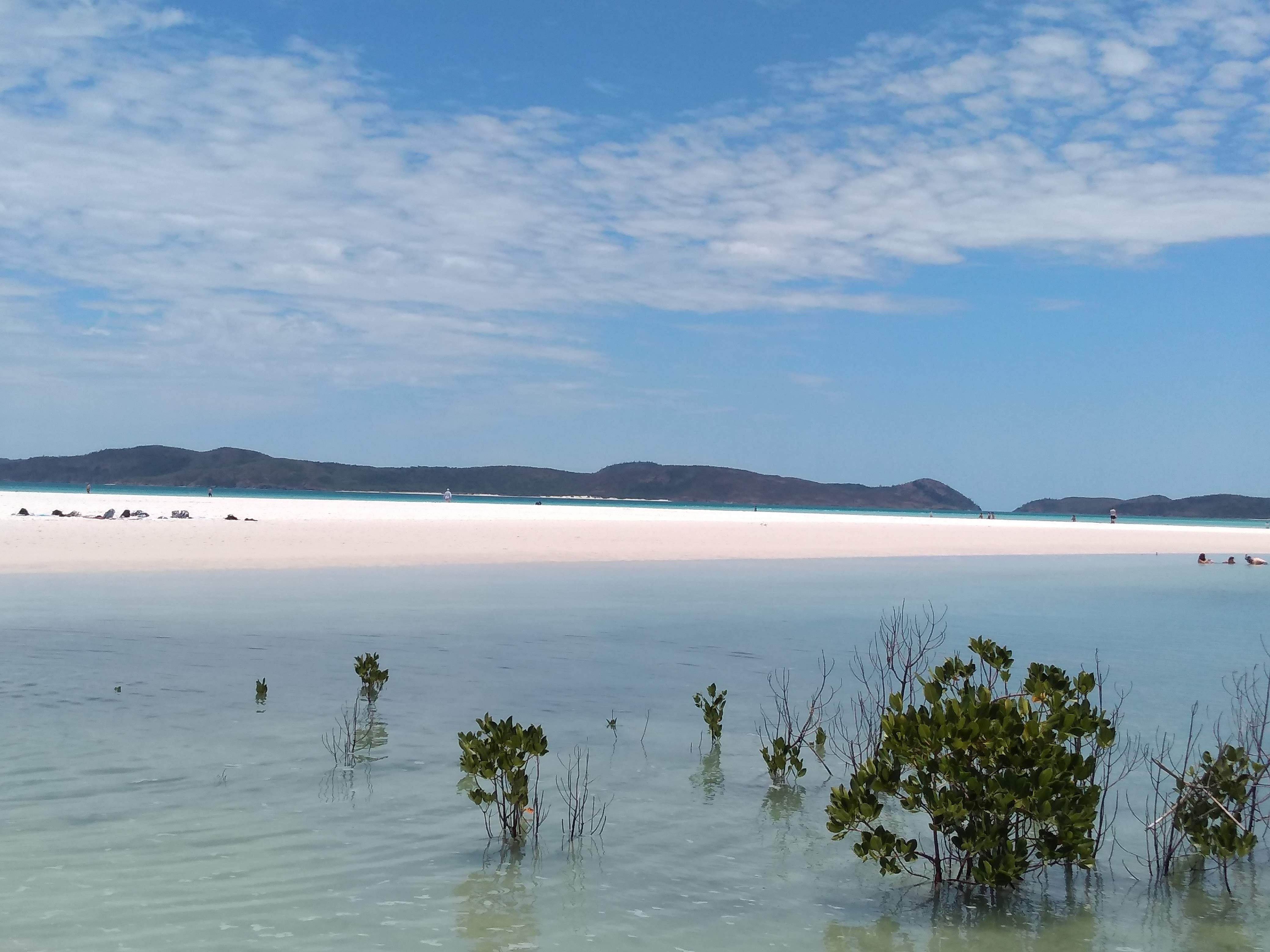
Three nights buys one full sailing or reef-pontoon day out to Whitehaven Beach and the outer islands, one day with slack for weather, and one day to actually sit still, which is rare enough on a moving itinerary that it is worth defending. Multi-day sailing trips exist and are genuinely good, but they eat two to three of your nights on a boat rather than in Airlie Beach or on an island, so decide which version of the Whitsundays you are doing before you book, day tours from a land base or a live-aboard sail, rather than trying to do both.

Nights 11 to 13, Cairns and Port Douglas
Fly Proserpine or Hamilton Island direct to Cairns rather than routing back through Brisbane; the regional services above make this the shorter option on the days they run, though frequency is thin enough that it is worth checking before you fix the rest of the schedule around it.
Three nights around Cairns supports one outer reef day trip, one Daintree and Cape Tribulation day, and one day for Kuranda or simply recovering. Reef day trips from Cairns with established operators such as Passions of Paradise and Sunlover Reef Cruises are commonly priced from roughly AU$260 to AU$350 for an adult depending on the operator and inclusions, with the government Environmental Management Charge already folded into that fare. Port Douglas, an hour north up the Captain Cook Highway, is a quieter, more upmarket base for the same reef access if Cairns itself feels too built up.
Getting into the Daintree proper means crossing the Daintree River on the cable ferry, since there is no bridge. Douglas Shire Council's own 2026/27 fee schedule lists a standard car at AU$35 one way or AU$57 return, an increase from the AU$31 and AU$51 rates in the prior year's schedule. Cape Tribulation, where the rainforest meets the reef, is roughly another 30 to 40 minutes past the ferry crossing.
The Skyrail Rainforest Cableway over the Barron Gorge to Kuranda is listed by the operator from around AU$74 one way and AU$111 return per adult; pairing it with the Kuranda Scenic Railway for one leg is the common way to do it without doubling back the same way you came.
What the reef actually costs, and where the sources disagree
Every commercial reef tour in Queensland charges a government Environmental Management Charge on top of the tour price, and this is one of the few places in this itinerary where the sources genuinely do not agree with each other. Some current guides describe a tiered structure: AU$8.00 per adult for a full day trip of three hours or more, AU$4.00 for a part-day trip, children under four exempt, and a cap of AU$24.00 over the first three days of an extended charter. Two established Cairns operators, Great Adventures and Quicksilver Cruises, instead state on their own pricing pages that the charge is a flat AU$8.50 per person for adults and children aged four and over, already folded into the advertised fare.
Those two figures, $8.00 tiered versus $8.50 flat, are close enough that the practical effect on your budget is negligible either way, but they are not the same number, and this piece could not resolve the discrepancy from the operators' own sites during research. What matters for planning purposes: the charge is small relative to the tour itself, it is charged once per day regardless of how many boats or islands you visit that day, and the number that actually affects your budget is the all-in adult fare, commonly AU$260 to AU$350 for a full day outer reef trip from Cairns, not the EMC line item buried inside it.
Entry and safety, the parts people skip past
Most visitors need an Electronic Travel Authority, subclass 601, applied for only through the official AustralianETA app rather than a website, at a AU$20 service fee with no separate visa charge. Decisions commonly come back within minutes, though official guidance is to apply at least a few weeks ahead rather than relying on the fastest case. Passport holders from some countries use a different, free eVisitor visa instead; check which category applies to your passport before assuming the ETA is the right one.
Marine stingers are a real, seasonal consideration in tropical Queensland waters, commonly described as running November through May, though experts are cautious about a hard "stinger season" framing since stings are not strictly confined to those months. Swim at patrolled beaches, use the stinger nets where they are provided, and consider a full-body lycra suit, which most reef tour operators either supply or rent, if you are swimming off a northern Queensland beach rather than an offshore reef platform in that window.
Key Takeaways
| Point | Details |
|---|---|
| The east coast alone is a Boston-to-Miami-sized trip | Sydney to Cairns by road runs roughly 2,421 to 2,590 km depending on the route; Boston to Miami on I-95 runs roughly 1,489 to 1,500 miles, about 2,400 to 2,414 km. |
| Flying beats driving the whole coast in two weeks | Sydney to Cairns direct runs from about 3 hours 10 minutes with multiple daily departures on Qantas, Jetstar and Virgin Australia, versus three to four full driving days. |
| Uluru is a separate trip, not a stopover | Sydney to Uluru direct runs about 3 hours 20 to 3 hours 40; the Cairns direct option is only a few flights a week. Either way Uluru wants two to three nights on the ground. |
| Perth is the other coast entirely | Roughly 3,290 km from Sydney, about 4 hours 10 minutes to 5 hours 5 minutes in the air depending on direction. |
| The reef fee sources disagree with each other | Some guides cite a tiered AU$8.00/AU$4.00 Environmental Management Charge with a three-day cap; two major Cairns operators list a flat AU$8.50 per person on their own sites. |
| A full day reef trip from Cairns runs roughly AU$260 to AU$350 | With the government Environmental Management Charge already included in that fare. |
| The Daintree ferry got more expensive on 1 July 2026 | A standard car now runs AU$35 one way or AU$57 return, up from AU$31 and AU$51 the year before, per Douglas Shire Council's own schedule. |
| The Byron Bay lighthouse car park caps out fast | AU$10 per vehicle per hour, capped at one hour per vehicle per calendar day. Park in town and walk in instead. |
| Most visitors need the AU$20 ETA, applied for only through the app | The Electronic Travel Authority (subclass 601) has no separate visa charge, only the AU$20 app service fee. |
| Marine stingers are a real November to May consideration | Swim at patrolled beaches within stinger nets, and consider a lycra suit for beach swimming in tropical Queensland. |
Where this plan breaks
Trying to add Uluru because it is "already in Australia." It sits a three to four hour flight from either coast, needs its own two to three nights to be worth the trip, and the direct Cairns option runs only a handful of flights a week. Doing it as a same-day add-on produces a tired travel day and very little of what makes the Rock worth seeing.
Adding Perth or the west coast to the same trip. The distance from Sydney alone is over 3,200 km and four to five hours in the air. This is not a stretch to an existing itinerary, it is a second country-sized trip using the same flight home.
Assuming the Great Barrier Reef fee schedules agree with each other. They do not, cleanly, between the tiered EMC figures some guides quote and the flat per-person rate two major Cairns operators publish on their own sites. Budget from the all-in tour price, not the disputed line item inside it.
Driving the whole coast to save on flights. At 2,400 to 2,600 km one way, driving Sydney to Cairns is a genuinely good multi-week road trip on its own terms, but folded into a fourteen day plan that also wants beach and reef time, it consumes three to four driving days that could otherwise be spent in the Whitsundays or around Cairns.
Booking the Byron Bay lighthouse car park for a full day. New South Wales National Parks caps it at one hour per vehicle per calendar day at AU$10 an hour. Park in town instead and walk in if you want more than an hour there.
Trying to fit Fraser Island (K'gari) into the same two weeks. It sits south of the Whitsundays near Hervey Bay and needs its own 4WD permit, listed on Queensland's own fee schedule at AU$61.80 for a standard vehicle access permit, plus two to three days to see properly. It is a real detour from the Sydney-Cairns line, not a stop along it.
How Planytera handles a trip like this
Planytera is an AI trip planner built by a solo developer, available on iOS, Android and the web. You describe the trip and it produces a day-by-day itinerary, ready in moments. On a route defined by how much distance it covers, three things matter more than any single attraction.
Pacing around the flights that actually decide the trip. Sydney to Byron, the Brisbane or Gold Coast link, the Whitsundays hop and the run up to Cairns are four separate movements in fourteen days. Setting the overall pace once and letting the days on each end adjust around those transfer days is a different job than writing five separate city guides and hoping the joins hold.
Keeping Uluru and Perth honestly separate. When a trip description mentions "Sydney to Cairns plus Uluru," the realistic answer is that it needs more days or a different scope, not a rushed flight wedged into day nine. Flagging that tradeoff early beats discovering it after the Whitsundays leg is already booked.
Re-pacing without rebuilding the week. A cancelled reef day, a Whitsundays sailing that gets rescheduled around weather, or a Daintree day trip that runs long all ripple into the days around them. Shifting what follows, rather than replanning the whole back half of the trip, is what actually saves a coast-long itinerary when one day does not go as booked.
Frequently asked questions
Is two weeks enough for Australia's east coast?
For Sydney, Byron Bay, a Whitsundays stop and Cairns with reef time, yes, at a pace that includes rest days. It is not enough to also do Uluru or the west coast without cutting something else; the driving distance alone, roughly 2,400 to 2,600 km from Sydney to Cairns depending on route, is comparable to a Boston to Miami road trip, and that is before adding a destination in the country's interior or on the opposite coast.
Should I fly or drive between Sydney and Cairns?
Fly the long legs if you only have two weeks. The full drive is quoted at roughly 2,421 to 2,590 km depending on the route, three to four full driving days at minimum, while the direct flight runs from about 3 hours 10 minutes with multiple daily departures across Qantas, Jetstar and Virgin Australia. Driving the whole coast is a legitimate multi-week trip in its own right; it is not compatible with also spending real time in the Whitsundays and around Cairns inside fourteen days.
Can I add Uluru to this itinerary?
Not without turning it into a longer or different trip. Uluru sits roughly in the center of the country, a three hour twenty to three hour forty flight from Sydney with frequent direct service, and only a handful of weekly direct flights from Cairns at about two hours fifty. It also rewards two to three nights on the ground rather than a same-day visit. Treat it as a separate trip unless you are adding at least three to four extra days.
How much does the Great Barrier Reef actually cost to visit?
A full day reef trip from Cairns with an established operator commonly runs AU$260 to AU$350 per adult, with the government Environmental Management Charge already included in that price. Sources disagree on the exact structure of that charge itself, some describing a tiered AU$8.00 to AU$4.00 rate with a three-day cap, two major Cairns operators instead listing a flat AU$8.50 per person on their own sites, but either way it is a small fraction of the total tour cost.
Do I need a visa for Australia?
Most visitors need an Electronic Travel Authority (subclass 601), applied for through the official AustralianETA app rather than a website, for a AU$20 service fee with decisions commonly returned within minutes. Passport holders from some countries instead qualify for the free eVisitor visa. Check which applies to your passport before applying, since applying for the wrong one wastes the fee.
Is it safe to swim in North Queensland during the trip?
Marine stingers, including box jellyfish and Irukandji, are a real consideration in tropical Queensland coastal waters, commonly associated with the months from November to May, though stings are not strictly limited to that window. Swim at patrolled beaches within stinger nets where provided, and use a full-body lycra suit, commonly supplied or rented by reef tour operators, for extra protection when swimming off the coast rather than on an offshore platform.
Useful sources and further reading
- Great Barrier Reef Marine Park Authority: Environmental Management Charge, the government fee that applies to commercial reef tours.
- Great Adventures Cairns: fares and prices and Quicksilver Cruises: fares, for the operators' own stated Environmental Management Charge figures.
- Douglas Shire Council: Daintree Ferry fees 2026/27, the current one-way and return car fares.
- Queensland Government: vehicle access permit fees, for the K'gari (Fraser Island) permit cost.
- Scenic World Blue Mountains: day passes, for current railway, skyway and cableway pricing.
- Sydney Harbour Bridge: tickets and prices and BridgeClimb: compare climbs and prices, for the Pylon Lookout and full climb price ranges.
- NSW National Parks: Cape Byron Lighthouse Precinct venue information, for the lighthouse car park fee and cap.
- Tourism Whitsundays: getting to the Whitsundays, for the Hamilton Island and Proserpine airport comparison.
- Skyrail Rainforest Cableway: tickets and prices, for current Kuranda cableway fares.
- Australian Government Department of Home Affairs: Electronic Travel Authority (subclass 601), the official visa information page.
- Surf Life Saving Queensland: marine stingers, for stinger season guidance and swimming safety.
- FlightConnections: Sydney to Cairns route data, for direct flight frequency and duration.
Recommended
More from the Planytera blog.