Blog17 min read
7 Days in Maui
A seven day Maui plan built around a Haleakala sunrise slot booked weeks ahead and a Road to Hana that eats a full day each direction.
By Dom


Two things break a first-time Maui itinerary, and neither of them is exotic. The first is a sunrise view from the summit of Haleakalā that cannot be decided the night before, because the National Park Service will not let a car onto the mountain during sunrise hours without a reservation bought in advance. The second is the Road to Hāna, a road that looks like a half-day drive on a map and is not one, because it spends 64 miles crossing 620 curves and 59 bridges, nearly half of them too narrow for two cars to pass.
Neither fact is hidden. Both get skipped anyway, because a seven day trip fills up fast with beach days and a rental car booking, and a park reservation system feels like something to sort out once you land. It is not. The reservation window opens 60 days out, sells out fast, and there is no walk-up alternative during the hours that matter. This plan puts both constraints on the calendar first and builds the rest of the week around them.
The sunrise reservation, and why "we'll decide in the morning" does not work
Haleakalā National Park requires a separate reservation for any non-commercial vehicle entering the summit district's four highest parking lots, Summit, Haleakalā Visitor Center, Kalahaku and Leleiwi, between 3:00 a.m. and 7:00 a.m., according to the National Park Service's own sunrise reservations FAQ. The reservation itself costs $1.00 per vehicle, booked exclusively through Recreation.gov, on top of the park's standard entrance fee of $30 per vehicle, which covers three consecutive days across both the Summit and Kīpahulu districts.
The booking window is the part that catches people out. Reservations release 60 days in advance at 7:00 a.m. Hawaii Standard Time, and by multiple accounts, including the Park Service's own materials, that day's batch commonly sells out within about 15 minutes. A second, smaller batch releases 48 hours before each date, which is a real second chance but not a reliable one for a trip planned only a week or two out. If a specific sunrise date matters to you, put it on the calendar the day the 60-day window opens for that date, not the week you land in Hawaii.
The reservation is not the whole story. The summit sits at 10,023 feet, and pre-dawn temperatures there commonly run in the high 30s to low 40s Fahrenheit, at least 30 degrees colder than sea level, according to multiple current guides to the park's weather. A car full of beach clothes and no jacket is a genuinely common way to have a miserable time at 10,000 feet in a place most visitors associate with 80-degree afternoons.
Fee-free entrance days exist on the federal calendar (Presidents Day, Memorial Day, the Independence Day weekend and Veterans Day were among 2026's listed dates on the park's own fee page), but the Park Service is explicit that fee-free days do not cover the 3:00 to 7:00 a.m. sunrise window or its reservation. There is no version of this rule that lets a free day substitute for a booked slot.
The Road to Hāna is not a morning
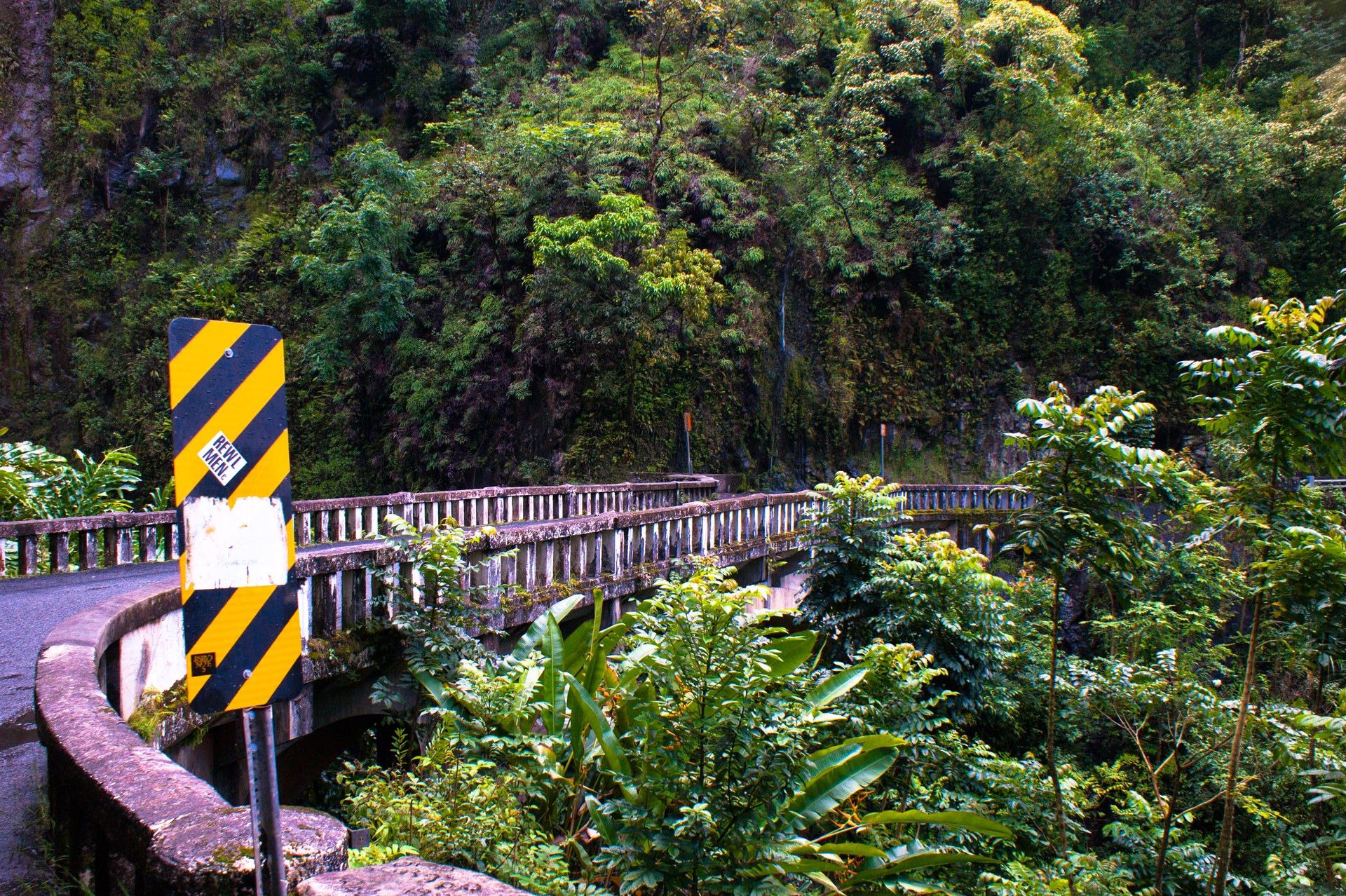
The Hāna Highway, Hawai'i Routes 36 and 360, runs roughly 64.4 miles from just east of Kahului to the town of Hāna, according to figures compiled from Hawai'i Department of Transportation sources on the road's own Wikipedia page, and along the way it crosses 59 bridges. Here is where a lot of trip planning goes wrong: the figure that circulates as "59 one-lane bridges" is not quite right. Of those 59 bridges, 46 are one lane wide, per the same sourcing, corroborated by a 2026 Maui News report on a Hawai'i DOT rehabilitation project for six of the highway's bridges that explicitly preserves their single-lane form. The other 13 bridges are wide enough for two-way traffic. It is a real distinction if you are trying to estimate how often you will be waiting for oncoming traffic to clear a bridge, which on this road is often.
An uninterrupted, non-stop drive of the highway takes about 2.5 hours by one commonly cited estimate, longer by others once the curves and the narrow surface are accounted for, and that number assumes zero stops on a road whose entire reason for existing is the string of waterfalls, black sand beaches and lookouts along it. Realistically, most visitors treat it as a full day trip from central or south Maui, commonly running 10 to 12 hours round trip once stops are included, because much of the road runs well under 25 mph. Budget the whole day, both directions, not a morning.
There is no gas station for long stretches of the drive and no reliable cell service either, a combination that shows up in nearly every current guide to the route as a reason to fill the tank in Pā'ia or Kahului before you leave and to download offline maps in advance.

The back road, and why most rental agreements do not want you on it
Piilani Highway, the coastal route that continues past Hāna and loops back toward central Maui rather than backtracking the way you came, is popular in trip reports as a way to avoid driving the same 64 miles twice. It is also, per current road-condition guides, a mix of paved sections and long unpaved or patchy-asphalt stretches, narrow in places, exposed to rockslides and flash flooding, with no gas, food or cell service along most of it. Several rental car companies either discourage or explicitly prohibit driving it, and getting stuck or damaging a vehicle on a restricted section commonly voids the rental agreement, leaving only liability coverage in place. As of an April 2026 notice, Maui County had the highway closed to through traffic near Ulupalaka Ranch for local access only. Check both your rental agreement and current road status before treating the loop as the default return route; the standard Hāna Highway as far as Kīpahulu, inside the national park's south district, is the route nearly every rental company does allow.
The other bookings this trip needs
Haleakalā and Hāna are not the only reservations on this island that changed from walk-up to timed-entry in the last few years.
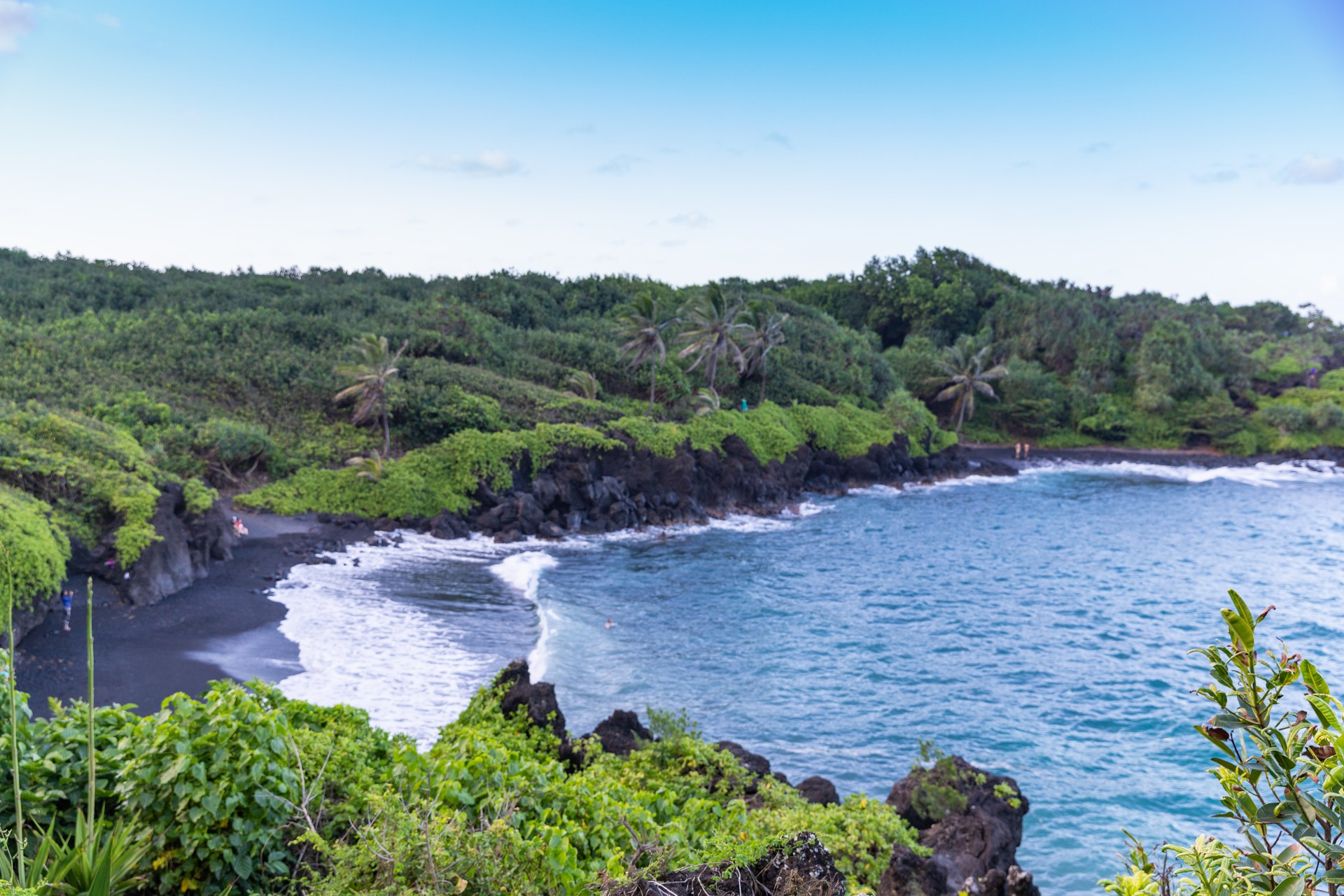
Waiʻānapanapa State Park, the black sand beach roughly halfway along the Road to Hāna, requires all non-resident visitors to book and prepay online in advance, per the state parks division's own reservation page. The listed cost is $5 per person plus $10 non-resident parking, and reservations open up to 30 days ahead, with no same-day booking available. Arriving without one risks being turned away at what is often the most photographed stop on the whole route.
ʻĪao Valley State Monument, the short valley hike near Wailuku on the way to or from the airport, similarly requires advance reservations for all out-of-state visitors, per the Hawai'i Division of State Parks: $5 entrance per person plus $10 non-resident parking, timed to 1.5-hour entry slots. Hawai'i residents with valid state ID are exempt from both.
Snorkeling Molokini and the wide price range that comes with it
Molokini, the crescent-shaped crater a short boat ride off Maui's south shore, is sold almost entirely through half-day boat tours rather than as a DIY destination, since it has no dock and no shore access. Current pricing guides put the range at roughly $130 to $200 per adult for a standard catamaran trip, climbing toward $250 or more for smaller rigid-hull boats or premium departures. The spread depends on boat size, what is included (gear, food, a second snorkel stop) and how early the boat leaves, with earlier departures generally getting calmer water and better visibility. Book a specific operator rather than budgeting a single number, since the range genuinely is that wide.
What West Maui looks like right now
Anyone building a Maui trip in 2026 should know where the island's tourism map has and has not returned to normal since the August 2023 Lahaina wildfire. Reporting from Hawai'i-focused outlets in mid-2026 describes a town still visibly mid-rebuild: sections of Front, Luakini, Prison and Dickinson streets have reopened to vehicles, including a stretch of Front Street between Pāpalaua and Shaw that reopened in August 2026, and the Cannery Mall and Lahaina Gateway shopping areas on the north side of town are open with grocery stores and a run of well-regarded restaurants along the water. Maui County had issued 552 rebuilding permits by March 2026, with 159 completed, per coverage from Civil Beat. The historic commercial core along the water, though, is still largely empty lots and construction fencing.
Nothing here should stop a visit; West Maui's resort areas in Kāʻanapali and Kapalua were not directly burned and have been open through the recovery period. But a plan that assumes historic Lahaina town is back to its pre-2023 self, full of open storefronts to browse, is planning against a town that is not there yet. This itinerary keeps West Maui light for that reason and puts the week's anchor days on the summit, the north shore road and the south shore beaches instead.
The seven days
This assumes a Kahului (OGG) arrival, a rental car for the week, and a base that can shift once, from south shore to central Maui, to shorten the Road to Hāna drive.
| Day | Base | What shapes the day |
|---|---|---|
| 1 | Kīhei or Wailea | Arrive OGG, settle in, short beach walk |
| 2 | Kīhei or Wailea | Molokini snorkel tour (booked ahead) |
| 3 | Kīhei or Wailea | Haleakalā sunrise (reservation required), rest of day open |
| 4 | Kīhei or Wailea | Road to Hāna, out and back in one day |
| 5 | Kīhei or Wailea | Recovery day, south shore beaches |
| 6 | Kīhei or Wailea | ʻĪao Valley, Wailuku, a West Maui afternoon |
| 7 | Depart from Kahului | Return flight |
Day 1, arrival
OGG's nonstop routes from the West Coast run long: Los Angeles to Kahului is commonly scheduled around 5 hours 39 minutes, and San Francisco around 5 hours 5 to 25 minutes depending on direction, per current flight-schedule data. Plan an easy first day, groceries and a short walk on the sand, not a packed itinerary.
Day 2, Molokini
Book the boat before the trip, not after you land; the better-reviewed morning departures fill up. Whichever operator you pick, confirm what is included, since the $130 to $200-plus range mostly reflects boat size and what is bundled in rather than a fixed market rate.
Day 3, Haleakalā sunrise
This is the day the whole week is built around, and it only works if the reservation was booked 60 days out. Leave Kīhei by roughly 3:00 to 3:30 a.m. to reach the summit before 7:00 a.m., in warm layers regardless of how the beach felt the afternoon before. The rest of the day can be as light as the early start demands.
Day 4, the Road to Hāna
Fill the tank in Pā'ia, download offline maps, and treat this as the day's only plan. Realistically 10 to 12 hours round trip with stops at black sand beaches, waterfalls and lookouts; book Waiʻānapanapa in advance if a stop there matters to you, since it is one of the drive's best-known points and does not accept walk-ups from non-residents. Do not schedule anything else this day, in either direction.

Day 5, recovery
A long pre-dawn day followed by a 10-to-12-hour drive leaves most travelers wanting a slow day. South shore beaches at Wailea or Kīhei are the easy choice, with no bookings required.
Day 6, ʻĪao Valley and West Maui
ʻĪao Valley is a short visit, roughly an hour including the walk to the lookout, and sits close to Wailuku and the airport, making it easy to pair with a West Maui afternoon in Kāʻanapali or Kapalua. Book the valley's timed entry slot in advance if you are not a Hawai'i resident.
Day 7, departure
Kahului's airport sits a short drive from the south shore. Build in the standard international-flight buffer for security and check-in rather than cutting it close on the last morning.
Key Takeaways
| Point | Details |
|---|---|
| Haleakalā sunrise requires a reservation, not a walk-up gate | $1 per vehicle via Recreation.gov, released 60 days out at 7 a.m. HST, commonly gone within about 15 minutes; a smaller batch releases 48 hours ahead. |
| The sunrise window is 3:00 to 7:00 a.m., and fee-free days do not cover it | Even on the park's federal fee-free dates, the sunrise reservation and its window still apply. |
| The Road to Hāna is a full day, not a morning | 64.4 miles, 620 curves, 59 bridges, an uninterrupted drive runs about 2.5 hours one way; most visitors budget 10 to 12 hours round trip with stops. |
| "59 one-lane bridges" overstates it slightly | 46 of the 59 bridges are one lane wide; the other 13 allow two-way traffic. |
| The back road (Piilani Highway) is often off-limits to rental cars | Long unpaved stretches, no services, and many rental agreements exclude or void coverage on it; part of it was closed to through traffic as of an April 2026 county notice. |
| Waiʻānapanapa and ʻĪao Valley both now require advance non-resident reservations | Roughly $5 entry plus $10 parking at each; no same-day or walk-up option for out-of-state visitors. |
| West Maui is mid-rebuild, not back to normal, as of 2026 | Some Lahaina streets and businesses have reopened; the historic core is still largely construction fencing per 2026 reporting. |
| Molokini snorkel pricing has no single number | Roughly $130 to $200 per adult on a standard catamaran, higher on smaller boats or premium trips; book by operator, not by average. |
Where this plan breaks
Booking the trip before checking the 60-day sunrise window. A seven day Maui trip planned two or three weeks out can still land a Road to Hāna day or a Molokini tour on short notice. It cannot reliably land a specific Haleakalā sunrise date, because that reservation opens exactly 60 days ahead and routinely sells out in about 15 minutes. If sunrise on the summit is a must-do, it has to be the first thing booked, potentially before flights.
Treating the Road to Hāna as a half-day add-on. A plan that schedules a morning drive to Hāna and an afternoon activity somewhere else is a plan that has not looked at the road's actual pace. Most of it runs under 25 mph, and the round trip with stops commonly runs 10 to 12 hours. Stacking anything else onto that day usually means skipping stops or driving parts of the route in the dark.
Assuming Waiʻānapanapa and ʻĪao Valley still take walk-ups. Both moved to online, prepaid, timed entry for non-residents in recent years. A plan built from an older guide or a friend's pre-reservation trip report can arrive at either site with nothing to show at the gate.
Driving Piilani Highway in a standard rental without checking first. It looks, on a map, like a natural way to loop back from Hāna without repeating the drive. Long unpaved stretches, no services, and rental agreements that commonly exclude the road entirely make it a real risk rather than a shortcut, and part of the route was under a through-traffic closure as of April 2026.
Expecting historic Lahaina to be a normal town to wander through. As of 2026, meaningful parts of West Maui have reopened, including restaurants, shopping and stretches of Front Street, but the historic core remains under construction. A day built around browsing Lahaina's old town as it existed before 2023 is planning against a place that is still being rebuilt.
How Planytera handles a trip like this
Planytera is an AI trip planner built by a solo developer, available on iOS, Android and the web. You describe the trip and it produces a day-by-day itinerary, ready in moments. A Maui week built around two fixed points, a sunrise slot on one specific morning and a full day given over to one road, is exactly the kind of plan where the order of days matters more than the list of things to see.
Anchoring the week to a date that cannot move. Once a Haleakalā sunrise reservation is booked for a specific morning, the rest of the trip has to build around it rather than the other way around. Planning the early wake-up day and the recovery day next to it, instead of scattering rest days randomly through the week, keeps one long pre-dawn morning from wrecking the days that follow.
Treating a full driving day as a full day, not a slot to fill around. The Road to Hāna does not leave room for a second booked activity the same day. A plan that blocks the whole day for it, rather than squeezing in a snorkel tour or a dinner reservation on either end, matches how the day actually goes.
Re-pacing without rebuilding the week. If a sunrise reservation only comes through for a different date than planned, or a snorkel tour gets weathered out, shifting the days around that change and letting the rest of the week resync beats starting the itinerary over.
Saved trips and shared plans. A week with two separate advance-reservation systems (Recreation.gov for the summit, Hawai'i state parks for Waiʻānapanapa and ʻĪao Valley) is easier to track as a shared, read-only plan than as a set of confirmation emails split across two inboxes.
Frequently asked questions
Do I really need a reservation just to watch the sunrise at Haleakalā?
Yes, for any non-commercial vehicle entering the park's four highest summit parking lots between 3:00 and 7:00 a.m. It costs $1 per vehicle, is booked through Recreation.gov, and is separate from the park's standard entrance fee. There is no gate sale during those hours; guided sunrise tours that use vans or bikes typically hold their own block of reservations, but a self-driven visit needs its own.
How far in advance do Haleakalā sunrise reservations open, and do they really sell out that fast?
Sixty days ahead, at 7:00 a.m. Hawai'i Standard Time, through Recreation.gov. By multiple accounts, including the National Park Service's own materials, a given date's reservations commonly sell out within about 15 minutes of release. A second, smaller release happens 48 hours before each date for travelers who could not plan that far ahead, but it is not a reliable substitute for booking on day one of the window.
Is it really 59 one-lane bridges on the Road to Hāna?
Not quite. The highway crosses 59 bridges in total, and 46 of them are one lane wide; the remaining 13 allow two-way traffic. It is a small correction, but it matters for pacing: on a narrow bridge, one direction has to yield, and with 46 of those crossings on one road, the waits add up over the drive.
Can I drive the Road to Hāna in a normal rental car, and should I loop back on Piilani Highway?
The standard Hāna Highway route, as far as Kīpahulu in the national park's south district, is the route nearly every rental company allows. Piilani Highway, the coastal loop that continues past Hāna, is a different matter: long stretches are unpaved or in poor repair, services are scarce, and many rental agreements exclude it or void coverage if you get stuck or damage the car there. Check your specific rental agreement and current road status before treating it as your return route.
Do I need to book Waiʻānapanapa State Park and ʻĪao Valley in advance?
If you are not a Hawai'i resident, yes, for both. Waiʻānapanapa requires online prepayment up to 30 days ahead, with no same-day booking, at roughly $5 per person plus $10 non-resident parking. ʻĪao Valley works similarly, with timed 1.5-hour entry slots at a comparable price. Hawai'i residents with valid state identification are exempt from both fees and reservations at each site.
Is Lahaina open to visitors in 2026?
Parts of it. Sections of Front, Luakini, Prison and Dickinson streets have reopened to vehicles, and the Cannery Mall and Lahaina Gateway areas on the north side of town have grocery stores, restaurants and shops operating. The historic waterfront core burned in the August 2023 wildfire remains largely under construction as of 2026 reporting, with rebuilding permits still being issued through the year. West Maui's resort areas in Kāʻanapali and Kapalua, which were not directly burned, have continued operating throughout.
Useful sources and further reading
- National Park Service: Haleakalā sunrise reservations FAQ, for the reservation fee, booking window and required hours.
- National Park Service: Haleakalā fees and passes, for entrance fee amounts, validity and fee-free dates.
- Recreation.gov: Haleakalā National Park summit sunrise reservations, the official booking platform.
- Wikipedia: Hāna Highway, for the route's length, curve count, and the 59 bridges/46 one-lane figure sourced to Hawai'i DOT records.
- Maui News: Hāna Highway bridge project to preserve historic character, on the 2026 rehabilitation of six of the highway's bridges while preserving their single-lane form.
- Hawai'i Division of State Parks: Waiʻānapanapa State Park and reservation details, for non-resident fees and the reservation window.
- Hawai'i Division of State Parks: ʻĪao Valley State Monument, for fees, hours and reservation rules.
- Civil Beat: Maui wildfires 3 years later, Lahaina recovery continues, for 2026 rebuilding permit figures and the state of the historic core.
- Hawaii Guide: visiting Lahaina, what's open, for street-by-street reopening status.
- FlightConnections: Los Angeles to Kahului and San Francisco to Kahului, for nonstop flight times from the West Coast.
Recommended
More from the Planytera blog.