Blog17 min read
10 Days in Israel: Building the Route Around Shabbat
A ten day Israel plan built around Shabbat, when public transport and most businesses stop from Friday afternoon to Saturday night, every week.
By Dom

Most Israel itineraries are written as if every day of the week behaves the same way. It does not. From Friday afternoon until after dark on Saturday, intercity buses and trains stop running almost everywhere in the country, most shops and many restaurants close, and several of the sites on everyone's list either shorten their hours or shut entirely. This is not a quirk of one town or one operator. It is Shabbat, the weekly Jewish day of rest, and it is observed at the level of national transport policy, not just by individual businesses choosing their own hours.
None of this makes Israel hard to visit. It makes Israel a country where the calendar grid matters as much as the map, and where a plan built without checking which day of the week each stop falls on will hit a wall it never saw coming, usually on a Saturday morning with no bus to the next town and a locked museum door. This plan treats the weekly shutdown as a fixed feature of the route, not an inconvenience to route around later, and it puts the one day you cannot avoid losing to Shabbat somewhere it actually works in your favor.
The weekend runs Friday to Saturday, not Saturday to Sunday
Israel's work week runs Sunday through Thursday. The weekend is Friday and Saturday, and Shabbat itself runs from sunset Friday to sunset Saturday, as the City of Tel Aviv-Yafo's own tourism site puts it plainly. That single fact reorders everything else in this post: the day most visitors assume is free for sightseeing, Sunday, is a normal working day with normal public transport, while Saturday, which feels like the obvious travel day to anyone arriving from a Monday-to-Friday country, is the day large parts of the transport network do not run at all.
The start and end times are not fixed on a clock. They are tied to sunset, which shifts across the year, so Shabbat begins as early as mid-afternoon in December and as late as early evening in June. There is no single "Shabbat starts at X" to memorize; the practical version is to check the candle-lighting time for your city and week and build backward from it, particularly for the Friday you plan to be moving between cities.
What actually stops, and what does not
Intercity buses and trains stop nationwide, with named exceptions. Egged and Dan, the country's two largest bus operators, suspend service from Friday afternoon until after nightfall Saturday, per Dan's own service description. Israel Railways runs no passenger trains over the same window; reported departure patterns put the last Friday trains in the mid-afternoon and the first Saturday-night trains resuming roughly an hour after sundown, though exact times vary by route and week, so check the current timetable rather than this post for your specific dates.
Haifa, Nazareth and a handful of other mixed Jewish-Arab cities are the exception, not Tel Aviv or Jerusalem. Haifa has long run limited bus service through Shabbat because of its mixed population, and the same holds in Nazareth and Nof HaGalil. Treat this as a genuine planning lever: basing a day in one of these cities removes the transport problem entirely for that day, in a way basing in Jerusalem or a small Galilee town does not.
Tel Aviv's light rail (the Red Line) does not run Saturday daytime at all, after the transport ministry reversed an earlier plan for full Saturday service and limited it to roughly 45 minutes on Saturday evening, according to Israeli press coverage of the decision. Haifa's Carmelit subway follows a similar pattern, running regular hours Sunday to Friday afternoon and resuming for a few hours after Shabbat ends Saturday night, while some of Haifa's surface bus lines, including the Metronit, keep running through the day.
Sherut shared taxis and private taxis are the real workaround. Both intercity and local sherut routes keep running through Shabbat, and reported pricing has Jerusalem-Tel Aviv sherut fares roughly doubling compared with the normal bus-equivalent fare once the buses themselves stop running, since the sherut becomes the only road option. Private taxis operate as usual, at a premium.
Tel Aviv itself stays lively. The municipality's own Shabbat guidance says most bars, restaurants and cafes keep operating normally, alongside 24-hour mini-markets and the city's larger museums and galleries, while shops, supermarkets and smaller museums close. Saturdays are, if anything, Tel Aviv's busiest cafe and beach day. The same page notes the city also runs a free weekend transport initiative connecting Tel Aviv with neighbouring municipalities on Shabbat itself; coverage of its launch describes seven bus lines across the metro area, run free of charge, though it is a relatively new, municipally funded service and worth confirming is still operating on the dates you travel rather than assumed as permanent infrastructure.
Jerusalem is quieter and more divided by neighborhood. Jewish-run businesses across much of West Jerusalem close for Shabbat, sometimes abruptly at midday Friday, while the Old City's Muslim and Christian Quarters and East Jerusalem generally continue operating as normal, since Friday and Sunday, not Saturday, are the relevant days of rest there. A handful of ultra-Orthodox Jerusalem neighborhoods, Mea Shearim among them, close their own streets to vehicle traffic for the duration of Shabbat; driving through, even to pass by, is unwelcome and occasionally contested.
What is open, closed, or shortened at the big sites
This is the part that catches people who correctly plan around transport and then still lose a day, because a museum's hours do not move in lockstep with the buses.
Open as usual, or close to it. The Western Wall plaza in Jerusalem's Old City is open every hour of every day, including through Shabbat, though the site's own conduct guidelines ask visitors not to use phones, cameras or any electronics there during Shabbat out of respect. Masada National Park keeps essentially the same hours on Saturday as any other day, closing an hour earlier than usual only on Fridays. The Israel Museum in Jerusalem is open a full day on Saturday, 10:00 to 17:00, and is the one that runs shorter on Friday, 10:00 to 14:00.
Closed on Saturday, full stop. Yad Vashem, Israel's national Holocaust memorial and museum, is closed every Saturday and on all Jewish holidays, with Friday hours cut to 09:00 to 14:00, per the museum's own published hours. The Allenby (King Hussein) Bridge crossing into Jordan is closed on Saturdays as well, with shorter Friday hours than the rest of the week; its exact weekday hours have been reduced further amid security concerns reported in Israeli press as recently as February 2026, so confirm the current schedule directly before building a Jordan side trip around it.
Closed on Friday, which is easy to miss. The Temple Mount, Haram al-Sharif, is open to non-Muslim visitors only Sunday through Thursday, in two short windows each day (roughly 7:30 to 11:00 and a shorter afternoon slot, shifting with the season), and is closed to non-Muslim visitors on both Friday and Saturday, and during Muslim holidays. If seeing it from inside the compound matters to you, it has to land on a weekday, and specifically not the Friday you are already treating as a half day.
Damaged, not closed by Shabbat but worth knowing before you build a Dead Sea day around it. Ein Gedi Nature Reserve was badly damaged by a flash flood in May 2025 that destroyed trail infrastructure and flooded the site's ancient synagogue; as of this writing only the short Nahal David walk and the synagogue are open, with the rest of the reserve's trail network still under restoration. Do not plan a full Ein Gedi hiking day without checking the Israel Nature and Parks Authority's current status first.

Getting around the rest of the week
Outside the Friday-Saturday window, Israel is compact and the connections are good. The Tel Aviv-Jerusalem high-speed rail line covers the trip in around 32 to 34 minutes, including a stop at Ben Gurion Airport, a fraction of the roughly hour-long drive the same route takes by road outside peak traffic. That train, like every other, does not run during Shabbat, so a day that depends on hopping between those two cities needs to sit on a weekday.
| Leg | Approximate time | Notes |
|---|---|---|
| Tel Aviv to Jerusalem, train | about 30 to 35 minutes | Does not run Friday afternoon through Saturday night |
| Tel Aviv to Jerusalem, car | about an hour, more at peak | Roughly 67 km |
| Jerusalem to the Dead Sea (Ein Gedi area) | roughly an hour | Via Route 1 east, then south on Route 90 |
| Dead Sea/Masada to Tiberias or Nazareth | roughly 2.5 to 3 hours | Route 90 up the Jordan Valley; it looks like the fast way and often is not |
| Tel Aviv to Haifa | about an hour | Roughly 93 km |
| Nazareth to Haifa | 30 to 40 minutes | Roughly 39 km |
| Ben Gurion Airport to Jerusalem, sherut | runs around the clock | One of the few options that keeps running straight through Shabbat |
Treat the driving times as a planning range, not a promise. They come from route-mapping sources rather than a single national road authority, and traffic around Tel Aviv and Jerusalem at peak hours routinely doubles the off-peak figure.
Why the Dead Sea is where Shabbat should land
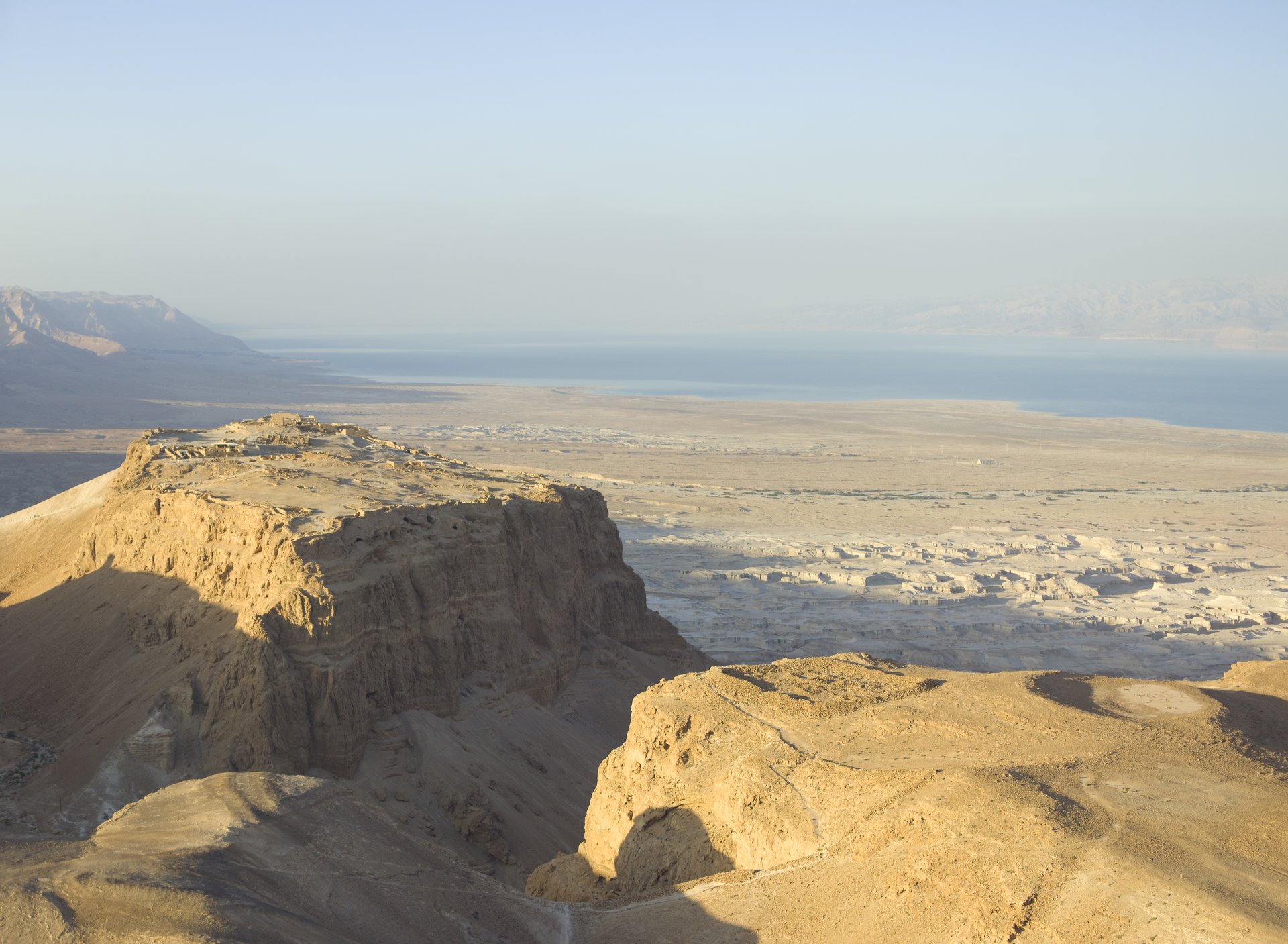
Here is the move that makes the rest of the week work: put your Friday-to-Saturday pair on the Dead Sea and Masada, reached by rental car, rather than on a city that depends on buses and trains to get around.
Masada keeps its normal Saturday hours. The Dead Sea itself is not a ticketed site with its own opening hours in the way a museum is. A rental car, picked up before Friday afternoon, removes the entire transport problem, because self-driving in Israel is not restricted during Shabbat the way public transit is; the restriction is cultural and institutional on the operator side, not a traffic law aimed at private cars. The one real constraint is rental company office hours, which commonly run only until early Friday afternoon and do not reopen until Shabbat ends, so pick the car up a day ahead of when you need it rather than on the Friday itself. A small number of car-sharing operators catering specifically to religious customers contractually prohibit driving their vehicles during Shabbat, with real financial penalties attached; that is a specific company policy rather than a rule for ordinary tourist rentals, but it is worth reading the rental agreement rather than assuming.
Put that together and Friday becomes a short travel day from Jerusalem to the Dead Sea, arriving with time to settle in before sunset, and Saturday becomes a Masada sunrise hike and a Dead Sea float, both of which happen regardless of what day it is. Compare that with trying to hold the same Friday-Saturday pair in Jerusalem or the Galilee, where the sites worth seeing are a bus ride apart and the buses are the thing that is not running.

The ten days
This routing starts and ends in Tel Aviv, uses the train for the Tel Aviv-Jerusalem leg, and picks up a rental car on day five to carry the Dead Sea, Masada and the drive north. It assumes you can choose your arrival day; arriving on a Sunday keeps the Friday-Saturday pair landing on days six and seven, exactly where this plan wants it.
| Day | Base | Focus |
|---|---|---|
| 1 | Tel Aviv | Arrive, Jaffa in the evening |
| 2 | Tel Aviv | Carmel Market, Rothschild, the beach |
| 3 | Jerusalem | Train in, Old City first look, Western Wall |
| 4 | Jerusalem | Yad Vashem, Israel Museum |
| 5 | Jerusalem | Temple Mount (weekday window only), pick up rental car |
| 6 | Dead Sea | Morning market in Jerusalem, drive south before Shabbat begins |
| 7 | Dead Sea | Masada at sunrise, float, drive north after Shabbat ends |
| 8 | Nazareth / Galilee | Nazareth Old City, Sea of Galilee |
| 9 | Haifa | Baha'i Gardens, Carmelit, German Colony |
| 10 | Tel Aviv | Drop the car, depart |
Days 1-2, Tel Aviv. Settle in, walk Jaffa's old port in the evening light, and spend a full day on Rothschild Boulevard, the Carmel Market and the beach. Tel Aviv is the most forgiving city on this trip to arrive into jet-lagged, since almost everything stays open daily except the weekly Shabbat window you are not using yet.
Day 3, into Jerusalem. The train takes about half an hour. Use the afternoon for a first pass through the Old City and the Western Wall plaza, which is open regardless of the day or hour.
Day 4, Jerusalem's weekday-only sites. Yad Vashem and the Israel Museum both deserve a real morning each; doing them back to back on a single weekday avoids losing either one to Friday's short hours or Saturday's closure.
Day 5, the Temple Mount and the car. The Temple Mount's visiting window for non-Muslim tourists only exists Sunday through Thursday, so this is the last weekday before Shabbat to use it. Pick up the rental car in the afternoon, well before Friday closing times catch you out.
Day 6, Friday, to the Dead Sea. Spend the morning at Mahane Yehuda market, which empties out fast as midday approaches and vendors close for Shabbat, then drive the roughly hour-long route south to a Dead Sea hotel, timed to arrive with margin before sunset.
Day 7, Saturday, Masada and the Dead Sea. The Snake Path gate opens an hour before sunrise, every day, Shabbat included. Climb or take the cable car, then spend the rest of the day floating and, if the short Nahal David trail at Ein Gedi is open when you check, walking it. Drive north once Shabbat ends in the evening, or hold the drive for Sunday morning if the roughly three-hour leg feels like too much after a full day outdoors.
Day 8, Nazareth and the Galilee. Nazareth's Old City and the Basilica of the Annunciation, then on to Tiberias or the Sea of Galilee shoreline. Nazareth's own rhythm does not follow Shabbat, which makes it a comfortable, low-friction day after a long drive.
Day 9, Haifa. The Baha'i Gardens run self-guided visits daily, Saturday included, with reserved guided tours available Wednesday through Sunday. Pair the gardens with the Carmelit and the German Colony.
Day 10, back to Tel Aviv. Return the car and fly out, or spend a last few hours in the city if your flight allows it.
Where this plan breaks
A Friday or Saturday arrival into Ben Gurion. Flights still land, since the airport itself operates daily, but the train and the airport shuttle bus do not run, which leaves sherut or a private taxi as the only way into the city until Shabbat ends. Build in the extra cost and the wait.
Trying to see Jerusalem and Tel Aviv on the same Saturday. The train that makes this an easy half-day swap on a weekday is exactly the service that stops. Anything that depends on moving between the two cities has to happen Sunday through Thursday, or Friday morning at the latest.
A Jordan side trip that assumes the Allenby crossing works like a normal border. It is closed Saturdays, runs shorter hours on Fridays, and its weekday hours have themselves been reduced in the past year on security grounds. Confirm the live schedule close to your travel dates rather than planning around last year's hours.
Counting on Ein Gedi's full trail network. The reserve took serious flood damage in May 2025 and was still running at reduced capacity more than a year later. A Dead Sea day built entirely around a long Ein Gedi hike is a day that might not have one, at least not yet.
Treating Shabbat's start and end times as fixed. They move with sunset across the year, by as much as a few hours between December and June. Check the candle-lighting time for your actual dates and city before locking in a Friday departure.
How Planytera handles a trip like this
Planytera is an AI trip planner built by a solo developer, available on iOS, Android and the web. You describe the trip and it builds a day-by-day itinerary, ready in moments. A week where one specific pair of days behaves completely differently from the other five is exactly the kind of plan where getting the order of days right matters more than the list of places.
Placing a recurring constraint inside the route, not around it. Telling the planner that two particular days need to land somewhere self-contained, reachable without relying on transit that will not be running, shapes the whole week around that fact instead of discovering the gap once you are standing at an empty bus stop.
Re-pacing when a day moves. If Masada sunrise does not happen on the planned Saturday because the weather or the drive north ran long, shifting that day and letting the days around it resync beats manually rebuilding the rest of the week.
Shared plans for a trip people argue about. Israel itineraries get debated more than most, since the Shabbat question touches on personal comfort levels as much as logistics. A shared, read-only link keeps everyone looking at the same plan, and split costs tracks who owes who without the app touching anyone's money.
It does not book trains, sherut seats or border crossing slots. Those stay yours to arrange, and on this trip in particular, several of them need to be sorted out a full day ahead of when you will actually use them.
Frequently asked questions
Can you travel around Israel on Shabbat at all?
Yes, but not the way you would on a weekday. Nationwide bus and train service stops from Friday afternoon until after dark Saturday. Sherut shared taxis and private taxis keep running, Haifa and Nazareth keep their own bus service, and a rented car moves freely once you already have it. The constraint is less "can you move" than "how," and planning that shift in advance is most of the work.
Is it rude or risky to drive during Shabbat?
For a tourist in a standard rental car, driving itself is not restricted by law, and it is common. The real friction points are specific: a handful of ultra-Orthodox Jerusalem neighborhoods, Mea Shearim among them, close their own streets to traffic during Shabbat and do not welcome cars passing through, and rental company offices are typically closed for pickup and drop-off from early Friday afternoon until Shabbat ends, which is a logistics problem rather than a legal one.
Why do Haifa and Nazareth have buses on Saturday when Tel Aviv and Jerusalem do not?
Haifa has a mixed Jewish and Arab population and has long run limited public transport through Shabbat for that reason, and the same holds in Nazareth and a few other mixed or Arab-majority cities. Tel Aviv has also piloted a free weekend bus network connecting the metro area on Shabbat, but it is a newer municipal initiative rather than the city's regular transit system, so confirm it is still running on your dates.
Is the Western Wall open on Shabbat?
Yes, the plaza is open every hour of every day, including throughout Shabbat. The site does ask visitors not to use phones, cameras or any electronic device there during Shabbat itself, out of respect for those observing it, which is a conduct request rather than a closure.
What time does Shabbat start and end?
It runs from sunset Friday to sunset Saturday (nightfall, in practice, with services typically resuming roughly an hour after), and the clock moves with the sun across the year, landing mid-afternoon in December and closer to evening in June. There is no fixed time to plan around; check the candle-lighting time for your destination and travel dates.
Can I visit the Temple Mount and Yad Vashem on the same day as my Dead Sea trip?
Not on this route, and not by design. The Temple Mount is open to non-Muslim visitors only Sunday through Thursday, and Yad Vashem closes on Saturdays with shortened Friday hours, so both need a weekday slot earlier in the week, well before the Dead Sea leg that is built to absorb Shabbat itself.
Useful sources and further reading
- Shabbat in Tel Aviv, official city tourism site, on what stays open, what closes, and the free weekend transport initiative.
- Dan Bus Company, Wikipedia summary of service suspension during Shabbat.
- Tel Aviv-Jerusalem railway, Wikipedia, for the roughly 32 to 34 minute scheduled journey time.
- Red Line (Tel Aviv Light Rail), Wikipedia), on the limited Saturday evening service.
- Yad Vashem, official opening hours.
- Israel Museum, Jerusalem, official site, for Friday and Saturday hours.
- Baha'i Gardens Haifa, official visiting information.
- Temple Mount visiting hours for non-Muslim tourists, Earth Trekkers, on the Sunday-to-Thursday window and the Friday-Saturday closure.
- Israel admits it cannot properly secure the Allenby crossing, Israel Hayom, 16 February 2026, on reduced crossing hours.
- Ein Gedi Nature Reserve closed to visitors until further notice after flood damage, Ynetnews.
- Getting to and from Ben Gurion Airport, Tourist Israel, on Shabbat sherut and taxi options.
- Sherut (mini van) transportation, Jerusalem, SmarterTravel, on fares rising when buses stop running.
Recommended
More from the Planytera blog.