Blog20 min read
12 Day Everest Base Camp Trek Itinerary: Buffer Days Matter
A 12 day Everest Base Camp itinerary built around the one thing most plans skip, that Lukla flights cancel on weather often enough to need two spare days, not zero.
By Dom

Most Everest Base Camp itineraries are built backward. They start from a flight home and count days back from it: twelve days total, two flying days, ten on the trail, done. The number that should come first, how many of those days Lukla's weather is going to take from you, gets treated as an afterthought or skipped entirely.
That is the single most common way people miss the trek, not altitude, not fitness, a tight flight schedule with no slack in it. Lukla's airport sits in a mountain bowl with a single short runway, no instrument approach, and a strict visual-flying rule, which means its flights stop the moment cloud or wind moves in, and regional weather closes the whole route for days at a time, not hours. A trip booked with zero spare days is a bet that the one week you are flying happens to be a clean one. The record says that bet loses often enough to plan around rather than hope around.
This itinerary puts the buffer where it belongs, prices the permits and the guide question correctly for the Everest region specifically (which runs different rules from the rest of Nepal), and paces the altitude gain against the same acclimatization guidance that high-altitude medicine actually publishes. Every number below is sourced, and where operators and officials disagree, that disagreement is stated rather than smoothed over.
Why Lukla is the chokepoint, not a detail
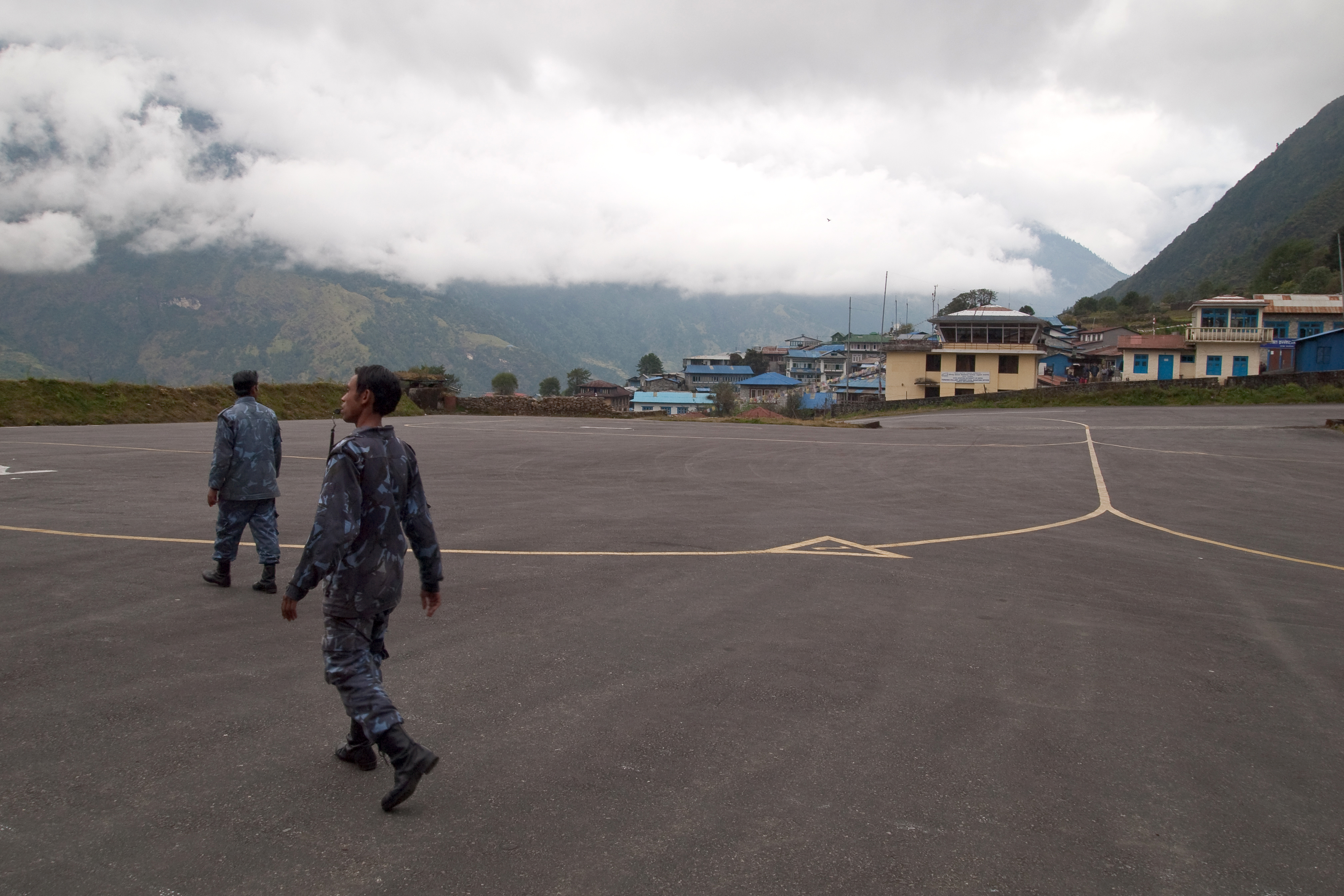
Tenzing-Hillary Airport at Lukla has a single paved runway 527 metres long, built on an 11.7 percent uphill gradient that functions as a built-in brake on landing and a ramp for takeoff. There is no go-around: a pilot who cannot land on the first approach does not get a second one into the same strip, because the runway ends at a mountain wall. Pilots are required to complete at least 100 short-takeoff-and-landing flights and ten supervised missions into Lukla before they fly it solo, which is a measure of how unusual the approach is rather than a routine certification.
None of that is survivable on instruments. Flights in and out of Lukla operate under visual flight rules, so any cloud sitting over the strip, any fog in the valley, or strong crosswind grounds the airport outright, in both directions, for as long as the weather holds. This is not a once-a-season event:
| Date | What happened | Duration |
|---|---|---|
| October 2023 | Adverse weather grounded Lukla flights; over 200 flights from Manthali were cancelled | 5 consecutive days |
| June 2024 | Fog and poor visibility halted fixed-wing and helicopter flights alike | 10 consecutive days |
| October to November 2025 | Cyclone Montha brought heavy rain, cloud and fog across the region; the airport ran on barely 100 flights, mostly helicopters | 3 consecutive days, reported as still ongoing at publication |
Three separate multi-day groundings across three consecutive years, in three different months, is the pattern an itinerary should be built around, not an outlier to hope you avoid. A short weather window of a day or two is common even outside these events; it is the multi-day closures that actually cost people their summit day or their flight home.
The flight itself has moved, and the route has a seasonal twist
During the two peak trekking seasons, spring (roughly March to May) and autumn (roughly September to November), scheduled flights to Lukla do not depart from Kathmandu's Tribhuvan International Airport at all. They run instead from Manthali Airport in Ramechhap, roughly a 3 to 4 hour drive east of Kathmandu, reached by road in the small hours of the morning to arrive before the best weather window. The reason is runway and airspace congestion in Kathmandu: Tribhuvan handles every international arrival into Nepal on a single runway, and Lukla-bound Twin Otters and Dorniers queuing behind international traffic were burning the clear-weather window that Lukla flying depends on. Moving the route to Manthali shortens the actual flight to roughly 15 to 20 minutes, against about 30 to 35 minutes from Kathmandu, which gives airlines more rotations before afternoon wind picks up.
What this means for planning: if your trek falls in peak season, budget a pre-dawn road transfer to Ramechhap before your Lukla flight, not a short hop from your Kathmandu hotel to the domestic terminal. Tara Air, Summit Air and Sita Air all operate the route with Twin Otter and Dornier aircraft. Quoted one-way foreigner fares vary by source and season, commonly cited in the roughly $160 to $240 range depending on whether the departure point is Manthali or Kathmandu; airlines also run a well-documented two-tier pricing structure where foreign nationals pay substantially more than Nepali citizens for the same seat. Confirm the current fare and departure airport directly with the airline or your trekking agency before booking, since both the price and the departure point depend on the season you are flying in.

Permits: two separate fees, and a guide rule the Everest region opted out of
Two permits, from two different authorities, cover the standard route.
Sagarmatha National Park entry permit. Nepal's Department of National Parks and Wildlife Conservation charges foreign nationals NPR 3,000 plus 13 percent VAT, SAARC nationals NPR 1,500, and Nepali citizens NPR 100, with children under 10 free. It is sold at the park entrance gate in Monjo (the usual point, since almost everyone walks through it after flying into Lukla) or in advance at the Nepal Tourism Board counter in Kathmandu.
Khumbu Pasang Lhamu Rural Municipality entry permit. This is a separate local-government fee, not the park fee and not the old TIMS card, which the municipality stopped recognising in 2018 in favour of issuing its own permit. It was NPR 2,000 for several years and rose by NPR 1,000 to NPR 3,000 for foreign nationals from the start of Nepal's 2024/25 fiscal year (mid-July 2024); SAARC and Chinese nationals pay NPR 2,000. It is sold at the same checkpoints along the trail, commonly at Lukla or Monjo.
Add the two together and a foreign trekker is paying roughly NPR 6,000 to 6,400 in permit fees alone, somewhere around $40 to $45 at exchange rates through mid-2026, before a single night of accommodation.
The guide requirement is the genuinely unusual part. Since 1 April 2023, the Nepal Tourism Board has required all foreign trekkers nationwide to hire a registered guide, ending the era of fully independent trekking everywhere else in the country. The Khumbu Pasang Lhamu Rural Municipality, the same local authority that issues the entry permit above, opted out of that national mandate for its own territory, on the position that the federal TIMS-adjacent system conflicts with its own local fee structure. Solo trekkers remain openly permitted on Everest Base Camp as of 2026, provided they carry the municipality's entry permit rather than a guide.
That exception is a live jurisdictional dispute, not a settled rule. Nepal Tourism Board officials have publicly warned that trekkers relying on the Everest exception are taking on legal uncertainty the federal government has not endorsed, even though enforcement on the ground has consistently sided with the local permit. Treat it as the current practical reality rather than a guaranteed one, and check status before you book if a guide requirement would change your trip's shape or cost.
Acclimatization is the actual pacing constraint, not the walking
Everest Base Camp sits at 5,364 metres. Kala Patthar, the standard sunrise viewpoint above Gorak Shep, runs around 5,545 metres by most surveys (a 2008 GPS reading put it higher, at roughly 5,644 metres; treat the lower figure as the more commonly cited one). Lukla, where the trek starts, is at about 2,840 metres. That is roughly 2,700 metres of net gain from airport to base camp, achieved over a walking distance commonly given as around 65 kilometres one way, so around 130 kilometres round trip, figures that vary by a few kilometres between sources depending on exact route and side trips.
High-altitude medicine is specific about what that gain needs. The Wilderness Medical Society's guidelines, summarised in the CDC's Yellow Book guidance for international travelers, recommend avoiding a sleeping altitude above about 2,750 metres on the first night at altitude, then above 3,000 metres gaining no more than roughly 500 metres of sleeping altitude per night, with an extra acclimatization night built in for every 1,000 metres of cumulative gain. The Himalayan Rescue Association, which runs the high-altitude aid post at Pheriche on this exact route, has long given a similar figure: no more than about 300 metres of sleeping-altitude gain per day above 3,000 metres, with a rest day roughly every 600 to 900 metres.
This is why the standard 12 day itinerary carries two dedicated acclimatization days, not one, built into the ascent rather than tacked on at the end. A 1996 clinical study at the Pheriche aid post, cited widely in Himalayan medicine literature, found at least 30 percent of travellers passing through at 4,243 metres showed signs of acute mountain sickness. Skipping or shortening the acclimatization days does not save you two days, it moves the odds of altitude illness, and the odds of a forced descent that costs you far more than two days, meaningfully against you.
The budget, in ranges because the real numbers vary
Three line items make up most of the cost, and none of them are single fixed numbers.
Flights. Kathmandu or Manthali to Lukla round trip, roughly $320 to $480 per person at commonly quoted foreigner fares, before any weather-driven rebooking fees.
Permits. Roughly NPR 6,000 to 6,400 (about $40 to $45) per person for the two permits above, plus the cost of a guide if you choose or are required to hire one, which trekking agencies typically bundle into package pricing rather than quote as a bare day rate.
Teahouses. This is the widest range and the least officially documented, since lodge pricing is set by individual owners rather than a government tariff. Commonly quoted figures put a basic twin room with shared bathroom at roughly $5 to $15 a night in lower villages like Phakding and Namche Bazaar, rising to $15 to $30 in Dingboche, Lobuche and Gorak Shep, where everything is carried in by porter or yak. Rooms are frequently discounted or free if you eat all your meals at the same lodge, which is the normal and expected arrangement rather than an upsell. Meals themselves rise with altitude for the same reason: a plate of dal bhat that costs little in Namche can cost two to three times as much at Gorak Shep.
Travel insurance with helicopter evacuation cover is close to universally recommended for this trek by guides, agencies and the aid posts along the route, specifically because many standard policies cap their altitude coverage well below 5,364 metres. Confirm your specific policy's altitude ceiling before you fly in rather than finding out at Pheriche.
The 12 day itinerary
This follows the standard Lukla-in, Lukla-out route with two acclimatization days placed where the HRA and WMS guidance above says they should go, not at the end for convenience.
Day 1: Fly to Lukla, walk to Phakding. A short flight (from Kathmandu outside peak season, from Manthali during it) followed by an easy two to three hour walk down to Phakding at about 2,610 metres, a gentle start that eases you into the valley before the climbing begins.
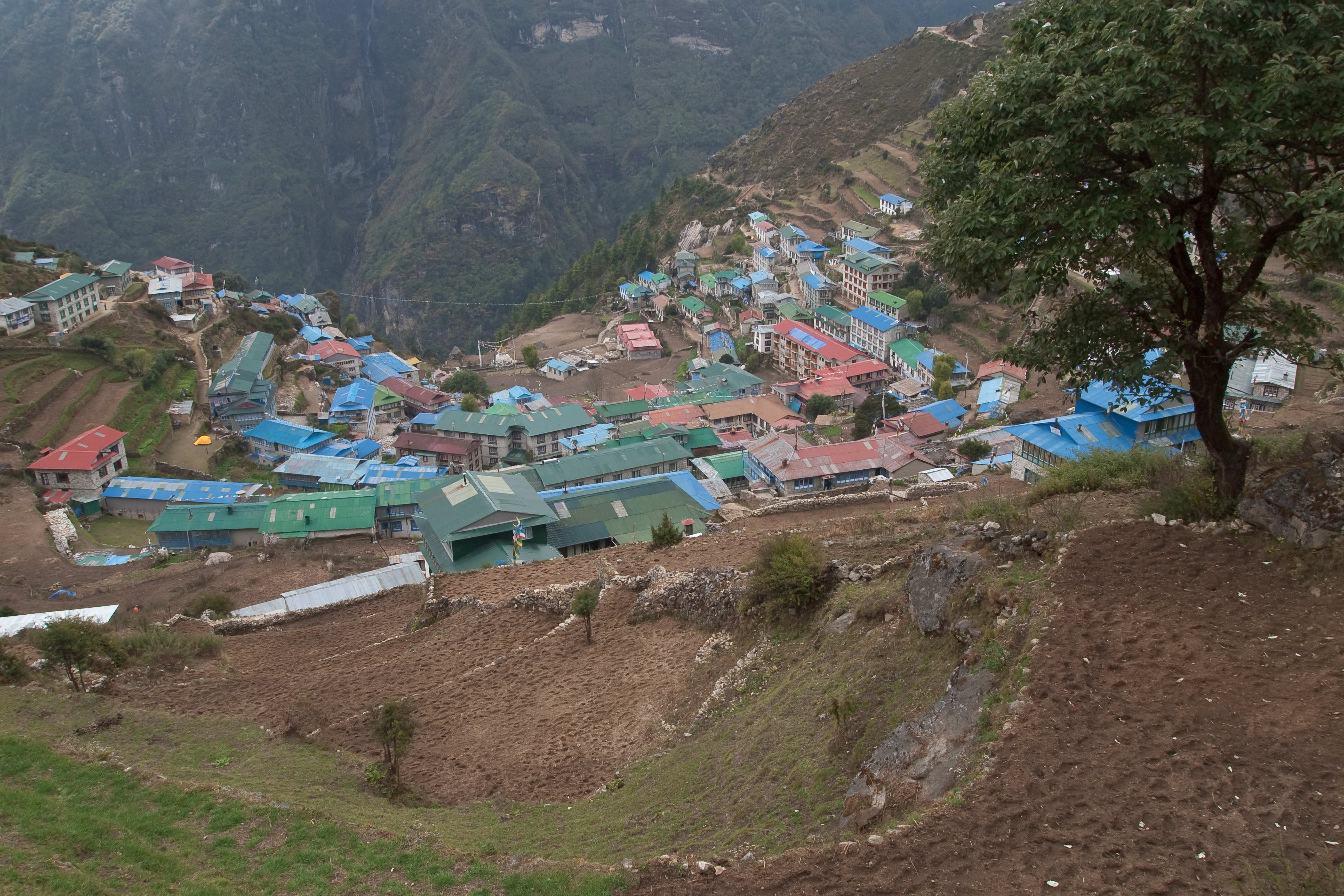
Day 2: Phakding to Namche Bazaar. The day's defining feature is the climb into Namche itself, a steep final push that gains several hundred metres in the last stretch. Namche sits at roughly 3,440 metres, the first major elevation jump of the trek.
Day 3: Acclimatization day in Namche Bazaar. The first of the two rest days, spent on a hike-high, sleep-low day trip, commonly to the Everest View Hotel or the Khumjung area, rather than idle rest. Namche itself is worth a full day: it is the last town with reliable shops, a weekly Saturday market, and the widest range of lodges on the route.

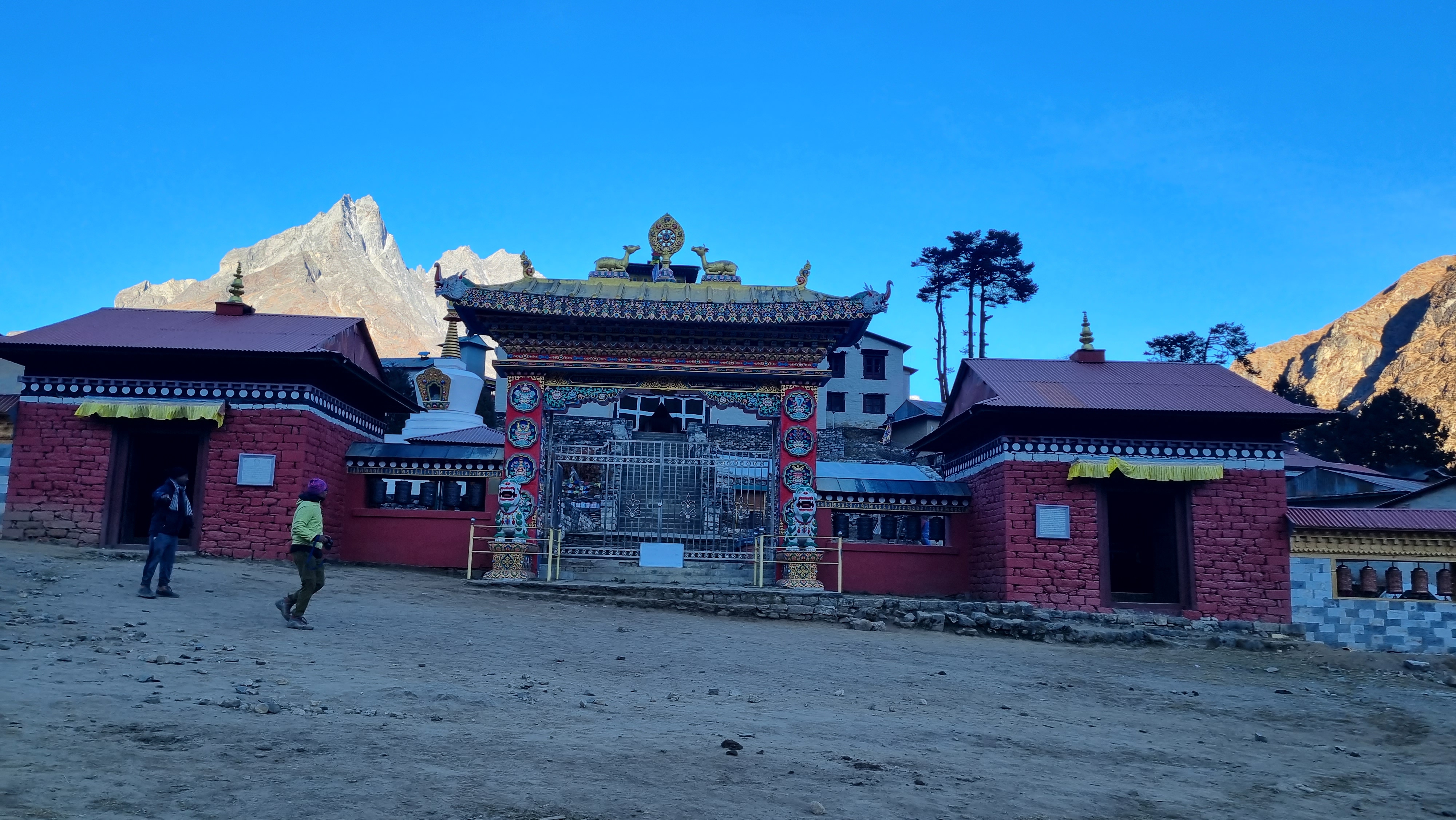
Day 4: Namche to Tengboche. A rolling trail along the valley with the first clear views of Ama Dablam and Everest itself on a clear day, ending at Tengboche monastery, the spiritual centre of the Khumbu, at around 3,860 metres.
Day 5: Tengboche to Dingboche. The trail drops to cross the Imja Khola before climbing again to Dingboche at about 4,410 metres, a meaningful jump that sets up the second acclimatization day.
Day 6: Acclimatization day in Dingboche. The second rest day, typically spent on a day hike up Nagarjun Hill or toward the Chhukung valley for the hike-high, sleep-low benefit, before continuing the next morning.
Day 7: Dingboche to Lobuche. A shorter walking day in distance but a harder one in effect, passing the memorials at Thukla before climbing to Lobuche at about 4,940 metres, where the air is noticeably thinner than it was the day before.
Day 8: Lobuche to Gorak Shep, then Everest Base Camp. The trail reaches Gorak Shep (about 5,164 metres) by late morning, then continues on to Everest Base Camp itself at 5,364 metres before returning to Gorak Shep to sleep. This is the longest and highest walking day of the trip to this point.
Day 9: Kala Patthar sunrise, then descend to Pheriche. An early, cold start for sunrise from Kala Patthar, the best Everest viewpoint on the standard route, followed by a long descent past Dingboche to Pheriche, which also drops you back toward easier breathing for the night.
Day 10: Pheriche to Namche Bazaar. A long descending day retracing the route through Tengboche, with the altitude loss noticeably easing fatigue and appetite for most trekkers by the end of it.
Day 11: Namche to Lukla. The final walking day, retracing the route back down to Lukla, timed to leave a buffer before the flight out rather than cutting it to the same afternoon.
Day 12: Buffer day and fly out. This is the second of the two spare days this itinerary is built around. If your flight home is clear, spend it in Lukla or fly out early and use the extra day in Kathmandu. If it is not clear, this is the day that absorbs the delay instead of your international flight home.
What to skip, and what not to compress
Skip compressing the two acclimatization days into one, even if a shorter itinerary looks appealing. The WMS and HRA guidance above exists because of what happens when people do this, and a forced descent for altitude illness costs more trail days than the one you saved.
Skip booking your international flight home for the same day you plan to fly Lukla to Kathmandu. Build in at least a full day, ideally two, between the two flights. A Lukla delay that also costs you a non-refundable long-haul ticket is a far more expensive problem than a day spent in Kathmandu.
Skip assuming the solo, no-guide option will still be available or still be the cheapest path by the time you book. It is the current practical reality in the Khumbu specifically, but it rests on an unresolved dispute between local and federal authority, not a stable law. Build your budget around the fee structure that is actually in force on your dates.
Do not skip travel insurance with a high-altitude helicopter evacuation clause, and check its altitude ceiling specifically rather than assuming "high altitude cover" means cover at 5,364 metres.
Key Takeaways
| Point | Details |
|---|---|
| Lukla flights ground for days, not hours, and it happens most years | Multi-day groundings documented in October 2023 (5 days), June 2024 (10 days) and October-November 2025 (3+ days), each from a different cause. |
| Peak-season flights depart from Manthali, not Kathmandu | March to May and September to November, flights run from Ramechhap's Manthali Airport, a 3 to 4 hour road transfer from Kathmandu, not the Kathmandu domestic terminal. |
| Two separate permits, roughly NPR 6,000 to 6,400 total | Sagarmatha National Park entry (NPR 3,000 plus 13% VAT for foreigners) and the Khumbu Pasang Lhamu Rural Municipality permit (NPR 3,000 for foreigners, raised from NPR 2,000 in mid-2024). |
| Solo trekking without a guide is still allowed here, uniquely | Nepal has required guides nationwide since April 2023; the Khumbu region opted out and issues its own entry permit instead, a status that remains disputed rather than settled. |
| The standard route needs two acclimatization days, not one | WMS and HRA guidance both cap sleeping-altitude gain above 3,000 metres at roughly 300 to 500 metres a night, with a rest day roughly every 600 to 1,000 metres gained. |
| Everest Base Camp sits at 5,364 metres, Kala Patthar around 5,545 metres | Net gain from Lukla (about 2,840 metres) is roughly 2,700 metres over about 65 kilometres each way. |
| Build in two spare days specifically for Lukla, not for the trek overall | One before the inbound flight, one before the outbound, so a multi-day grounding does not cost you the summit day or a non-refundable flight home. |
Where this plan breaks
It assumes the acclimatization days land where this plan puts them. They are scheduled based on the published altitude gain, but individual response to altitude varies, and anyone showing symptoms should add rest days or descend regardless of what the itinerary says. No itinerary overrides how your body actually responds.
It assumes two buffer days is enough. Two of the three documented groundings above ran longer than two days. Two is a meaningful improvement over zero, not a guarantee. Travelers with an especially rigid flight home, a connecting international flight booked the same day as the Lukla return, are the ones most exposed, and should consider a longer buffer or a fully refundable final flight segment.
It assumes the Manthali departure point holds for your dates. The Kathmandu-versus-Manthali split follows the peak season calendar, but airlines have adjusted it in past years based on traffic and conditions. Confirm the departure airport with your airline or agency close to your travel date rather than assuming the seasonal pattern holds exactly.
It assumes the solo no-guide option remains available. This is the plan's single biggest open variable. If the federal guide mandate is ever enforced in the Khumbu, the cost and structure of this trip changes; price a guide into your contingency budget even if you plan to go without one.
It assumes your teahouse rooms are available on arrival. Outside of peak season weeks, teahouses are rarely pre-booked meal-for-room arrangements and mostly fill on a walk-up basis. In the busiest weeks of spring and autumn, popular lodges in Dingboche, Lobuche and Gorak Shep can fill by early afternoon; arriving late in high season is a real risk to where you sleep, not a theoretical one.
How Planytera handles a trip like this
Planytera is an AI trip planner built by a solo developer, available on iOS, Android and the web. You describe the trip and it builds a day-by-day itinerary, ready in moments. A few things matter specifically for a trip shaped like this one.
Re-pacing without a rebuild. This itinerary has two fixed acclimatization points and two flight legs that depend entirely on weather neither you nor the airline controls. When a Lukla delay pushes the whole schedule back by a day, the days around it should shift with it rather than require starting the plan over.
Offline access. There is no reliable mobile signal for most of the trek above Namche Bazaar, and none at all around Gorak Shep or base camp itself. A saved trip keeps the itinerary, route notes and contacts available with no connection.
Multi-day pacing as a setting. Spreading two acclimatization days correctly across a twelve day structure, rather than bunching rest days for convenience, is exactly the kind of pacing decision an itinerary built from preferences should get right by default.
Per-person cost estimates. Flights, two separate permits, and teahouse costs that rise by altitude add up in a way that is easy to lose track of by day eight. Seeing a running per-person figure helps before you commit, and split costs then tracks who owes whom on a group trek without moving anyone's money.
It does not book flights, permits or teahouse rooms. The Lukla or Manthali flight, both permits, and your lodge arrangements are still yours to handle directly, through an agency or on arrival.
Frequently asked questions
How many buffer days do I actually need for Lukla flight delays?
At minimum, two: one before your inbound flight to Lukla and one before your outbound flight home from it. Documented groundings have run 3, 5 and 10 consecutive days in the last three years alone, so two days meaningfully improves your odds without eliminating the risk. Anyone with a rigid non-refundable international flight booked the same day as their planned Lukla return should consider a longer buffer or a flexible final flight segment instead.
Do I need a guide for the Everest Base Camp trek?
As of 2026, no, uniquely in the Khumbu region. Nepal has required a licensed guide for all foreign trekkers nationwide since 1 April 2023, but the Khumbu Pasang Lhamu Rural Municipality opted out of that mandate for its own territory and issues its own entry permit to solo trekkers instead. This exception is a live jurisdictional dispute between the local authority and the national tourism board rather than a settled national rule, so confirm current status before relying on it, particularly if a guide requirement would significantly change your budget.
What permits do I need, and how much do they cost?
Two: the Sagarmatha National Park entry permit (NPR 3,000 plus 13 percent VAT for foreign nationals, NPR 1,500 for SAARC nationals) and the Khumbu Pasang Lhamu Rural Municipality entry permit (NPR 3,000 for foreign nationals, NPR 2,000 for SAARC and Chinese nationals). Together that is roughly NPR 6,000 to 6,400 per person, both payable at checkpoints along the route such as Monjo and Lukla, or the park permit in advance in Kathmandu. The old TIMS card is not used in the Khumbu region; the municipality replaced it with its own permit in 2018.
Why do Lukla flights sometimes depart from a different airport?
During the spring and autumn peak seasons, scheduled flights run from Manthali Airport in Ramechhap district rather than Kathmandu, because Kathmandu's single runway cannot absorb both its international traffic and the volume of Lukla-bound domestic flights without burning the clear-weather flying window Lukla depends on. The Manthali route is reached by a 3 to 4 hour road transfer from Kathmandu, usually departing well before dawn, and the flight itself is correspondingly shorter at around 15 to 20 minutes against roughly 30 to 35 minutes from Kathmandu directly.
How many acclimatization days does the standard itinerary need?
Two, placed at Namche Bazaar (around 3,440 metres) and Dingboche (around 4,410 metres) on the standard route. This follows the Wilderness Medical Society guidance, summarised in the CDC's Yellow Book, of no more than about 500 metres of sleeping-altitude gain per night above 3,000 metres with an added rest day for roughly every 1,000 metres of cumulative gain, a figure broadly consistent with the Himalayan Rescue Association's own guidance from its aid post on this exact route. Compressing both rest days into one is one of the more common ways people cut a trek short through altitude illness rather than weather.
What does the trek actually cost?
It varies widely and is not a single number. Round-trip flights to Lukla commonly run roughly $320 to $480 per person at quoted foreigner fares. The two permits together run roughly NPR 6,000 to 6,400 (about $40 to $45). Teahouse rooms commonly range from $5 to $15 a night in lower villages up to $15 to $30 a night near base camp, usually discounted if you eat all meals at the same lodge, with meal prices themselves rising at higher altitude. None of these are government-set tariffs, so treat them as commonly reported ranges rather than fixed prices, and add a guide's day rate if you choose or are required to hire one.
Sources and further reading
- Civil Aviation Authority of Nepal: Tara Air summer 2026 domestic schedule, for scheduled Kathmandu, Lukla and Ramechhap routing.
- The Himalayan Times: Flights disrupted at Lukla for ten days, tourists stressed out, on the June 2024 grounding.
- Himalpress: Trekkers stuck in Manthali as bad weather grounds Lukla flights, on the October 2023 grounding.
- Everest Chronicle: Cyclone Montha grounds Lukla flights for third day, on the October to November 2025 grounding.
- Department of National Parks and Wildlife Conservation: Sagarmatha National Park brochure, for official entry fees.
- The Himalayan Times: Local govt imposes Rs 2,000 entry fee on foreigners visiting Mt Everest region, on the original 2017 Khumbu Pasang Lhamu fee and its relationship to the national park fee.
- Himalpress: Entry fee to Everest region hiked by Rs 1,000, on the 2024 increase to NPR 3,000.
- Kathmandu Post: Nepal ends solo trekking era, Everest region is an exception, on the April 2023 national guide mandate and the Khumbu opt-out.
- The Himalayan Times: Solo travellers allowed to trek without a guide in Everest region, on the trek card and the dispute with the national tourism board.
- CDC Yellow Book: High-Altitude Travel and Altitude Illness, for the Wilderness Medical Society acclimatization guidance.
- Wikipedia: Kala Patthar, for summit elevation measurements and their variation between surveys.
Recommended
More from the Planytera blog.